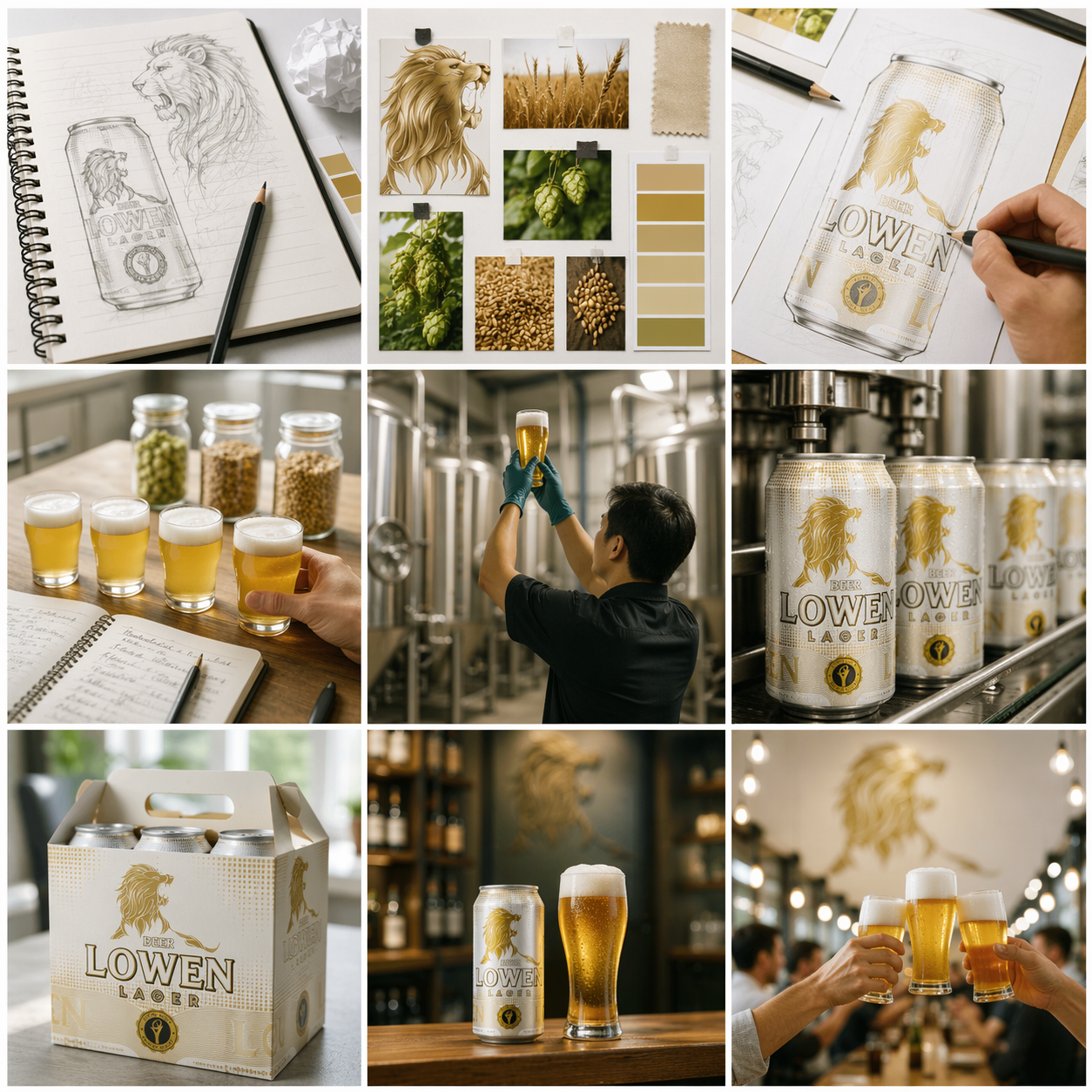


In the fast-paced flow of the F&B industry—where consumer tastes evolve faster than ever—some ideas are born merely “to try for fun.” But there are also ideas nurtured to become a legacy: a mark strong enough to be remembered, authentic enough to be trusted, and enduring enough to stand the test of time.
Building a private beer brand is not simply about choosing a catchy name or an eye-catching design; it is a process of crystallizing personal passion with precise industrial production capability. In the Vietnamese market of 2026, the shift from “drinking enough” to “drinking with taste” has opened the door to products with distinct identities. Beer is no longer just a beverage—it represents a lifestyle, the spirit, and the soul of a business.
Today, private label beer is no longer an exclusive playground reserved for multinational corporations with billion-dollar budgets. A craft beer bar, a restaurant chain, a luxury hotel, or even a community of beer enthusiasts can all create “their own beer.” The real question is: where should you begin—not just to “launch a product,” but to build a brand with personality and a sustainable strategy?
A private beer idea does not have to be a “distant dream.” Turn it into a feasible plan today. With the full-package OEM/ODM services of Bia Sài Gòn – Miền Trung, we accompany you from the very first flavor sketch to the finished bottle on the shelf. Start small, standardize your processes, and be ready to scale when the market responds. Don’t just dream—start brewing.
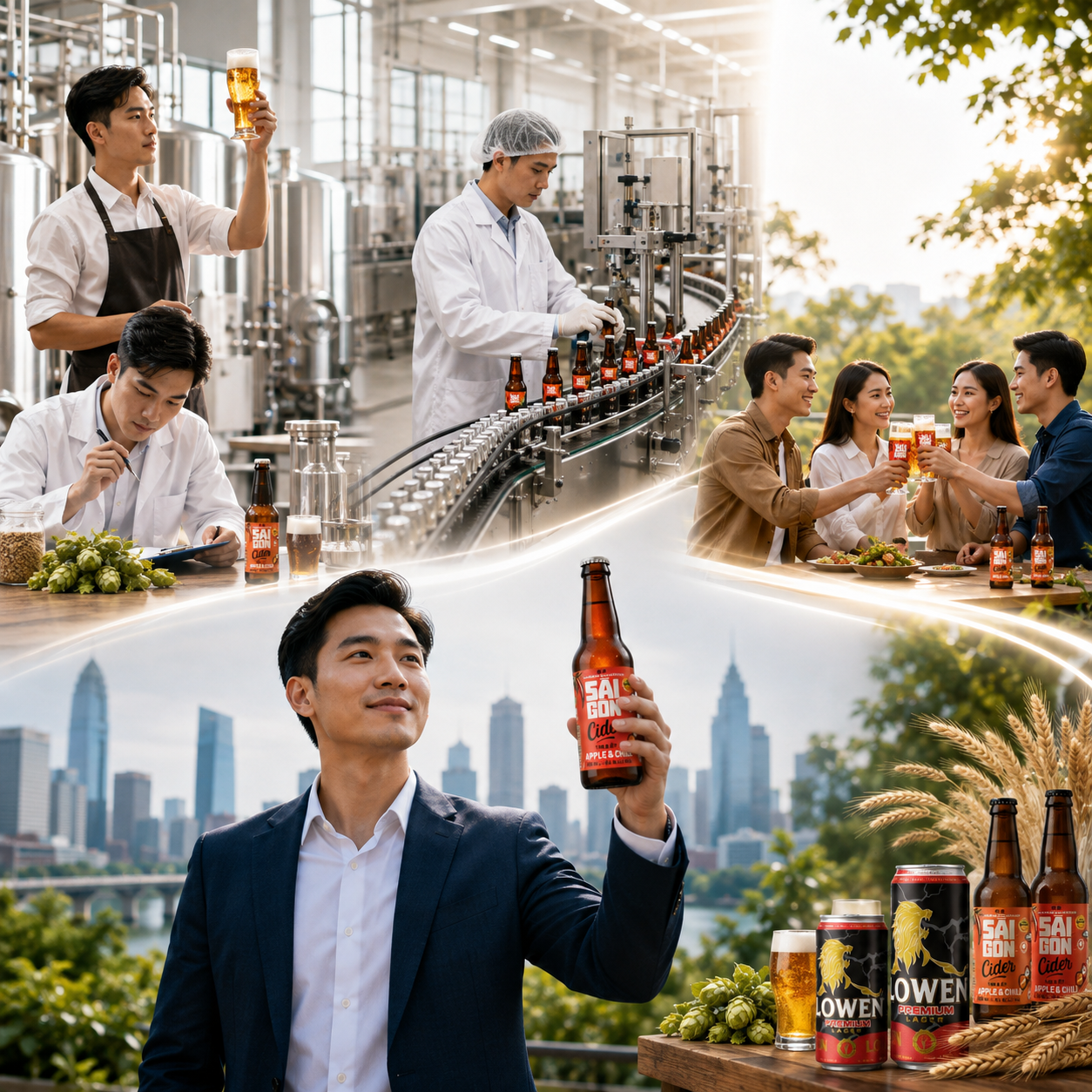
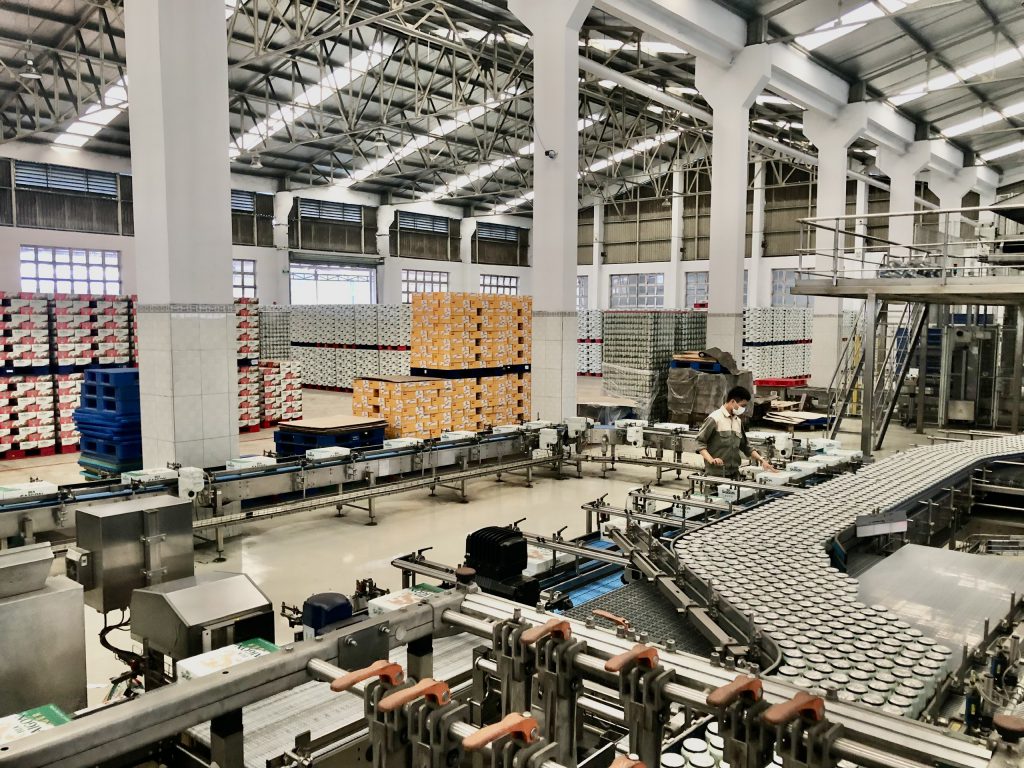 Modern production processes at the factory are the foundation for creating high-quality batches of beer.
What Is Private Label Beer and Why Is This the “Golden” Time?
Private Label Beer (also known as Own Brand Beer) is beer produced according to your recipe, standards, and brand positioning, but manufactured by a capable production partner (an OEM/ODM brewery). Under this model, you do not need to own a production system worth hundreds of billions of VND, yet you fully own the “soul” of the product: from brand story and label design to pricing strategy and exclusive distribution channels.
Why is this model booming in Vietnam?
First, it offers absolute differentiation. In an industrial beer market that is gradually becoming saturated in flavor, consumers are craving novelty and uniqueness. Owning a proprietary beer line allows businesses to escape the price wars dominated by major beer distributors.
Second, it is a solution for optimizing profit margins. Instead of acting as an agent with fixed commissions and constant pressure from suppliers, you can proactively structure pricing and directly control profit on every unit sold.
Third, it helps build brand equity. A bottle of beer bearing your logo on the dining table is one of the most effective “mobile billboards,” delivering your brand message through every sip.
Finally, private label beer creates community engagement. Beer is not just a beverage; it is a catalyst for conversation. When customers drink your beer, they are truly participating in the story you tell.
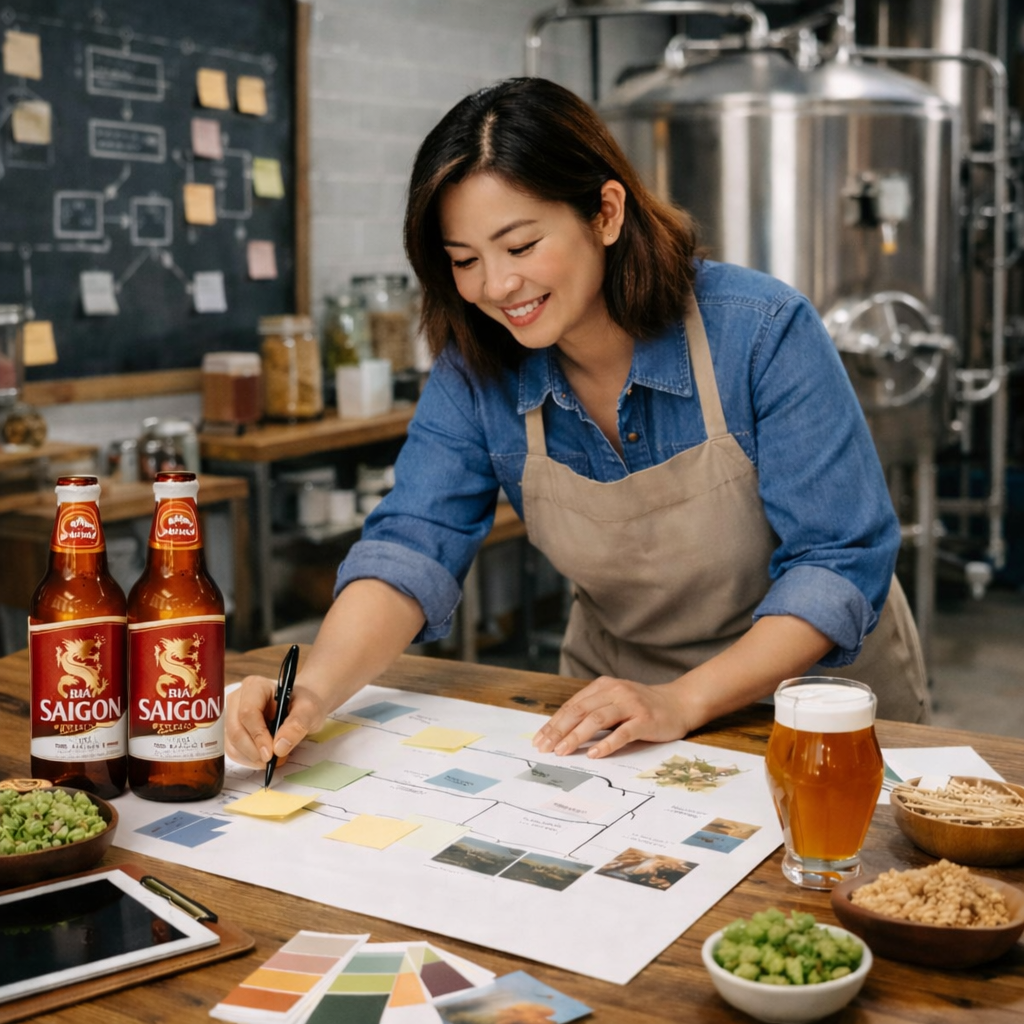
Start With the “Core” – What Do You Want to Represent?
Before choosing hop varieties or alcohol content, ask yourself: “Why does this brand exist?”
A beer brand without a “core” will easily be forgotten among hundreds of alternatives. The core is the compass guiding every technical decision that follows—from bitterness and color to can and label design.
Strategic directions you may consider:
-
Community Core:
Beer made specifically for people who share the same lifestyle. For example, a low-alcohol, mineral-replenishing beer for running communities, or a bold, full-bodied beer for big-motorbike enthusiasts. -
Local Core:
Leveraging regional pride. Using local names, iconic landscapes, or even regional specialty ingredients (such as ST25 rice, pepper, or local citrus peel) to create deep emotional connections with local customers. -
Experience Core:
Designing beer around the drinking moment. You might create a beer specifically for BBQ parties with higher bitterness to balance fatty flavors, or a light, “chill” beer for sunset evenings at rooftop bars. -
Quality (Premium) Core:
Emphasizing meticulous brewing processes, using 100% malt imported from Germany or rare hops from the Hallertau region, targeting sophisticated, high-end consumers.
Customer Persona: Who Are You Brewing For?
A common mistake among beginners is brewing according to the founder’s personal taste and hoping the market will like it. In the professional beer industry, “customer-centric” must be reflected through concrete product metrics.
Don’t brew for yourself—brew for your target audience by answering these five “golden” questions:
-
Usage context:
When do customers drink beer? A hot midday calls for a refreshing lager, while an elegant evening party may require a more complex-flavored ale. -
Location:
Do they drink at lively pubs, upscale restaurants, or buy beer to enjoy at home? The location determines packaging type (can or bottle) and suitable volume. -
Expected flavor:
Do they prefer strong bitterness (high IBU), tropical fruit aromas from dry-hopping techniques, or the gentle sweet finish of barley (medium EBC)? -
Purchase psychology:
Do they choose beer for its “cool” packaging to take check-in photos, or for the story behind a meticulous 21-day brewing process? -
Price segment:
Are they willing to pay VND 20,000 or VND 100,000 for a new experience? The selling price directly influences raw material costs and production technology choices.
Formula and Standards: Don’t Let It Be “Good Once, Different the Next Time”
In professional brewing, the definition of “delicious” is diverse, but the definition of “standard” is singular. Consistency is the greatest measure distinguishing large-scale breweries from small, artisanal operations. Customer trust is built through thousands of bottles with 100% consistent quality.
To achieve this, technical parameters must be controlled through mathematical formulas and precise measuring equipment.
| Parameter | Technical Meaning | Impact on Experience |
|---|---|---|
| ABV (%) | Alcohol content – determined by dissolved sugar levels and fermentation efficiency. | Creates warmth and the perception of “strength/lightness” when drinking. |
| IBU | Bitterness – calculated based on the alpha acid content of hops. | Balances malt sweetness and stimulates the palate. |
| EBC/SRM | Color – determined by the roasting level of malt. | Ranges from golden straw to deep black, affecting visual perception. |
| CO₂ | Carbonation – the level of dissolved carbon dioxide in the beer. | Creates a fine, lasting foam and a refreshing “crush” sensation. |
Every parameter must be calculated with care—for example, fermentation capacity or temperature curves during the mash (saccharification) process. A deviation of even 1°C can completely alter sugar structures and change the final flavor profile of the beer.
Customers may try once out of curiosity, but they return only for consistent quality. Do not gamble your brand reputation on batches that are “good sometimes, mediocre other times.”
The strict quality management system of Bia Sài Gòn – Miền Trung ensures absolute consistency—the 1,000th batch tastes exactly like the first. Let us handle the “technical” side, so you can focus on the “story.”
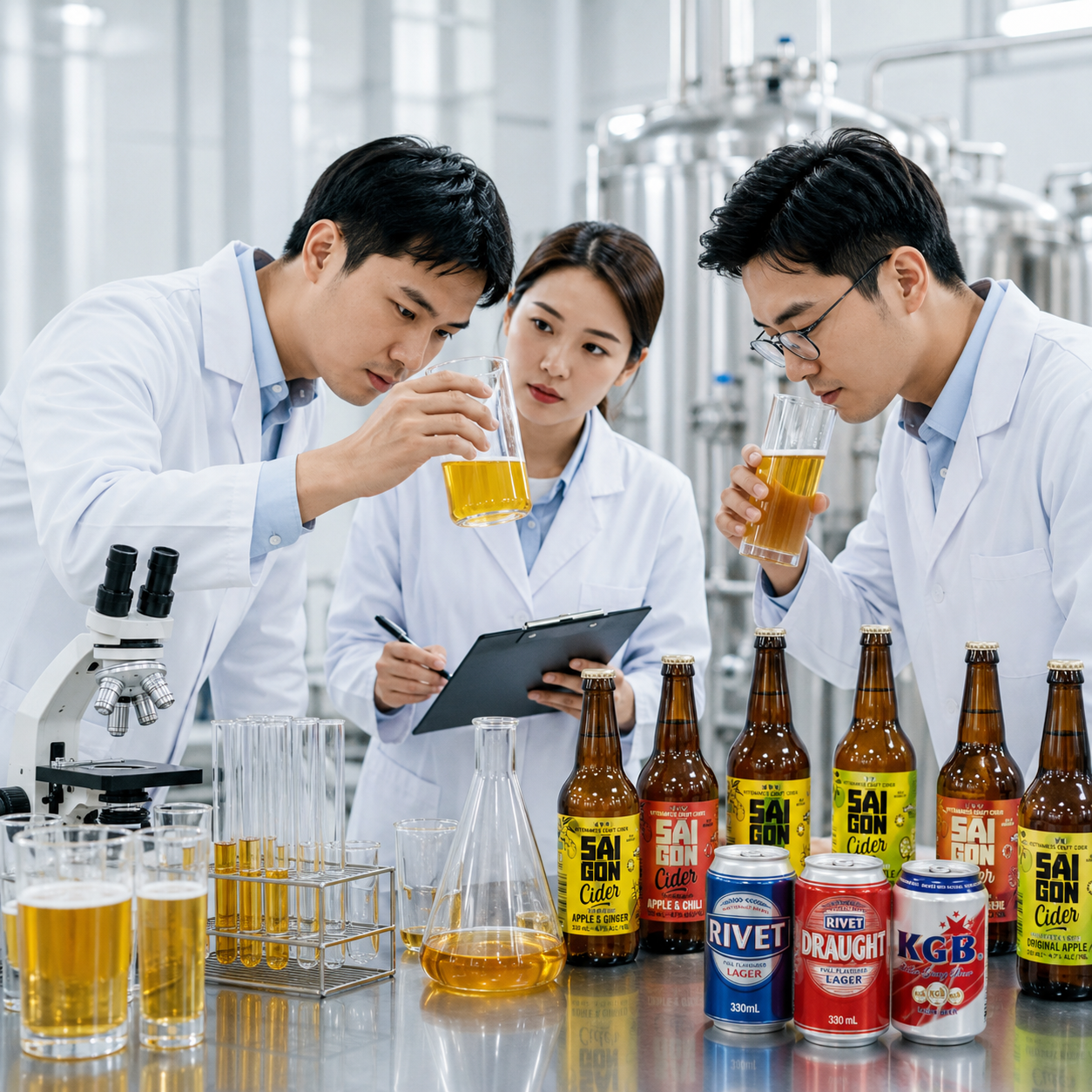
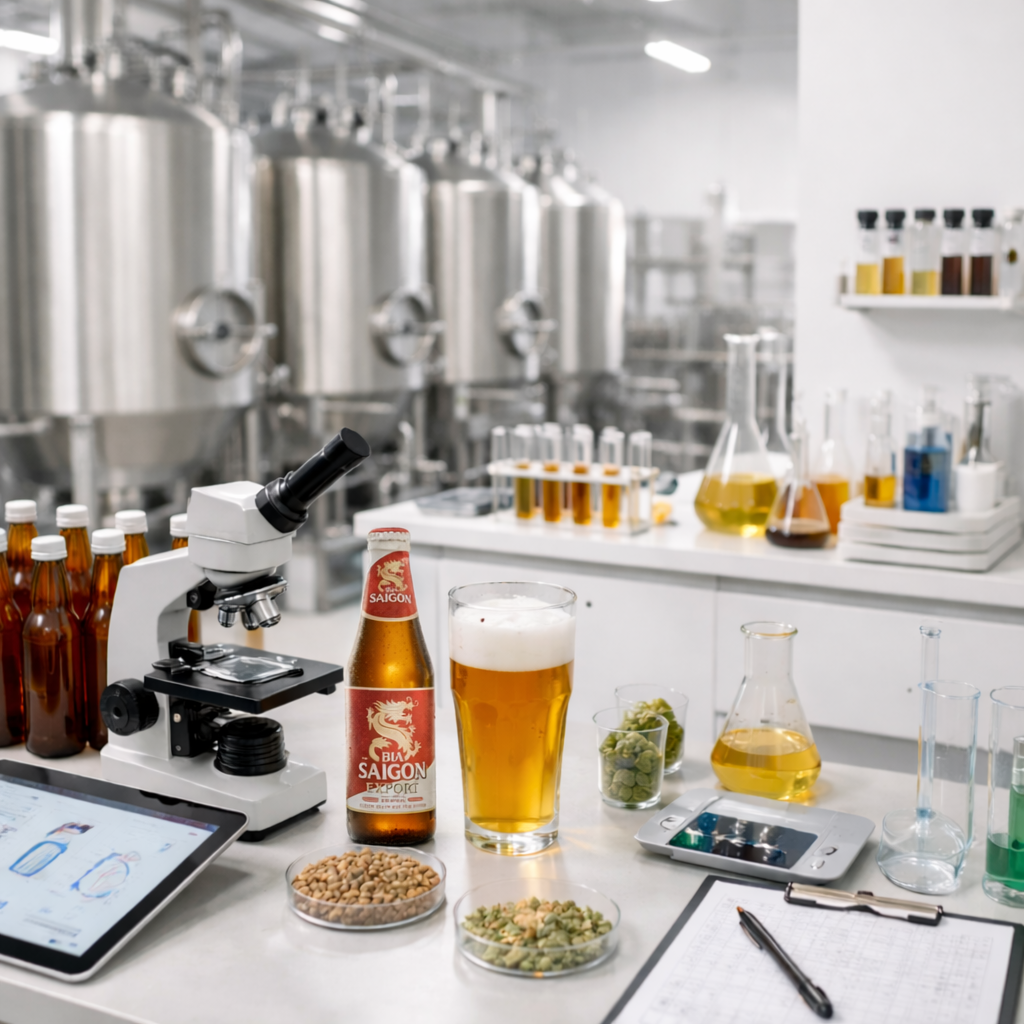 (Illustrative image) Strict quality control in the laboratory ensures consistency for each batch of beer.
Packaging Design: One Second That Decides Fate
In the modern beer market, packaging is the most effective “silent salesperson.” When customers stand in front of a shelf filled with dozens of beer options, you have exactly one second to capture their attention. Packaging design is not just graphic art—it is also a deep understanding of materials and industrial printing techniques.
A successful beer label design must meet three core criteria:
-
Visibility:
The ability for the brand to be recognized from a distance of at least 2 meters. This requires intelligent color coordination and a high-contrast logo. -
Clarity:
At a glance, customers must immediately know what type of beer it is (Lager, Wheat, or Ale) and its alcohol content. Ambiguity in technical information often leads customers to pass over the product. -
Emotional Appeal:
The label material (textured paper labels, clear plastic labels, or foil stamping with metallized lamination) must match the price segment you are positioning. In particular, the packaging must withstand humid environments and cold temperatures in ice buckets without peeling or fading.
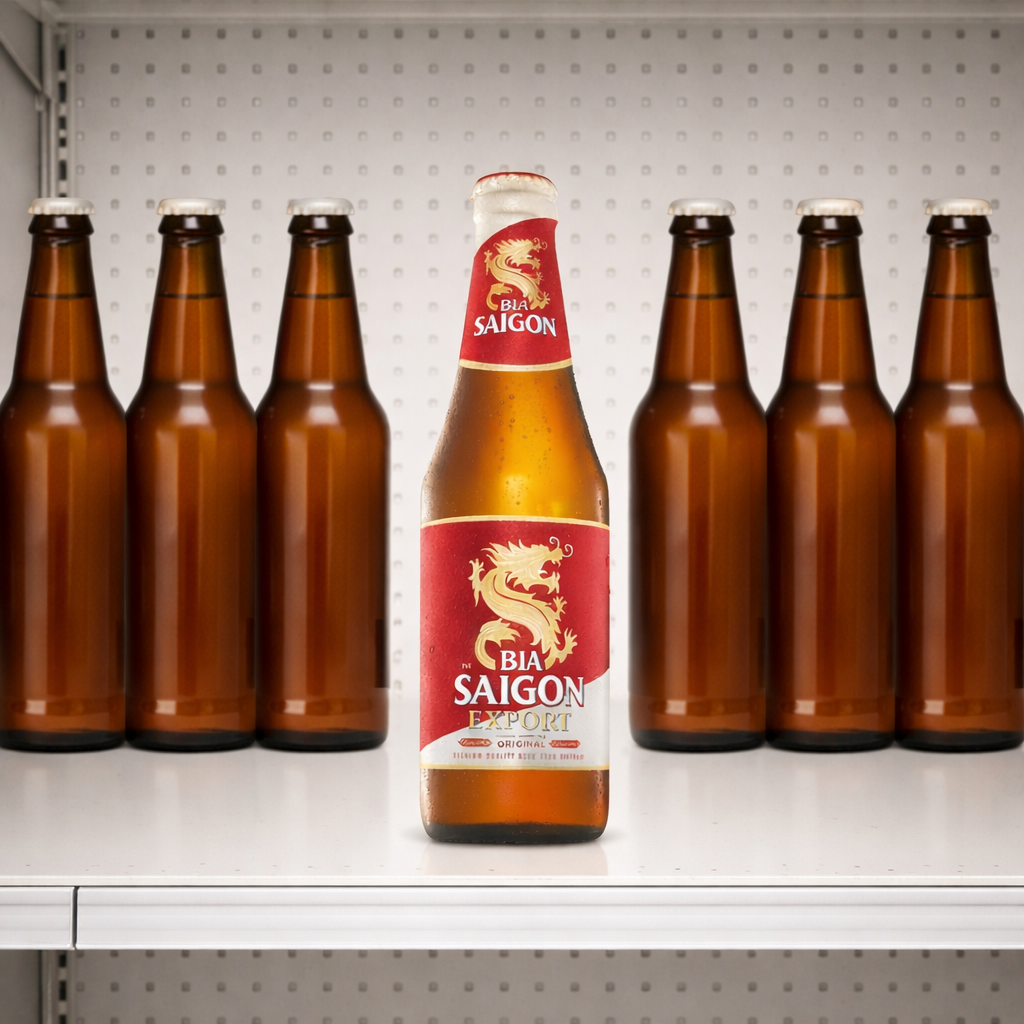
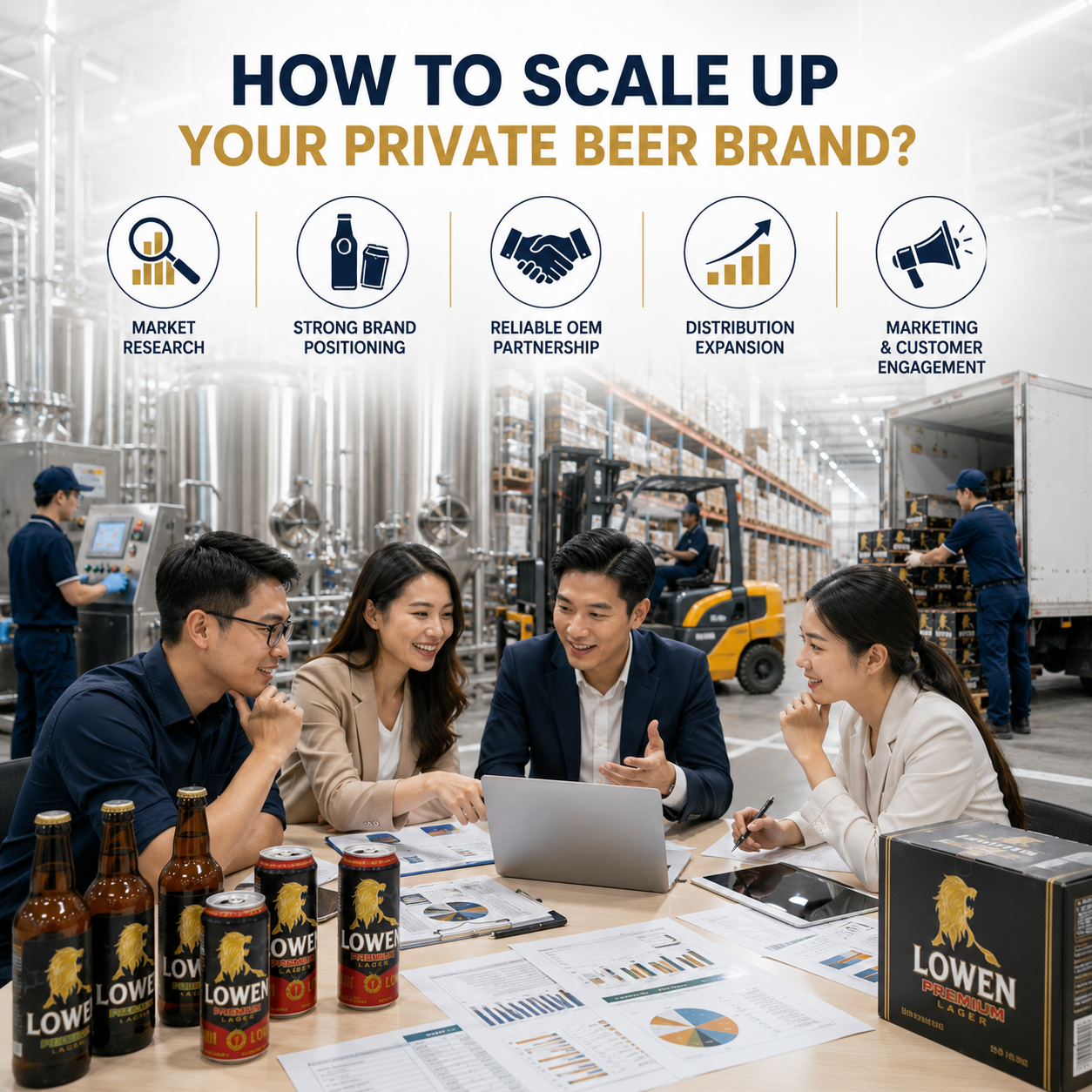
(Illustrative image) Creative packaging is a crucial weapon that helps your beer brand stand out on the shelf.
Choosing a Production Model: OEM or ODM?
Understanding these two models will help you optimize financial resources and accelerate your time-to-market.
OEM (Original Equipment Manufacturer):
This model is designed for partners who already have deep beer knowledge or possess a proprietary, signature recipe. You bring your formula, unique fermentation process, and ingredient requirements to the factory. We act as an “extended arm,” using modern machinery systems to precisely realize your recipe.
ODM (Original Design Manufacturer):
This model is suitable for businesses that want to launch a private-label beer quickly without diving too deeply into technical details. The factory provides a portfolio of beer styles that have been thoroughly researched in the market. You simply choose the flavor profile you prefer, and we support you with custom label and packaging design.
Which model to choose depends on the level of control you desire and your initial budget for sample research and development.
Choosing a beer manufacturing partner means choosing a long-term companion. At Bia Sài Gòn – Miền Trung, we offer a wide range of OEM/ODM solutions, from pilot runs to mass production. We don’t just sell beer—we provide a launchpad for your brand’s sustainable growth.
Launch Planning: “Soft Entry” and “Big Bang” Strategies
The biggest mistake is producing 10,000 cases of beer without knowing how the market will react. A smart launch roadmap requires caution and continuous measurement using real data from points of sale.
An ideal launch roadmap includes three phases:
Pilot Phase:
Produce a small batch ($500L – 1000L$) to test customer response at a few representative outlets. This is the time to measure key metrics such as repeat purchase rate and flavor perception.
Refinement Phase:
Collect real-world feedback. Customers may find the beer slightly too bitter, or the label hard to read under the dim lighting of a bar. At this stage, we support you in adjusting the $IBU$ or redesigning the label before scaling up production.
Official Launch Phase:
Once all metrics have been optimized, we move into mass production and combine it with marketing campaigns and tasting events to create strong market buzz.
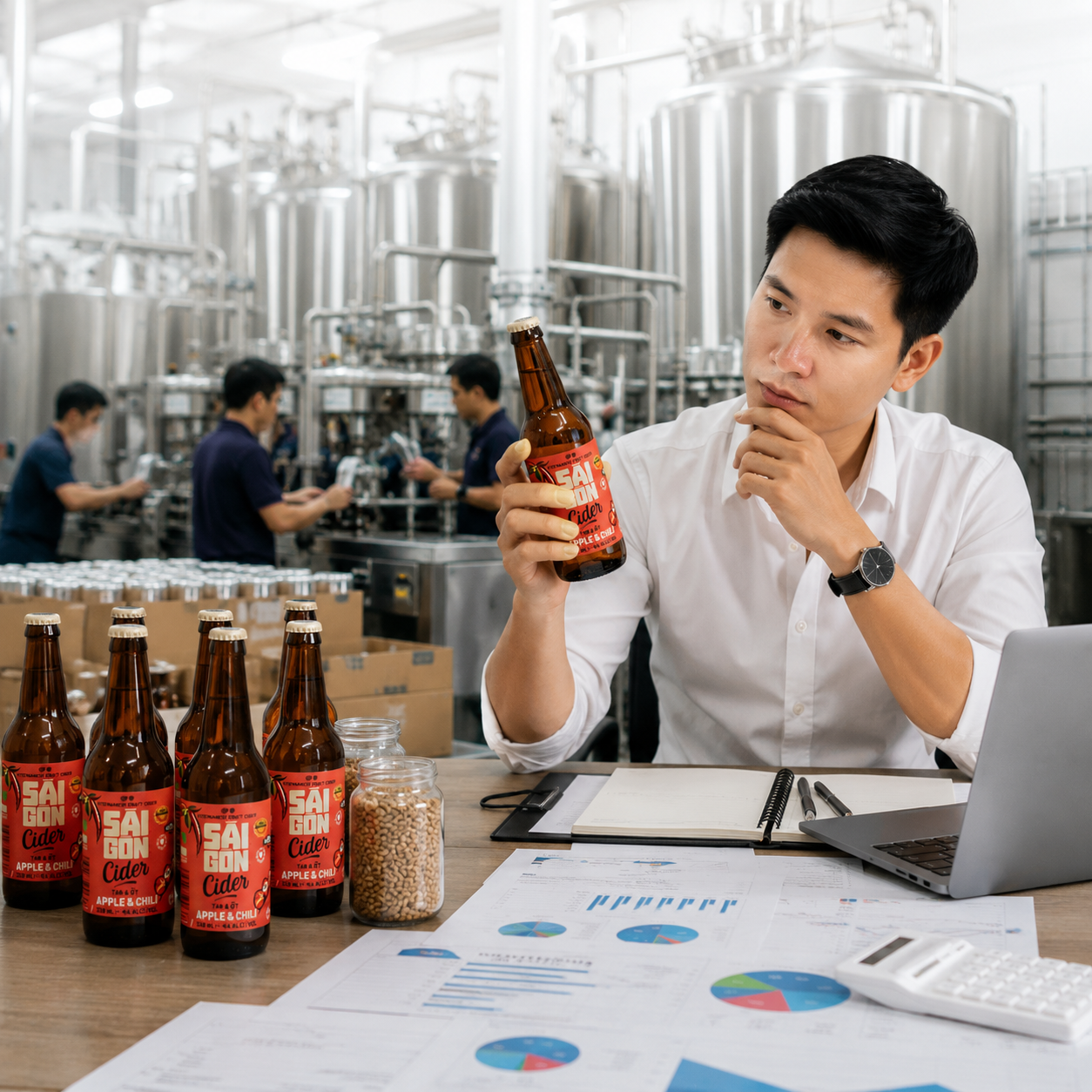
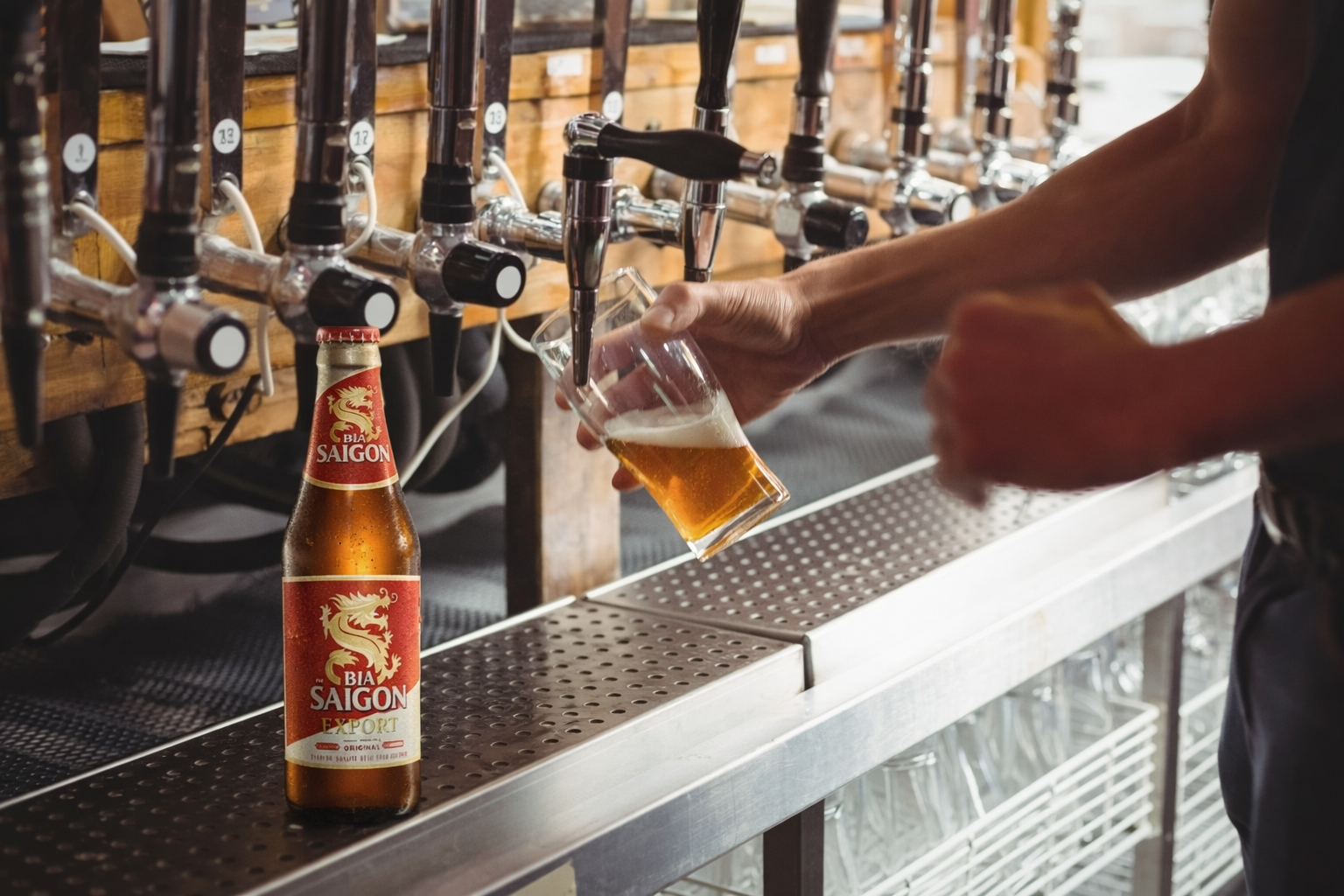
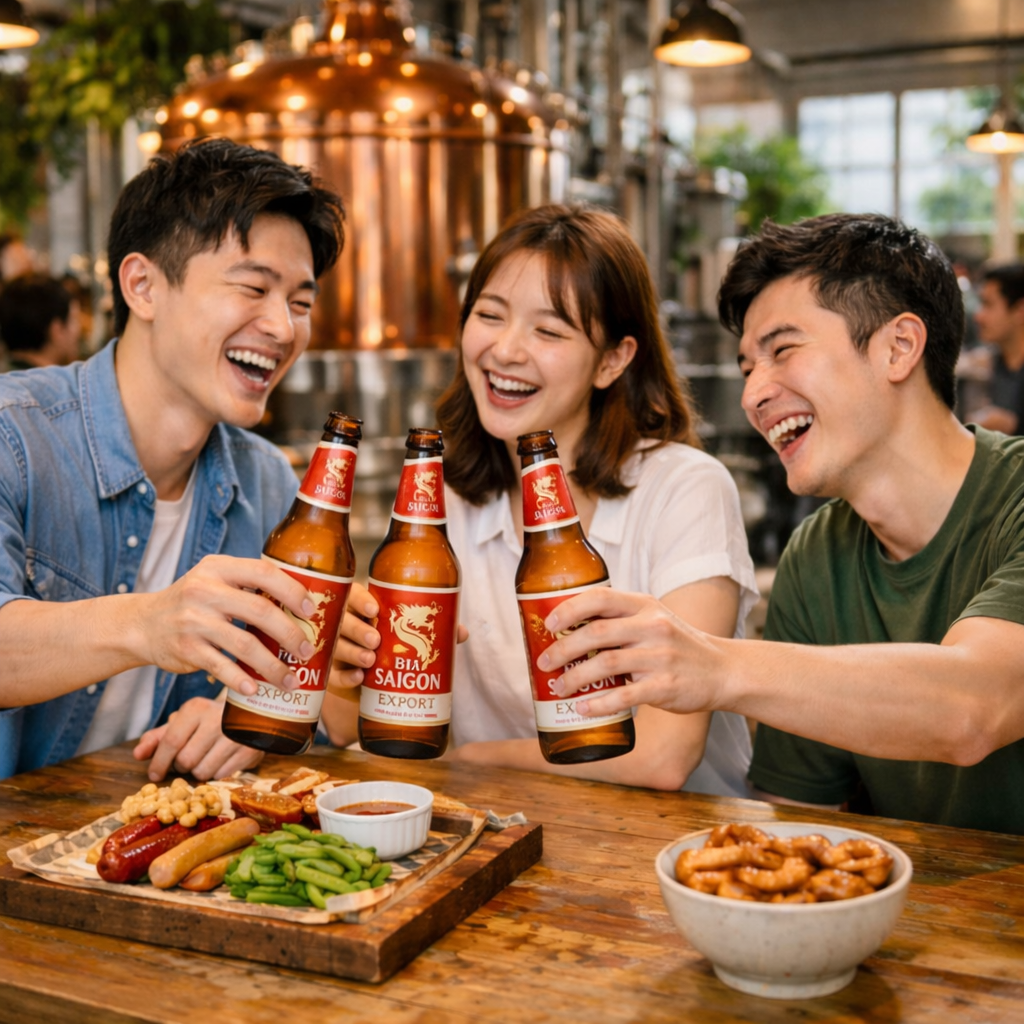 (Illustrative image) Beer is a catalyst for joyful moments and connecting people.
“Fatal” Mistakes You Must Avoid
The journey of building a brand is always full of “black holes” that, without experience, you can easily fall into:
Chasing low prices:
Choosing the cheapest manufacturing partner often leads to consequences such as low-quality ingredients (for example, using excessive adjunct grains instead of malt), which can cause headaches after drinking or make the beer oxidize very quickly.
Lack of legal compliance:
This is the biggest barrier. Failing to register intellectual property for the brand, lacking product quality declarations, or not having proper beer and alcohol production licenses can expose the business to extremely high legal risks once revenue begins to grow.
Over-chasing trends:
Making beer that is overly “quirky” (such as durian-flavored or garlic-flavored beer) may bring short-term social media fame for a week, but it will not generate stable cash flow because customers usually try it once and move on. Prioritize beers with strong drinkability—those people can enjoy again and again without getting bored.
Legacy Is Not in the Bottle – It Lies in the Value You Leave Behind
When you create your own beer brand, you are not just selling an alcoholic beverage. You are building a symbol—a catalyst for joy and community connection. That legacy comes from making the right choices from the very beginning: choosing the right partner, maintaining consistent quality control, and serving customers with genuine dedication.
Every bottle of beer is a new chapter in your brand story.
The journey from zero to “your own beer” is an exciting marathon. You already have the idea and the ambition; Bia Sài Gòn – Miền Trung has the experience, technology, and internationally certified manufacturing facilities. Together, we can create beers that are not just meant to be consumed, but remembered.
You have the idea—we have the factory and the experts. Don’t let your plan stay on paper. Contact Bia Sài Gòn – Miền Trung today for direct consultation on OEM/ODM processes. From brand positioning to optimized packaging solutions, we are ready to help turn your private-label beer dream into reality.
CONTACT US FOR CONSULTATION & START YOUR PROJECT TODAY
Do you need an optimal beer manufacturing solution?
Would you like a detailed quotation for your own beer line?
Our team of experts is always ready to listen and accompany you.
Company: Saigon Beer – Central Region Joint Stock Company (SMB)
Head Office Address: 01 Nguyen Van Linh Street, Tan An Ward, Buon Ma Thuot City, Dak Lak Province, Vietnam
OEM Consulting Hotline: (+84) 94 1127575
Dedicated Email: Oem@biasaigonmt.com
Official Website: https://oem.biasaigonmt.com/