

In the beer industry, peak season—particularly the summer season—is often viewed as a period that simply requires “increasing output.” However, if businesses approach the issue solely from a production perspective, they can easily fall into situations of overstock or shortages. The essence of peak season does not lie in selling more, but in selling the right product, at the right time, and within the right consumption context.
As temperatures rise, beer consumption behavior changes significantly: drinking frequency increases, consumption occasions become more diverse, and there is a stronger connection with social activities such as travel, outdoor parties, and events. This means that demand not only increases in volume but also evolves in terms of quality. Consumers tend to favor lighter beer styles, easy-drinking products, convenient formats, and beverages that provide an immediate sense of refreshment.
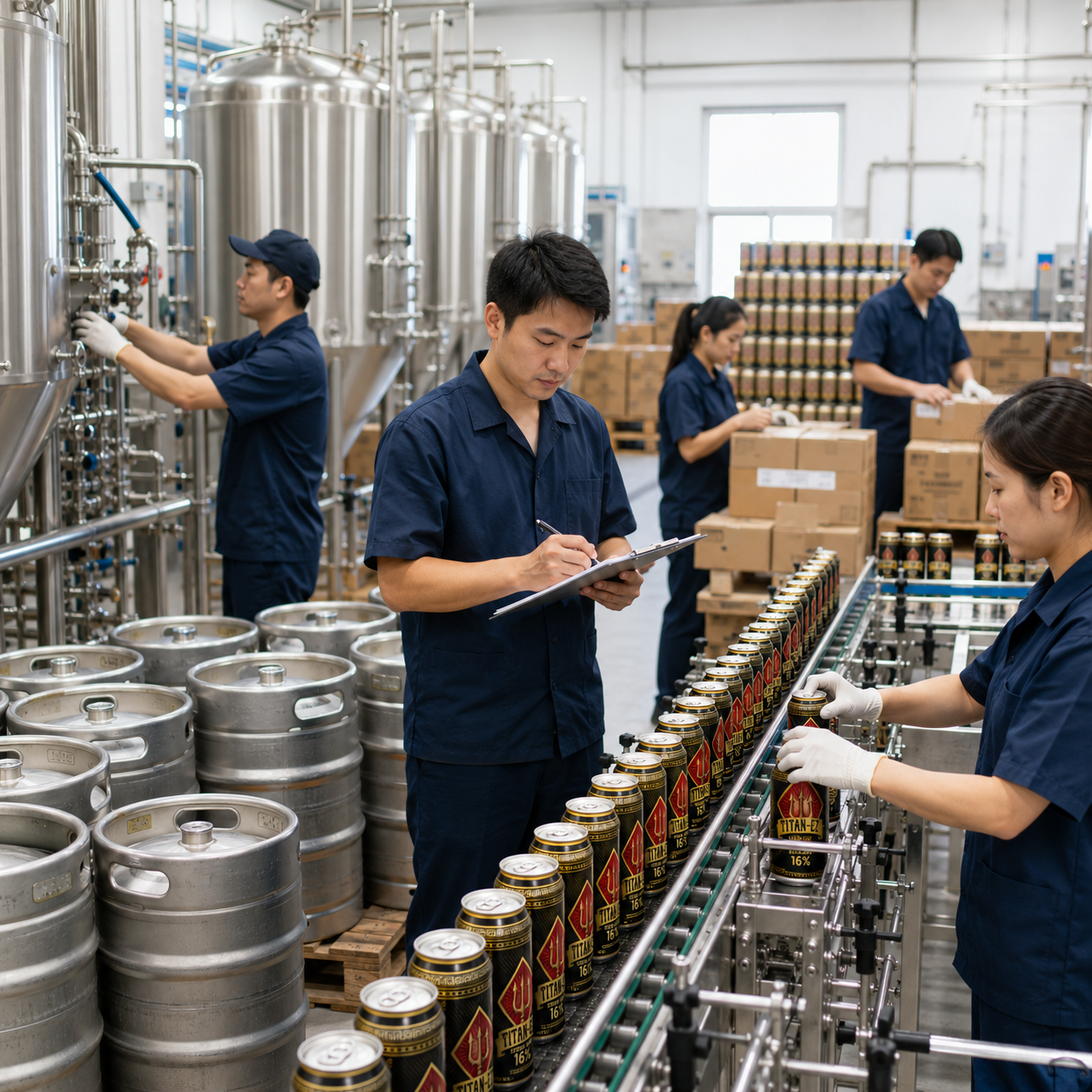
If businesses fail to recognize these changes, they may end up producing more but selling less, or experiencing slow sales. On the other hand, brands that understand the consumption context clearly will have a significant advantage in preparing the right product portfolio and optimizing their production plans.
Another important factor is timing. Peak season does not last evenly throughout the year but often consists of short spikes associated with holidays, vacations, or special events. Failing to synchronize production with these peaks can cause businesses to miss valuable sales opportunities.
Therefore, the first step in preparing for peak season is not increasing capacity, but gaining a deep understanding of market demand and consumer behavior during this period. This forms the foundation upon which the entire strategy is built.
Demand Forecasting – The Foundation of Every Production Decision
After understanding the nature of peak season, the next step is to translate that knowledge into concrete figures. Demand forecasting is not an exercise in absolute precision, but it serves as the guiding force behind every subsequent decision.
Effective forecasting typically starts with historical data, but it does not stop there. Businesses must place that data within the current context: consumer trends, market developments, upcoming marketing campaigns, and even competitive factors. For example, if you plan to launch a new beer product for the summer season, demand will differ from the previous year, and the forecast should reflect that reality.
The key lies in the approach. Rather than trying to identify one “correct” number, businesses should develop multiple scenarios: a base case, a growth scenario, and a peak-demand scenario. This creates greater flexibility in production and minimizes risk.
Demand forecasting must also be aligned with distribution channels. Demand from seaside bars will differ from that of supermarkets and will differ even more from export channels. Clearly separating each channel helps businesses prepare the right products, the right packaging formats, and the right delivery schedules.
In practice, many businesses fail during peak season not because of poor products, but because of inaccurate forecasts. They may produce too much for inefficient channels or experience shortages in high-demand outlets. This not only affects revenue but also damages brand reputation.
Therefore, demand forecasting is not merely a preparatory step—it is the backbone of the entire peak-season production strategy.
Organizing Production – Balancing Capacity and Flexibility
Once demand forecasts are established, the next challenge is organizing production in a way that ensures sufficient output while maintaining the flexibility required to respond to changes. This is one of the biggest challenges, especially for smaller brands.
Under ideal conditions, businesses could increase capacity when necessary and reduce it when demand slows. In reality, however, production capacity is often fixed. Making excessive investments to serve a short peak season can result in underutilized capabilities throughout the rest of the year.
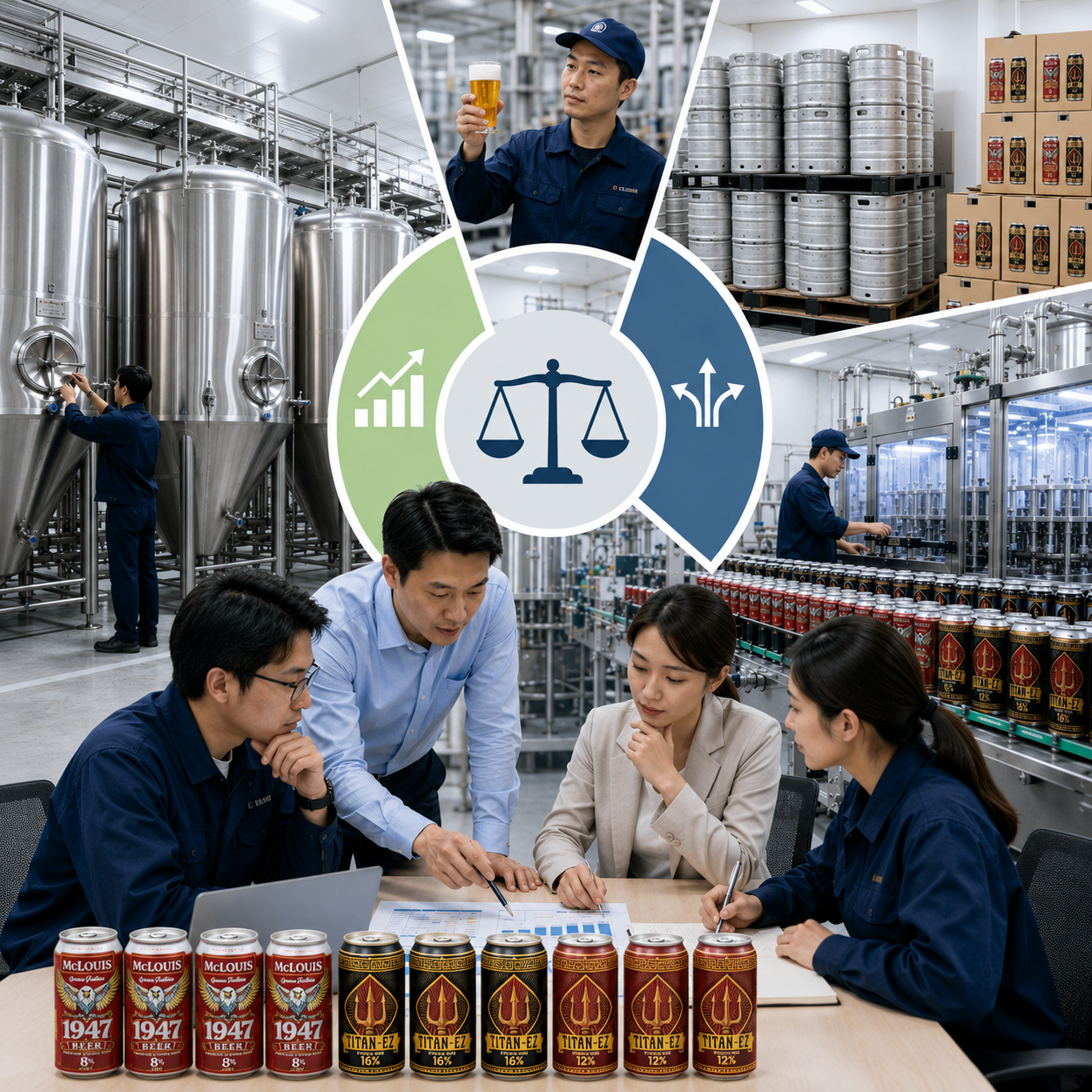
For this reason, the production mindset must shift from “maximizing capacity” to “optimizing responsiveness.” This requires a production system capable of rapidly adjusting output levels, changing product portfolios, and adapting to market fluctuations.
Another important factor is the raw material supply chain. During peak season, not only the beer industry but also many other beverage sectors increase output, creating pressure on supplies such as cans, bottles, and packaging materials. Without proper preparation, businesses may find themselves in a situation where they have sufficient capacity but lack the necessary materials.
From a strategic perspective, many brands have adopted the OEM model to address this challenge. Instead of building their entire production capability themselves, they leverage the existing systems of large breweries to ensure both capacity and flexibility.
This approach not only reduces investment pressure but also enables companies to focus on factors that create direct value, such as products and brand development. In an environment where peak seasons are short and competition is intense, flexibility in production becomes the decisive factor in capturing opportunities.
Aligning Production with Distribution and the Market
One of the most common mistakes is treating production and distribution as separate activities. In reality, these two functions must operate as a unified system, especially during peak season.
Fast production combined with slow distribution leads to excess inventory. Conversely, efficient distribution coupled with insufficient production results in missed sales opportunities. Therefore, synchronization between these two elements is essential.
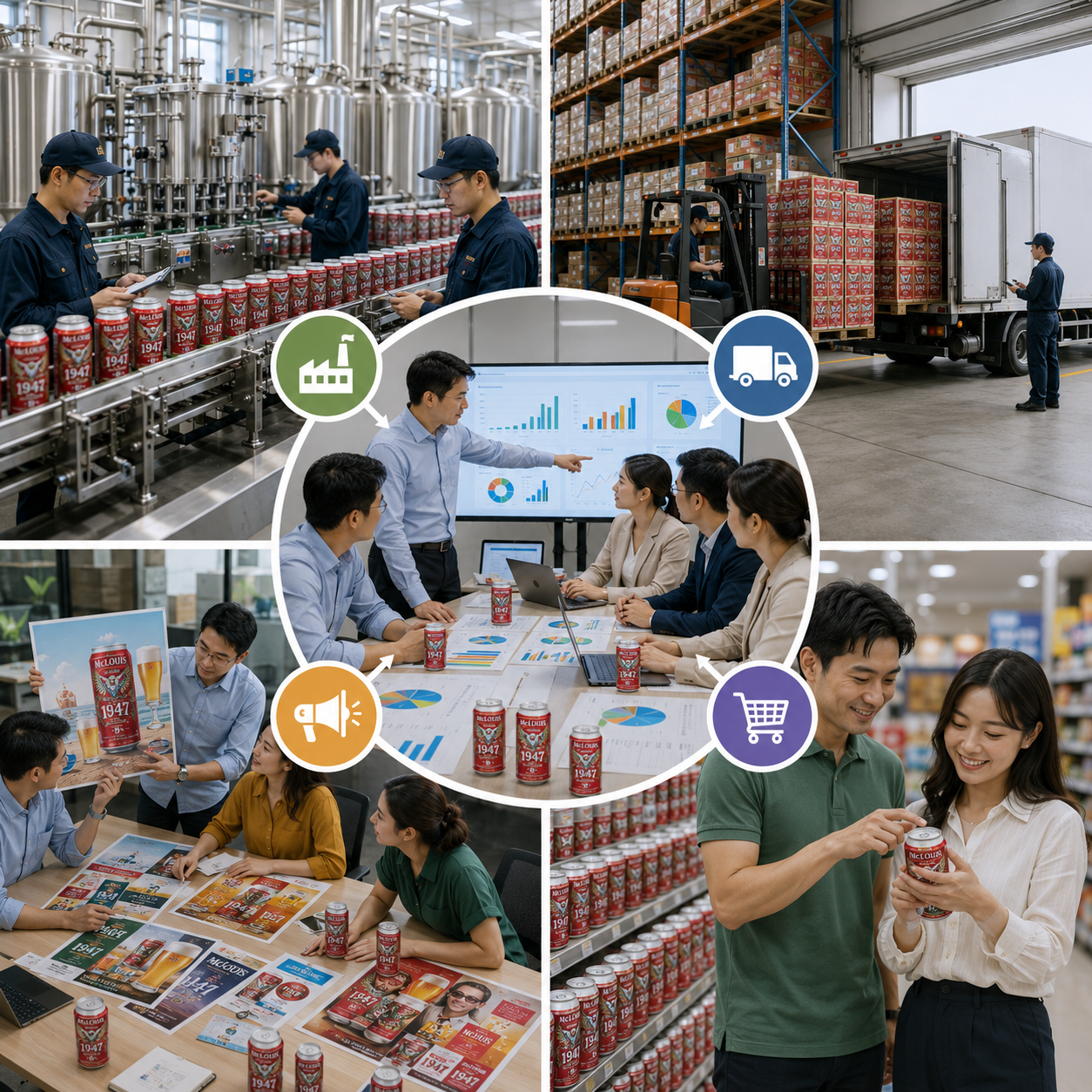
The critical factor lies in timing. Products must reach points of sale before demand peaks, not after demand has already materialized. This requires businesses to work closely with distributors, forecast demand by region, and establish appropriate delivery schedules.
In addition, it is important to recognize that peak season also places enormous pressure on logistics systems. Transportation may be delayed, costs may increase, and order-processing capabilities may become constrained. Without accounting for these factors in advance, even the most well-designed production plan will struggle to deliver optimal results.
Another aspect is the connection with marketing. When promotional campaigns are launched, demand can rise sharply. If production and distribution are not prepared, businesses may face a situation where a campaign goes viral but products are out of stock—an avoidable failure.
Therefore, preparing for peak season is not simply about producing enough; it is about delivering products to the right place, at the right time, and in the right way.
Leveraging OEM – A Strategic Solution for Peak Season
In an environment where peak season demands speed, flexibility, and precision, the OEM (Original Equipment Manufacturing) model is increasingly becoming a strategic choice for many brands, particularly startups and expanding businesses.
Instead of making large investments in a brewery and bearing the risks associated with excess capacity, companies can utilize the existing production capabilities of professional partners. This shortens preparation time, reduces financial pressure, and improves adaptability to market changes.
In Vietnam, Saigon Beer – Central Region (SMB) is one of the companies providing comprehensive beer OEM and beverage manufacturing services. With modern brewery facilities, internationally certified processes, and experience serving multiple markets, the company can provide support ranging from product development to production and packaging.
The key advantage lies in flexibility. Businesses can adjust output according to actual demand, experiment with different beer products, and quickly bring products to market at the right time. This is the decisive advantage during peak season, where every opportunity is closely linked to speed.
Preparing for Peak Season Smarter with OEM
If you are planning for the upcoming peak season, do not let production constraints slow your growth.
Explore OEM services at Saigon Beer – Central Region to:
- Take control of production without investing in a brewery
- Flexibly adjust output according to market demand
- Ensure quality meets international standards
- Focus maximum resources on brand building and sales
Company: Saigon Beer – Central Region Joint Stock Company (SMB)
Address: 01 Nguyen Van Linh Street, Tan An Ward, Buon Ma Thuot City, Dak Lak Province, Vietnam
OEM Consultation Hotline: (+84) 94 1127575
Email: oem@biasaigonmt.com
Website: https://oem.biasaigonmt.com/
In a highly competitive market, success does not belong to the company that produces the most—it belongs to the company that prepares the best.