

The first half of 2026 has witnessed many notable developments in the Vietnamese beer industry. Although purchasing power has shown signs of recovery in certain segments, the market is still undergoing a period of significant restructuring. Consumers are changing their behavior more rapidly, competition among beer brands is becoming increasingly intense, and the pressure to optimize costs remains a reality for most businesses in the beer industry.

In this context, the second half of 2026 is not only a period for maintaining sales but also a crucial time for businesses to prepare for the year-end beer consumption season—the period that generates the highest revenue for the beer industry. Companies that prepare early will gain significant advantages in product development, supply chain management, distribution networks, and their ability to reach consumers.
From the perspective of Saigon Beer – Mien Trung Joint Stock Company (SMB), the beer market is entering a stage where competitiveness is defined by adaptability. It is no longer simply a race of production volume or distribution coverage; businesses must become more agile in product development, operational optimization, and brand building. This is also why the beer OEM model is increasingly being adopted by businesses seeking to shorten their time to market and reduce initial investment pressure.
Understanding Changes in Consumer Behavior in the Second Half of 2026
One of the most common mistakes businesses make is developing business plans based on data from previous years without fully evaluating current changes in consumer behavior.
The Vietnamese beer market is experiencing a clear shift from habit-based consumption to experience-driven consumption.
Consumers are becoming less exclusively loyal to a single beer brand. Instead, they are increasingly willing to try new beer products if they align with their preferences and lifestyles.
In particular, younger consumers are having a significant influence on market trends. They pay greater attention to beer flavor, packaging design, brand experience, and the emotional value that a beer product delivers.
This creates opportunities for emerging beer brands, while simultaneously placing pressure on traditional businesses.
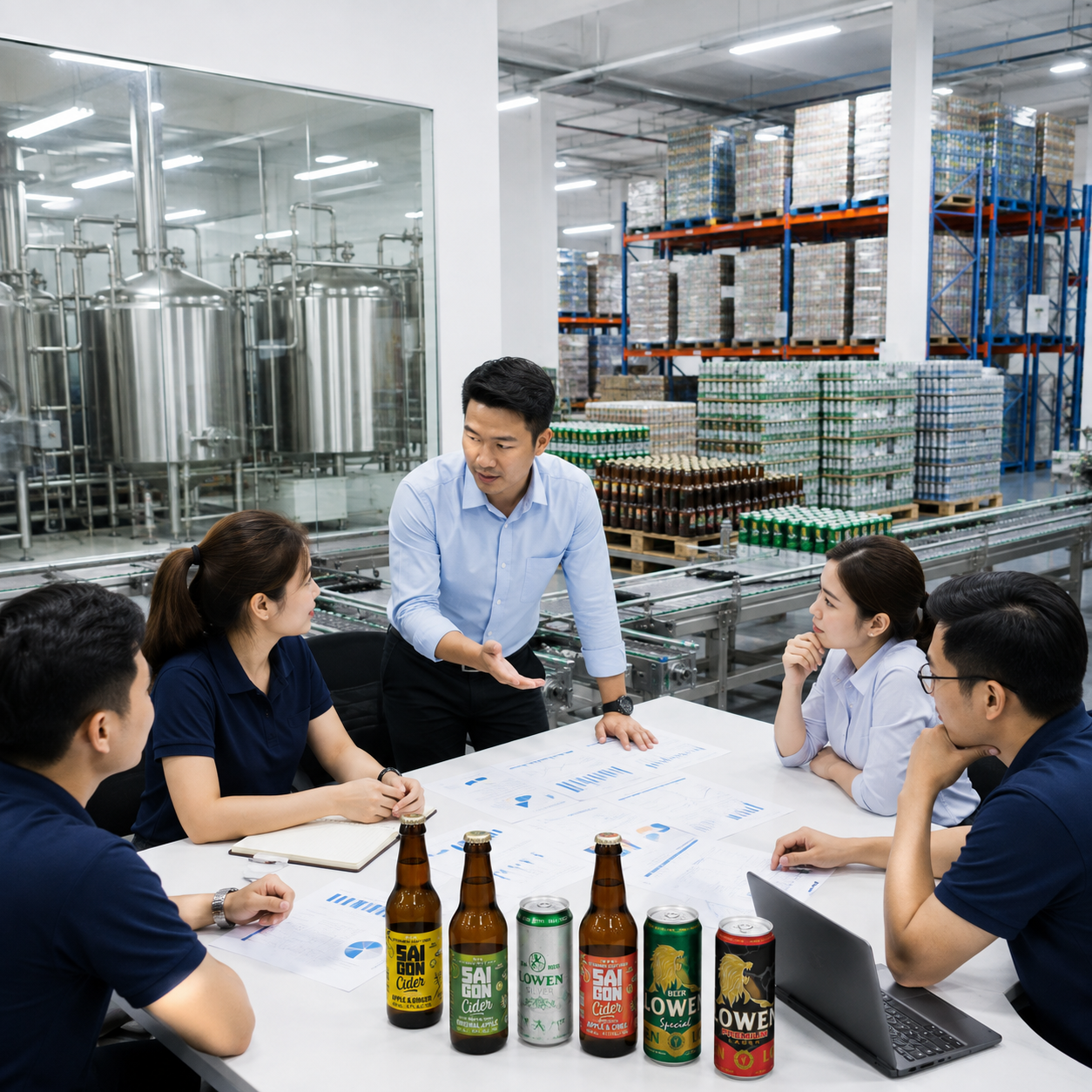
During the second half of 2026, businesses need to invest more heavily in market research rather than focusing solely on sales activities.
Understanding what consumers truly want will help businesses develop more suitable beer products, reduce inventory risks, and improve the chances of success when launching new beer products.
For beer OEM projects, this is an essential first step before determining the beer recipe, brand positioning, or market-entry strategy.
Product Innovation Will Be the Key to Competitive Advantage
As the market becomes increasingly diverse, businesses can no longer rely on a single beer product for an extended period.

Today’s consumers are constantly seeking new experiences.
Traditional Lager beers continue to play an important role, but alongside them, strong beers, fruit beers, specialty-flavored beers, and many new fermented beverages are also experiencing significant growth.
This trend is expected to accelerate further in the second half of 2026 as the market enters the festival season and the year-end beer consumption period.
It is important to note that product innovation does not necessarily mean completely changing existing beer recipes.
Many businesses have achieved success by making small improvements that better meet consumer needs.
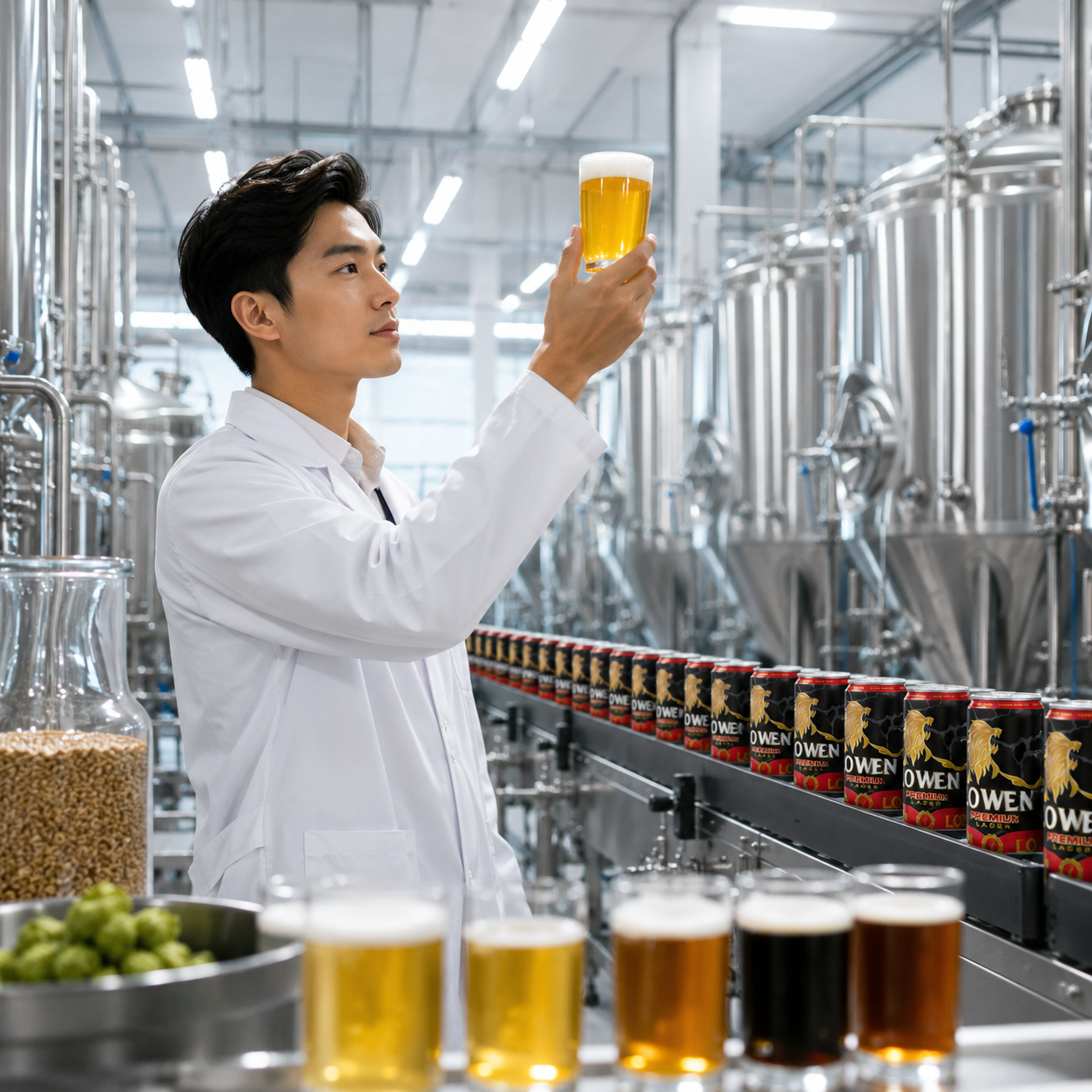
To accomplish this, strong R&D capabilities play a critical role.
At SMB, the 130-liter-per-batch Pilot Brewing System has been invested in to support research and development of new beer products. Through this system, the company and its beer OEM partners can test multiple beer recipes before moving into industrial-scale production.
This helps shorten product development time and significantly reduce the risks associated with launching new beer products.
Preparing the Supply Chain Early Is an Important Competitive Advantage
One of the defining characteristics of the beer industry is its pronounced seasonality.
As the year-end season approaches, beer consumption demand typically rises rapidly within a short period. This places tremendous pressure on raw materials, production, and logistics.
Many businesses only begin preparing when market demand starts to increase, resulting in raw material shortages or excessive production pressure.
By contrast, companies that prepare early are far better positioned to control costs and maintain product quality.
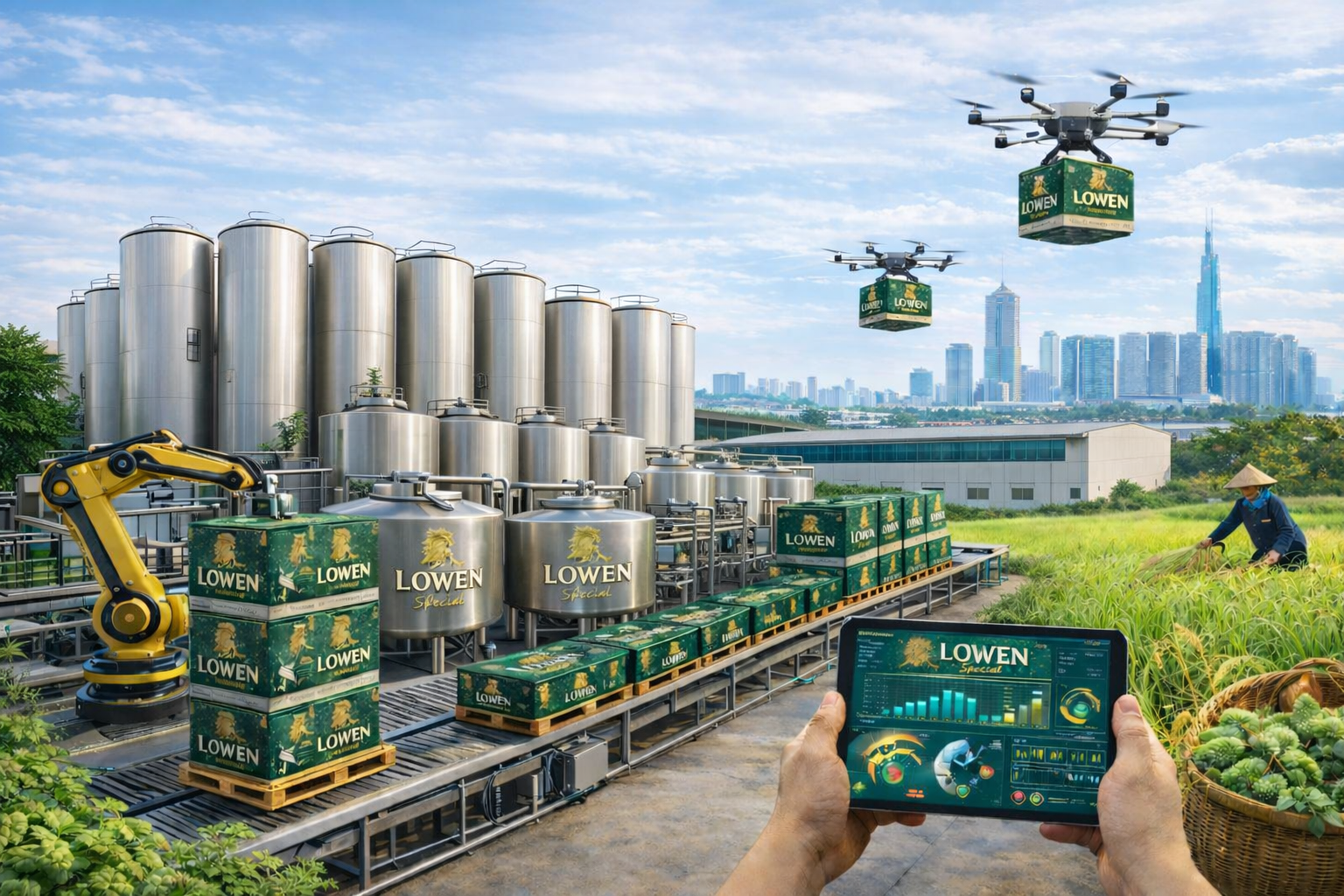
For the beer industry, the supply chain involves not only raw materials such as malt, hops, and brewer’s yeast, but also packaging, logistics, and storage capabilities.
A disruption at any point in the chain can affect the entire business operation.
This is why an increasing number of businesses are choosing to partner with manufacturers that possess comprehensive supply chain management capabilities rather than investing in an entire production system themselves.
The beer OEM model enables businesses to focus on brand development and market expansion while ensuring stable production capacity.
Marketing in the New Era Is No Longer Just About Advertising
While large advertising budgets once created a clear competitive advantage, that is no longer entirely the case today.
Consumers now receive information through multiple channels and tend to trust real experiences more than traditional advertising messages.
This requires businesses to rethink their marketing approach.
Instead of focusing solely on selling beer products, companies need to build meaningful relationships with consumers.
Brand stories, customer experiences, and the ability to create meaningful differentiation are becoming increasingly important.
This is especially true for beer brands developed through the beer OEM model, where building a unique identity is a decisive factor.
A beer product manufactured on the same production line can still create a completely different market image if the brand clearly understands its target customers.
Effective marketing in the second half of 2026 will not simply be about promotion—it will be about creating compelling reasons for consumers to choose and return to a beer brand.
Beer OEM Will Continue to Be a Significant Growth Trend
As investment costs continue to rise and market changes become increasingly rapid, the beer OEM model is becoming a strategic choice for many businesses.
Instead of spending years building a brewery, establishing brewing technology, and developing a technical team, businesses can leverage the existing capabilities of a professional beer manufacturer.

This significantly shortens the time required to bring beer products to market.
More importantly, businesses can focus their resources on activities that create direct value, such as brand development, expanding distribution channels, and customer relationship management.
At Saigon Beer – Mien Trung Joint Stock Company (SMB), our beer OEM operations are built upon modern brewing facilities, a highly experienced R&D team, and a 130-liter-per-batch Pilot Brewing System dedicated to new product development.
We have observed that demand for developing private-label beer brands is increasing significantly and will continue to be a major trend in the years ahead.
Businesses that prepare early for the second half of 2026 will have greater opportunities to establish a competitive advantage as the beer market enters its next phase of growth.
If your business is looking for a trusted beer OEM partner to develop a private-label beer brand, Saigon Beer – Mien Trung Joint Stock Company (SMB) is ready to support you from the initial product concept through to commercial production.
Company: Saigon Beer – Mien Trung Joint Stock Company (SMB)
Address: 01 Nguyen Van Linh Street, Tan An Ward, Buon Ma Thuot City, Dak Lak Province, Vietnam
OEM Consultation Hotline: (+84) 94 1127575
Email: oem@biasaigonmt.com
Website: https://oem.biasaigonmt.com/
With modern brewing facilities, an experienced R&D team, a 130-liter-per-batch Pilot Brewing System, and the capability to develop a diverse portfolio of beer products ranging from Lager beers, strong beers, and fruit beers to new-generation fermented beverages, SMB provides comprehensive beer OEM solutions that help businesses enter the market quickly and build a sustainable competitive advantage.