

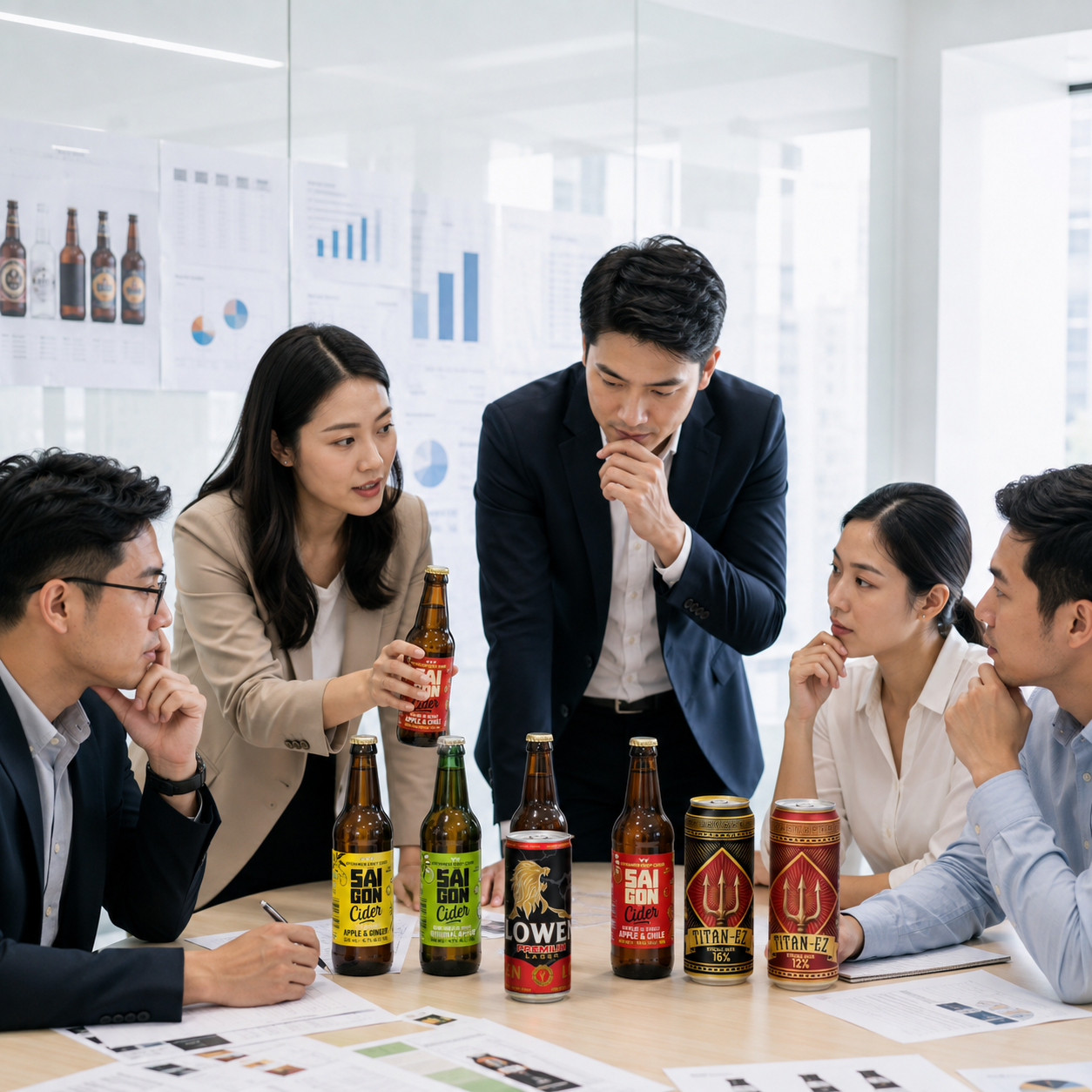
Therefore, brand repositioning should not be understood as “starting from scratch” or completely changing the identity that has already been built. Instead, it is a process of adjusting the strategy so that the brand remains relevant to its target customers, enhances perceived value, and maintains its competitiveness in the long term.
For businesses that own a private-label beer brand (Private Label), identifying the right time to reposition the brand can help avoid prolonged sales declines while opening up opportunities to reach new customer segments.
When the Brand No Longer Creates Differentiation in the Market
At the early stage, many private-label beer brands attract customers through their novelty. However, as more similar products enter the market, this advantage gradually disappears.
If a business’s brand no longer has a clear point of distinction in terms of flavor, brand image, brand story, or customer experience, customers can easily switch to another product at a similar price that offers a fresher experience.
This is one of the clearest signals that a brand needs to be repositioned. The process does not necessarily require changing the brand name; it can begin by redefining the core brand values, refreshing the communication message, or developing additional product lines that better match the market’s current needs.
When the Target Customers Have Changed
Many businesses build their brands based on customer profiles from several years ago. Meanwhile, consumer behavior today is changing rapidly under the influence of the economy, technology, and lifestyle trends.
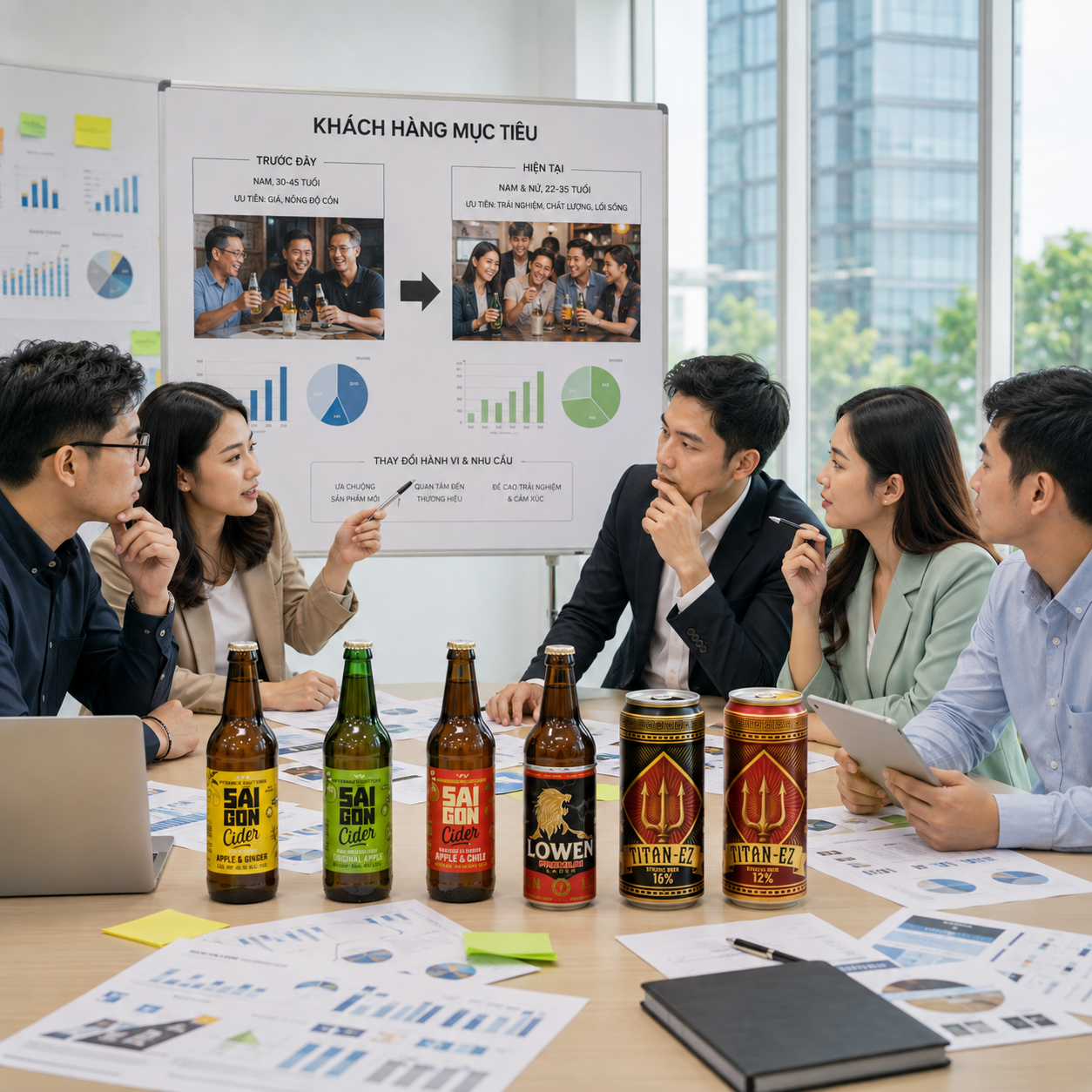
Modern consumers are not only concerned with flavor but also pay close attention to brand experience, packaging design, ingredient origins, and the values represented by the brand.
If the existing customer segment is shrinking, or if the business wants to expand into new segments such as premium restaurant chains, hotels, resorts, or international tourists, brand repositioning can help the brand better meet the expectations of new customer groups while preserving the foundation that has already been established.
Before changing the brand image, businesses should reassess their target customers, consumer trends, and the current market position of the product to ensure that every repositioning decision is based on actual data rather than subjective assumptions.
When Sales Growth Slows or Market Share Gradually Declines
Declining sales do not always originate from product quality.
In many cases, the beer can maintain consistent flavor, but the brand is no longer attractive enough to influence purchasing decisions.
If a business continually needs to rely on discount programs to maintain sales, has a low customer repeat rate, or loses market share while the overall market is still growing, this may indicate that the brand is gradually losing its competitive strength.
Instead of simply increasing the advertising budget, businesses should reconsider their entire brand positioning strategy. Refreshing the brand identity, adjusting the communication message, or upgrading the brand experience may deliver more sustainable results than short-term promotional campaigns.
When Expanding Into New Markets or Distribution Channels
A brand that succeeds in a local market may not necessarily be suitable when expanding nationwide or targeting export markets.
Differences in culture, taste preferences, income levels, and consumer habits mean that businesses may need to adjust their positioning to increase their ability to reach new customers.
Similarly, when expanding from traditional channels into modern retail systems, e-commerce, or F&B chains, the brand image may also need to be upgraded to suit the new competitive environment.
In this case, brand repositioning is not intended to change the brand’s identity but rather to help it adapt to an expanding business context.
When Packaging No Longer Reflects the Brand’s Value
Packaging is one of the first factors influencing a customer’s purchasing decision.
If the design has become outdated, is difficult to recognize, or is no longer aligned with the current positioning, consumers may perceive the product as having lower value from the very first interaction.
For a private-label beer brand, refreshing packaging should be carried out strategically. The goal is not to completely change the design simply to create differentiation, but to retain the elements that have already established brand recognition while upgrading the image according to market trends and customer expectations.
This is also an opportunity for businesses to communicate their brand story more clearly and increase perceived value at the point of sale.
When the Business Changes Its Development Strategy
Throughout the development process, many businesses expand their scale, add new product categories, or shift toward higher-value market segments.
These changes often create a need to adjust the brand positioning.
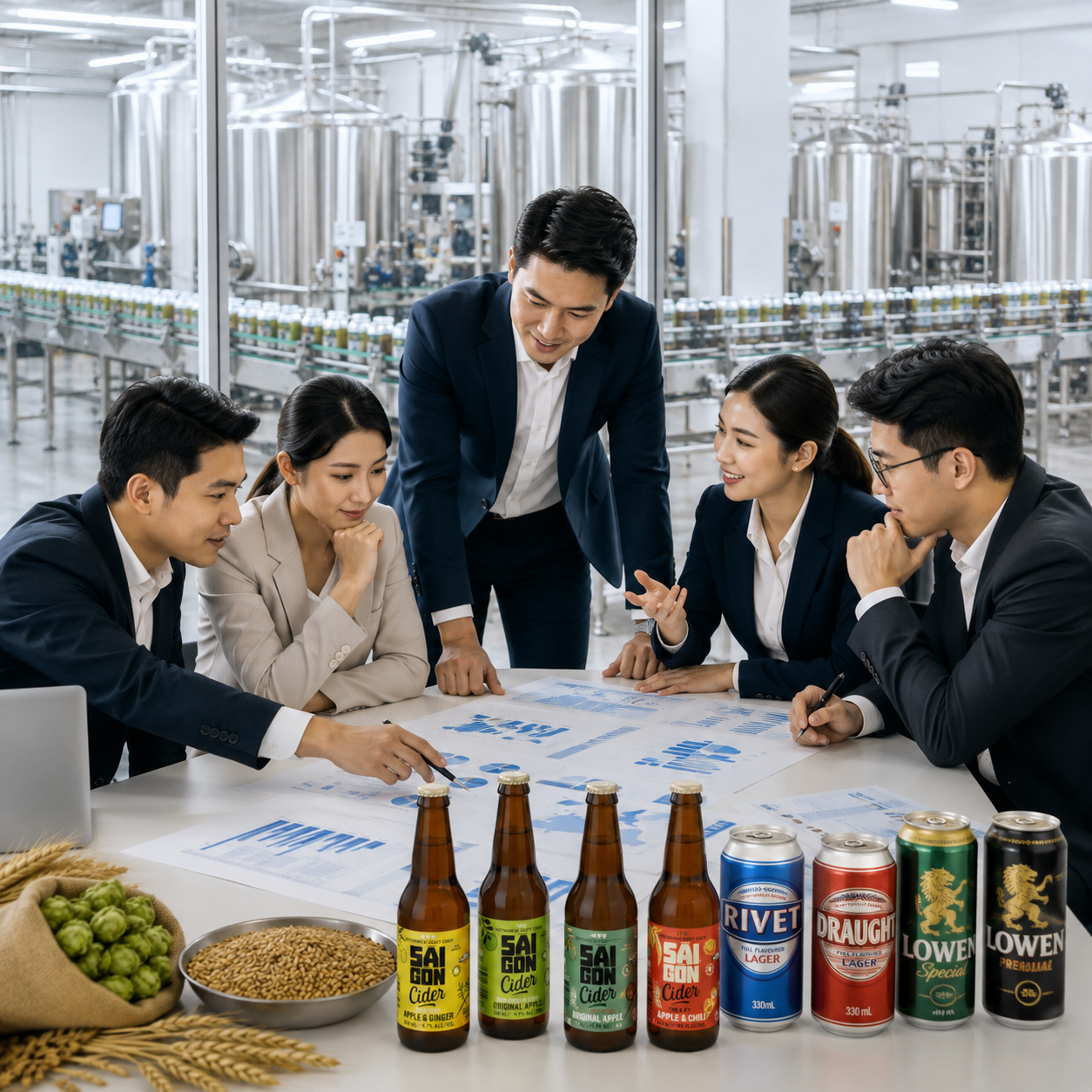
For example, a beer brand that once targeted the mainstream segment may need to build a more premium image when partnering with restaurant chains or hotels. Conversely, a business may also develop more accessible beer lines to expand its customer base.
Brand repositioning helps the brand accurately reflect the business’s new development direction while avoiding a gap between the brand image and the actual value delivered by the product.
If a business is planning to expand into new markets or develop a new beer line, this is an appropriate time to reassess its brand positioning strategy to ensure that the brand develops in alignment with its long-term business objectives.
Repositioning Does Not Mean Completely Changing the Product
One common misconception is that brand repositioning means changing the beer recipe or completely redesigning the brand.
In reality, many successful brands only adjust certain elements such as communication messages, brand identity systems, packaging design, or brand storytelling while maintaining the same product quality.
What matters is that every change has a clear objective and is based on market research, rather than following short-term trends.
Maintaining the values that customers already appreciate while adding new elements will help the repositioning process take place naturally and reduce the risk of losing loyal customers.
The Role of an OEM Partner in the Brand Repositioning Process
For businesses developing a private-label beer brand through the OEM (Original Equipment Manufacturing) model, the manufacturing partner does not simply act as a contract manufacturer but can also support the repositioning process comprehensively.
Through an experienced R&D team, businesses can research and develop new recipes that align with the brand’s positioning. Modern production systems enable businesses to test different product lines while maintaining consistent quality. At the same time, experience in implementing multiple OEM projects helps businesses assess the feasibility of each concept before bringing it to market.
At Sai Gon – Mien Trung Beer Joint Stock Company (SMB), OEM services are implemented with the goal of accompanying businesses throughout each stage of brand development. From researching consumer trends, consulting on product development, and designing packaging to organizing production and implementing quality control, SMB aims to help businesses refresh their brands while maintaining consistency and the core values they have already established.
Repositioning a private-label beer brand is not a sign of failure, but rather a necessary step to adapt to changes in the market and increasingly diverse consumer needs.
Businesses should consider brand repositioning when the brand no longer creates differentiation, target customers change, sales growth slows, the business expands into new markets, or when the brand image no longer accurately reflects the value the business wants to communicate.
More importantly, this process should be carried out based on market research, customer data, and a long-term development strategy. With the support of a capable and comprehensive OEM partner, businesses will have additional resources to implement necessary changes, build a more sustainable private-label beer brand, and strengthen their competitiveness in the market.
Contact Information
- Company: Sai Gon – Mien Trung Beer Joint Stock Company (SMB)
- Address: 01 Nguyen Van Linh, Tan An Ward, Buon Ma Thuot City, Dak Lak Province
- OEM Consultation Hotline: (+84) 94 1127575
- Email: Oem@biasaigonmt.com
- Website: https://oem.biasaigonmt.com