

In the strategy of developing a Private Label beer brand, packaging is not merely an outer layer but an integral part of the product strategy. The question of canned beer or bottled beer is essentially a comprehensive decision that balances beer quality, production cost, logistics, marketing, and brand positioning.

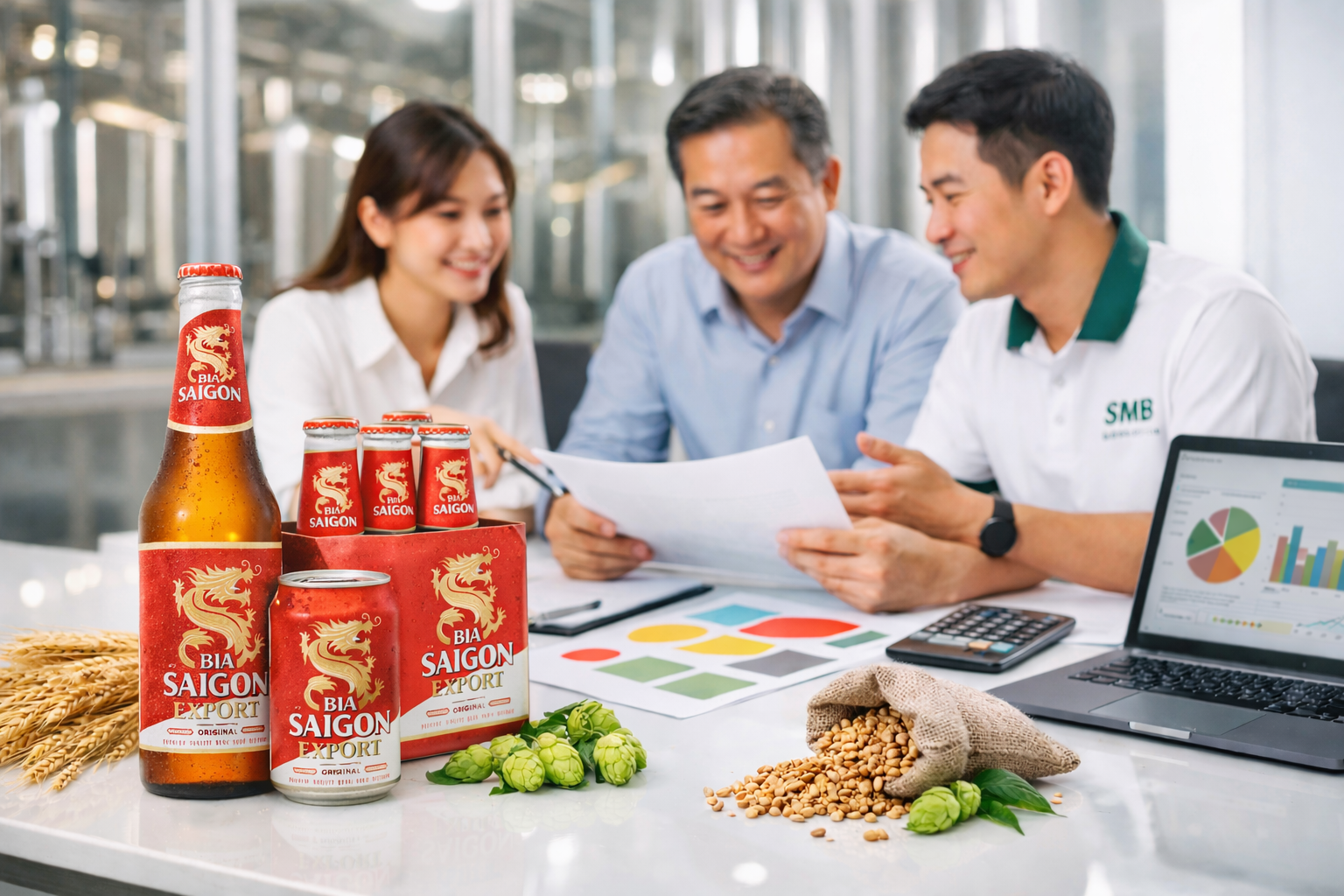
In Vietnam, many businesses choose to implement beer OEM manufacturing through large-scale breweries with international standards such as Saigon Beer – Central Vietnam Joint Stock Company (SMB)—a company with a modern brewery system, extensive experience in producing diverse beer lines, and a quality management platform aligned with international standards.
From the perspective of a beverage packaging solutions expert, this article will provide a comprehensive analysis to help you make the right strategic decision.
The “Packaging Battle” – History and Global Trends
Packaging Matters More Than You Think
In the beverage industry, packaging directly affects:
-
Purchase decisions at the point of sale
-
The ability to protect beer quality
-
Transportation efficiency
-
Consumer experience
Many market studies show that packaging can influence up to 50% of a customer’s first purchase decision. For a new brand implementing beer OEM manufacturing, this is a critical factor.
The Shift from Bottles to Cans
The long tradition of the beer industry has been closely associated with glass bottles. However, over the past 10–15 years, the global market has been shifting strongly toward aluminum cans, especially in the craft beer and premium beer segments.
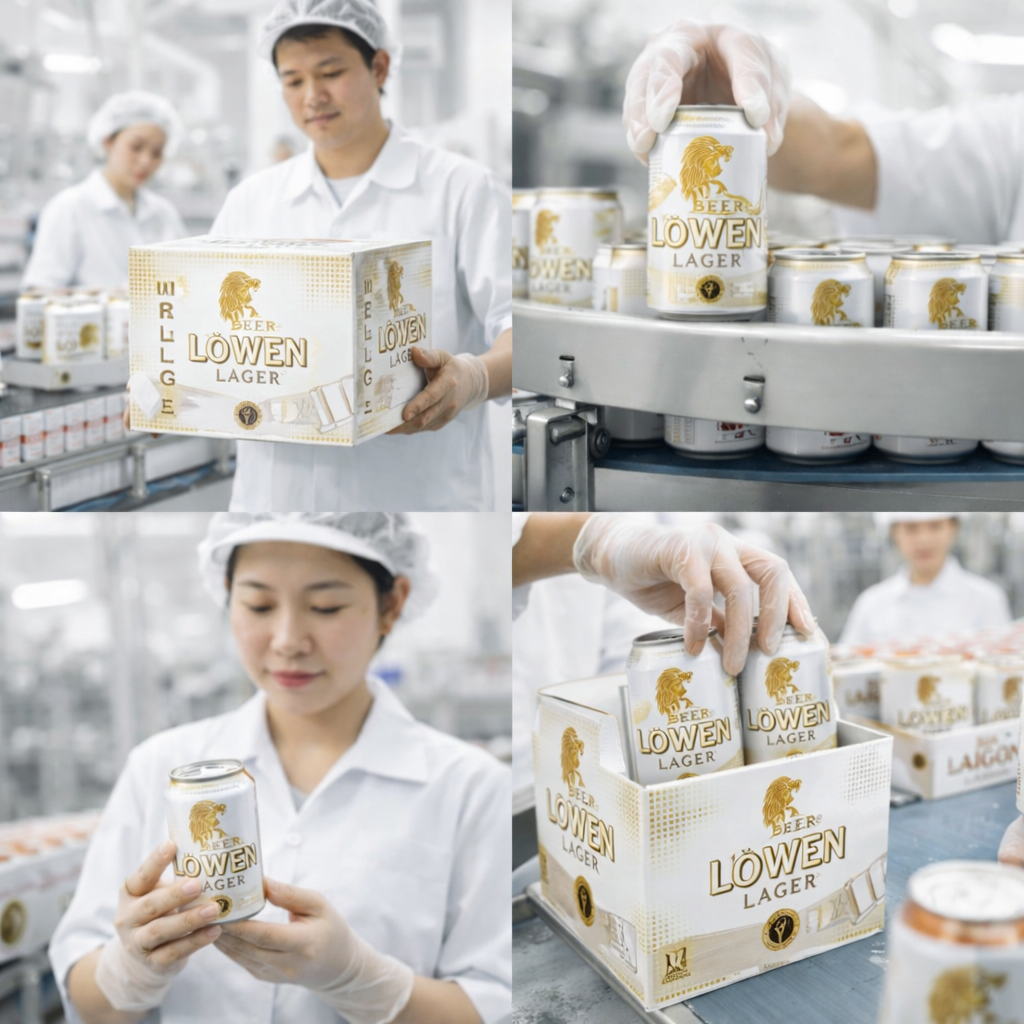
Modern breweries such as SMB have invested in both canned beer production lines and bottled beer production lines, allowing brands to flexibly choose the most suitable packaging format for their business strategy instead of being limited by equipment capabilities.
Current trends show that:
-
Cans are growing strongly in the supermarket and e-commerce channels.
-
Bottles still maintain an advantage in restaurants, hotels, and the gift segment.
Therefore, when asking whether to choose canned beer or bottled beer, businesses need to consider their brand positioning and distribution channel objectives from the very beginning.
Technical Analysis – Beer Quality Inside Is the Core Factor
First and foremost, packaging must protect the product from factors that can reduce quality.
The Impact of Light and UV
Light, especially UV rays, can break down compounds in hops, causing an unpleasant odor known as the Skunky effect.
-
Aluminum cans block light almost completely.
-
Clear glass bottles do not protect against UV.
-
Brown bottles provide better protection, but not absolute protection.
For IPA lines rich in hop aroma, limiting UV exposure is an important factor in maintaining beer quality.

Oxidation Risk
Oxidation causes beer to lose its freshness and flavor. Aluminum cans, when filled with the proper technique, significantly reduce the amount of dissolved oxygen.
At breweries with modern filling systems such as SMB, the process of controlling dissolved oxygen and microbiology is carried out strictly to ensure consistency between production batches in the beer OEM manufacturing model.
The Misconception That “Bottled Beer Tastes Better”
In reality, the perception of “better taste” often comes from psychology and habit. In blind tests, most consumers cannot tell the difference if the product is stored properly.
From a purely technical perspective, cans have the advantage in protecting against light and oxygen, while bottles offer an advantage in emotional appeal and brand image.
Need a Detailed Technical Analysis for Your Private Label Beer Line?
The choice between canned beer contract manufacturing and bottled beer production should be based on a specific analysis of the recipe and distribution channels.
OEM Consultation Hotline: (+84) 94 1127575
Email: oem@biasaigonmt.com
The Economics and Logistics Equation
When implementing beer OEM manufacturing, total cost is not only about the production price but also about operations.
Weight and Transportation
Aluminum cans are significantly lighter than glass bottles. This helps to:
-
Reduce logistics costs
-
Increase the number of units per pallet
-
Optimize fuel costs
Glass bottles are heavier and more fragile, increasing insurance costs and product loss.
Warehouse Space
Cans are easier to stack and optimize warehouse space. At large production scale, this difference directly affects operating costs.
Recyclability
Aluminum can be recycled many times without losing quality. This aligns with the sustainability trend that many brands are pursuing.
Summary Comparison Table
| Criteria | Canned Beer | Bottled Beer |
|---|---|---|
| UV Protection | Almost absolute | Depends on bottle color |
| Oxidation Risk | Low | Medium |
| Weight | Light | Heavy |
| Breakage Risk | Low | High |
| Logistics Optimization | Very good | Limited |
| Premium Image | Medium | High |
Thanks to its integrated investment in both can filling lines and bottle filling lines, SMB can support brands in choosing the most suitable solution instead of imposing a choice based on existing production capacity.

Marketing and Consumer Experience
Brand Positioning
Bottled beer is associated with a traditional image, dining tables, and restaurant settings.
Canned beer represents convenience and dynamism, suitable for supermarkets and outdoor consumption.
Therefore, the question of canned beer or bottled beer depends largely on the brand strategy.
Printing Surface Area
Aluminum cans allow 360-degree full-body printing, turning the product itself into a powerful visual marketing tool. This is especially important for new brands that still lack brand recognition.
Glass bottles depend on labels and mold designs, which often require larger MOQ (Minimum Order Quantity) when creating customized designs.
User Experience
Cans chill faster and are safer for large events or crowded environments.
Bottles create a more premium perception and are suitable for table service environments.
In practice, many brands collaborating with SMB implement both packaging formats simultaneously to optimize different distribution channels.
Strategic Choice Based on Business Objectives
There is no universal answer to the question of canned beer or bottled beer. The right decision depends on:
-
The beer style (Lager, IPA, Stout, etc.)
-
The price segment
-
The distribution channel
-
The scale of investment capital
If the focus is on supermarkets and wide distribution networks, canned beer OEM manufacturing often optimizes cost efficiency and operations.
If the positioning is premium with restaurant channels, bottled beer production may increase perceived value of the brand.

With a modern brewery infrastructure and extensive experience in implementing beer OEM manufacturing for multiple brands, SMB provides flexible solutions ranging from beer recipe development, packaging selection, to operational cost optimization.
Choosing the Right Packaging – Protecting Profitability and Long-Term Brand Value
A successful beer OEM project does not depend solely on the beer recipe, but also on the right beverage packaging strategy.
If you are considering between canned beer and bottled beer, consult with industry experts to receive recommendations aligned with your specific business objectives.
Company: Saigon Beer – Central Vietnam Joint Stock Company (SMB)
Address: 01 Nguyen Van Linh Street, Tan An Ward, Buon Ma Thuot City, Dak Lak Province, Vietnam
OEM Consultation Hotline: (+84) 94 1127575
Email: oem@biasaigonmt.com
Website: https://oem.biasaigonmt.com/
Choosing the right beer packaging today will create a sustainable foundation for your Private Label beer brand in the future.