

In the increasingly competitive beer market, many distribution businesses, F&B chains, and new beverage brands often face an important decision: whether to import beer from abroad or develop private label beer through the contract manufacturing (OEM) model.
For many years, imported beer was considered an easy choice to build a premium image. However, as the market evolves and demand for products with unique identity grows, many businesses are beginning to consider beer contract manufacturing at domestic breweries.

To make the right choice, it is essential to consider the total cost structure, including production costs, logistics, marketing, and the ability to build a long-term brand. Comparing imported beer with contract-manufactured beer is not just about price—it also involves the company’s overall business strategy.
Imported beer – a familiar choice with significant costs
For many years, imported beer has been seen as an attractive market segment. Brands from Europe, Japan, or the United States are often associated with a premium image, long history, and an international consumption style. This makes it easier for distribution businesses to build product prestige when introducing imported beer into their system.
However, behind that brand image lies a complex cost structure. When importing beer from abroad, businesses must pay not only the production cost but also a range of additional expenses such as international shipping, cargo insurance, import duties, and customs procedures.
Moreover, beer is sensitive to temperature and transit time. Long logistics chains can increase storage costs and affect product freshness, which is particularly critical for lager or craft beer that require strict storage conditions.
As a result, by the time the product reaches consumers, the cost of imported beer is often significantly higher than the ex-factory price at the brewery.
Beer OEM – a model to optimize cost structure
In contrast to the import model, beer contract manufacturing (OEM) allows businesses to produce products locally at breweries with existing production capacity. In this model, the business develops its private label beer and places production orders directly at the brewery, instead of importing finished products from abroad.
This approach eliminates many costs associated with the international supply chain. Without long-distance shipping, import taxes, or logistics risks, the product cost can be better controlled.
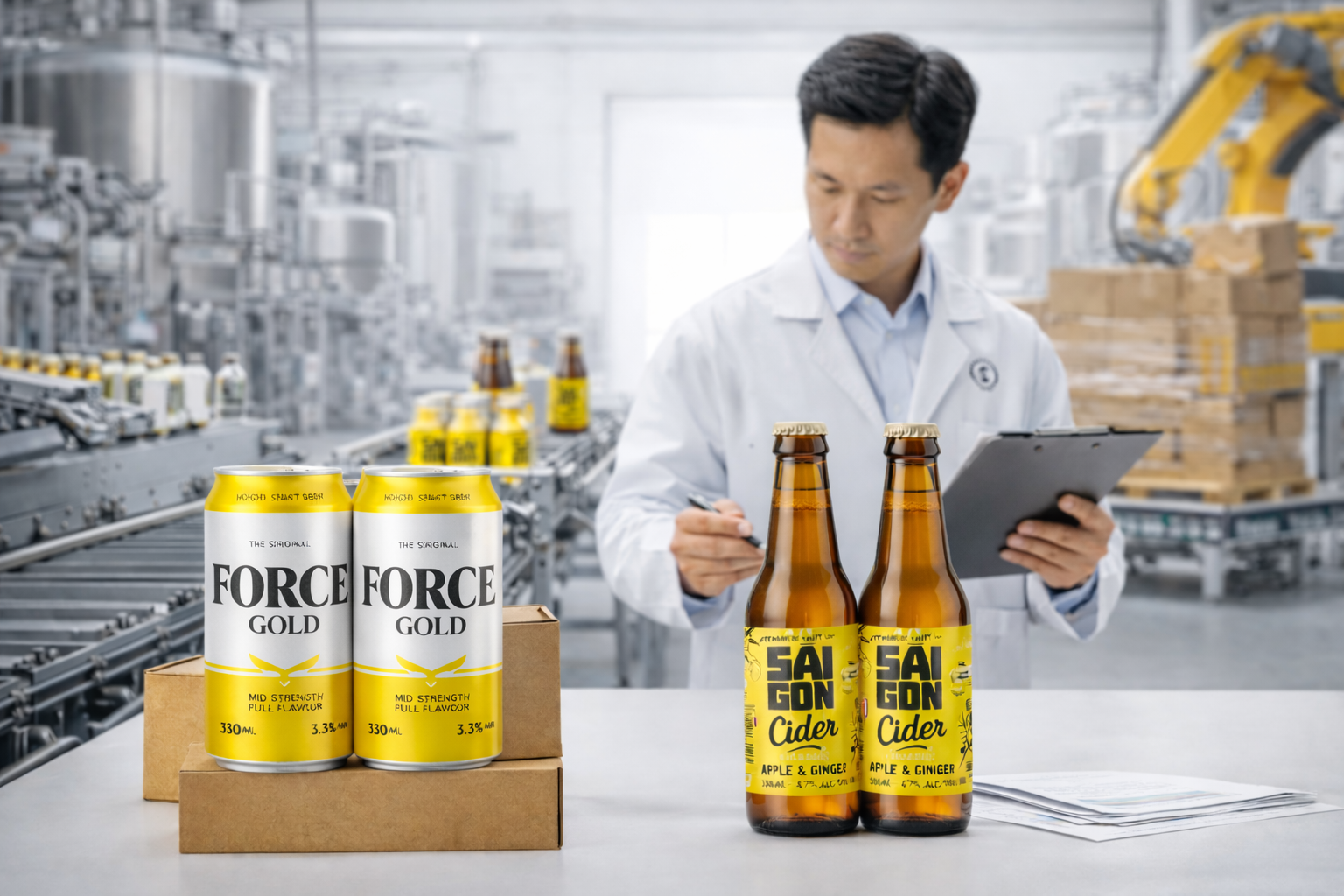
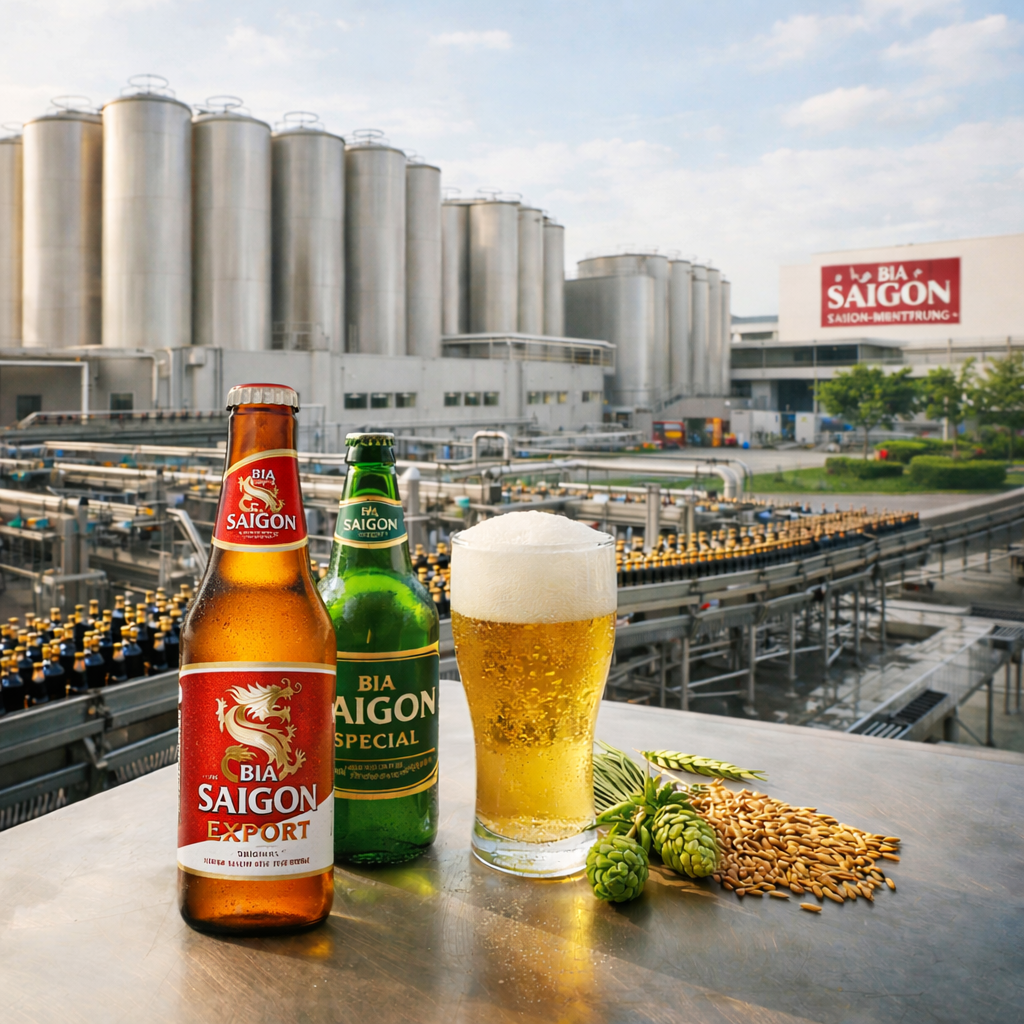
In Vietnam, one of the companies capable of providing this service is Saigon Beer – Central Region Joint Stock Company (SMB). With a modern brewery system and fully integrated production lines, SMB can support businesses in developing private label beer from recipe development to mass production.
Producing locally also allows businesses greater flexibility in adjusting production volume, packaging design, and product strategy according to market demand.
Comparing the cost structure between imported beer and OEM beer
Looking closely at the cost structure, these two models differ in several key aspects.
For imported beer, costs typically include the ex-factory price at the foreign brewery, international shipping, cargo insurance, import duties, and domestic logistics costs. These factors significantly increase the product price before it reaches consumers.
In contrast, OEM beer has a simpler cost structure. Costs mainly involve production, packaging design, and domestic distribution. Without international logistics expenses or import taxes, the product price is generally more competitive.
Additionally, the OEM model offers financial advantages. Businesses do not need to invest in a brewery but only place production orders in batches. This shifts most long-term capital investment into flexible operating costs, reducing financial pressure during the early stages.
Brand-building potential – an important factor beyond cost
Although cost is important, the choice between imported beer and contract-manufactured beer also depends on the company’s brand strategy.
When importing beer, the business typically acts only as a distributor for an existing brand. This saves time in brand development but makes the business dependent on the image and strategy of the foreign brewery.
On the other hand, developing beer through the OEM model allows the business to fully own its brand. From the beer recipe and packaging design to the product story, everything can be built according to the company’s unique vision.
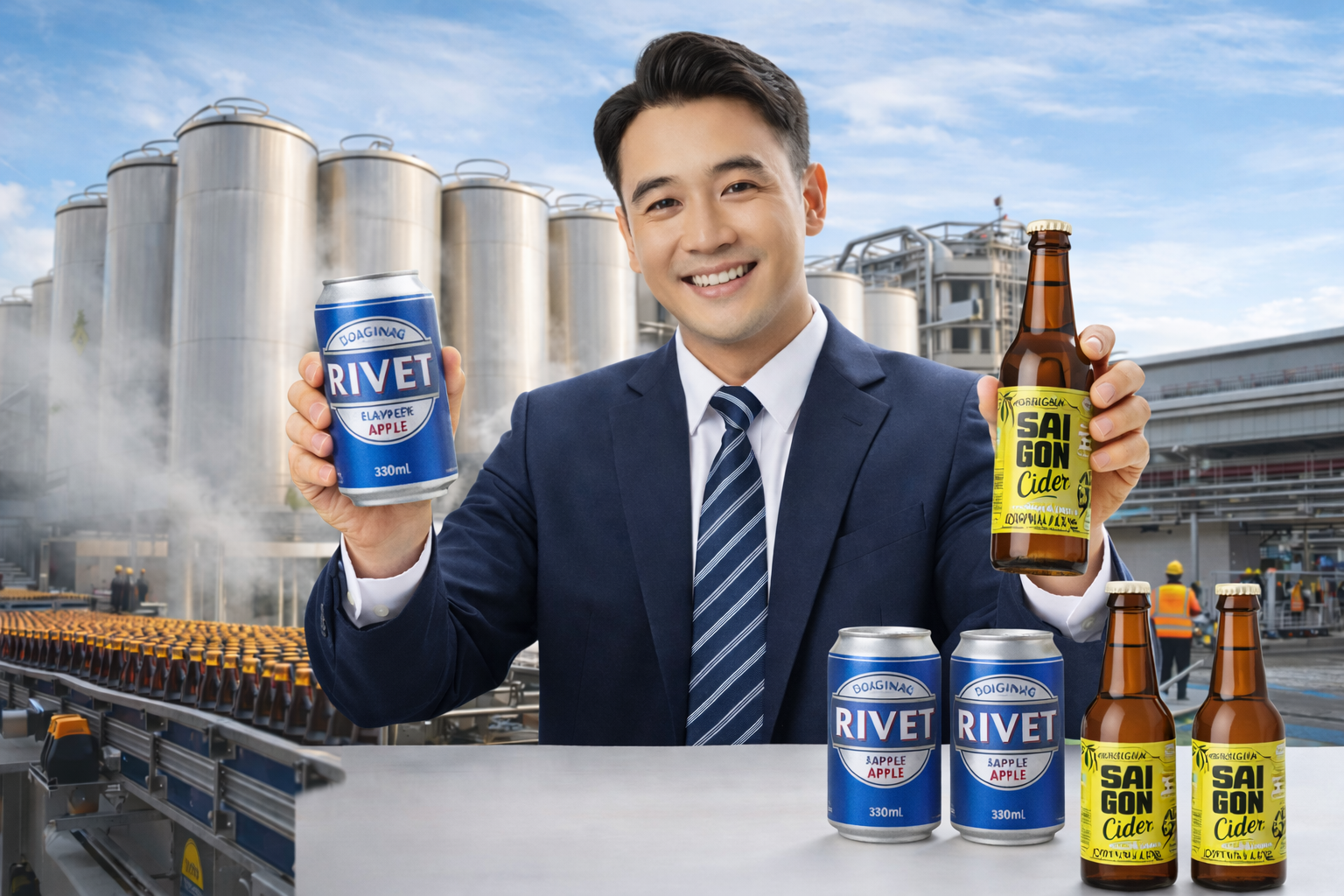
This is especially important for F&B chains, distribution businesses, or brands aiming to develop products with a unique identity. A private label beer can become a powerful marketing tool while creating a long-term competitive advantage.
The role of the manufacturing partner in cost and quality management
In the OEM model, selecting the right manufacturing partner is a key factor in the success of the project. The brewery must have strong technical capabilities, a robust quality control system, and sufficient production capacity to ensure consistent beer quality.
Saigon Beer – Central Region Joint Stock Company (SMB) is one of the breweries in Vietnam capable of executing large-scale OEM projects. The company operates modern production lines and adheres to international quality management standards such as ISO 9001, ISO 22000, and ISO 14001.
With many years of experience in the beer industry, SMB can support businesses throughout the product development process, from recipe research and flavor testing to commercial production.
The combination of the brewery’s production capabilities and the business’s market strategy helps optimize both costs and product quality.
Beer contract manufacturing – an optimal solution for many businesses
Comparing imported beer and OEM beer shows that each model has its own advantages. Imported beer suits businesses that want to quickly bring international products to the market. However, logistics costs and import duties can significantly increase the product price.
In contrast, the beer OEM model allows businesses to better control their cost structure while creating opportunities to build their own brand. By leveraging the production capabilities of large breweries such as Saigon Beer – Central Region, businesses can develop private label beer with a unique identity at competitive costs.
In an increasingly diverse beer market, the choice between importing and contract manufacturing is not only a matter of cost but also a strategic decision regarding brand and market positioning.
If your business is considering developing private label beer with optimal costs, partnering with a brewery that has strong production capabilities and industry experience is crucial.
Saigon Beer – Central Region Joint Stock Company (SMB) currently offers full-service beer OEM, from recipe development and packaging design to production and packaging under the business’s own brand.
Contact SMB to get support in building a private label beer solution tailored to your business strategy:
Company: Saigon Beer – Central Region Joint Stock Company (SMB)
Address: 01 Nguyen Van Linh Street, Tan An Ward, Buon Ma Thuot City, Dak Lak Province
OEM Consultation Hotline: (+84) 94 1127575
Email: oem@biasaigonmt.com
Website: https://oem.biasaigonmt.com/