

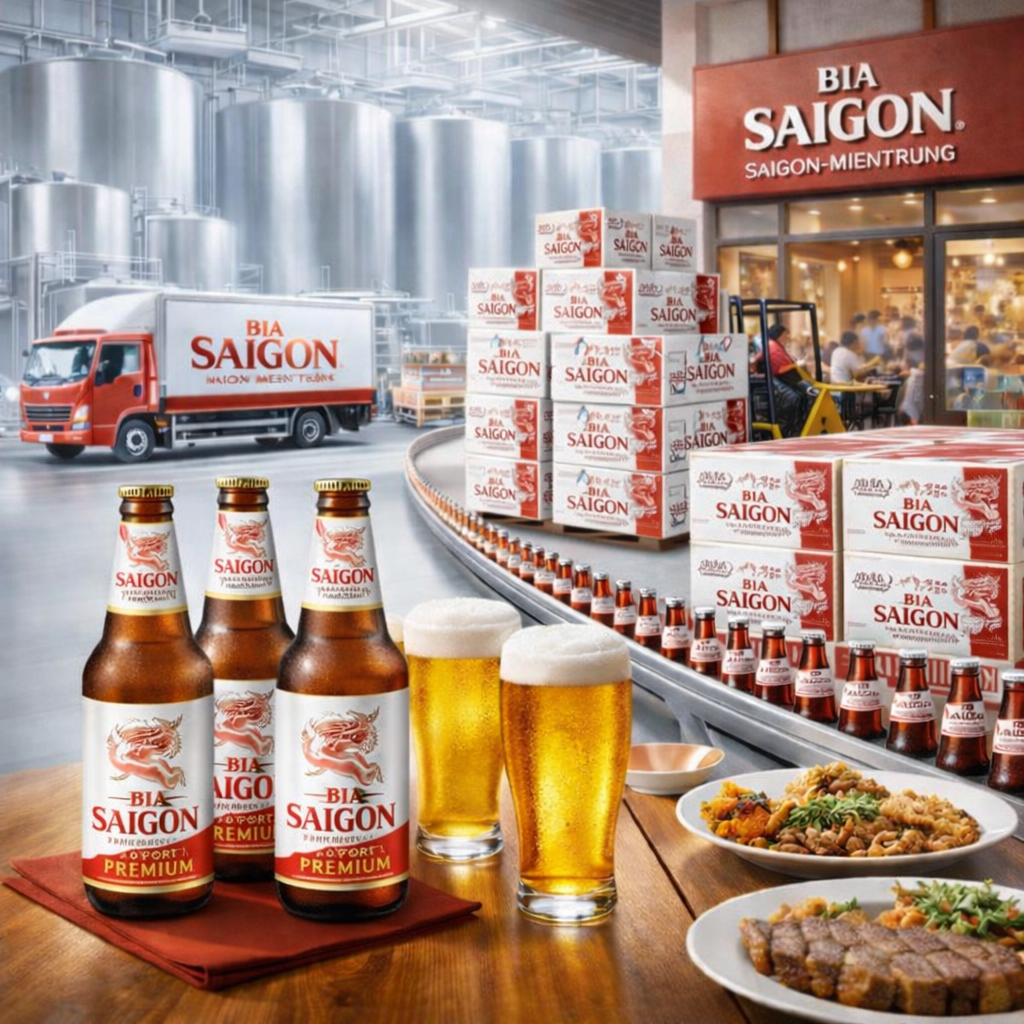
From a financial perspective, complete dependence on major beer brands places restaurants in a passive position. Purchase prices are controlled by suppliers, while selling prices are constrained by market pressure. As a result, profit margins continue to thin, forcing many venues to increase sales volume rather than value per bill. However, boosting volume in a highly competitive environment only inflates operating costs and heightens financial risk.
Private-label beer manufacturing is precisely the way to break this loop. When a restaurant owns its own beer, it is no longer selling a “commodity” product but a piece of identity. This allows the restaurant to step out of price-based competition and shift the game toward experience and brand—an arena where industrial beer conglomerates cannot easily dominate through marketing budgets alone.
Private-label beer – the new “soul” of the dining experience
In modern F&B, diners do not merely consume food or beverages; they consume stories and emotions. A beer bearing the restaurant’s name, introduced as “the house beer,” instantly sparks curiosity. A common consumer instinct is to try something that cannot be found elsewhere. This deliberate sense of scarcity is what makes private-label beer the new “soul” of the dining experience.
From a brand equity perspective, private-label beer functions as a powerful brand touchpoint. Every time a guest orders a beer, they are interacting directly with the restaurant’s name and visual identity. Unlike selling another company’s beer—where the restaurant brand fades into the background—private-label beer continuously reinforces brand recognition throughout the meal. Over time, that flavor becomes a memory associated with the venue and its service style, creating an emotional bond that is extremely difficult to replace.
From a business standpoint, this bond translates into repeat behavior. Guests may forget a particular dish, but they often remember “the beer that only this place has.” This forms the foundation for sustainable growth, as the cost of retaining customers is always significantly lower than the cost of acquiring new ones.
The art of food pairing and R&D capability at SMB
Food pairing was once the exclusive domain of wine, but in the context of modern restaurants and pubs, beer has demonstrated far greater flexibility. Beer can be light, crisp, full-bodied, sour, fruity, or roasted, allowing it to pair with a wide range of culinary styles. The problem is that mass-produced industrial beers are rarely designed to complement the specific menu of a particular restaurant.
OEM manufacturing at SMB enables deep flavor customization. Bitterness, alcohol content, hop aroma, and finish can all be adjusted to support a signature menu. A seafood restaurant may opt for a light beer with a clean finish to highlight freshness, while a grill-focused venue may require a malt-forward beer to balance richness. This pairing creates an exclusive culinary combination that cannot be replicated simply by sourcing similar ingredients.
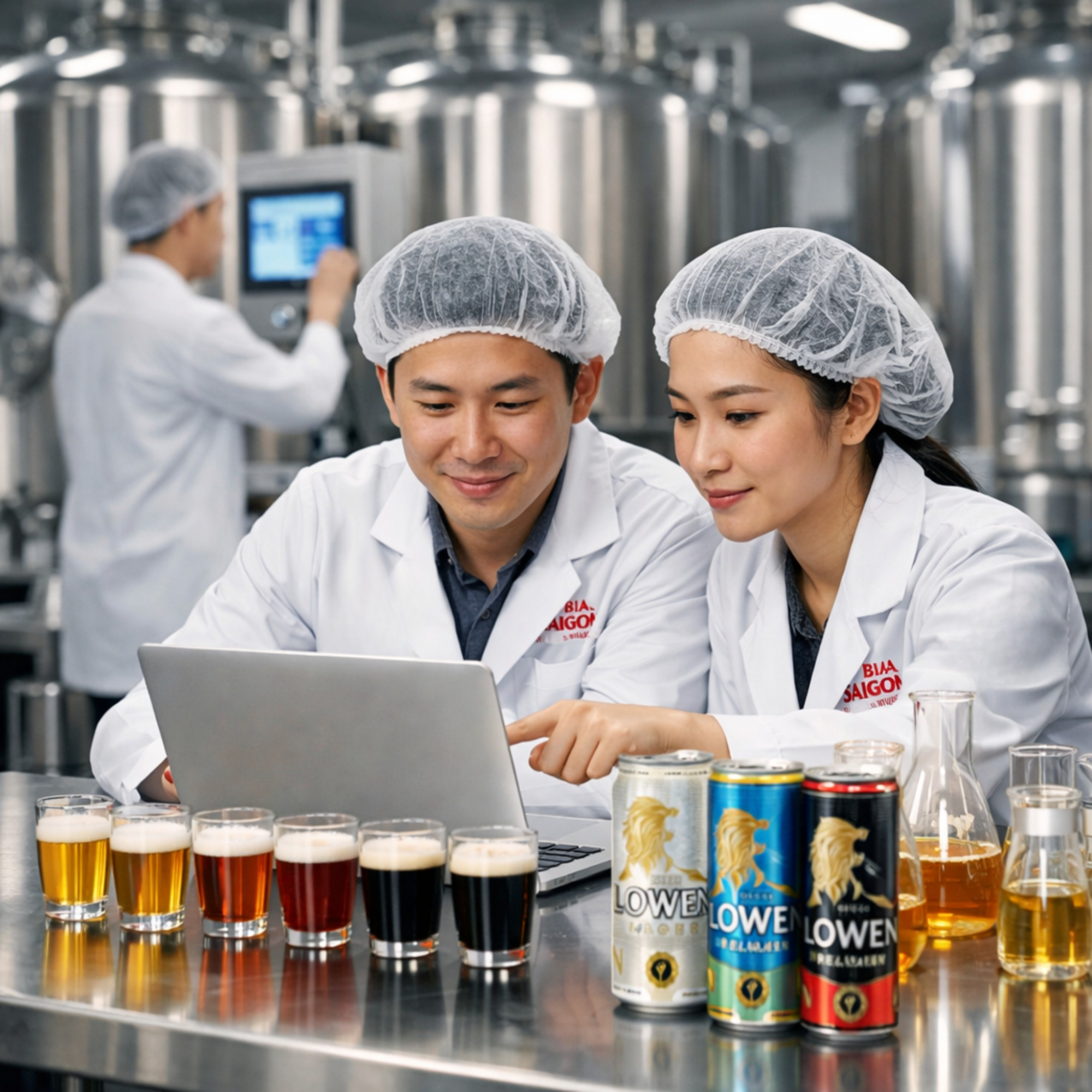

From a financial management perspective, this represents a shift from reselling someone else’s product to selling an asset of one’s own. Each private-label beer SKU not only generates profit per unit sold, but also creates controllable margins—a critical factor that helps restaurants better withstand market volatility.
“Naturally viral” marketing as a growth engine
In the age of social media, the most effective marketing often comes not from paid advertising, but from real customer experiences. When a guest checks in with a beer bottle bearing the restaurant’s logo, they are creating promotional content with a level of credibility far higher than any banner ad. This effect is particularly strong among younger pubs and restaurants with a clearly defined concept.
Private-label beer becomes an ideal visual prop for check-ins. It is distinctive enough to attract attention, yet closely tied to the brand to convey a clear message. Every photo and every story shared becomes an organic brand appearance in the feeds of friends and the broader dining community.
Over time, this effect creates a positive loop: good experiences lead to sharing, sharing sparks curiosity, and curiosity brings in new customers. This is a sustainable, low-cost form of marketing with strong viral potential—especially well suited to modern pubs and restaurants.
Packaging – Elevating space and bill value
Packaging is not merely a container for beer; it is part of the spatial experience. The growing use of tall, sleek cans or custom-designed glass bottles reflects a trend toward modernity and refinement. When placed on the table, an aesthetically pleasing beer bottle can completely change the perception of a meal, making the experience feel more “worth the price” in the eyes of guests.
From a financial standpoint, enhancing perceived value allows restaurants to increase average bill value without increasing portion sizes or ingredient costs. Private-label beer with thoughtfully designed packaging enables a venue to position itself in a higher segment—even when the core business model remains that of a casual pub.
In practice, realizing these advantages requires a manufacturing partner capable of aligning flavor, packaging, and economics. SMB supports restaurants and pubs in building private-label beer lines that function not only as beverages, but as strategic assets within the HoReCa business model.
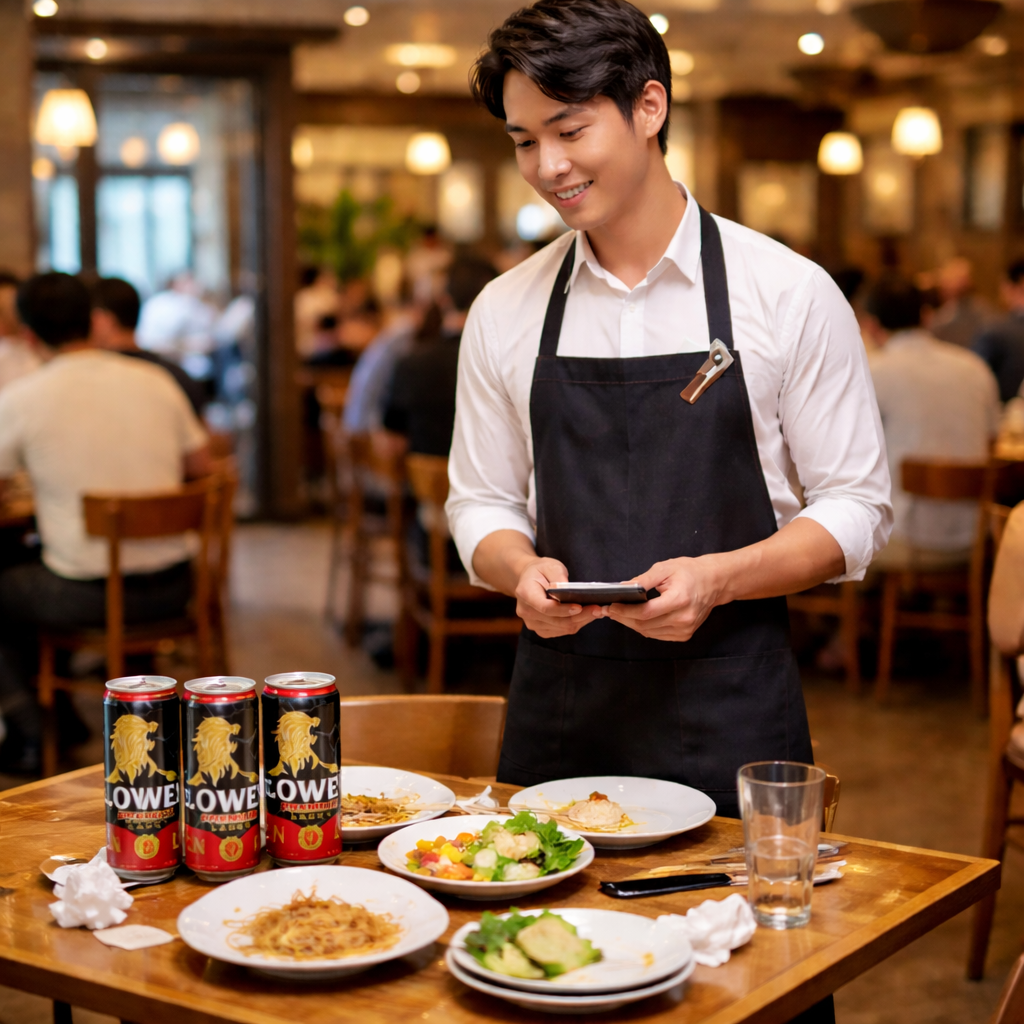
More importantly, consistent packaging across every table setting contributes to building a professional brand image. This is especially valuable for expanding restaurant chains, where consistency is the foundation of strong brand recognition.
Commitment to international quality standards and sustainability
In the F&B industry, nothing is more important than safety and consistency. Even a minor quality incident can destroy a reputation that a restaurant has built over many years. Công ty Cổ phần Bia Sài Gòn – Miền Trung operates in compliance with international standards such as FSSC 22000 and ISO, ensuring that private-label beer meets stringent food safety requirements.
From a strategic perspective, international certifications are not merely paperwork—they are a protective shield for the restaurant brand. They allow restaurants to expand with confidence, serve larger customer volumes, and avoid risks related to quality failures or supply disruptions.
This long-term stability enables restaurants to focus on what matters most: developing experiences and building their brand. When quality is secured at the source, private-label beer is not just a short-term profit solution, but a strategic pillar for sustainable growth.
Start your private-label beer project for your restaurant or eatery
- Organization: Joint Stock Company Saigon Beer – Central Region (SMB)
- Head office address: 01 Nguyen Van Linh Street, Tan An Ward, Buon Ma Thuot City, Dak Lak Province
- OEM consultation hotline: (+84) 94 1127575
- Dedicated email: Oem@biasaigonmt.com
- Official website: https://oem.biasaigonmt.com/
Private-label beer manufacturing with Saigon Beer – Central Region is not merely a production decision, but a strategic move that helps modern restaurants and pubs define their brand identity, optimize profitability, and break free from price-based competition.