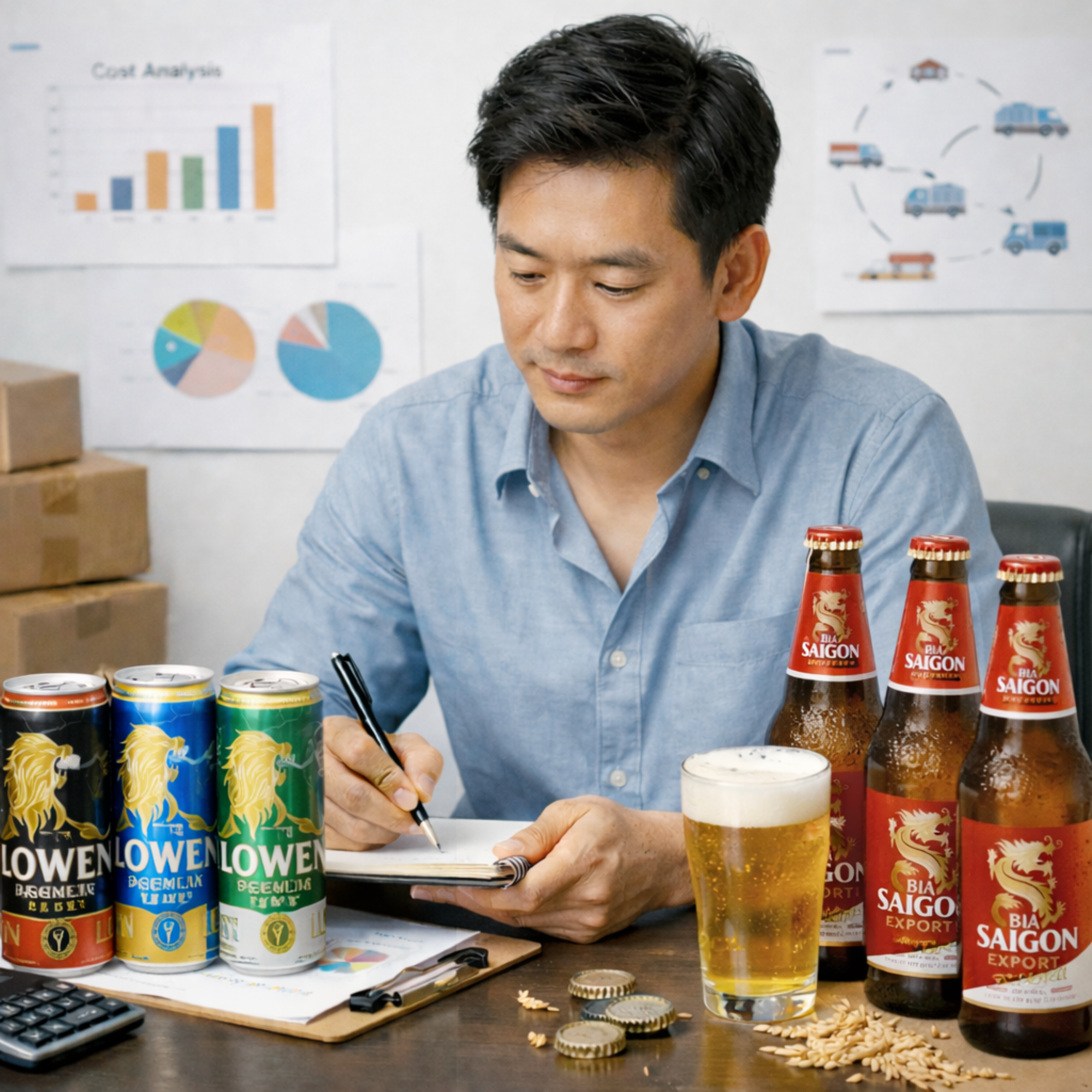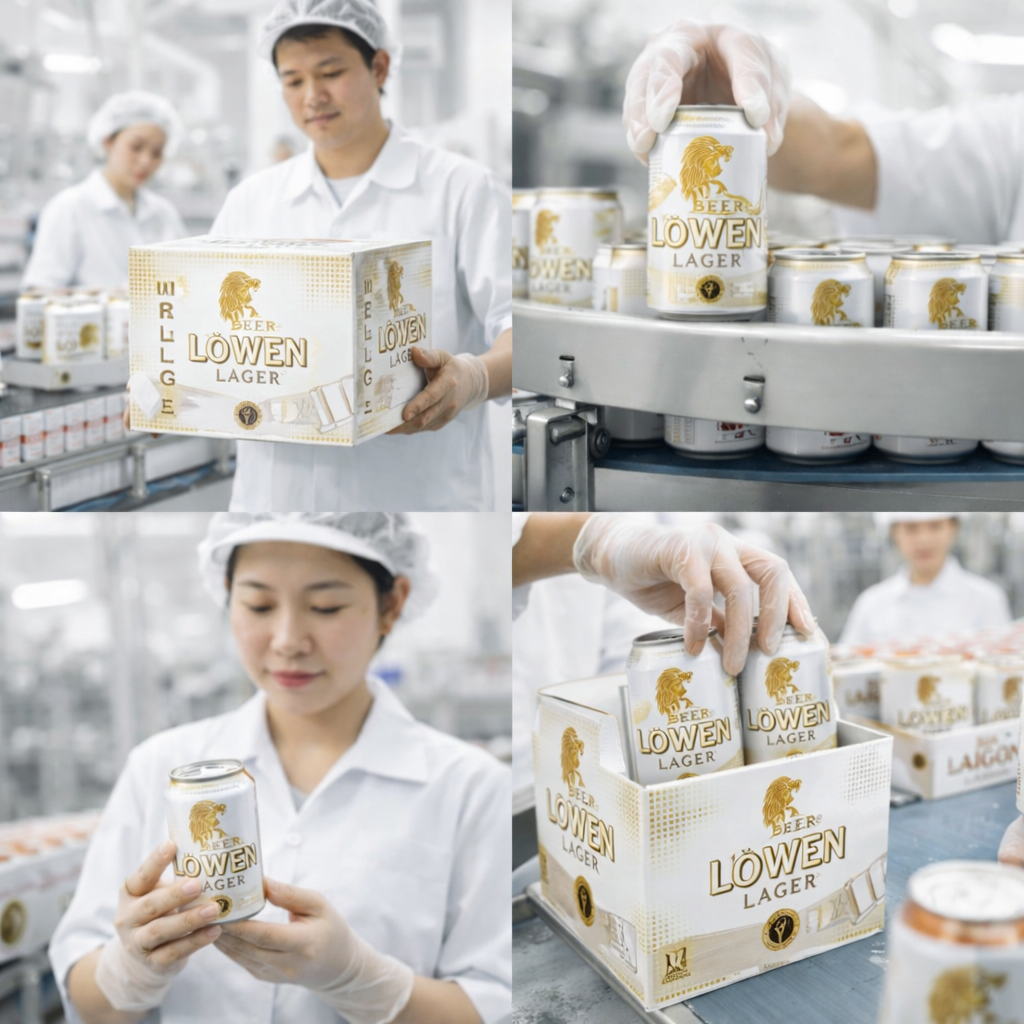


In any private label beer OEM project, beer packaging costs are not merely a superficial investment — they are one of the key factors that directly determine the beer selling price, profit margins, and overall business performance. In today’s highly competitive beer market, especially when partnering with capable beer OEM manufacturers such as Saigon Beer Central Region Joint Stock Company (SMB), understanding the cost structure and optimization strategies can create a significant competitive advantage.
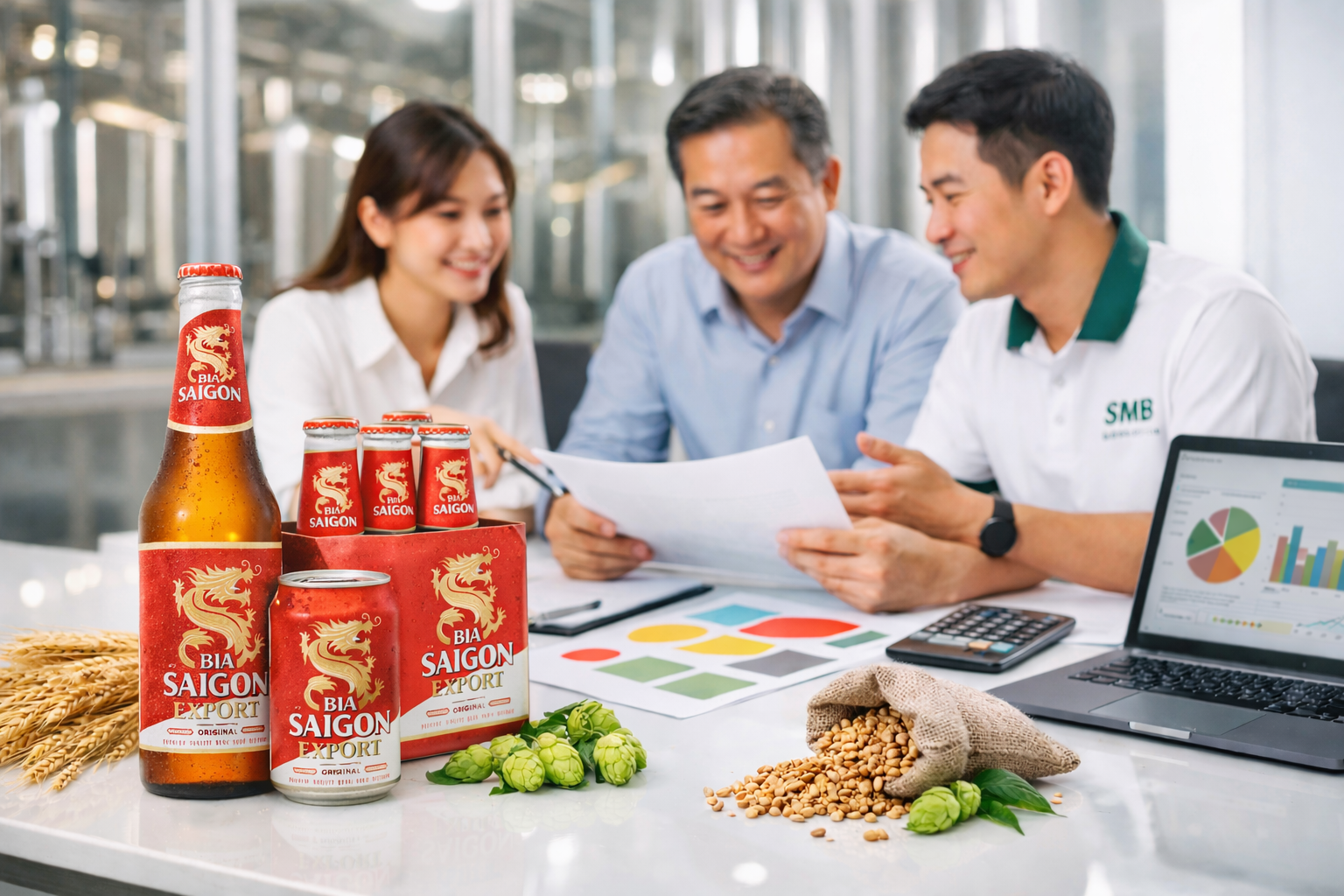
SMB is a manufacturer specializing in beer OEM, alcoholic beverage OEM, and soft drink OEM production, operating modern production lines from filling to packaging and labeling, ensuring international standards. SMB provides end-to-end OEM services, from design to quality control, helping brands optimize costs and resources.
Packaging – Not just a “shell” but the company’s cash flow
Beer packaging costs typically account for a significant portion of COGS (Cost of Goods Sold), usually ranging from 35–45% of total beer production costs. This makes beer packaging a potential “dead cost” if not managed effectively.
Typical cost structure within COGS
- Beer packaging costs: 40%
- Beer raw materials (malt, hops, yeast): 30%
- Marketing, distribution & logistics: 20%
- Others (labor, testing, overhead): 10%
The pie chart above illustrates the contribution of each cost category to total COGS.
Why is packaging sometimes more expensive than the beer itself?
- Aluminum cans depend on global metal prices.
- Glass bottles are heavy and fragile, requiring careful handling.
- Custom printing and design require molds and high MOQ (Minimum Order Quantity).
- Secondary packaging (cartons, pallets, shrink wrap, etc.) accumulates additional costs.
Therefore, for a single unit product, the cost of protection and presentation can sometimes exceed the cost of the beer ingredients inside.
Cost structure of canned beer and bottled beer
The choice of beer packaging format directly affects COGS, logistics, inventory, and retail pricing.
Cost components of canned beer
- Aluminum can body and lid
- Direct printing or printed sleeve
- Carton boxes / pallet liners
- Shrink wrap packaging
Aluminum cans offer advantages such as lightweight structure, stackability, and transportation efficiency. However, direct printing on cans often requires printing plates and higher minimum volumes compared to bottle labeling, increasing initial setup costs.
When partnering with beer OEM manufacturers like SMB, brands can optimize designs to align with production lines and large-scale printing capacity, reducing beer packaging costs per unit.
Cost components of bottled beer
- Glass bottles
- Metal caps
- Paper labels or plastic labels
- Carton boxes with dividers
- Pallets & shrink wrap
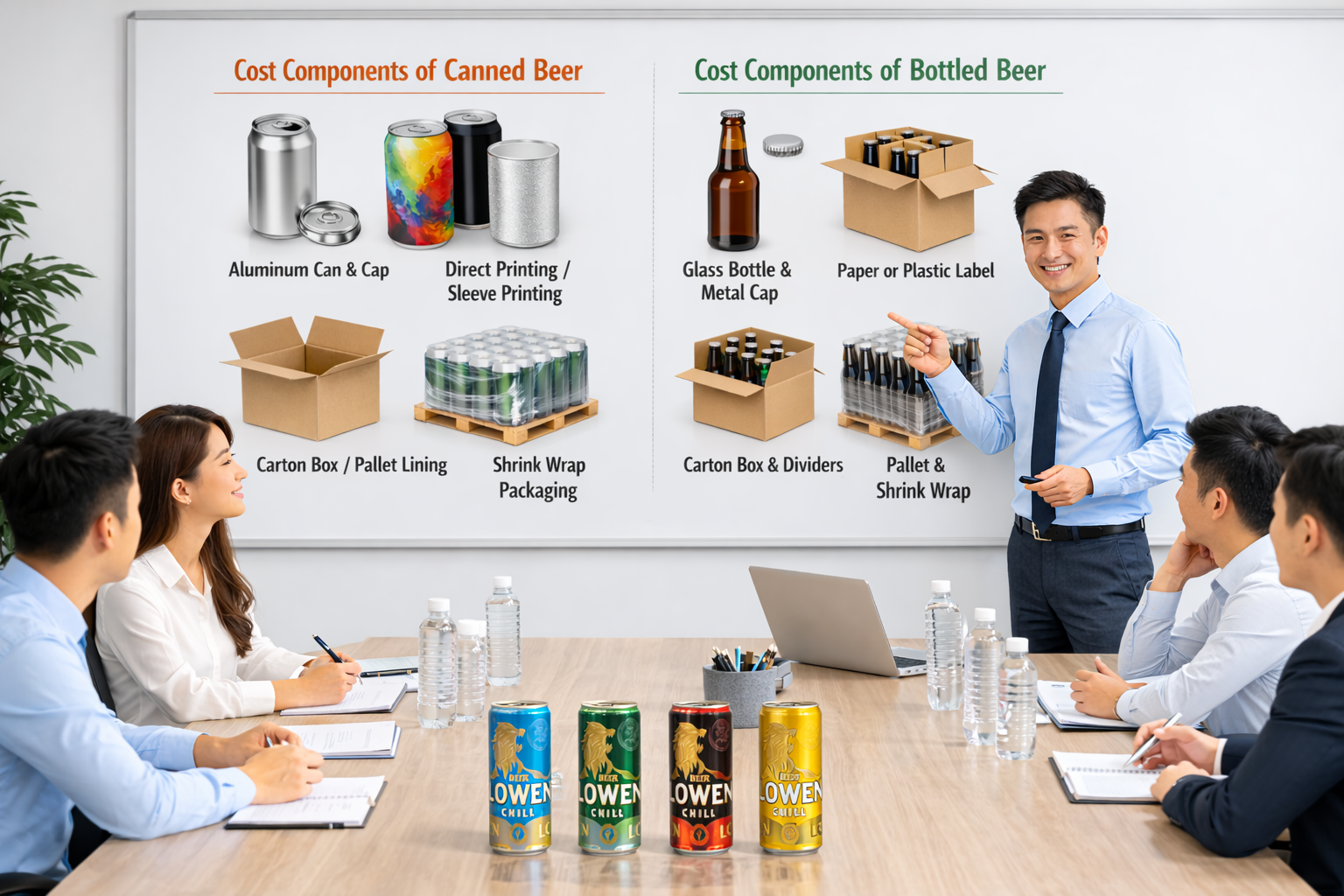
In bottled beer production, labels are often cheaper than direct printing, but they carry risks such as misalignment, peeling, and display defects, which can impact product presentation quality and lead to additional post-processing costs.
Hidden impact from logistics and warehousing
Beer packaging costs are not only present in the production stage but also significantly affect:
Transportation costs
Glass bottles are much heavier than aluminum cans, which increases freight costs. In large markets like Vietnam, transportation can account for a substantial portion of logistics costs—typically around 10–15% of total production costs.
Therefore, choosing canned beer helps reduce this burden. Aluminum cans are lighter and more stackable, optimizing shipment volume per trip and lowering cost per unit.
Warehouse space and working capital
Bulky beer packaging requires more storage space, increasing warehousing expenses. This directly impacts cash flow and reduces ROI (Return on Investment) for the project.
A well-optimized packaging design and selection can improve cash flow, reduce inventory levels, and bring the beer selling price to a more competitive level.
Need consultation to optimize logistics & packaging costs?
If you are balancing beer packaging costs and logistics in a private label beer OEM project, experts can provide detailed cost analysis to optimize profit margins.
OEM Consultation Hotline: (+84) 94 1127575
Email: oem@biasaigonmt.com
Loss risks and “hidden costs” in production
Costs do not always appear clearly in pricing tables—many are “hidden” if not properly controlled.
Two main risk groups
Loss due to breakage:
Glass bottles are more fragile, leading to higher loss rates during transportation and handling. This affects actual sellable volume and increases hidden costs.
Printing defects in cans:
A design error in can printing can render entire batches unusable, forcing re-production. This not only increases costs but also delays product launch timelines.

In addition, environmental treatment and recycling (collection and processing of packaging waste) are also “hidden” costs that many new brands often overlook.
Partnering with an OEM such as SMB helps businesses reduce this risk because the factory has quality control systems, waste treatment systems, and international standard certifications related to packaging and food safety.
Strategies to optimize packaging costs to increase competitiveness
To reduce beer packaging costs and optimize the beer selling price, consider the following strategies:
Negotiate MOQ with the OEM
MOQ – the minimum order quantity for custom designs – is a key factor determining the unit price of printed packaging or labels. Flexible negotiation helps reduce unit costs based on actual production volume.
SMB provides flexible OEM services for both small and large projects, with production and printing processes that meet international standards, helping brands avoid the burden of excessively high MOQ requirements.
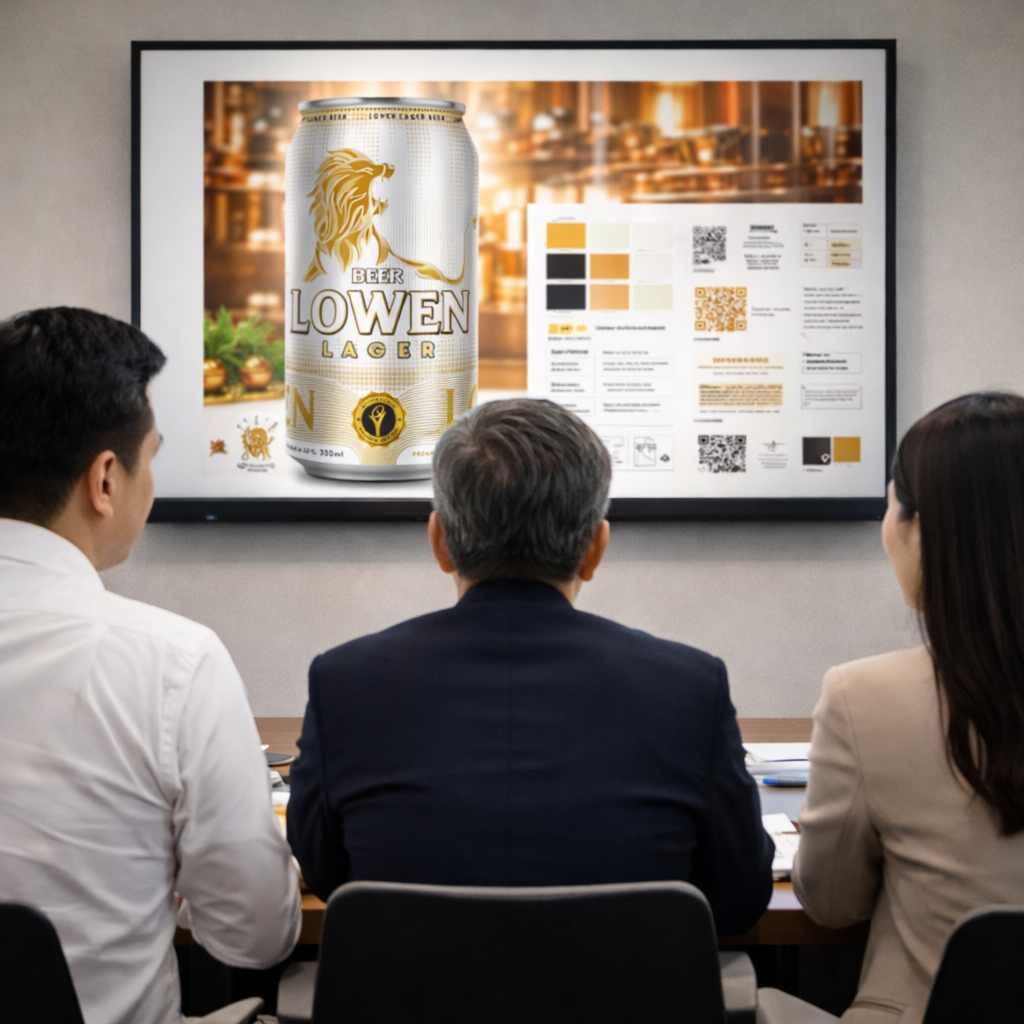
Simplify design to reduce printing ink costs
By optimizing the design and the number of print colors, you can directly reduce printing costs. Minimalist design not only lowers ink expenses but also improves packaging recognition — a plus in the beer pricing strategy.
Choose materials that match product positioning
Mass-market segment: prioritize canned beer to optimize logistics costs.
Premium segment: consider the added experience factor — while still ensuring financial efficiency.
Conclusion and advice for private label beer investors
Packaging costs are an important part of the financial picture in the beverage industry, especially when implementing a private label beer OEM project. Packaging is not only a tool to protect the product, but also a factor that determines the beer selling price, profit margins, and competitiveness in the market.
Optimizing costs from packaging selection to MOQ negotiation, logistics management, and print design will help brands:
- Significantly reduce COGS
- Increase price competitiveness
- Optimize working capital and improve ROI
When partnering with an experienced OEM brewery like SMB — with production, filling, and quality control capabilities that meet international standards — investors will have a strong foundation to build an effective private label beer brand.
Get detailed consultation today
If you are considering launching a private label beer OEM project or want to restructure beer packaging costs to improve profit margins:
Company: Saigon Beer Central Region Joint Stock Company (SMB)
Address: 01 Nguyen Van Linh, Tan An Ward, Buon Ma Thuot City, Dak Lak Province
OEM Consultation Hotline: (+84) 94 1127575
Email: oem@biasaigonmt.com
Website: https://oem.biasaigonmt.com/
The right strategy from the start will help your brand grow sustainably in the long term.