

In the context of an increasingly competitive beverage industry, launching Private Label beer through beer OEM manufacturing or beer contract brewing has become a strategic choice for many businesses. Instead of investing in a large-scale brewery, brands focus on marketing, distribution, and brand positioning, while production is handled by a specialized beverage OEM partner.
However, behind the opportunity for rapid growth lie several beer production risks that can directly affect cash flow, brand reputation, and long-term business sustainability. This article provides an in-depth analysis of the most common risk categories and effective prevention strategies from the perspective of strategic consulting in the beverage industry.

Private Label Beer Trend – A Growth Accelerator or an Investment Trap?
The Vietnamese beer market is rapidly shifting from the traditional brewery ownership model toward an asset-light model. Launching a Private Label beer allows businesses to:
-
Shorten time-to-market for new products.
-
Reduce initial CAPEX investment.
-
Leverage existing brewing technology and certifications from established breweries.
-
Test multiple brand concepts with lower financial risk.
This trend is particularly suitable for startups, F&B chains, and distributors looking to develop their own labels. However, focusing too heavily on the initial financial benefits while neglecting production control, legal compliance, and supply chain management can quickly turn opportunity into a burden.
The key issue is not whether a company chooses beer OEM manufacturing or builds its own brewery, but rather how effectively the business manages risks from the very beginning of project design.
Quality and Recipe Risks – The Foundation of Every Beer Brand
In the beer industry, quality is not only a competitive factor—it is a matter of survival. A single inconsistent production batch can undermine an entire marketing campaign.
The first risk often appears in the lack of consistency between brewing batches. When controls over fermentation temperature, conditioning time, or tank pressure are not tightly monitored, the flavor profile of the beer can change. Consumers are extremely sensitive to these differences, especially in the premium and mid-range beer segments.
Raw Material Control and Quality Assurance Risks
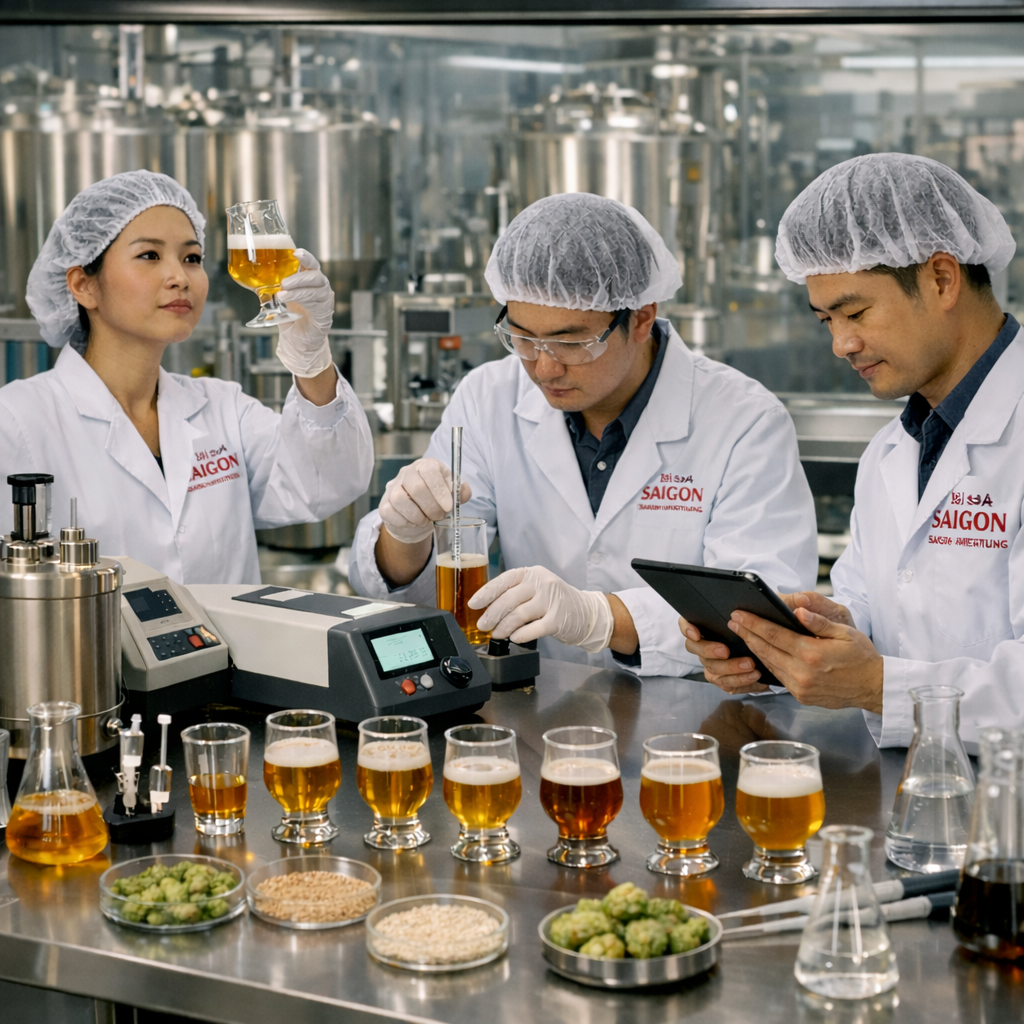
In addition, controlling raw material inputs is critical to maintaining long-term product quality. If malt, hops, or brewer’s yeast do not meet standards—or if supply sources change without clear communication—the product may lose its consistency. This is one of the most common beer production risks when businesses lack direct supervision at the brewery.
Furthermore, key indicators such as microbiological levels, alcohol content (ABV), heavy metals, or other contaminants—if not regularly tested in an independent laboratory—can lead to potential product recalls.
To prevent these risks, companies should require pilot batch testing before mass production, establish clear technical specifications in contracts, and ensure the presence of independent quality verification mechanisms. In a beer OEM manufacturing model, process transparency and production supervision rights are essential conditions.
Legal and Brand Protection Risks – The Often Overlooked Grey Area
Legal compliance is often underestimated when launching a Private Label beer, yet it is a major reason many brands exit the market prematurely.
First, failing to register trademark protection in time may result in losing ownership of the beer brand to third parties. When this happens, the cost of resolving trademark disputes is usually far higher than the cost of initial registration.

In addition, product declaration dossiers, labeling, ingredient information, and regulatory warnings are mandatory requirements. Any errors can lead to administrative penalties or large-scale product recalls. In the beer industry, this risk is even more serious because alcoholic beverages are strictly regulated.
Another critical issue is recipe ownership. If a beer OEM contract does not clearly define ownership rights, the brewery may use a similar beer recipe for other clients. This can erode competitive advantage and reduce the long-term value of the brand.
Therefore, contracts must clearly define intellectual property rights, confidentiality clauses, and legal responsibilities of each party. This not only protects the beer brand but also establishes a strong foundation for long-term cooperation.
Expert Consultation Helps Reduce Risks from the Start
If you are developing a Private Label beer project or need to review legal and production risks within your current beer OEM manufacturing model, consulting with industry experts from the early stages can help save costs and avoid strategic mistakes.
OEM Consultation Hotline: (+84) 94 1127575
Email: oem@biasaigonmt.com
Supply Chain and Inventory Risks – The Silent Financial Pressure
In practice, many beer contract brewing projects encounter difficulties not because of product quality but because of inventory management and cash flow pressure.
The requirement for MOQ (Minimum Order Quantity) often forces businesses to place large orders to achieve competitive production costs. However, if market forecasts are inaccurate, excessive inventory levels can lock up cash flow and increase storage costs.
Beer is also sensitive to temperature and light exposure. Improper storage can reduce carbonation, alter the flavor profile, or cause oxidation. In such cases, businesses may be forced to discount products or even dispose of inventory.
Additionally, relying on a single beverage OEM partner can create risks if problems occur with raw materials, operations, or pricing policies.
The solution lies in building flexible production planning, realistic sales forecasting, and maintaining backup options for manufacturing partners or supply sources.
Choosing the Right OEM Partner – The Key to Success or Failure
Selecting the right beverage OEM partner is not simply choosing a production facility—it is choosing a strategic partner.
A brewery that meets international standards with a strong quality management system can significantly reduce beer production risks. However, what matters even more is transparency and the ability to support long-term collaboration.
The product development process should include recipe research, sensory testing, market validation, and adjustments before large-scale brewing begins. True professionalism is demonstrated through the ability to provide strategic consultation, not just manufacturing services.
Contracts must clearly define technical standards, payment terms, defect resolution mechanisms, and intellectual property rights. In the beer OEM model, a well-structured contract is the most effective risk management tool.
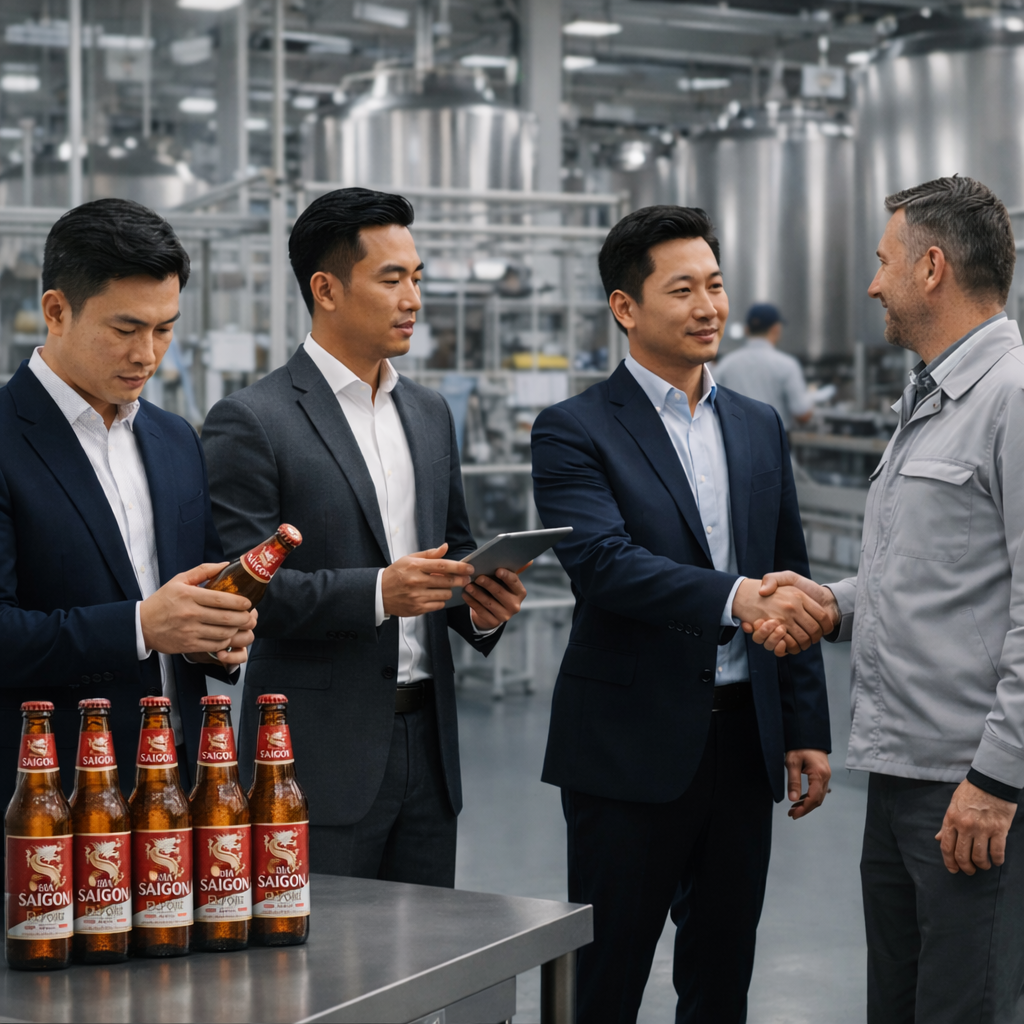
Sustainable and Professional Private Label Beer Solutions
Launching a Private Label beer is not simply about placing a production order; it is about building a complete brand ecosystem. Success comes from balancing marketing creativity with strong operational control.
When businesses clearly understand beer production risks, legal risks, and supply chain risks, they can develop preventive strategies rather than reacting to crises.
The beer OEM model remains an optimal solution when implemented correctly: choosing the right OEM brewery, establishing clear process control systems, and managing finances carefully.
Instead of viewing beer contract brewing as a short-term solution, it should be seen as a strategic foundation for scaling production and expanding market presence.
Ready to Launch Your Private Label Beer Project Safely and Efficiently?
A successful beer OEM project does not come from luck—it comes from thorough preparation and choosing the right strategic partner.
For professional consultation on beer OEM manufacturing, cost optimization, and comprehensive risk management:
Company: Saigon Beer – Central Vietnam Joint Stock Company (SMB)
Address: 01 Nguyen Van Linh Street, Tan An Ward, Buon Ma Thuot City, Dak Lak Province, Vietnam
OEM Hotline: (+84) 94 1127575
Email: oem@biasaigonmt.com
Website: https://oem.biasaigonmt.com/
Starting correctly from the very first step will help your beer brand grow sustainably—rather than becoming another project that fails due to a lack of strategy.