


For many years, OEM in the beer industry has often been viewed as a stopgap solution: outsourcing production to save time or to utilize excess capacity. However, amid rising global costs, recurring supply chain disruptions, and increasing profit pressure, OEM is being redefined as a strategic financial optimization tool.
This is especially true for businesses that:
-
Develop private label beer brands
-
Export to the EU, the UK, or CPTPP markets
-
Or seek to rapidly expand their product portfolios while facing CAPEX constraints
In these cases, building a proprietary brewery is no longer the optimal option in terms of ROI, cash flow, and risk management.
Within this context, Saigon Beer Central Vietnam (SMB) stands out as an OEM partner capable of delivering direct and measurable impact on:
-
COGS
-
OPEX
-
CAPEX
-
Tariffs
-
And Total Cost of Ownership (TCO)
The analysis below examines each financial pillar in depth, using an industrial financial modeling approach, to demonstrate why OEM manufacturing at SMB is not merely “cheaper,” but financially smarter.
Cost Structure Analysis
1. Labor costs – A structural advantage, not a short-term one
In the beer industry cost model, labor is not only a direct expense but also a factor that can amplify or erode operational efficiency. At many breweries in China, average wages of USD 1,300–1,800 per month result in:
-
High insurance and welfare costs
-
Annual wage increase pressure
-
High labor turnover rates
By contrast, at SMB, wage levels of USD 400–700 per month are not only 35–60% lower, but are also associated with high workforce stability. This creates three deeper financial advantages:
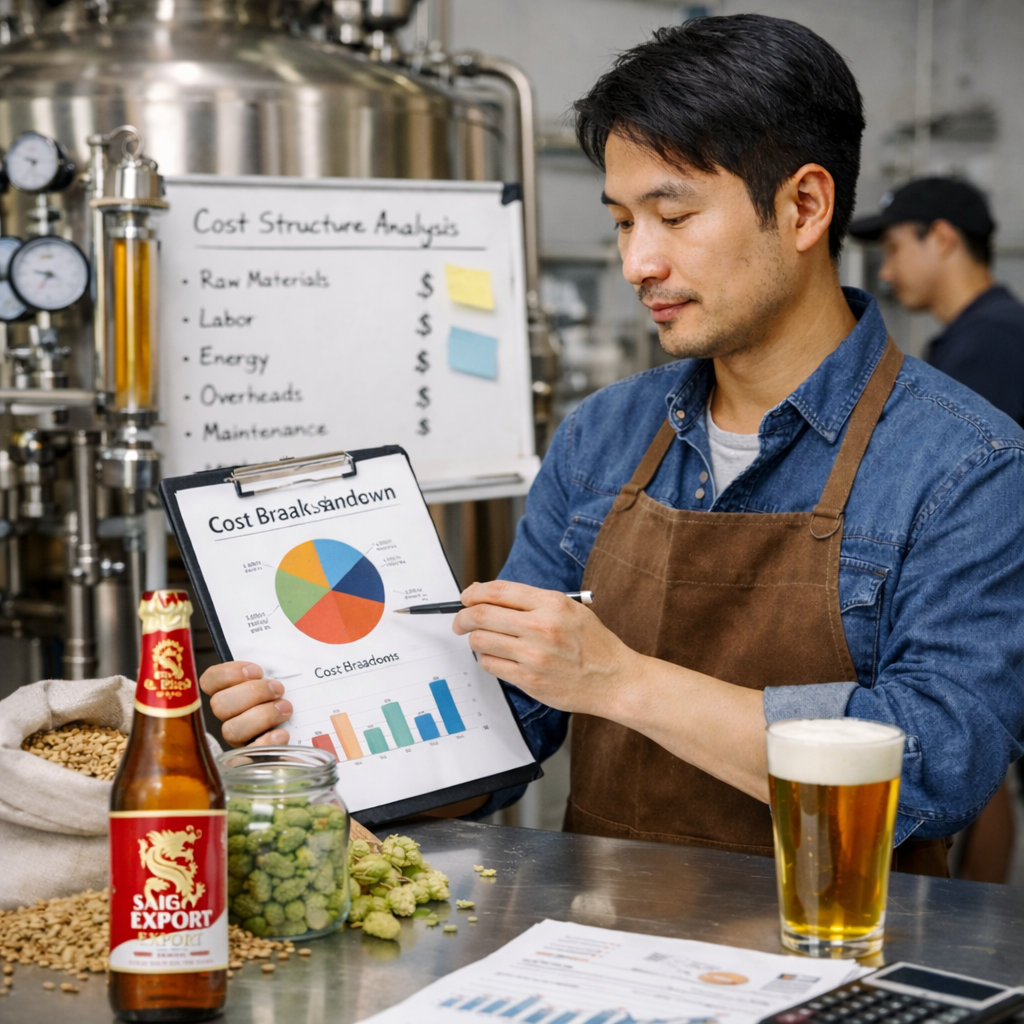
First – Low and stable labor cost per unit of product (labor cost per unit).
Not only are wages lower, but thanks to a workforce familiar with the production lines, average productivity is higher, reducing labor cost per hectoliter of beer by an additional 10–15% compared with theoretical benchmarks.
Second – Reduced training costs and operational errors.
In OEM manufacturing, even small mistakes (incorrect temperature, timing, or pressure) can lead to batch rejection and significant losses. SMB minimizes these risks through a team that has “worked through a wide range of formulations,” thereby lowering the Cost of Poor Quality—an often hidden but substantial expense.
Third – Indirect impact on final product cost.
When labor accounts for approximately 15% of COGS, a 40–50% reduction in labor costs can translate into a 6–8% decrease in total unit cost. For export products, this margin is sufficient to:
-
Win OEM bids
-
Or create superior profit margins compared with competitors
2. Energy costs – The “silent lever” in the brewing industry
Energy is the most difficult variable to control in beer production, as it depends on:
-
National electricity prices
-
Peak-hour pricing structures
-
Equipment efficiency
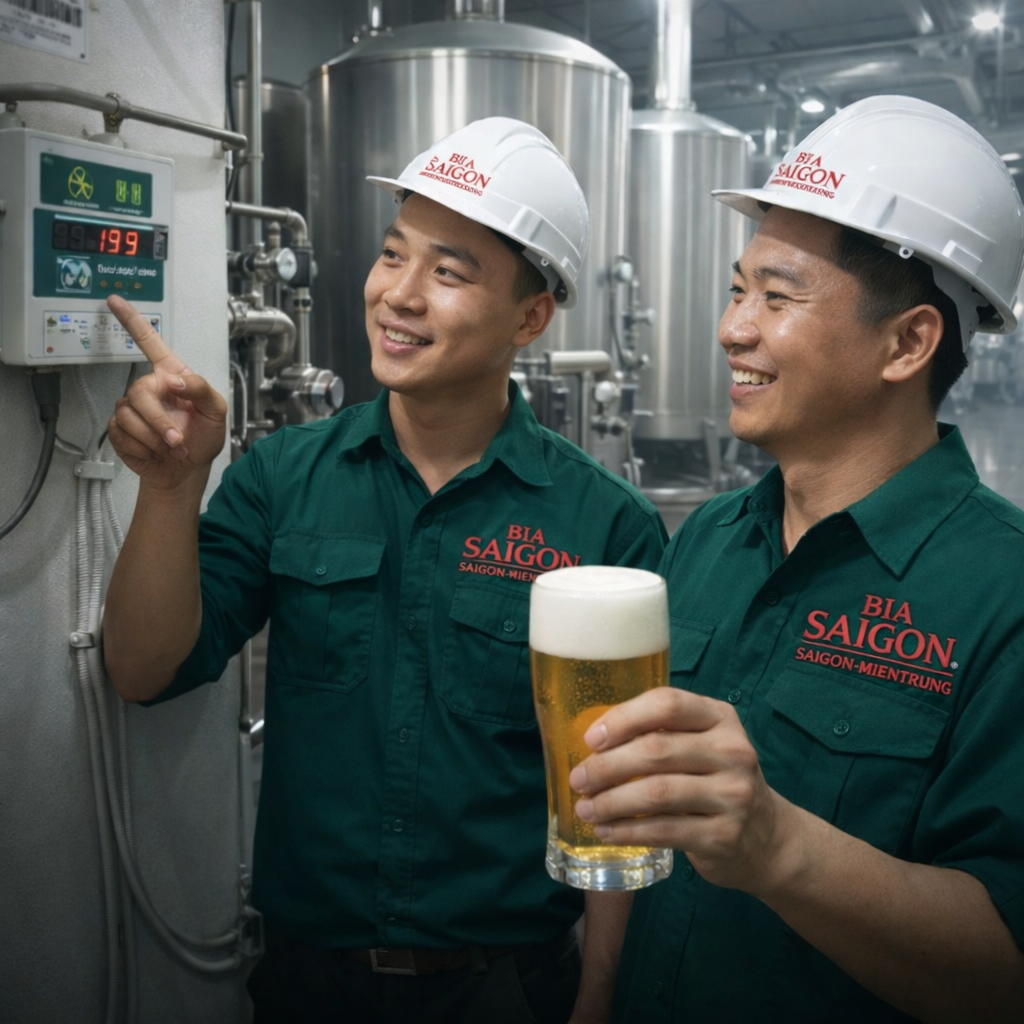
With industrial electricity prices in Vietnam being 20–25% lower than in China and the regional average, SMB holds an advantage that OEM businesses often underestimate at first, but which is critically important over the long term.
In the brewing process, energy consumption is not limited to boiling, but also includes:
-
Rapid cooling of wort (energy-intensive)
-
Maintaining fermentation temperatures
-
Pasteurization and filling
As production volume increases, energy costs rise exponentially rather than linearly. Therefore:
-
Breweries with lower electricity prices gain greater advantages as they scale up
-
Profit margins are not “eroded” when output expands
In addition, stable electricity pricing enables SMB to:
-
Forecast costs more accurately in OEM quotations
-
Reduce the risk of mid-contract price adjustments
-
Maintain long-term commitments with export customers
For OEM clients, this translates into:
Stable costs – predictable profits – lower risk
3. OPEX optimization through automation – Efficiency beyond cost reduction
Automation at SMB is not only intended to reduce labor, but also to standardize quality and control variability. SCADA, MES, and ERP systems enable:
-
Monitoring of each production batch
-
Early detection of deviations
-
Reduced downtime and rework
From a financial perspective, this helps to:
-
Lower OPEX per unit of product
-
Reduce unexpected maintenance costs
-
Increase asset turnover
More importantly, automation reduces financial risk, as each defective OEM batch can lead to:
-
Product disposal
-
Delivery delays
-
Contract penalties
-
Brand damage
Domestic supply chain ecosystem (Supply Chain Efficiency)
1. On-site supply chain – Optimizing logistics and working capital
SMB does not operate as a “standalone factory,” but as part of a fully integrated beverage industrial cluster. Direct linkages with domestic can, bottle, and packaging manufacturers deliver financial benefits that go beyond transportation cost savings:
-
Reduced inventory capital: Short lead times allow for lower safety stock, freeing up working capital.
-
Improved market responsiveness: Labels and can designs can be changed quickly without incurring significant additional costs.
-
Lower foreign exchange risk: Reduced dependence on imported packaging materials.
For OEM businesses, this represents a clear cash-flow advantage, especially during periods of rapid growth.
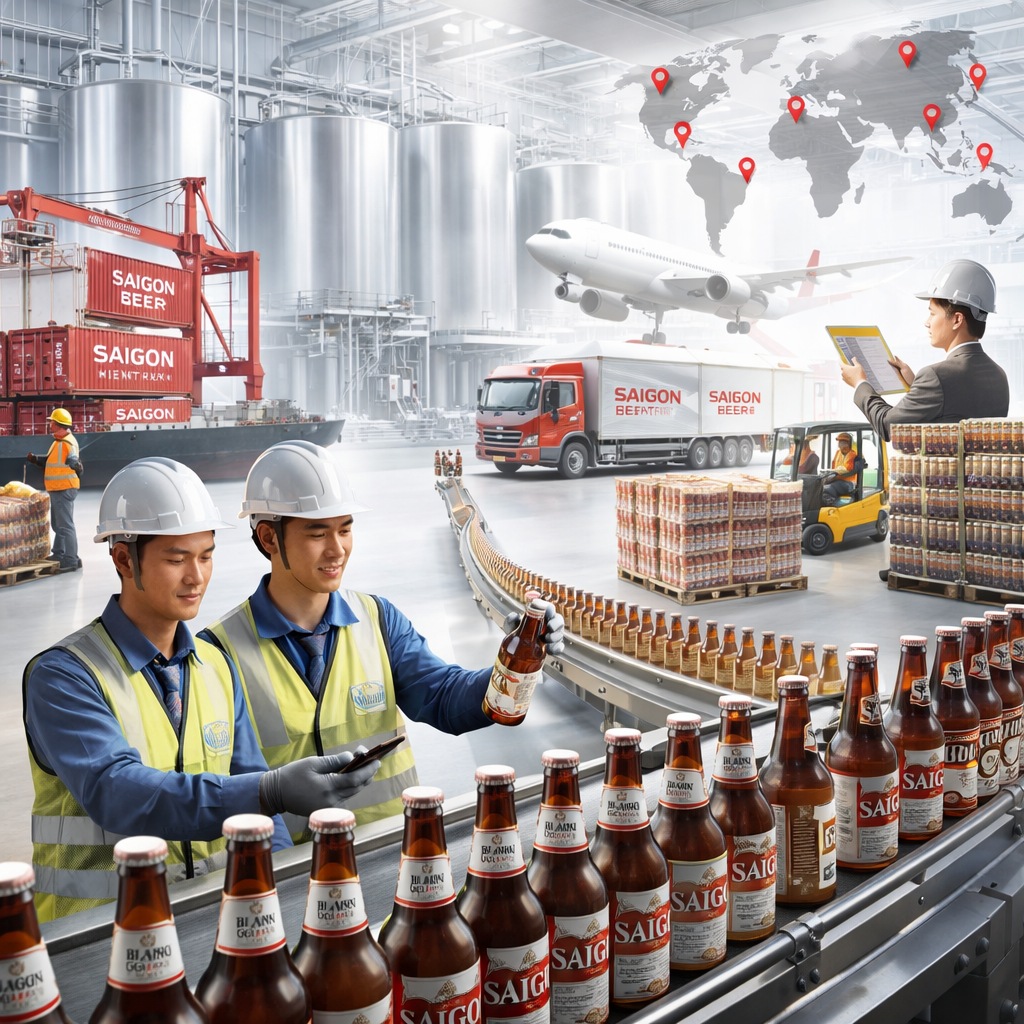
2. Lean Manufacturing – Profit generated from “not doing”
Lean at SMB focuses on:
-
No overproduction
-
No excess inventory
-
No unnecessary operations
Each of these “no’s” translates directly into:
-
Lower COGS
-
Lower OPEX
-
Reduced disposal and write-off costs
According to industry financial models, Lean practices can improve EBIT margins by an additional 2–4%—a very significant figure in the beer industry.
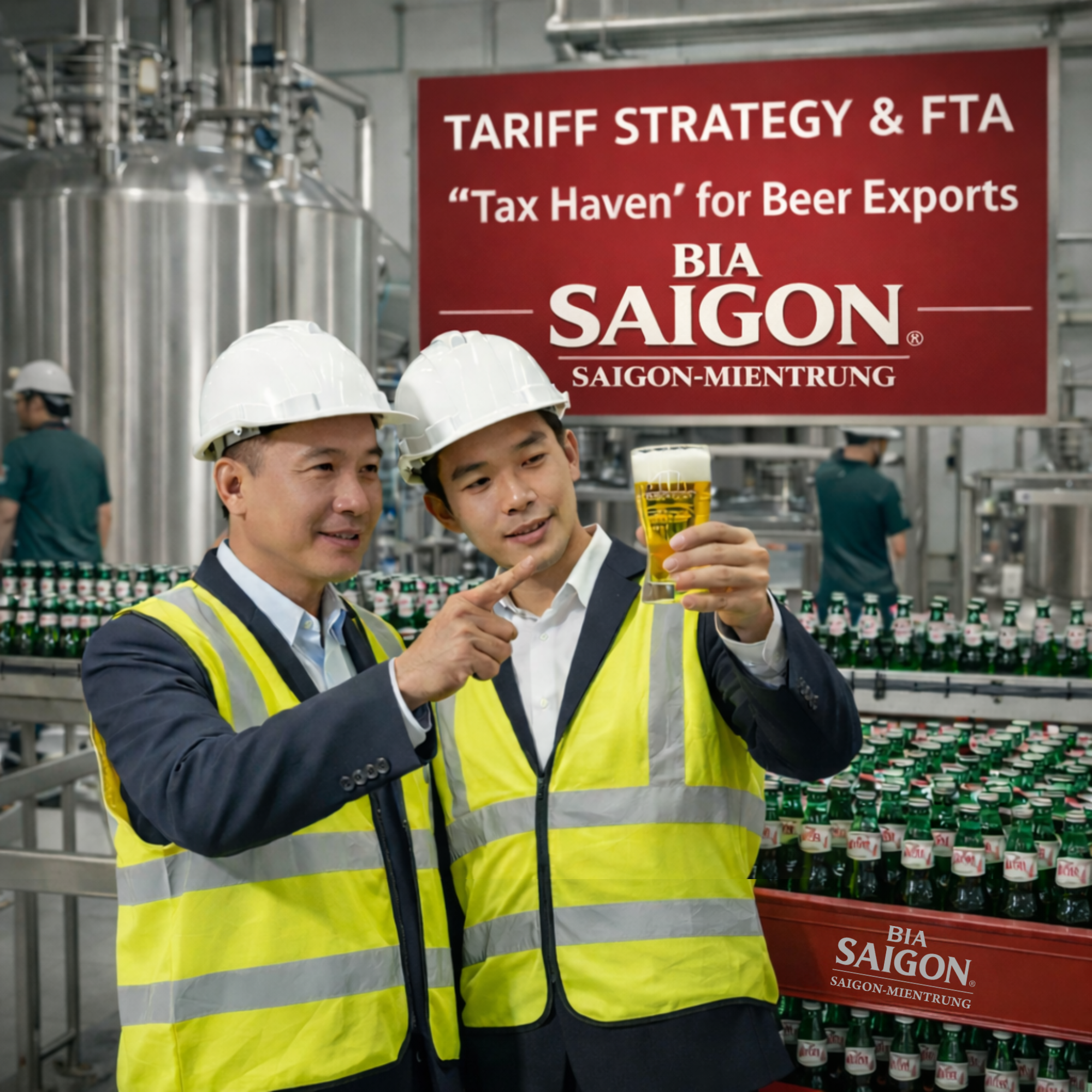
Tariff strategy & FTAs – A “tax haven” for exports
1. FTAs as financial tools, not just trade agreements
EVFTA, CPTPP, and UKVFTA are not merely trade agreements, but instruments for tax cost optimization. When import duties are reduced to 0%, the benefits extend beyond:
-
Lower selling prices
-
To higher profit margins or larger marketing budgets
-
SMB plays the role of an “FTA translator,” helping customers to:
-
Understand rules of origin
-
Design compliant supply chains
-
Avoid the risk of retroactive tax assessments
2. Export cost comparison – A container-level perspective
Criteria OEM at SMB Without FTA EU import duty 0% 15–20% Profit retained High Eroded Competitiveness Very high Low In many cases, the entire profit of an OEM project lies in the FTA advantage rather than in the processing price itself.
Opportunity cost and financial risk
1. Avoiding CAPEX – Preserving capital for growth
Investing USD 10–20 million to build a brewery implies:
-
Prolonged negative cash flow
-
Market risk exposure
-
Depreciation pressure
OEM manufacturing at SMB allows businesses to:
-
Allocate capital to marketing
-
Test markets
-
Scale up quickly—and exit quickly if needed
2. “Right from the start” – Insurance against invisible costs
Costs related to product disposal, recalls, and litigation often do not appear in initial financial plans, yet they can destroy the entire ROI. SMB minimizes these risks through experience and robust QA/QC systems.
Sustainable production and long-term costs
Biomass and renewable energy at SMB are not merely ESG initiatives, but long-term financial insurance against:
-
Carbon taxes
-
EU CBAM
-
Pressure from sustainability-focused distributors
OEM manufacturing at Saigon Beer – Central Vietnam enables businesses to:
-
Reduce COGS
-
Optimize OPEX
-
Avoid CAPEX
-
Leverage FTAs
-
Protect long-term profitability
Connect with SMB to optimize your OEM financial strategy
Entity: Saigon Beer – Central Vietnam Joint Stock Company (SMB)
Head Office Address: 01 Nguyen Van Linh Street, Tan An Ward, Buon Ma Thuot City, Dak Lak Province
OEM Consulting Hotline: (+84) 94 112 7575
Dedicated Email: Oem@biasaigonmt.com
Official Website: https://oem.biasaigonmt.com/ -