

In 2026, the beverage market is entering a new state of competition: consumers are no longer simply buying “beer”; they are buying a story that aligns with their personal identity, consumption context, and value system.
As demand fragments into countless “micro-tastes,” the traditional centralized production model—where a brand must own a factory to be recognized—is gradually losing its efficiency.
The era of personalization does not favor those who own the most fixed assets; it favors those who control speed, data, and market access.
Within this transformation, beer OEM manufacturing emerges as an optimal mechanism that allows brands to free up cash flow, reduce operational risks, and concentrate their resources on marketing, branding, and distribution systems.
With the cost advantage of Central Vietnam combined with international-standard production systems, Saigon Beer – Central Vietnam OEM services demonstrate why OEM is no longer just a supporting option, but is becoming the strategic infrastructure for new beverage brands.

When Companies No Longer Want to Own Factories, They Want to Own the Market
In traditional economic logic, owning a factory meant controlling quality, optimizing profit margins, and maintaining production autonomy. But by 2026, that logic is being reversed by two simultaneous forces: on one side, cost pressures and supply-chain risks; on the other, the personalization trend that is driving an explosion in the number of SKUs. When product portfolios constantly fluctuate, fixed assets are no longer an advantage but can easily become a burden of depreciation and excess capacity risk. Modern brands realize that the greatest value lies in market access: distribution capability, customer data, and the ability to shape a compelling brand narrative. Therefore, they are shifting from the mindset of “own the plant” to “own the demand.”
In this context, the Private Label beverage trend is growing rapidly because it is the fastest way for retailers and F&B chains to convert customer traffic into profit margins. Private labels allow them to control the customer experience, pricing strategies, and purchase frequency without depending entirely on long-established brands. However, Private Label can only scale when there is a qualified production platform capable of turning ideas into stable commercial products. This is where the OEM model becomes the new infrastructure: the factory provides manufacturing capability, standards, and operations, while businesses own the market, the brand, and the data.
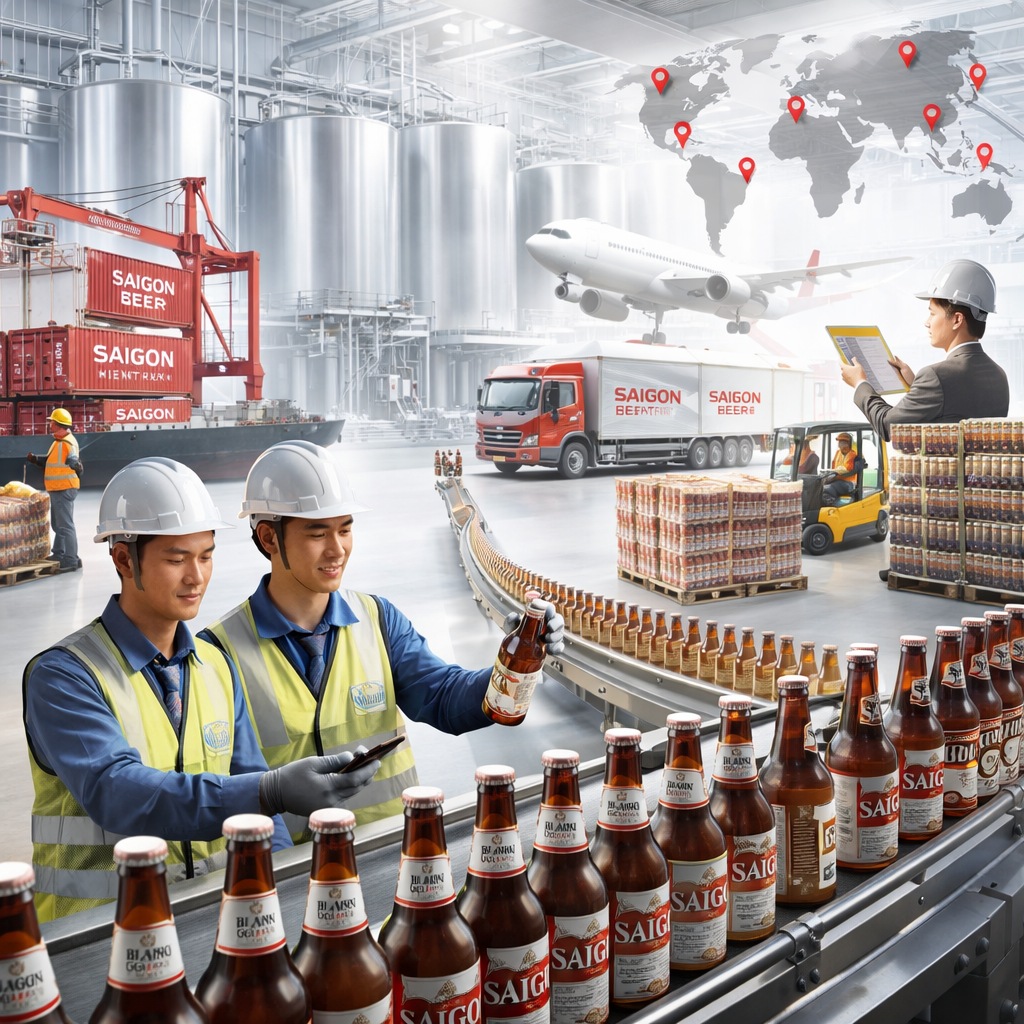
As Vietnam emerges as a new manufacturing destination thanks to cost advantages and an extensive FTA network, the advantage of beer OEM manufacturing is no longer about simply “producing on behalf of others,” but about transforming manufacturing capability into a service integrated into growth strategies. Saigon Beer – Central Vietnam OEM therefore fits companies that want to move quickly into the market: they do not need to wait to build a brewery, do not need to lock in long-term capital, yet can still have products that meet industry standards to compete in the new landscape.
Optimizing CAPEX and Freeing Cash Flow — A Game of Finance, Not Just Production
A modern industrial brewery is not simply a few brewing and filling lines. It is a large “asset block” that includes water treatment systems, cold storage, CIP systems, laboratories, food safety standards, technical personnel, labeling compliance, and—most importantly—time. Investing tens of millions of USD in CAPEX is not merely a cost but a long-term commitment accompanied by market risk. When consumer behavior changes rapidly, betting on fixed assets is like anchoring a strategy to a future that businesses cannot fully predict.
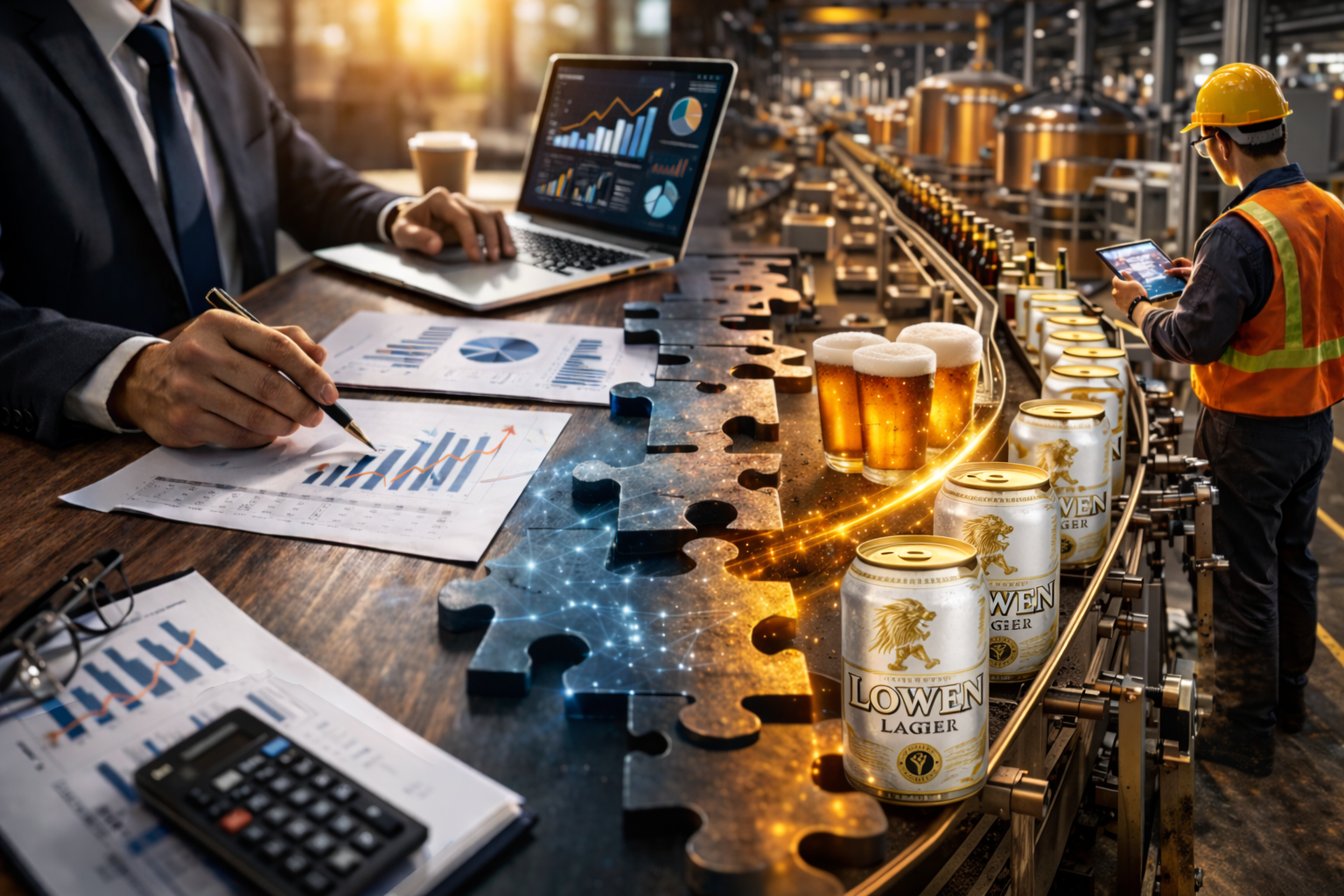
Converting CAPEX into OPEX: How Beer OEM Reshapes Financial Structure
OEM changes the financial structure by converting CAPEX into OPEX. Instead of spending capital to “buy production capacity,” companies purchase output on demand. This mechanism creates a key advantage: cash flow is freed up to capture distribution channels. In the beverage industry, market share is rarely determined by who owns the largest brewery; it is determined by who secures better shelf placement, who has stronger point-of-sale distribution, and who can move faster in marketing and shaping consumer habits. Therefore, OEM is not merely about cost optimization—it is a restructuring of investment priorities from assets to the market.
Another important point is that OEM reduces the risk of “trapped assets.” When building a brewery independently, companies must bear risks related to capacity utilization, technological obsolescence, and products failing to meet expectations. By contrast, outsourcing through beer OEM manufacturing minimizes fixed-asset risk: if a SKU underperforms, businesses can adjust the recipe, change packaging, reposition the brand, or discontinue production without being dragged down by depreciation. This flexibility functions like a financial option—an intangible but extremely valuable advantage in 2026, when markets prioritize rapid experimentation and data-driven optimization.
Time-to-Market: Speed as the Core Competitive Advantage
If brand advantage in the previous decade was scale, then by 2026 the advantage is speed. Consumers shift between beverage trends as quickly as they scroll social media: today fruit beer, tomorrow hard seltzer, next week low-ABV beer or seasonal products. In such a market, taking 18–24 months to build a brewery is no longer a strategy—it is almost equivalent to removing yourself from the competition. By the time the brewery is completed, market tastes may already have shifted, and the original product portfolio may be outdated.
OEM creates a mechanism to compress strategic time. When manufacturing capacity already exists, product launch speed depends mainly on recipe development, sample approval, and packaging preparation. With standardized R&D and operational systems, SMB can bring a product to market in approximately 8 weeks for the first project if the brief is clear and coordination processes are streamlined. This advantage is not just about speed—it is an economic difference. The earlier a product launches, the sooner a company begins revenue cycles, collects market feedback, adjusts positioning, and reaches product–market fit. In the beverage industry, missing a peak season can disrupt an entire year’s business plan.
Time-to-market is also directly tied to marketing efficiency. When products launch quickly, marketing campaigns do not have to wait in a costly “holding pattern.” Companies can synchronize product development, distribution activation, and communication campaigns in a unified timeline. This is particularly critical for Private Label beverages, where retailers need products at the right seasonal moment to maximize sales performance. In this sense, OEM becomes an operational lever for marketing—transforming manufacturing speed into speed of consumer mindshare.
In an increasingly competitive market, the advantage is no longer simply “being able to produce,” but “being able to produce in time.” And OEM is the shortest path to turning an idea into a real SKU on the shelf.
Central Vietnam’s Cost Advantage and Cost Optimization at SMB
Production costs in the beer industry are not limited to raw materials. They are heavily influenced by labor, energy, and operational efficiency. As inflation pressure and input-price volatility persist, businesses cannot rely solely on negotiating supplier prices; they must restructure where and how production happens. Central Vietnam, with its competitive cost structure, is emerging as a new foundation for OEM manufacturing strategy, and SMB represents a clear example of this advantage.
At SMB, labor cost advantages are estimated to be 35–60% lower than high-cost production centers in the region. However, the key factor is not merely lower wages; it is the stability and operational standardization that reduce production errors, minimize product loss, and lower the cost of poor quality. In beer brewing, even small deviations in temperature, time, or pressure can cause an entire batch to be rejected. When operations teams have deep experience, risk costs decline—and that reduction is reflected directly in the final production cost.
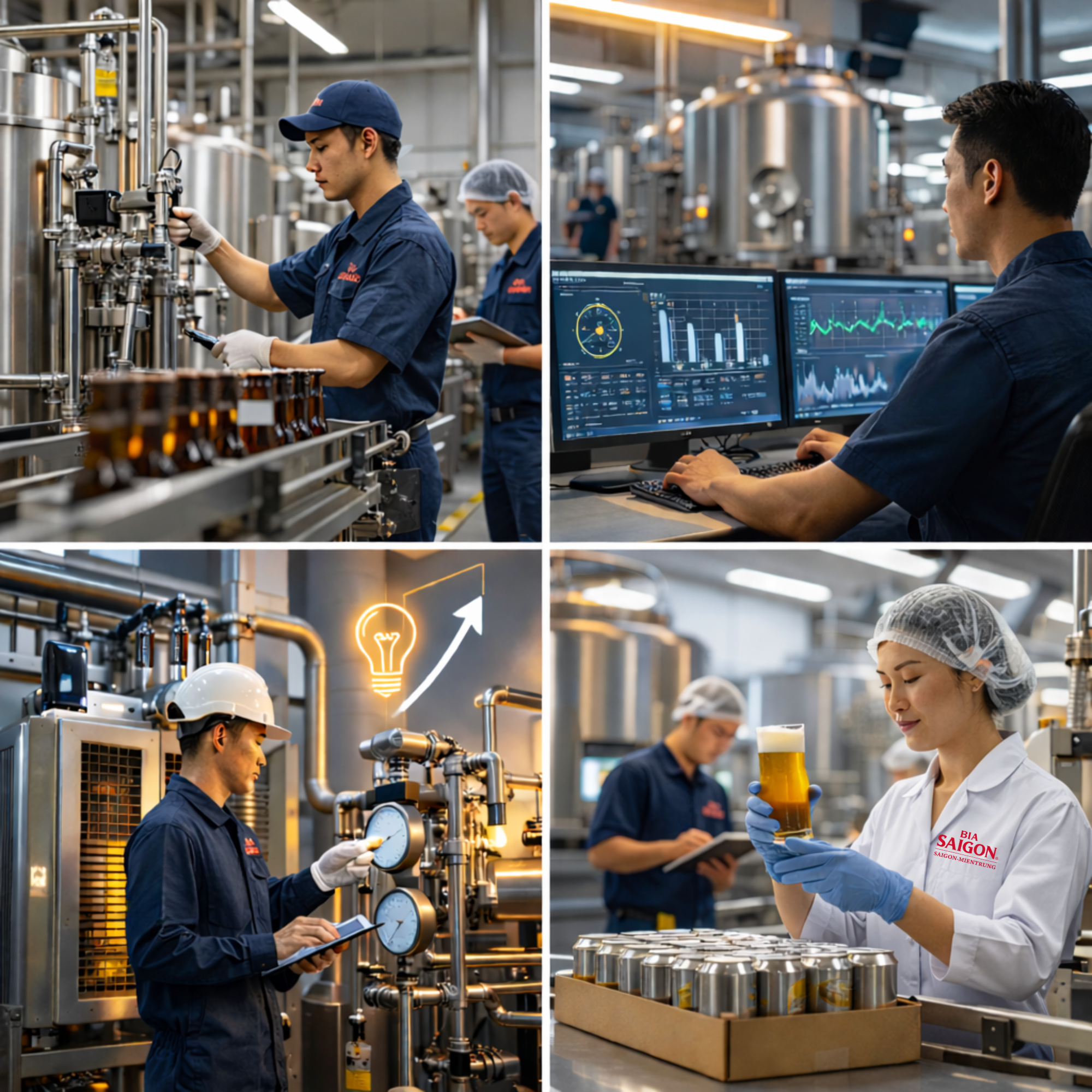
At the same time, energy is one of the variables that quietly erodes profit margins in beer brewing: boiling, cooling, fermentation, and pasteurization all consume significant electricity and thermal energy. An electricity cost advantage of around 20–25% lower gives SMB a structural edge that competitors in high-cost markets find difficult to replicate. As production volume increases, this advantage becomes even more significant because energy costs do not grow linearly with revenue; they often rise faster when capacity expands if the system is not optimized. Therefore, OEM manufacturing at SMB is not only “cheaper,” but also capable of maintaining stable production costs during scale-up, a critical factor for rapidly growing beverage brands.
Finally, there is the domestic supply chain for packaging materials: aluminum cans, glass bottles, cartons, and labels. When local supply is strong and lead time is short, companies can reduce safety inventory and lower working capital requirements. As a result, OEM at SMB becomes a comprehensive solution for beer production cost optimization: not only cheaper in unit price, but also more efficient in total cost of ownership, operational risk, and production speed.
International Quality Standards and Technical Barriers: Why FSSC 22000 Becomes a Commercial “Passport”
In the new era of globalization, trade barriers are no longer primarily about tariffs; they are about technical standards: food safety, traceability, social responsibility, environmental compliance, and energy management. A beverage brand that wants to expand into markets such as the EU or the United States cannot rely solely on a good product and attractive design. It needs a quality management system that distributors can trust, that can pass rigorous audits, and that can minimize regulatory risks. This is where OEM production at a brewery with international certifications creates a decisive advantage.
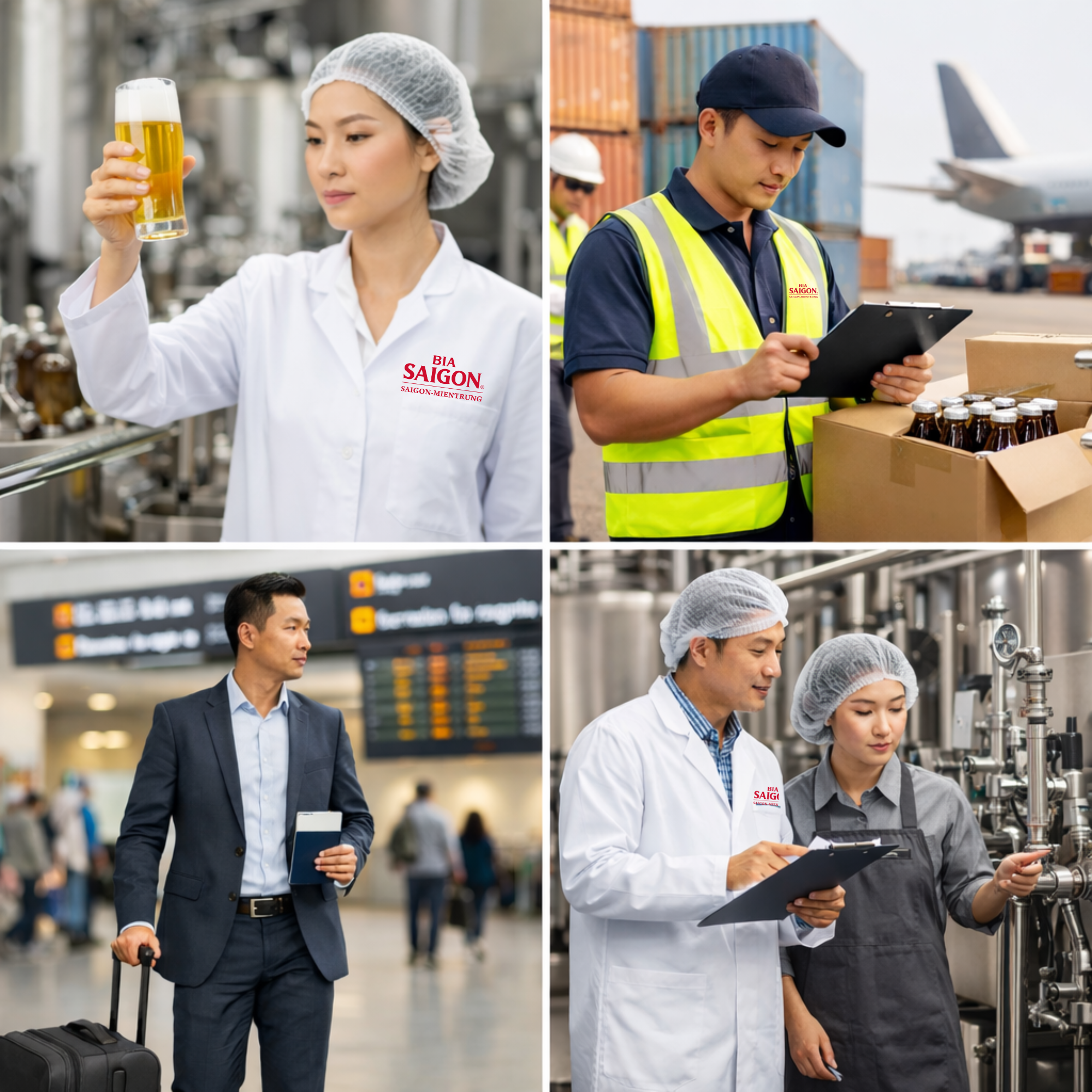
With certifications such as FSSC 22000 and ISO systems, outsourced products do not only achieve sensory quality; they meet the requirements to enter demanding distribution chains. In essence, FSSC 22000 is not just a certificate; it is a risk management framework: hazard control, process control, sample retention, batch traceability, and response capability when incidents occur. For businesses developing Private Label beverages, this significantly reduces the risk of product recall—a risk that could eliminate a new brand in its very first season.
When connected to global FTA agreements, the story becomes even more strategic. By producing in Vietnam and meeting rules of origin, companies can leverage tariff advantages from EVFTA, CPTPP, or UKVFTA to strengthen competitiveness. However, to fully utilize FTAs, businesses must have the appropriate documentation, certifications, and process compliance. OEM at SMB provides not only manufacturing capacity, but also the capability to overcome regulatory barriers—understanding documentation preparation, operational standards, and how to turn compliance into a commercial advantage.
Therefore, in 2026, international-standard quality is no longer an added benefit; it is an entry requirement. OEM with a partner like SMB turns that entry requirement into part of the service, allowing brands to focus on what they do best: the market and the brand story.
R&D Capability: When Beer Brewing Technology Becomes a Tailor-Made Service
Personalization in beverages cannot happen through marketing alone. It must begin with the recipe: bitterness (IBU), alcohol content (ABV), color, aroma, aftertaste, and mouthfeel. Yet most new businesses lack the resources to build a team of brewmasters, laboratories, and pilot testing systems. This creates a paradox: the market demands differentiated products, but the cost of creating differentiation is high. Modern OEM solves this paradox by transforming R&D into a service.
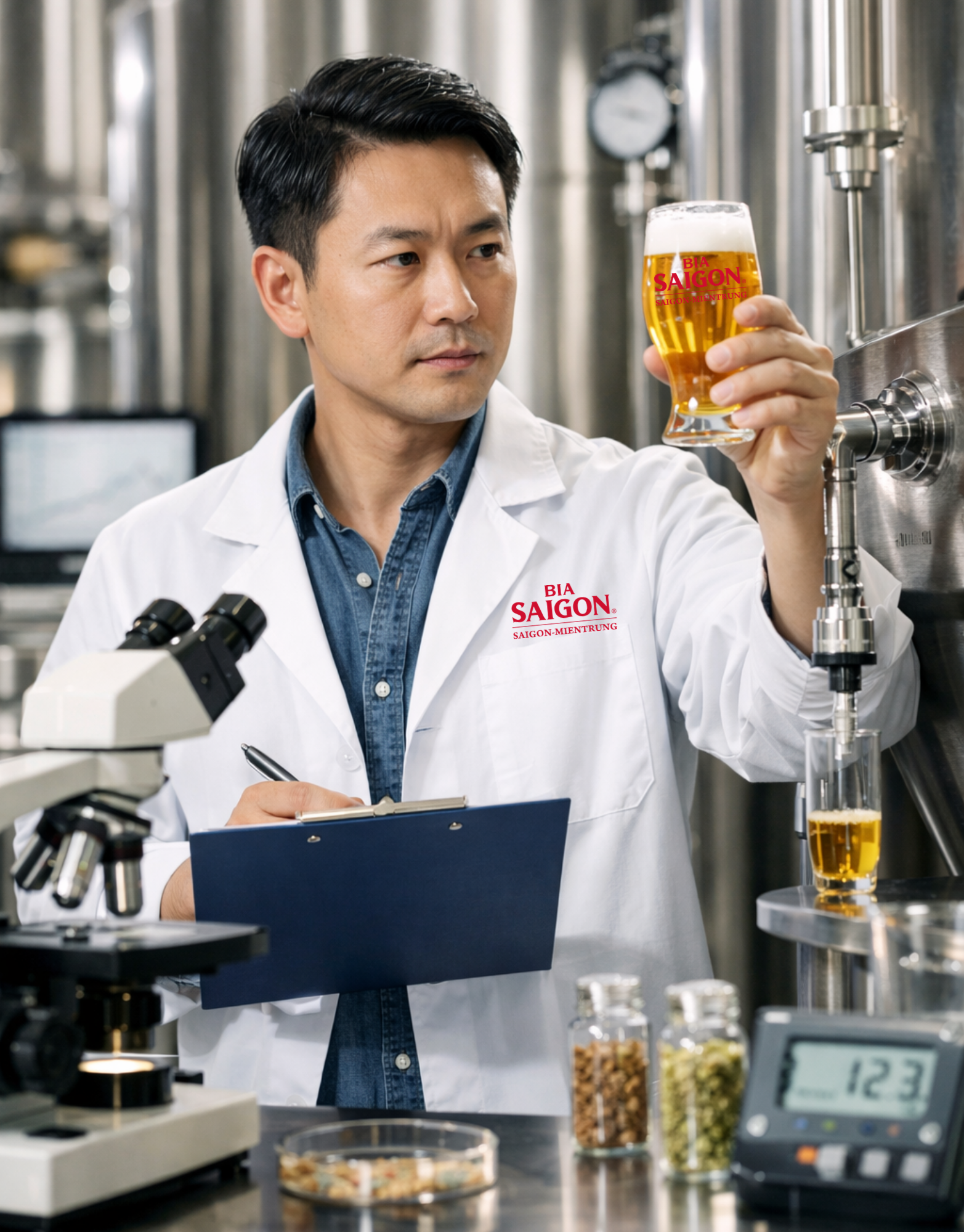
SMB approaches R&D through a continuous process: receiving the market brief, developing the beer formulation in the lab, running pilot batches to test stability, and then scaling up to industrial brewing while maintaining the flavor profile. In the beer industry, the challenge is not simply creating a formula but preserving that formula during large-scale production. Many small brands fail when transitioning from test batches to large volumes because the flavor profile changes. If an OEM brewery has strong process control and scale-up experience, it effectively turns R&D into a fast lane that moves ideas to market.
A notable shift in 2026 is that the beer recipe becomes a strategic asset similar to design and data. When SMB can deploy diverse raw materials, customize brewing parameters, and develop products based on sensory direction, client companies can own unique products without maintaining their own technical departments. This is what makes beer OEM manufacturing so powerful: it enables product differentiation at a lower marginal cost while shortening the trial-and-error cycle. Economically, this mechanism accelerates innovation.
From a market perspective, R&D-as-a-service also allows brands to respond quickly to data. When a SKU performs well, variations can be created rapidly; when trends shift, a new beverage line can be tested without major reinvestment. In the era of personalization, flexible R&D capability becomes the foundation for brands to survive and grow.
Long-Term Vision: Building a Beverage Brand Like Building a Distribution Empire
If beverages are viewed as a long-term game, then owning a brewery is not the optimal starting point for most new brands. The optimal starting point is the market: distribution, positioning, storytelling, community building, and the ability to shape consumer habits. OEM allows companies to build this foundation first and only invest in fixed assets once sufficient market data exists to reduce risk. This represents the new strategic mindset: invest according to market signals, not subjective belief.
In an increasingly competitive environment, a brand’s advantage is no longer just the product. It is the system: a communication system that generates demand, a sales channel network that converts demand into revenue, and an operational system that maintains the promise of quality. OEM with a partner like SMB secures the operational pillar—from stable product quality and cost optimization to international standards—so companies can concentrate their resources on the market pillar. When businesses are not consumed by technical and operational complexity, they can move faster, experiment more, and expand distribution coverage more aggressively.
In the long run, the sustainability of a beverage brand lies in its ability to scale without breaking financially. With labor costs 35–60% lower, energy costs 20–25% cheaper, and certification platforms such as FSSC 22000 and ISO, Saigon Beer – Central Vietnam OEM allows brands to expand production volume while maintaining a healthy profit structure. This provides the necessary foundation to continuously reinvest in marketing, branding, and distribution networks—the elements that create the real economic moat.
By 2026, OEM is no longer just a smart option; it is the shortest path to transforming a beverage idea into a scalable business system. And in this game, choosing the right OEM partner means choosing the right foundation for building a true beverage empire.
Contact SMB for Free OEM Consultation
Company: Saigon Beer – Central Vietnam Joint Stock Company (SMB)
Address: 01 Nguyen Van Linh Street, Tan An Ward, Buon Ma Thuot City, Dak Lak Province, Vietnam
OEM Hotline: (+84) 94 1127575
Email: oem@biasaigonmt.com
Website: https://oem.biasaigonmt.com/