

Entering 2026, Vietnam’s beer industry no longer operates under the growth logic based purely on volume as in previous periods. The domestic market has reached saturation in the mass-market beer segment, where major brands have virtually no room left to raise prices or expand distribution coverage without eroding profit margins. Pressure from rising raw material, energy, and distribution costs has made the traditional business models of many large brewers increasingly inflexible.
In that context, Private Label Beer has emerged as a structural solution. Instead of continuing to compete head-on with the “giants,” many F&B businesses, HoReCa chains, retailers, and exporters are choosing to produce private-label beer to gain better control over pricing, brand storytelling, and profit margins. By 2026, private-label beer is no longer a “side product,” but has become an independent growth segment, enabling businesses to escape price wars and move into a game centered on experience and brand identity.
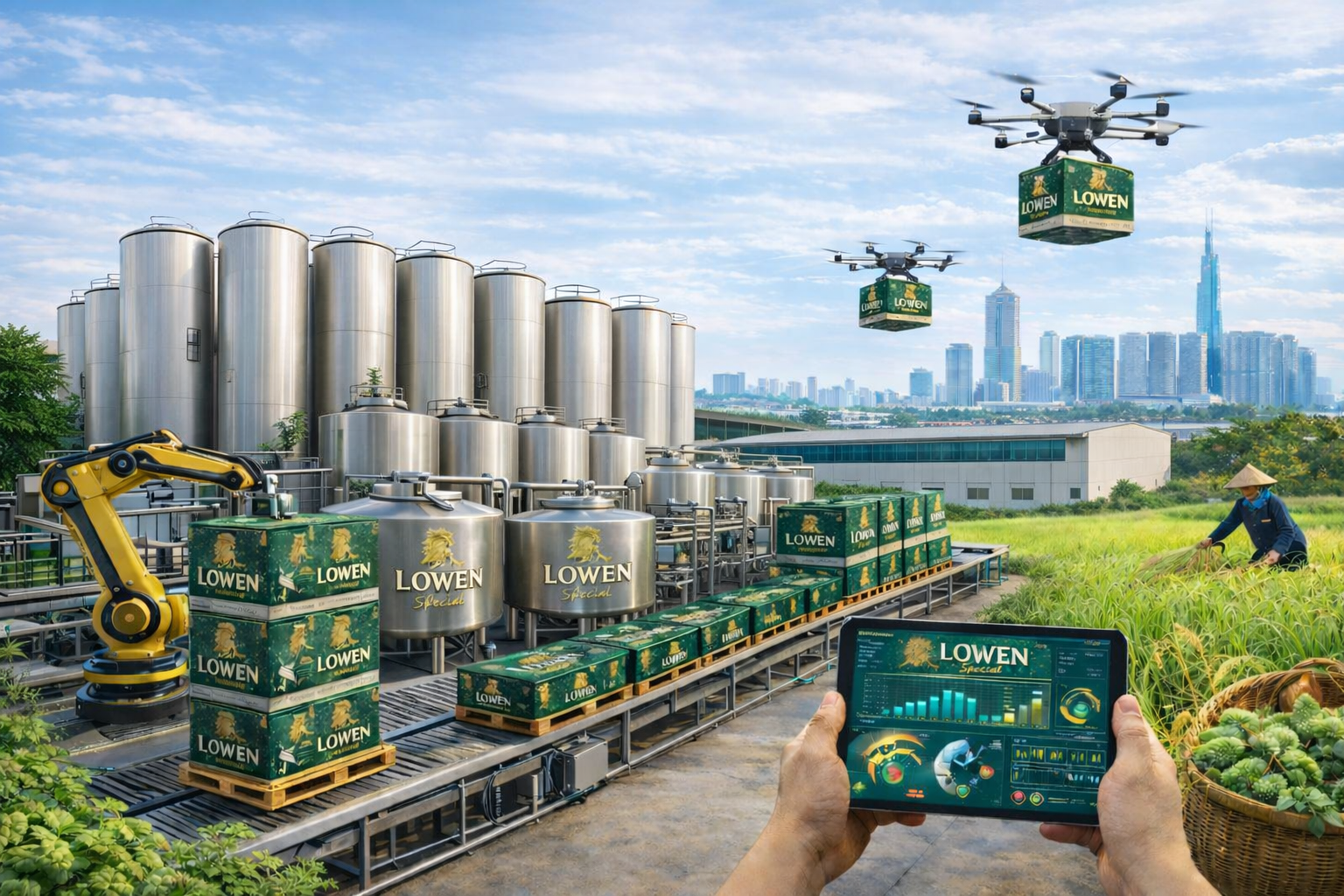
Vietnam, with its clear production advantages, is emerging as a regional hub for beer OEM manufacturing. Within this landscape, SMB plays the role of a strategic manufacturing platform that brings together industrial scale, international standards, and a high degree of customization—three factors that are decisive for the success of Private Label beer in the post-saturation phase.
The “Green Beer” trend and sustainable production – ESG becomes a mandatory requirement
Whereas in earlier stages ESG was still seen as a “value add,” by 2026 sustainable production has become a mandatory condition for beverages to access developed markets. Mechanisms such as carbon taxes, the EU’s CBAM, and supplier selection criteria imposed by international retail chains have turned the carbon footprint of each can of beer into a real economic metric.
In this context, OEM breweries are no longer competing solely on price, but also on their ability to green their production chains. SMB is one of the pioneering players in Vietnam in deploying biomass energy, optimizing the use of renewable electricity, and implementing international-standard energy management systems. This enables OEM partners not only to reduce long-term costs, but also to overcome “carbon barriers” when exporting to the EU and other demanding markets.
By 2026, “Green Beer” is no longer a marketing message, but an operational requirement. Brands that cannot embed a sustainability narrative into their products will gradually be excluded from global supply chains. At this point, SMB’s role is not only to produce beer, but to accompany partners on their ESG journey from the very early stages of product design.
Flavor personalization and the rise of Specialty Beer
Consumers in 2026 are no longer looking for “good beer” in a generic sense. They are seeking beers with personality—beers that reflect their lifestyle, regional identity, or brand story. This shift is driving the rise of Specialty Beer segments: beers incorporating local ingredients, low-alcohol beers, functional beers, or seasonal brews.
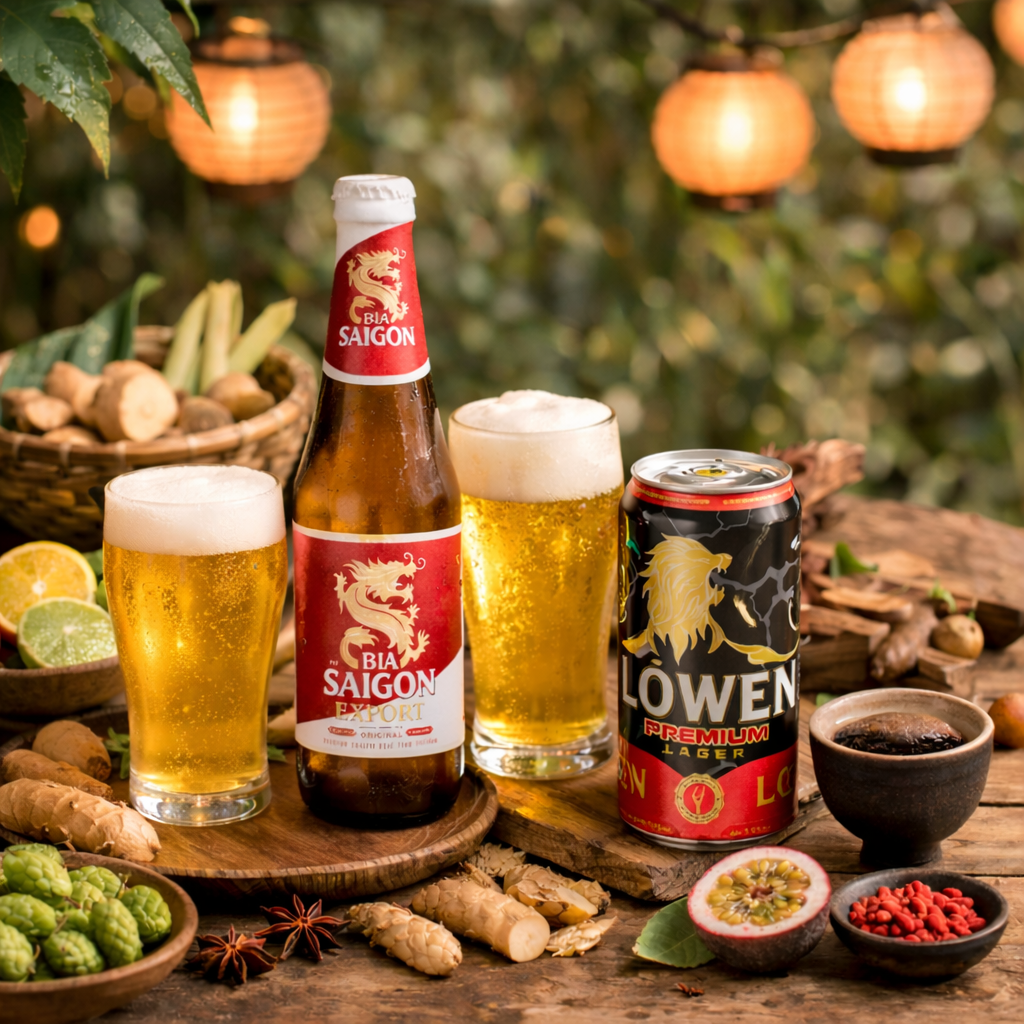
This trend places very high demands on the R&D capabilities of contract breweries. OEM manufacturing is no longer about mass-producing a single fixed recipe, but about the ability to customize flavors in a controlled manner—ensuring products are distinctive while remaining stable at scale. SMB has built a seamless R&D model spanning laboratory research, pilot batches, and industrial-scale production, helping partners reduce risk when bringing new products to market.
In 2026, personalization is not only a consumer trend but a defensive strategy. Businesses that do not own a proprietary flavor profile are easily replaceable in consumers’ minds. Private label beer manufacturing at SMB enables companies to retain the “soul of the product,” rather than acting merely as distributors.
The packaging revolution – Sleek cans and Printing 4.0 technology
Packaging is becoming a new competitive battlefield in the beer industry. In 2026, the 330ml Sleek can is regarded as the aesthetic standard for the mid- to high-end segment, thanks to its modern feel, convenience, and alignment with personalized consumption behavior. At the same time, Printing 4.0 technologies—from thermochromic color-changing labels to high-resolution printing—turn each beer can into a “media touchpoint.”
This shift requires filling and packaging lines with high precision, strong control of dissolved oxygen, and minimal fill-level variance. SMB has made significant investments in modern lines that allow the simultaneous deployment of multiple packaging formats and SKUs—an important advantage in an increasingly fragmented market.
By 2026, packaging is no longer just a container for beer, but a way to tell the brand story directly on the shelf. OEM factories that fail to keep pace with this revolution will quickly be pushed out of the high-value chain.
Cost optimization amid global inflation
Global inflation and supply chain volatility have driven beverage production costs sharply higher in many countries. In this context, Vietnam is emerging as a strategic “low-cost basin,” thanks to its abundant labor force and competitive energy prices. With labor costs 35–60% lower and industrial electricity prices 20–25% cheaper, beer production in Vietnam offers a clear structural advantage.
SMB leverages this advantage through large-scale production and operational optimization, enabling OEM partners to maintain competitive pricing without sacrificing quality. This is especially critical in 2026, as consumers become increasingly price-sensitive while still demanding premium experiences.

In the context of rising global costs, OEM manufacturing at SMB is not merely a cost-saving solution, but a strategy to preserve profit margins.
FTA leverage and the capability to take OEM products “everywhere”
The year 2026 is widely regarded as the point of full maturity for free trade agreements such as EVFTA and CPTPP. However, tariff incentives only take effect when businesses fully comply with rules of origin and international quality standards. This remains a barrier that prevents many small manufacturers from leveraging FTAs, despite having low production costs.
SMB holds certification systems such as FSSC 22000, enabling OEM beer products to easily pass audits by major importers. At the same time, its experience in regulatory compliance and export documentation significantly shortens partners’ time to international markets.
In 2026, FTAs are no longer advantages on paper, but real competitive levers for businesses that choose the right manufacturing platform.
A roadmap for building a sustainable beer brand with SMB
The future of the beverage industry does not belong to brands chasing volume, but to those that can control identity, cost, and sustainability. Private label beer manufacturing at SMB provides a clear roadmap—from product ideation, R&D, and production to packaging and export.

As a strategic partner, SMB does not merely help businesses “make beer,” but helps them build beer brands capable of long-term survival in an increasingly demanding market. The year 2026 will mark a period of strong differentiation between companies that choose the right OEM platform and those that continue to rely on outdated models.
CONTACT SMB FOR FREE OEM CONSULTATION
Entity: Saigon Beer – Central Vietnam Joint Stock Company (SMB)
Address: 01 Nguyen Van Linh Street, Tan An Ward, Buon Ma Thuot City, Dak Lak Province
OEM Consulting Hotline: (+84) 94 112 7575
Email: Oem@biasaigonmt.com
Website: https://oem.biasaigonmt.com/
The trend of beer contract manufacturing in 2026 is not merely a production story, but a strategic one. SMB stands at the intersection of cost, technology, and sustainability—where the future of the beverage industry is being shaped.