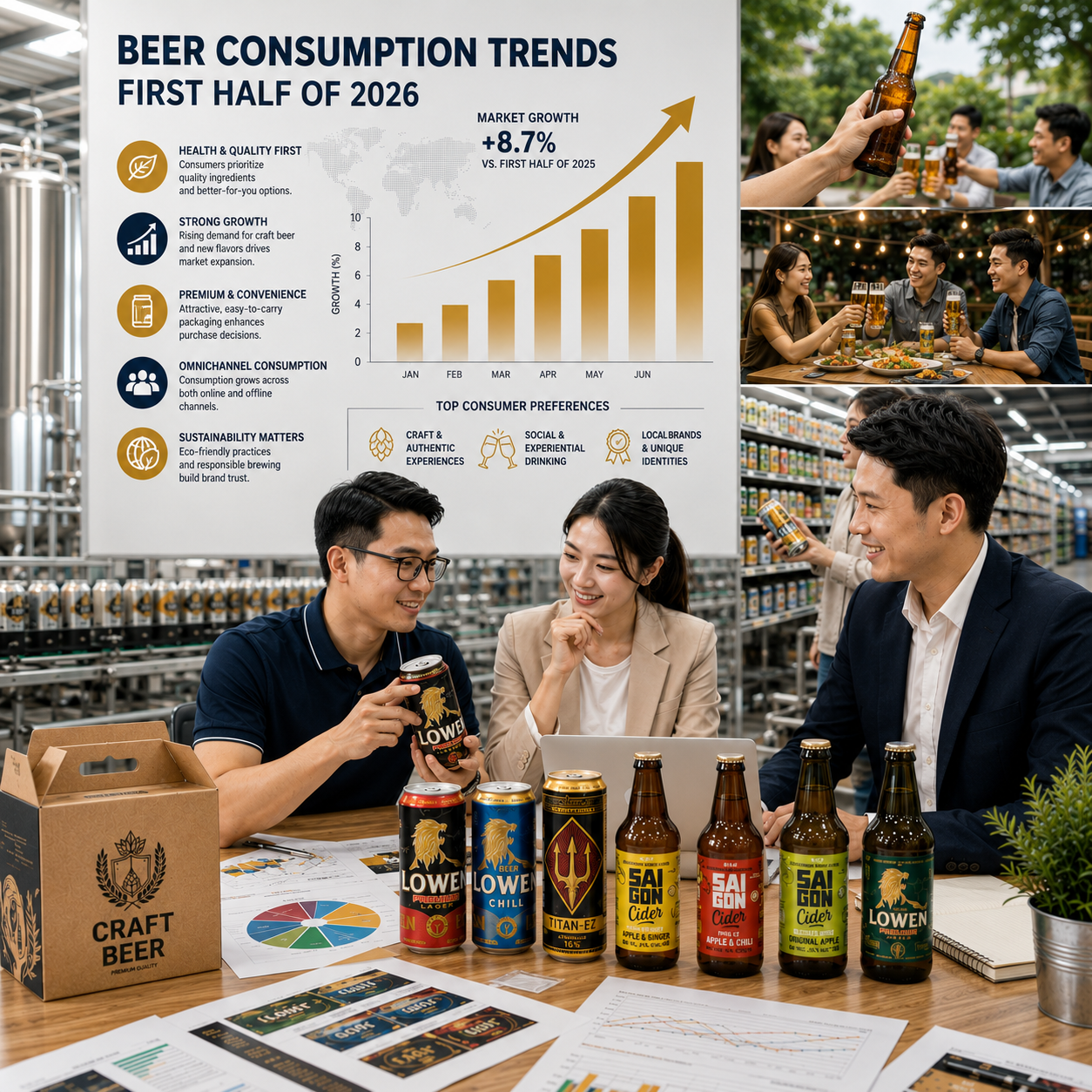


In early 2026, the Vietnamese beer market is no longer a playground of rapid expansion driven by volume growth as in previous periods. Instead, the industry is entering a cycle of “soft restructuring,” where growth no longer comes from output volume, but from value, experience, and product portfolio structure.
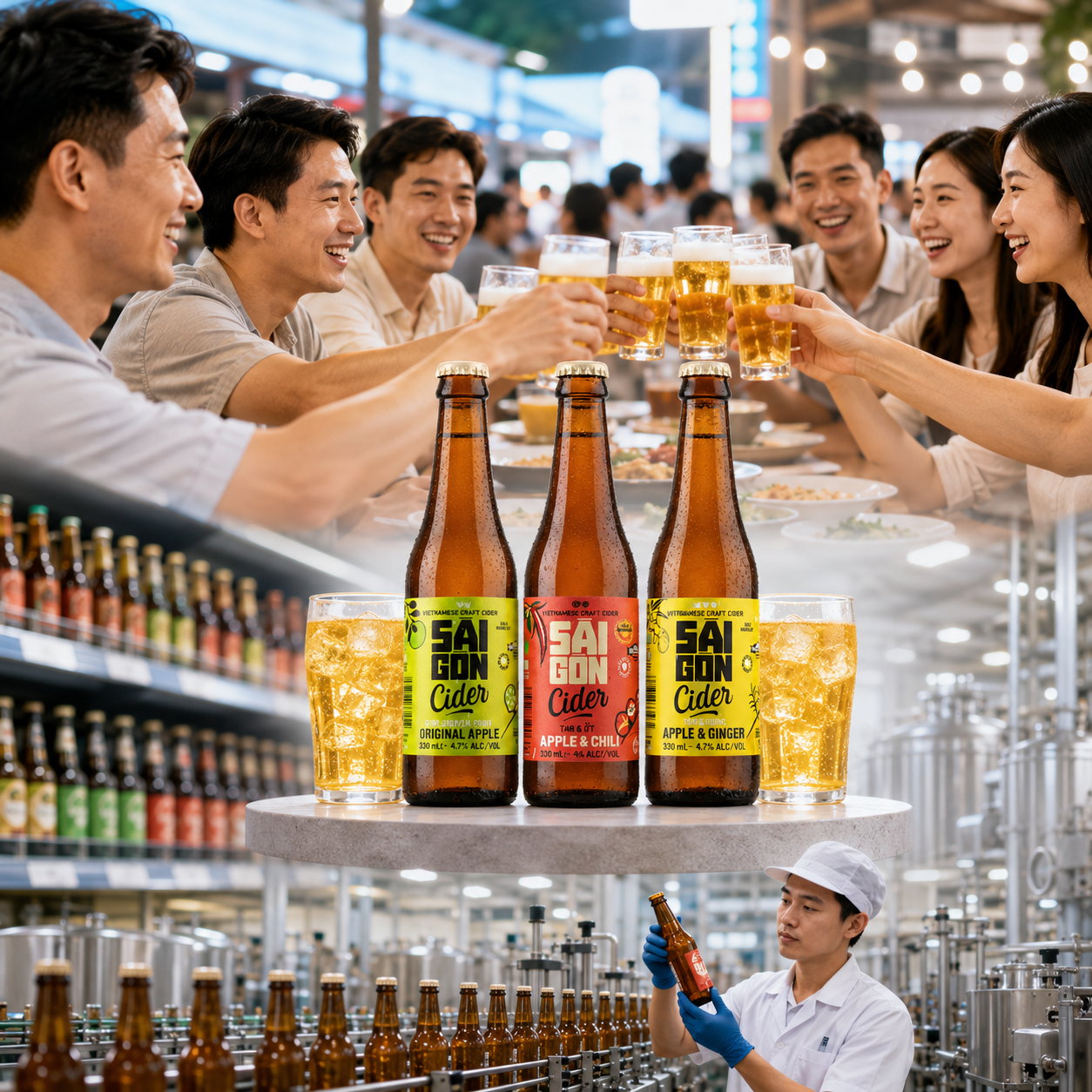
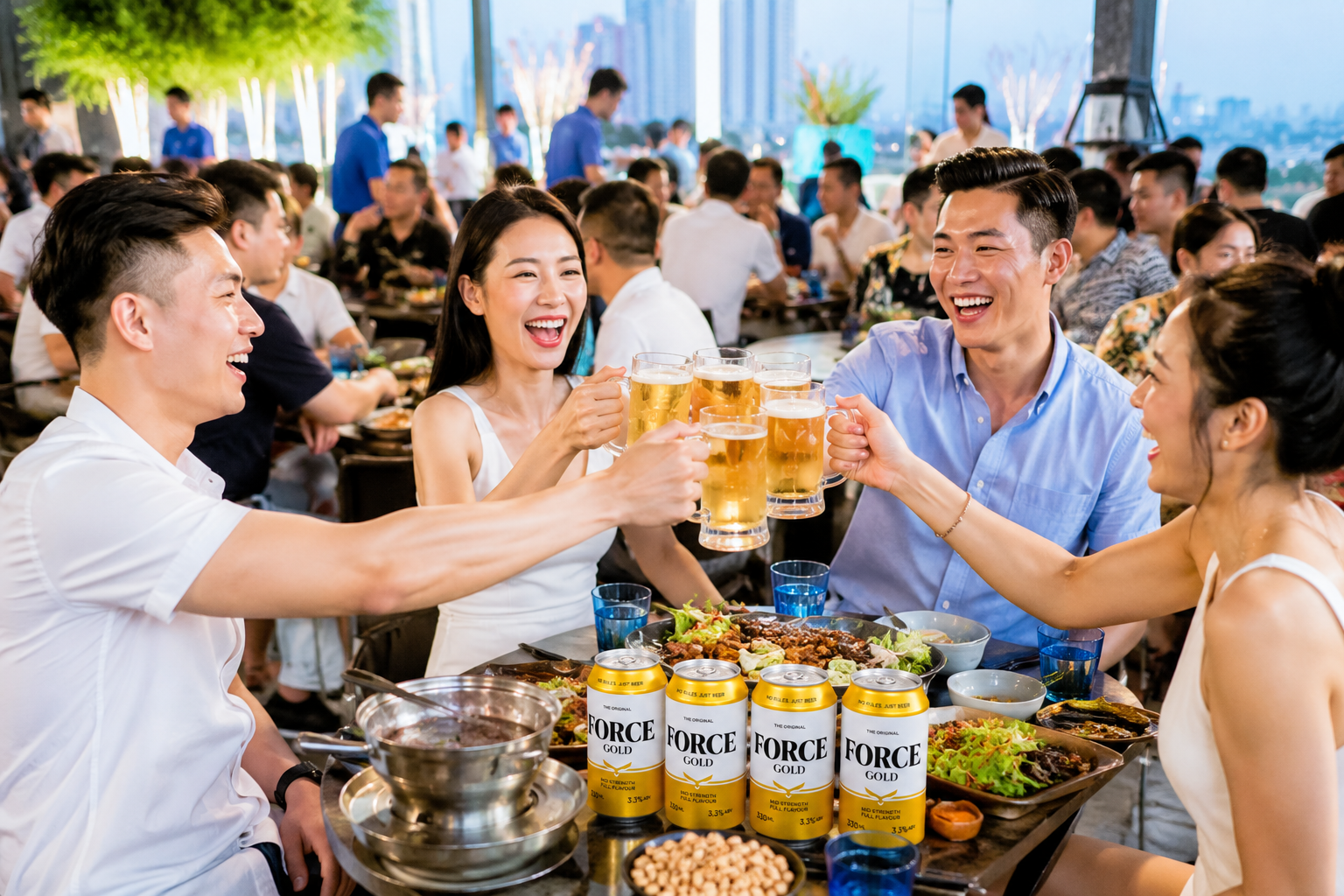
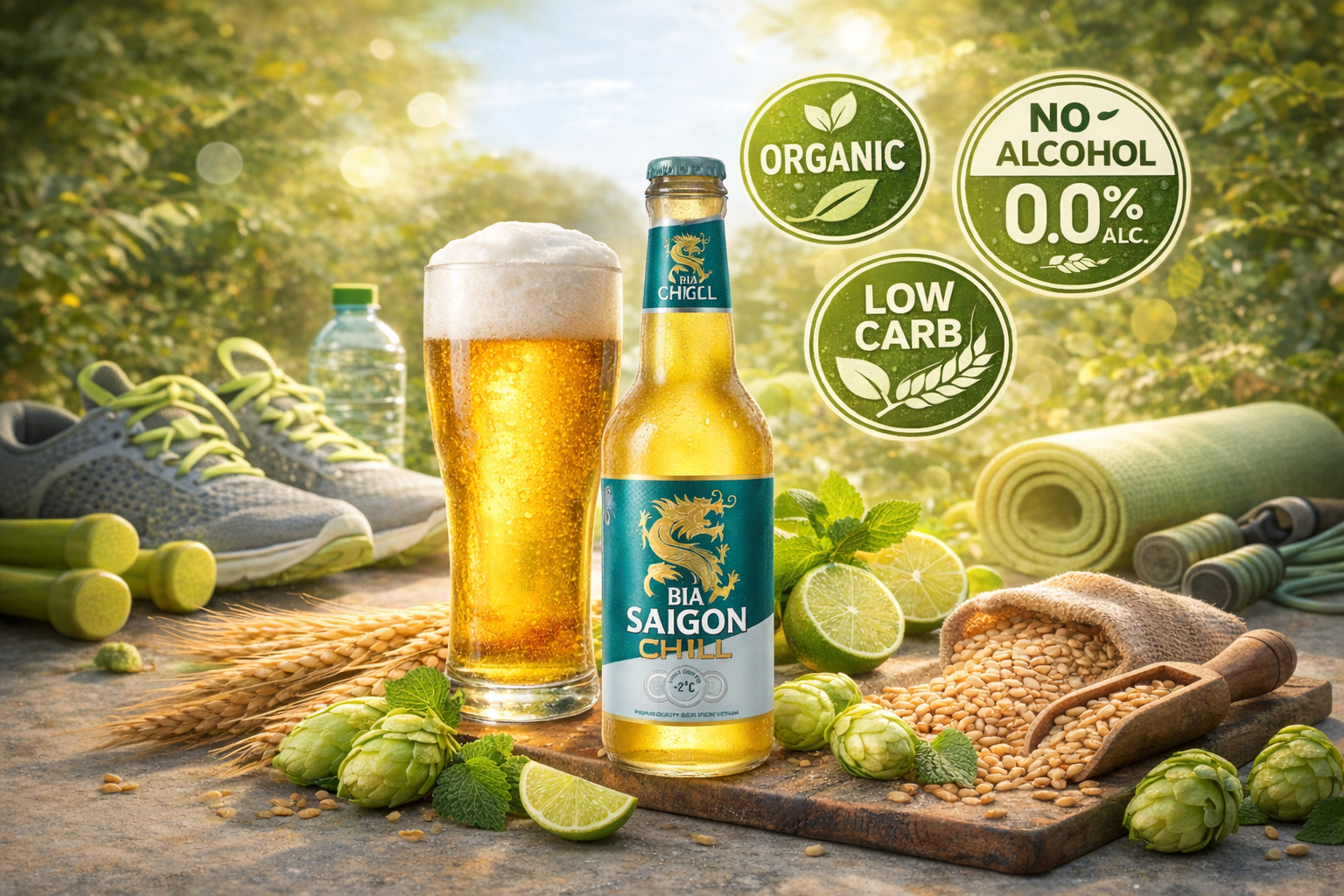
Consumers are becoming increasingly segmented: the mass-market segment still accounts for a large share but is highly price-sensitive, while younger urban consumers are seeking new experiences — from craft beer and fruit beer to low-ABV beer and lightly fermented beverages. This creates an interesting paradox: overall demand is not exploding, but the number of “market opportunities” is increasing.
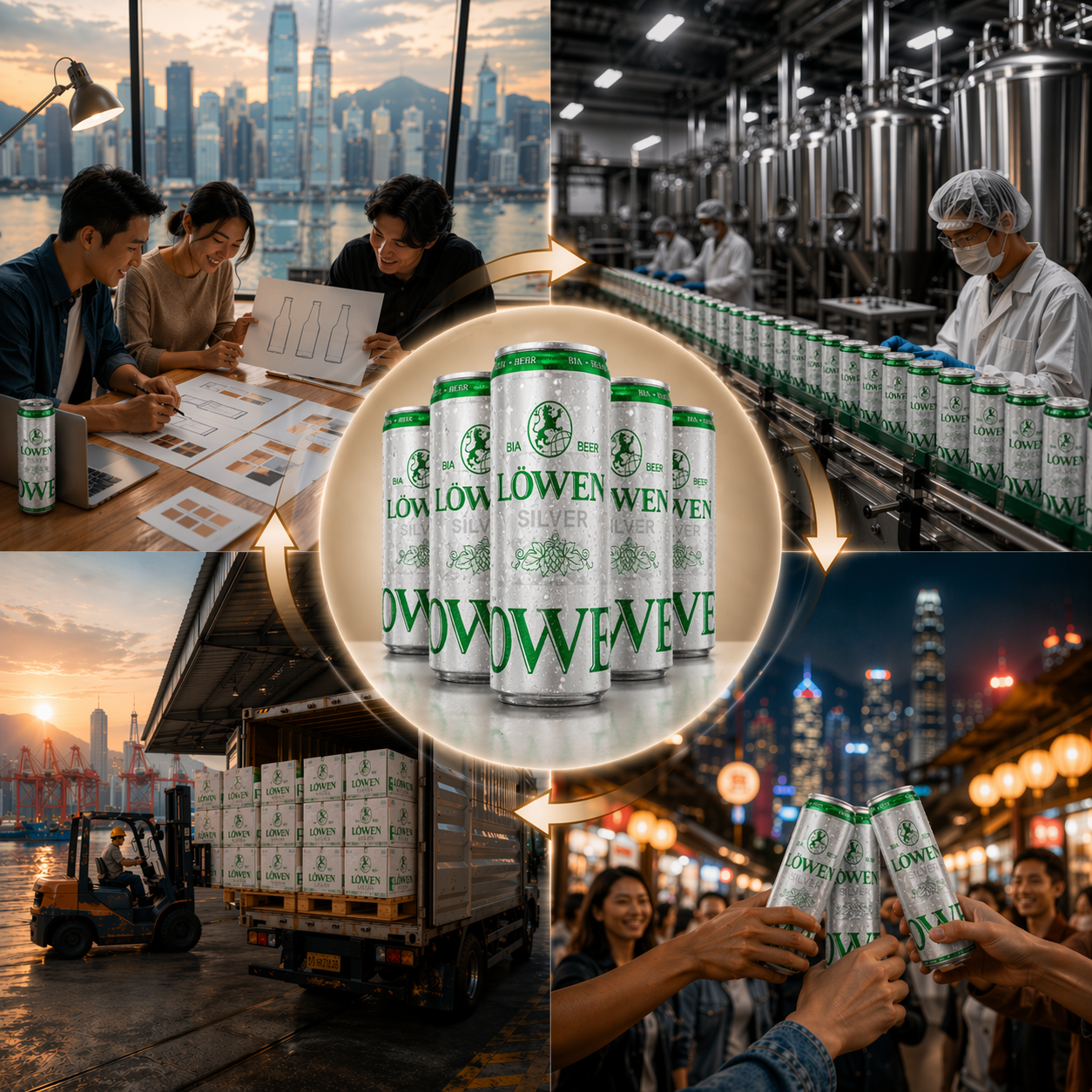
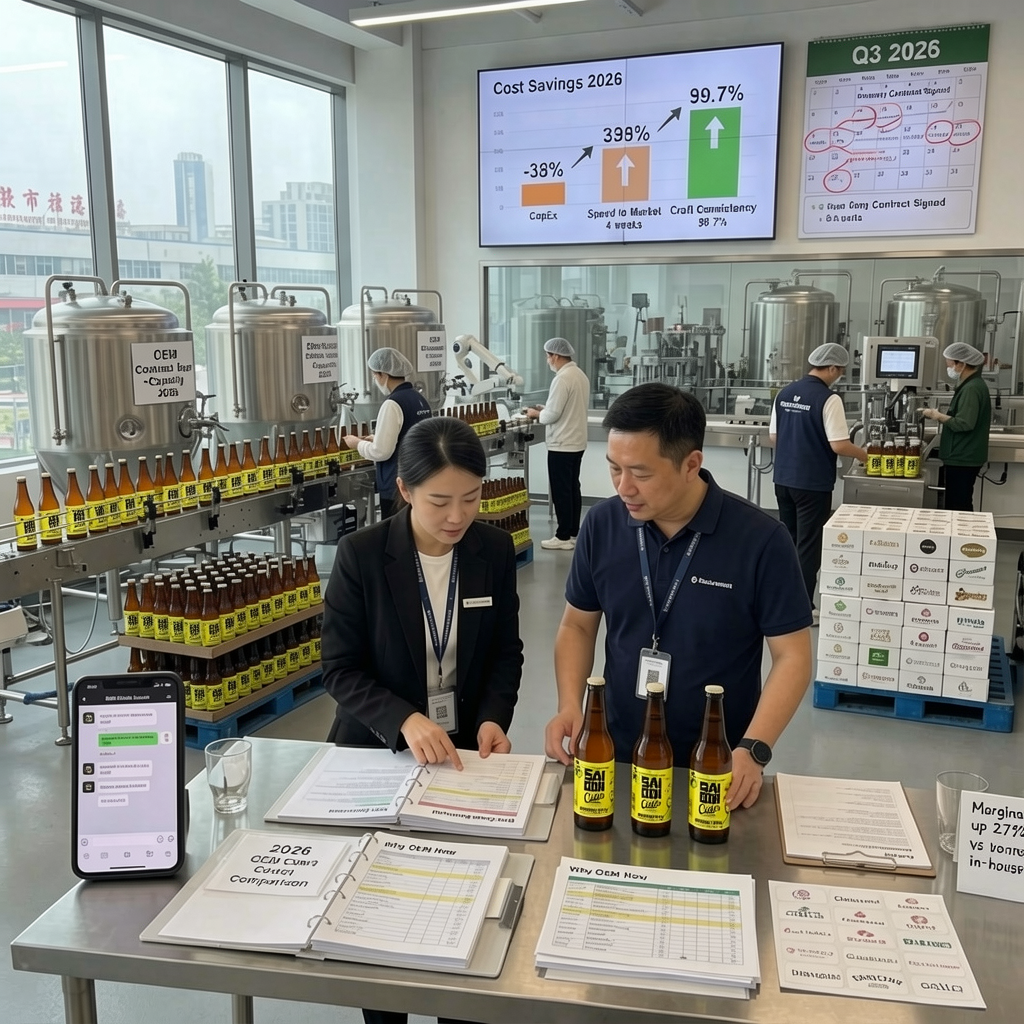
It is precisely in this context that beer OEM manufacturing becomes an adaptive mechanism. Instead of making large investments to serve a fixed product portfolio, businesses can flexibly launch multiple small SKUs, conduct rapid testing, and optimize products based on market feedback. This represents a shift from “mass production” to “mass customization.”
From a strategic perspective, 2026 is not the year of the strongest brand, but the year of the brand that reacts fastest to the market. And OEM is the tool that makes this possible.
Regulatory Pressure and Costs – Catalysts for the OEM Model
One of the most defining factors shaping the 2026 beer market is the pressure of costs and regulations. Special consumption taxes, rising operational expenses, and increasingly strict compliance requirements are making investment in self-owned breweries riskier than ever.
Under the traditional model, businesses must bear:
- Large CAPEX investments (factories, equipment, warehouses)
- Implementation timelines of 2–3 years
- Risks of excess production capacity
Meanwhile, OEM transforms this entire burden into flexible OPEX. This not only helps reduce financial pressure, but also creates a strategic advantage: businesses can reallocate capital toward marketing and distribution — the factors that ultimately determine market share.

Especially in 2026, when the cost of capital is no longer cheap and the market is increasingly unpredictable, OEM becomes a “risk management tool.” Businesses do not need to make the perfect decision from the beginning; they can continuously test, measure, and optimize.
The Rise of Private Label – A Game of Ecosystems, Not Individual Brands
One of the most prominent trends in 2026 is the explosion of Private Label beverages. Not only supermarkets, but also restaurant chains, hotels, and even lifestyle brands are beginning to develop their own private beer lines.
The reason is very clear:
Private Label is not just a product — it is a tool for increasing profit margins and controlling customer experience.
When an F&B chain owns its own beer line, it can:
- Increase value per table
- Create differentiation from competitors
- Build deeper brand recognition
However, the biggest barrier has always been production. Not every business has the capability to operate a brewery that meets international standards. This is exactly where beer OEM manufacturing becomes the “invisible infrastructure” behind the Private Label wave.
Instead of becoming manufacturers, businesses become brand builders, while production is handled by a professional partner. This model enables much faster market expansion compared to the traditional approach.
Vietnam – A New Production Hub for the Regional Beer Industry
It is no coincidence that more international corporations are shifting production to Vietnam. In the beer industry, Vietnam’s advantage comes from a rare combination of factors:
- Competitive production costs
- Strategic geographic location for exports
- A dense network of free trade agreements (FTAs)
Among these, Central Vietnam is emerging as a true “low-cost zone.” Factors such as:
- Labor costs 35–60% lower
- Electricity costs 20–25% lower
- Close proximity to seaports
create a cost structure that many other countries struggle to compete with.
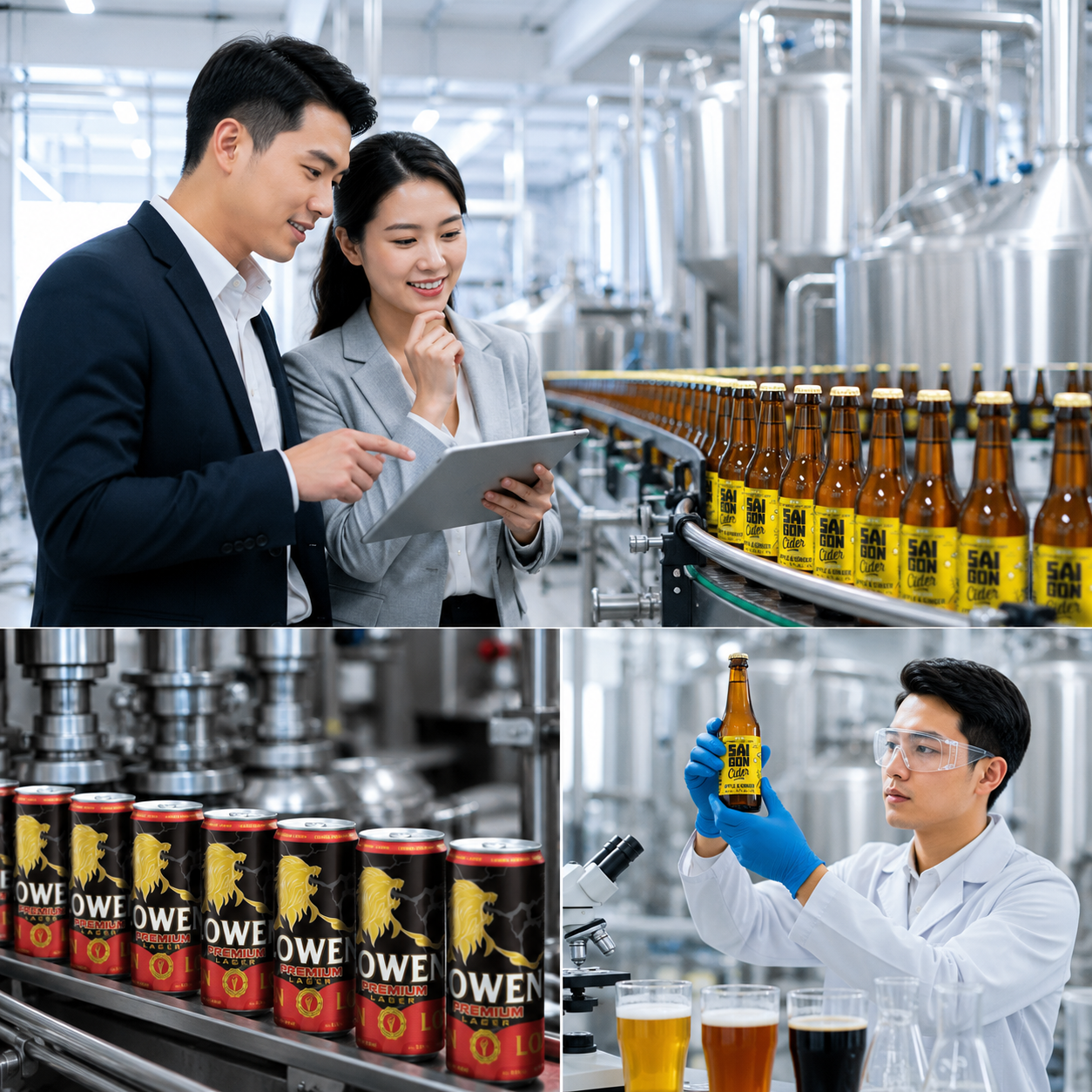
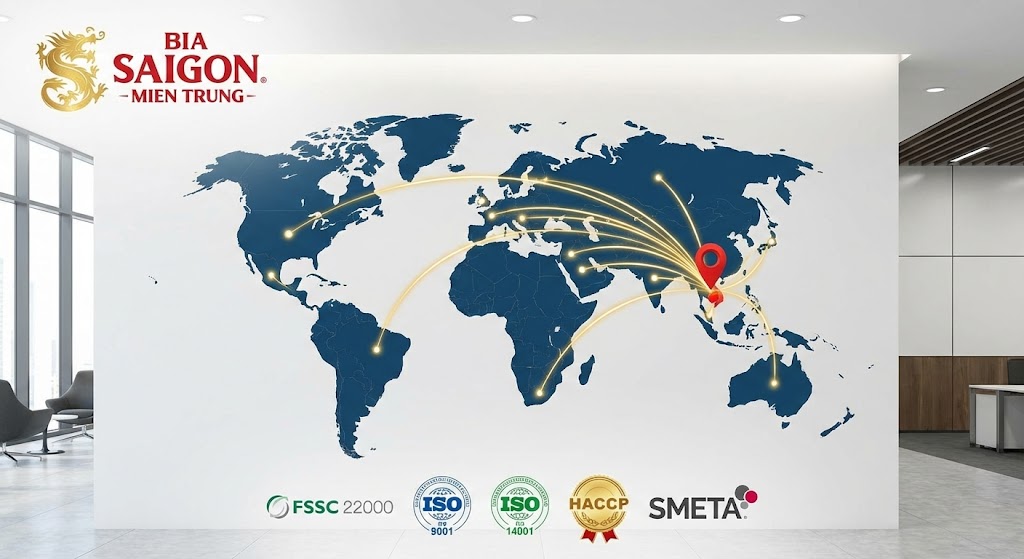
Saigon Beer – Central Region (SMB) is leveraging these advantages to build a large-scale OEM platform. With factory systems in Dak Lak, Quy Nhon, and Phu Yen, SMB not only manufactures products, but also acts as a logistics hub for export-oriented projects.
This is especially important for OEM businesses: costs are not only about production, but also about transportation, inventory, and lead time. A production system located near ports significantly reduces the total cost of ownership (TCO).
Quality and Standards – The Mandatory “Passport” for Global Competition
If in the past “good beer” was enough, by 2026 that is no longer true. The market — especially export markets — now demands something greater: a verifiable quality system.
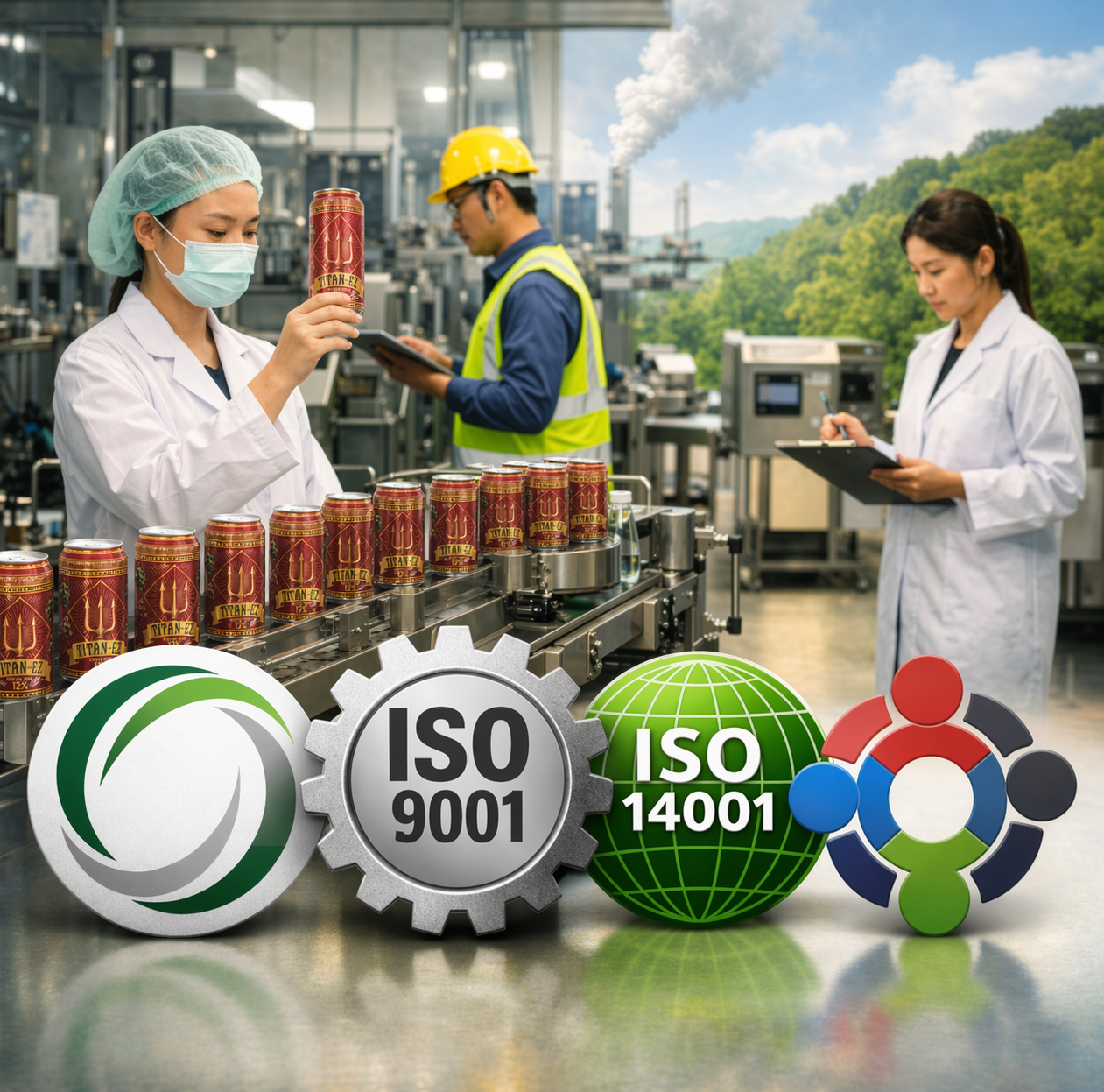
Certifications such as:
- FSSC 22000
- ISO 9001, ISO 14001
- SMETA
are not merely technical standards, but commercial tools. They help businesses:
- Pass audits from international distributors
- Reduce legal risks
- Increase brand credibility
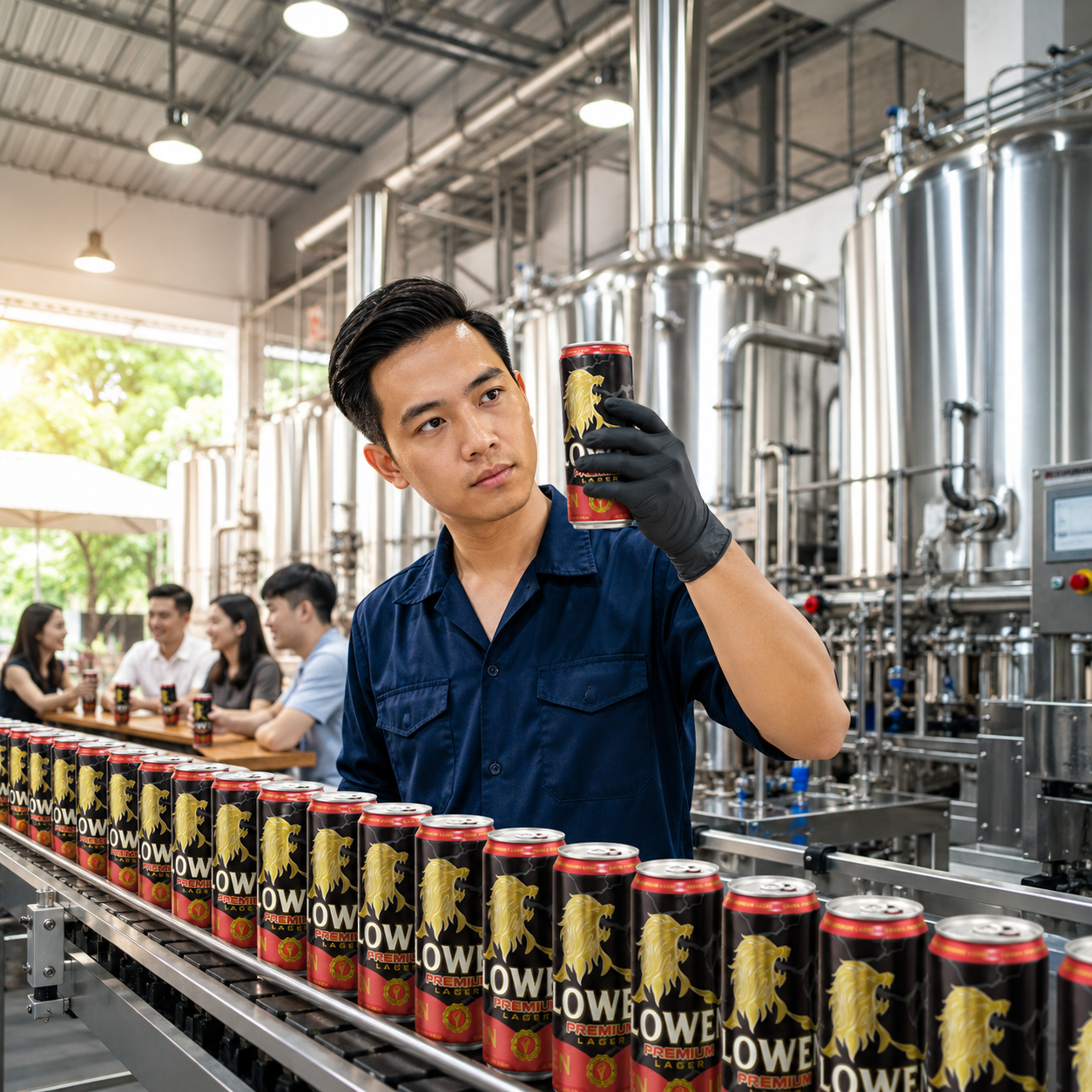
At SMB, the QA/QC system operates according to industrial standards with strict control over every production batch. This ensures that one million cans of beer maintain the same quality as the very first can — a critical factor in building a long-term brand.
In today’s competitive landscape, quality is no longer a competitive advantage. It is a mandatory condition for survival.
OEM – The Strategic Lever for Businesses to “Move Fast and Win Fast”
The greatest advantage of OEM is not cost, but speed and strategic structure.
In the beverage industry:
- Trends change rapidly
- Product life cycles are short
- Consumers become bored easily
If a business spends two years building a factory, it has already missed two or three trend cycles.
Meanwhile, with OEM manufacturing at SMB:
- Product launch timeline: 6–10 weeks
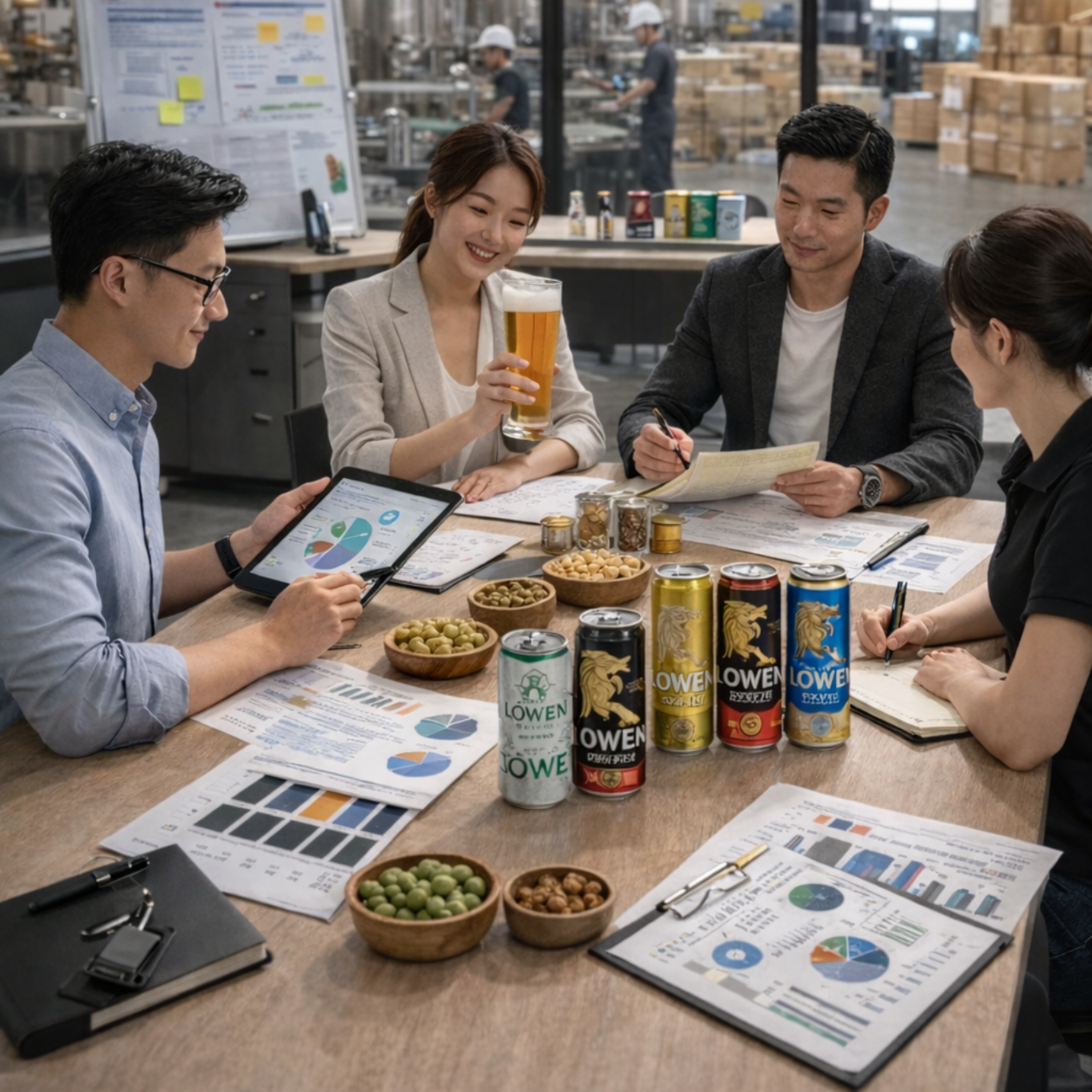
- Ability to test multiple SKUs simultaneously
- Rapid adjustments based on market data
This creates a massive advantage: the ability to learn faster than competitors.
More importantly, OEM allows businesses to focus on what truly creates value:
- Branding
- Marketing
- Distribution
This is the real “battlefield” of the beer industry in 2026.
What Opportunities Exist for Private Label Beer Businesses in 2026?
2026 is not an easy year, but it may be the most opportunity-rich year for businesses following the right model.
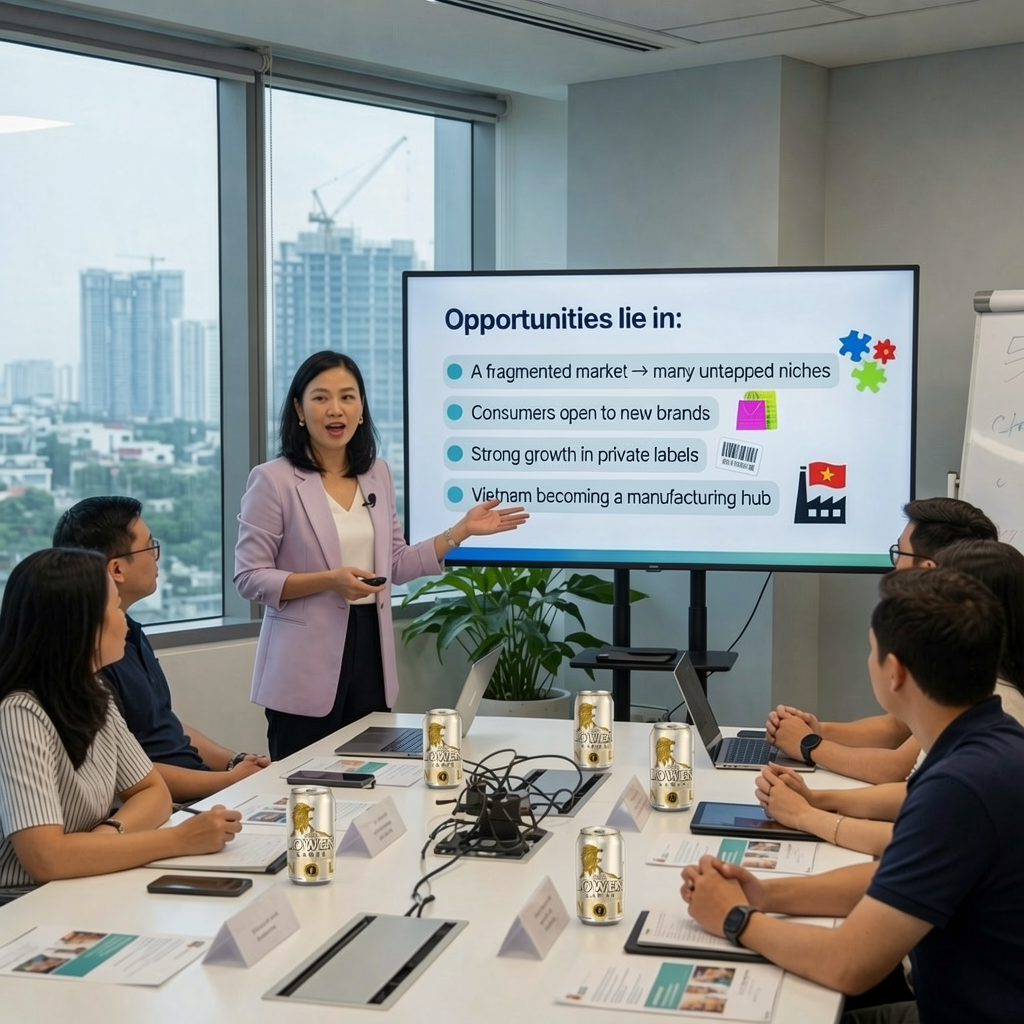
The opportunities lie in:
- A fragmented market → many untapped niches
- Consumers becoming more open to new beer brands
- Strong growth of Private Label beer
- Vietnam emerging as a manufacturing hub
However, to capture these opportunities, businesses need a new mindset:
not owning factories — but owning the market.
OEM manufacturing at SMB is the tool that makes this mindset possible:
- Optimizing production costs
- Leveraging FTAs for exports
- Ensuring international-standard product quality
- Scaling rapidly without carrying CAPEX risks
In the long term, the winning brand will not be the one that manufactures best, but the one that:
- Understands customers best
- Reacts fastest
- Allocates capital most intelligently
OEM Consultation Contact
If you are looking for a partner to start or expand your private beer brand:
Company: Saigon Beer – Central Region Joint Stock Company (SMB)
Address: 01 Nguyen Van Linh Street, Tan An Ward, Buon Ma Thuot City, Dak Lak Province
OEM consultation hotline: (+84) 94 1127575
Email: oem@biasaigonmt.com
Website: https://oem.biasaigonmt.com/
SMB is not just a factory — it is a strategic platform that helps you enter the beer market in 2026 faster, safer, and more efficiently.