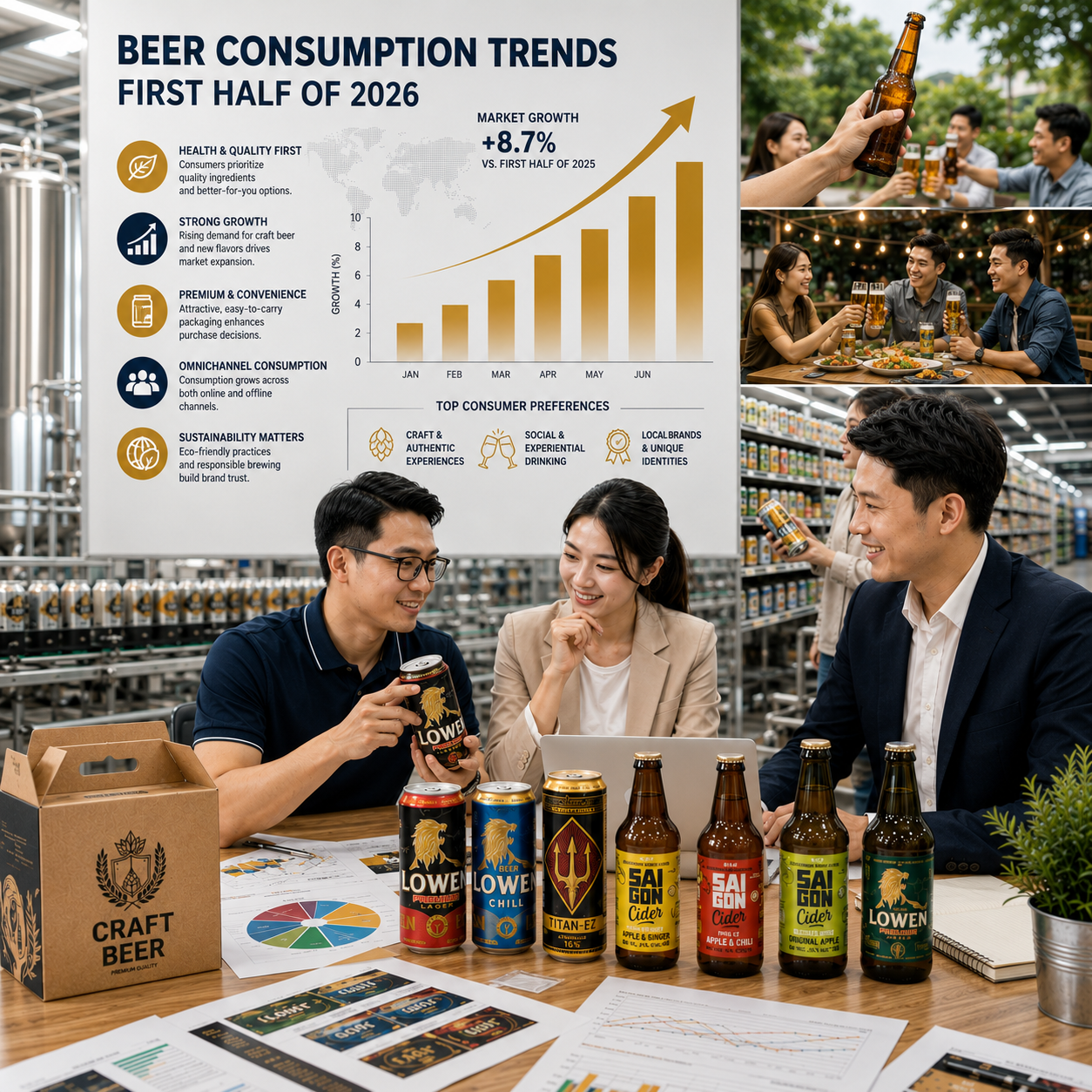


The beer market in 2026 no longer operates under the logic that “the bigger player wins.” For many decades, the beer industry was a game of scale, where businesses invested heavily in breweries, production lines, and distribution systems to maximize output. However, as consumer behavior changes, scale is gradually losing its dominant role. Consumers are no longer absolutely loyal to a single brand; instead, they are shifting toward exploration, experimentation, and choices based on personal experiences.
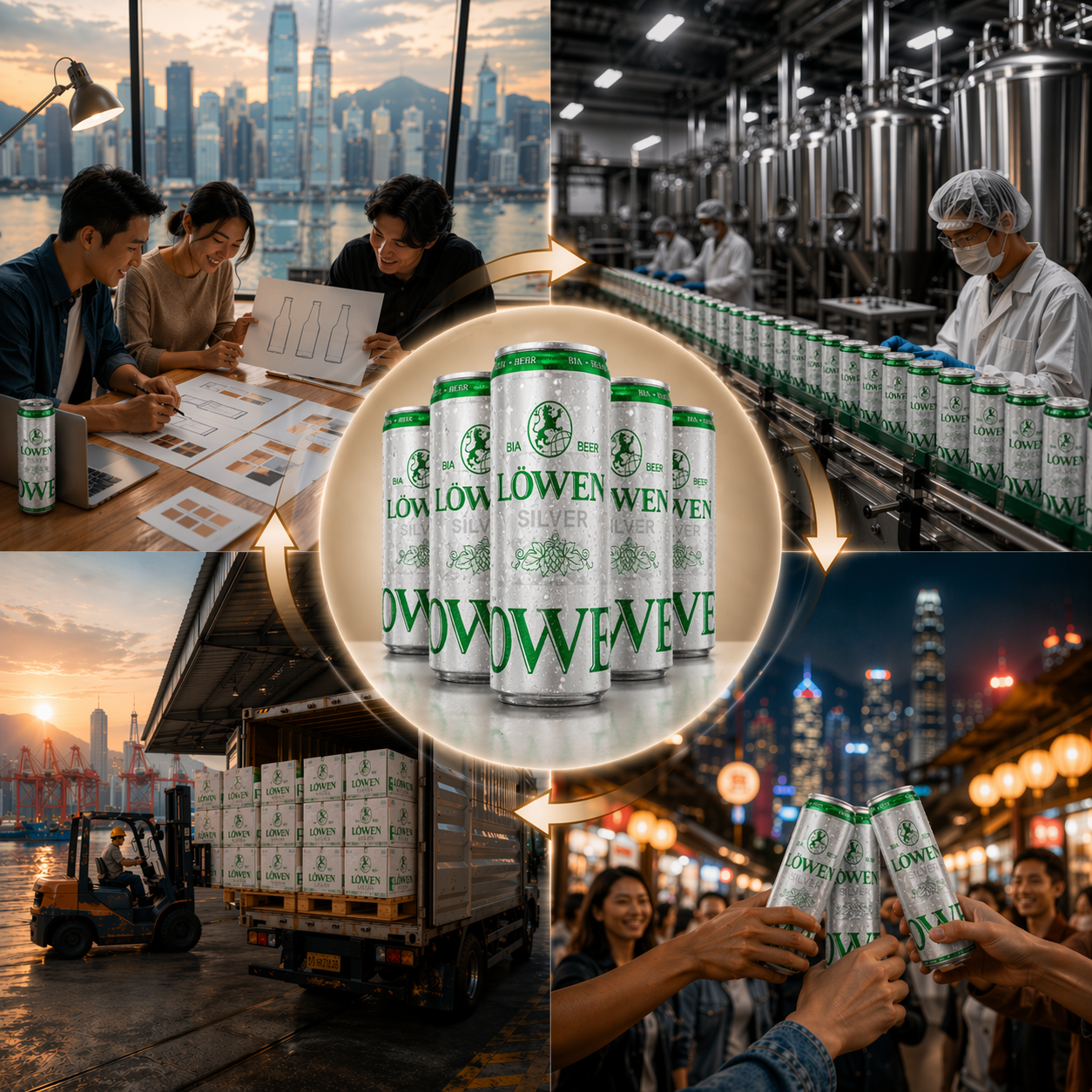
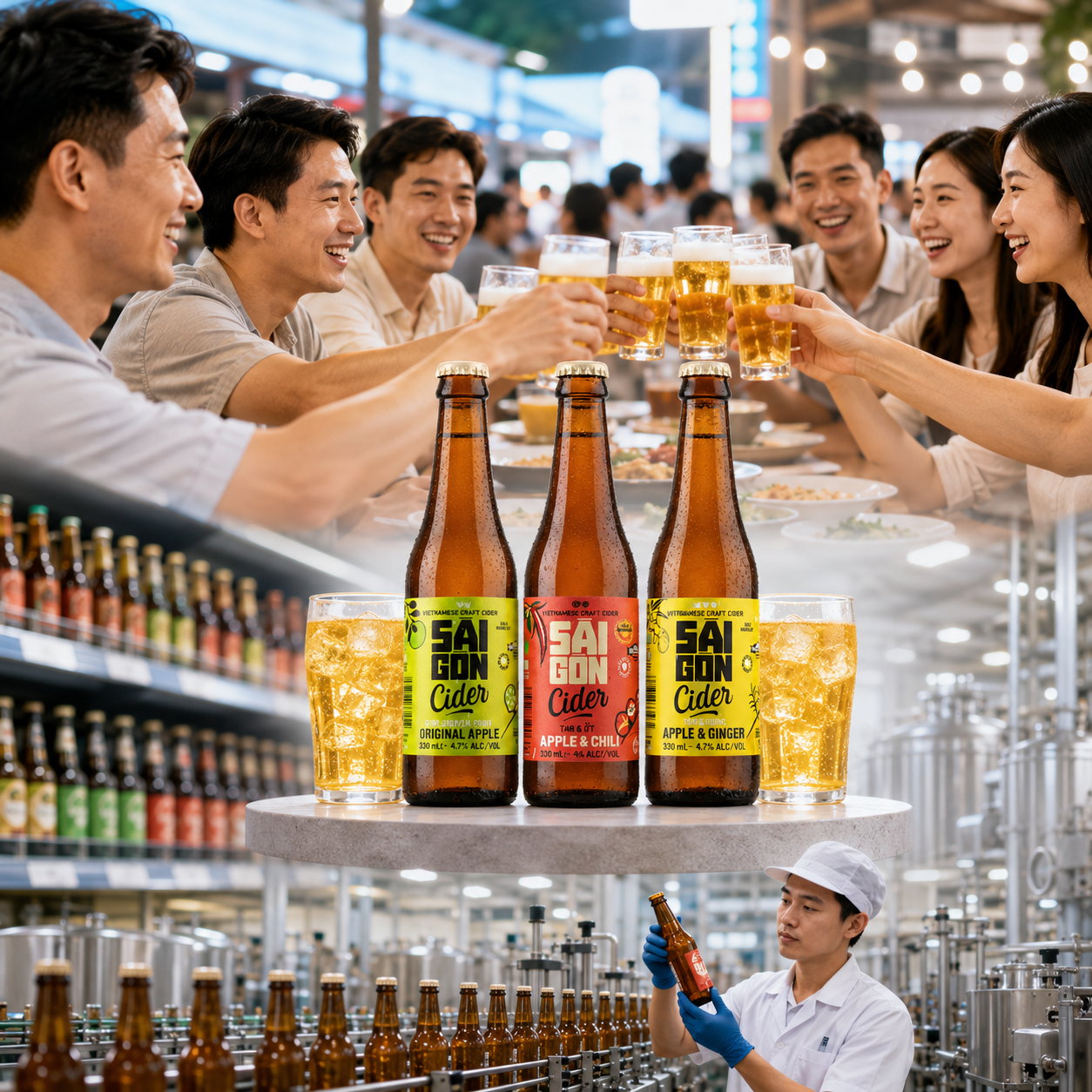
This fragmentation has completely changed the nature of competition. The market is no longer “one large ocean,” but rather a collection of hundreds of “small waters,” each representing a specific demand: light beer, fruit beer, craft beer, locally inspired beer, or beer designed for specific consumption spaces such as restaurants, lounges, or events.
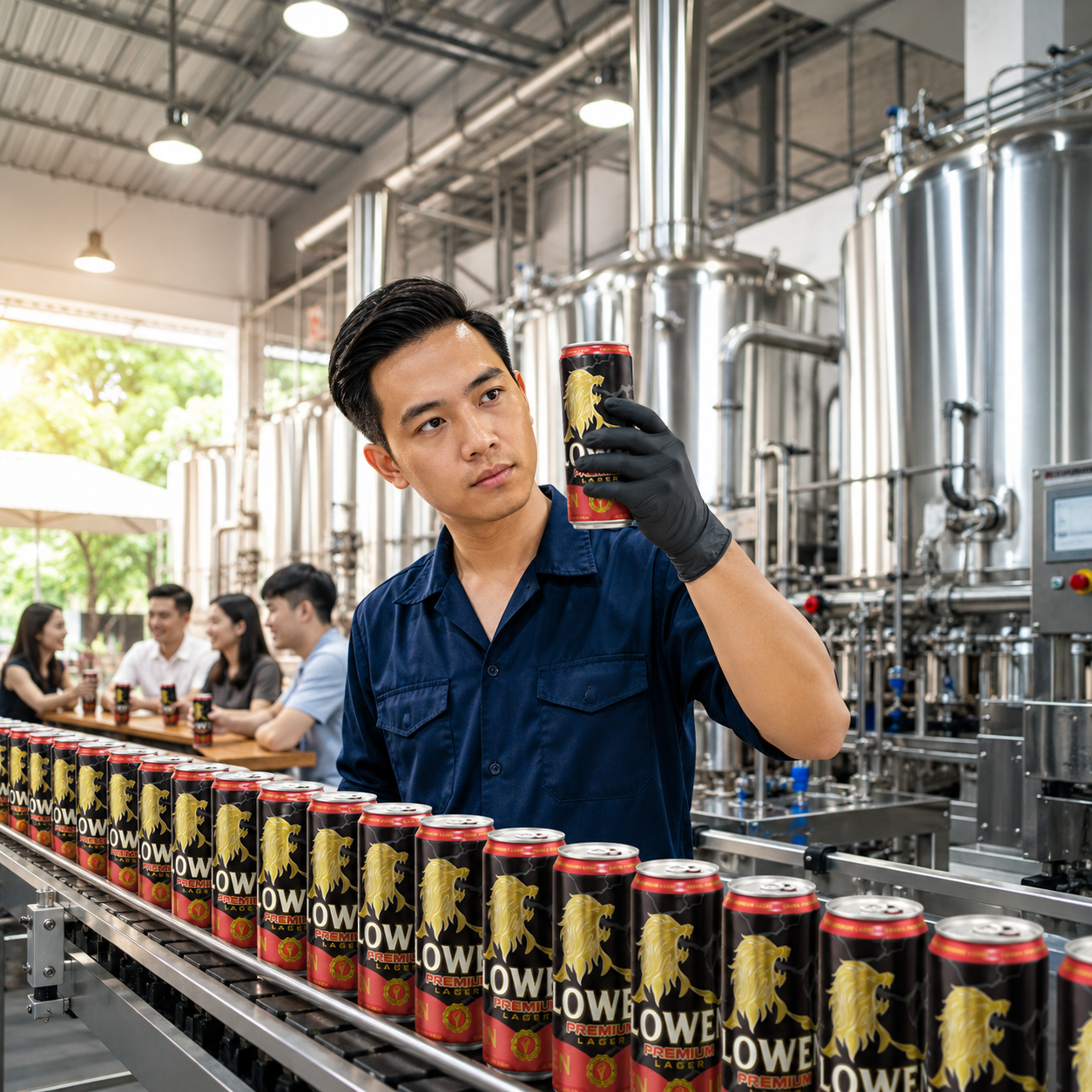
In this context, the traditional production model becomes rigid. When businesses invest in a brewery, they are forced to optimize output volume, which limits their ability to experiment. In contrast, OEM manufacturing opens up an entirely different approach: production is no longer a barrier, but a service that can be “turned on or off” according to market demand.
This explains why more and more brands are shifting toward beer OEM manufacturing. Not because they are unable to produce products themselves, but because they realize that in today’s market, flexibility matters more than ownership.
The Financial Challenge – When CAPEX Becomes a Strategic Burden
A brewery is not just an asset; it is a long-term financial commitment. Tens of millions of dollars in initial investment are not only tied up in equipment, but also in opportunity costs — capital that could otherwise be used to build the brand, develop distribution channels, or expand into new markets.
Under stable market conditions, large CAPEX investments may make sense. But 2026 is not a stable market. Fluctuations in demand, raw material costs, tax policies, and competition have made “placing long-term bets on fixed assets” riskier than ever.
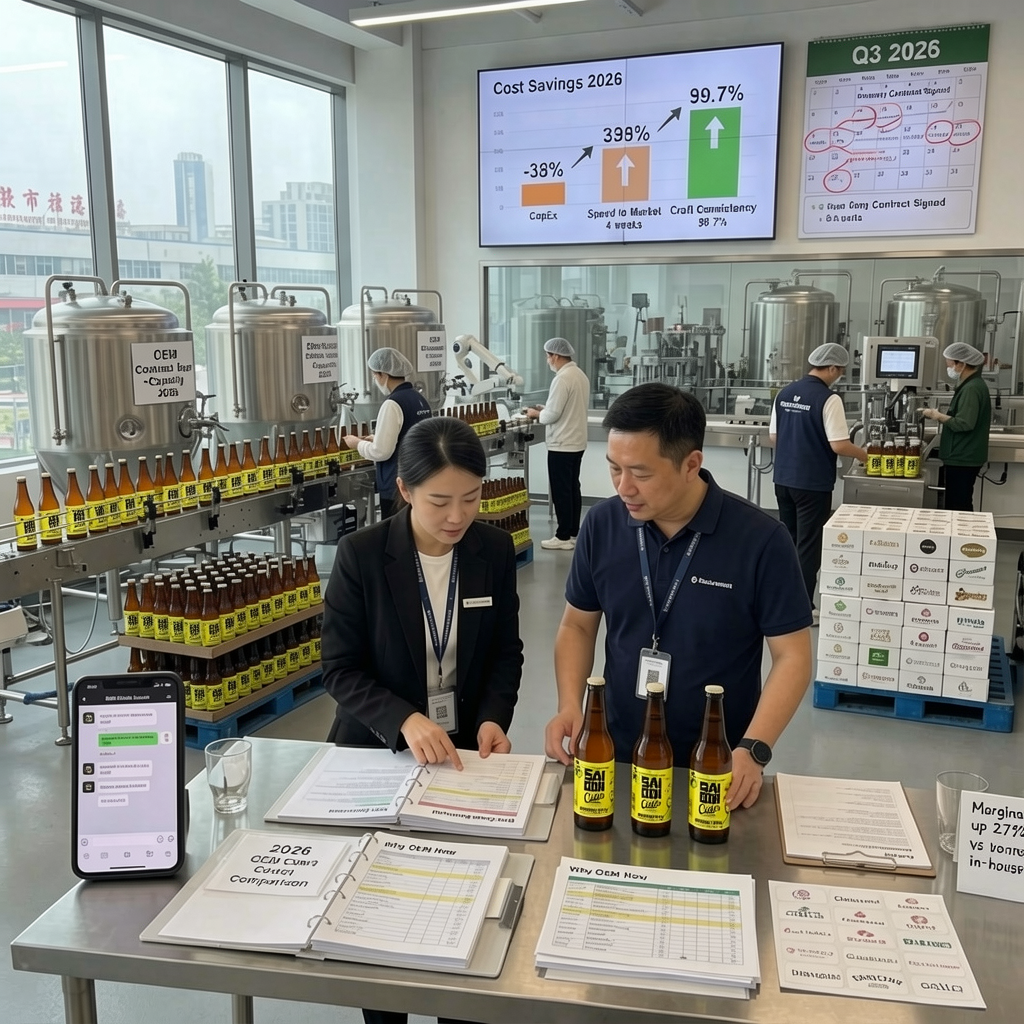
OEM manufacturing solves this problem by changing the financial structure. Instead of investing upfront and hoping the market absorbs the production volume, businesses only produce when demand exists. This transforms production costs from CAPEX into OPEX — a form of variable cost that flexibly scales with revenue.
More importantly, OEM frees up cash flow. Without capital being locked into a brewery, businesses can invest heavily in marketing, branding, and distribution systems. In the beer industry, these are the factors that truly determine success.
For this reason, shifting to OEM is not merely an operational decision — it is a strategic financial decision.
Speed – A Survival Factor in the Modern Beverage Industry
In the beverage industry, time is not only money — it is a competitive advantage.
A traditional beer product can take two to three years to move from concept to market if a business builds its own brewery. During that time, consumer trends may change multiple times. A product once considered highly promising may become outdated before it even launches.
In contrast, OEM manufacturing dramatically shortens this cycle. With existing infrastructure already in place, a product can be developed, tested, and launched within weeks or months. This creates a major advantage: businesses can move “in sync with the market” rather than constantly chasing it.
Speed also creates another benefit: the ability to learn. When businesses can launch multiple products within short periods of time, they gather market data faster. As a result, they better understand customers, optimize their product portfolio, and reduce the risk of costly mistakes.
In the context of 2026 — where trends shift rapidly and competition becomes increasingly intense — speed is no longer a secondary advantage; it is a condition for survival.
Cost Advantages – The Competitive Foundation of Beer OEM in Vietnam
One of the factors driving the rapid growth of beer OEM manufacturing in Vietnam is its structural cost advantage. Unlike developed markets, where production costs are high and difficult to reduce, Vietnam — especially the Central region — offers a clear advantage.
Here, labor costs are significantly lower than in many neighboring countries, while energy costs also remain competitive. When these two factors combine, beer production costs can decrease substantially, especially at large scale.
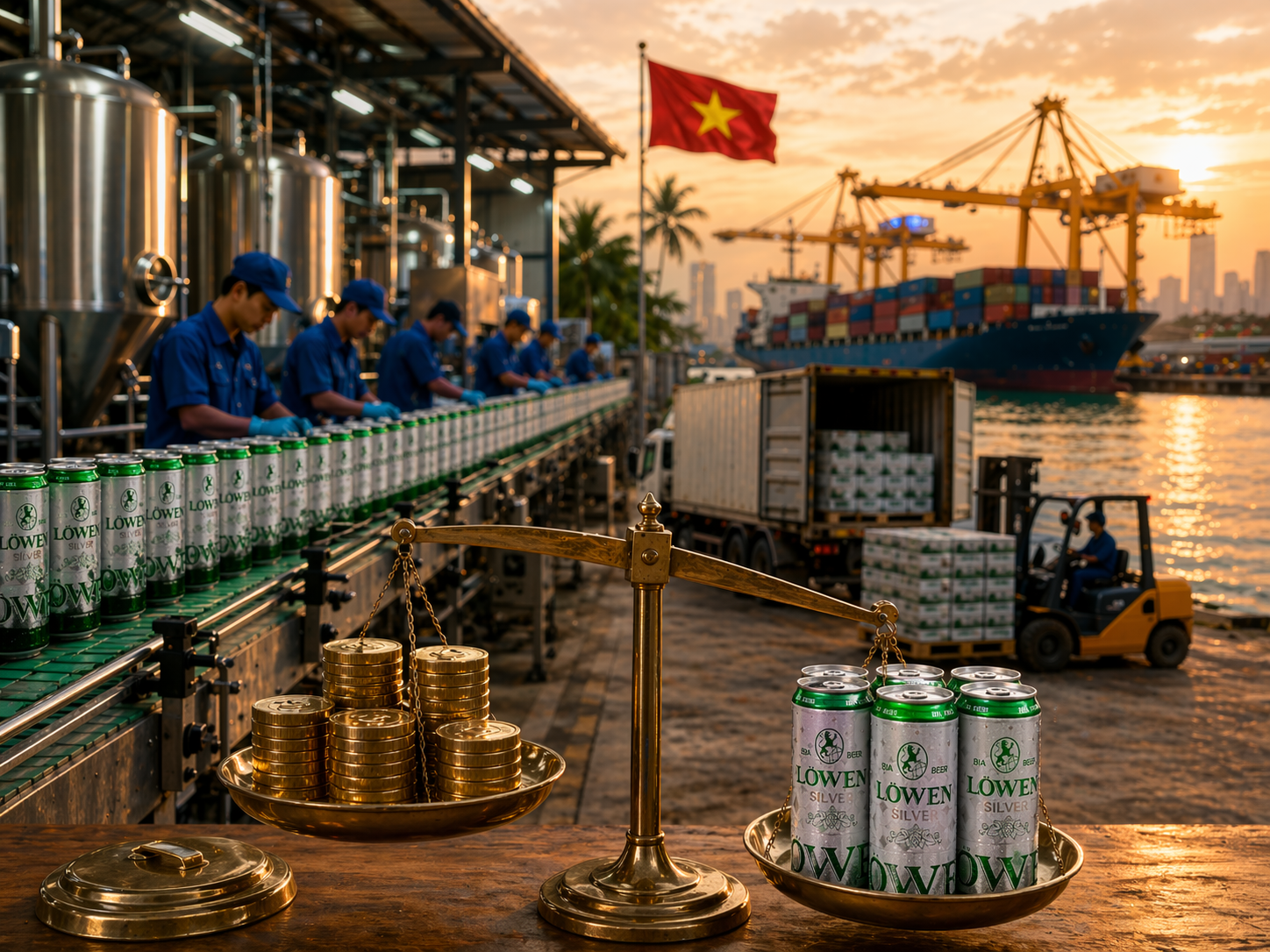
In addition, the geographic proximity to seaports helps reduce logistics costs, especially for export-oriented projects. This not only helps businesses save costs, but also improves delivery speed and responsiveness to market demand.
Within the OEM manufacturing model, these advantages are effectively “shared” with client businesses. Instead of building their own production systems in high-cost regions, companies can leverage Vietnam’s existing infrastructure to optimize production costs.
The result is a more efficient cost structure, allowing businesses to compete more effectively both domestically and internationally.
Quality Standards – From Competitive Advantage to Mandatory Requirement
While quality was once a differentiating factor, by 2026 it has become a mandatory requirement. Consumers are becoming increasingly demanding, while export markets require ever-higher standards.
A new beer brand attempting self-production would face numerous challenges: quality control, regulatory compliance, and management system development. These are not only technical challenges, but also matters of cost and time.
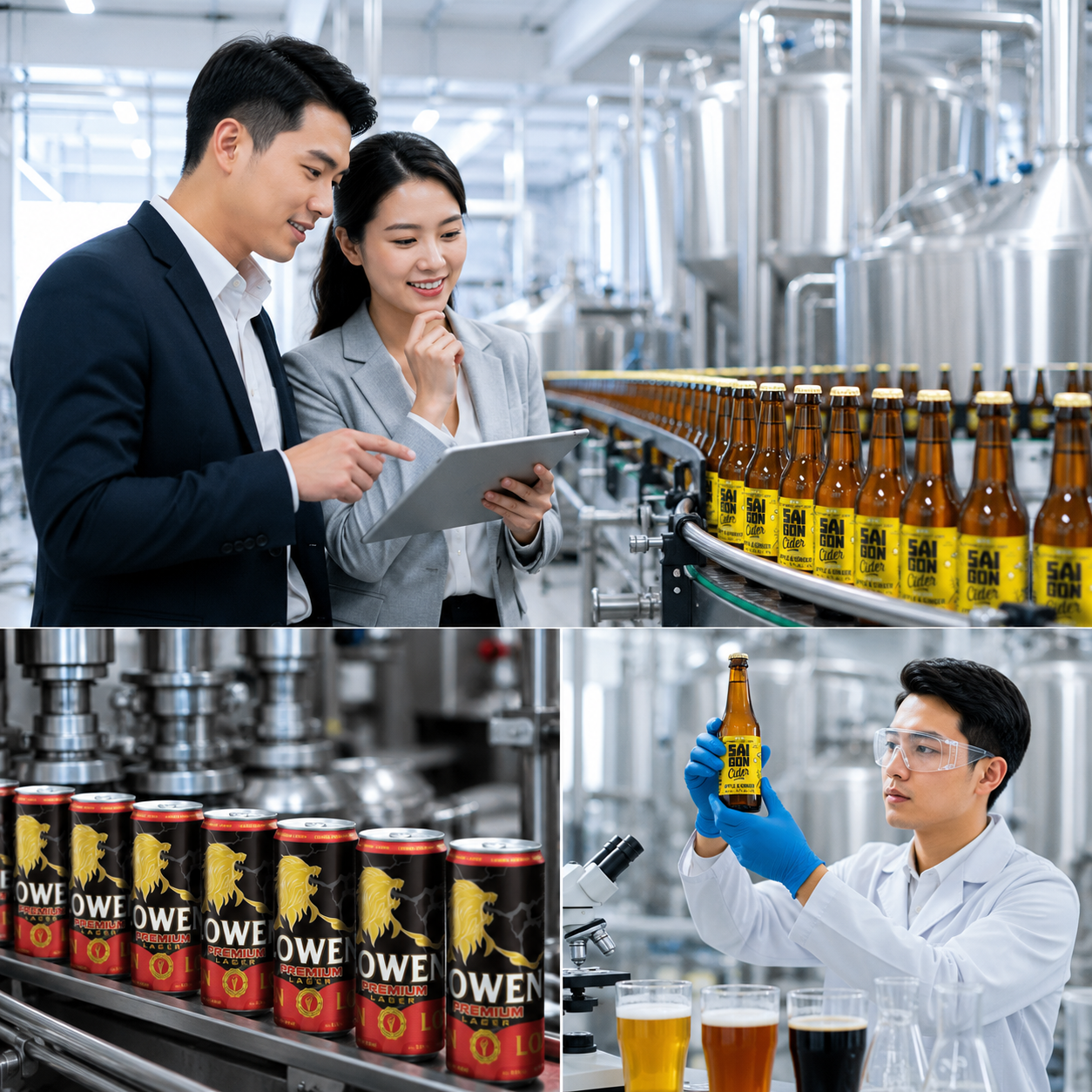
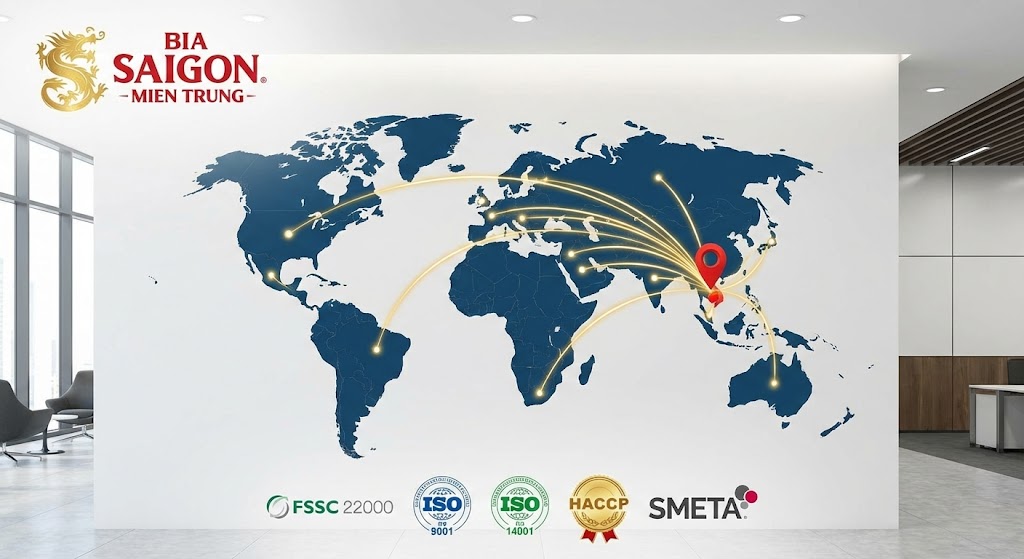
OEM manufacturing solves this issue by providing a system that has already been standardized. When products are manufactured in an internationally certified brewery, they not only meet quality requirements, but also gain access to modern distribution channels and international markets.
This is especially important for brands aiming for long-term growth. A product cannot build a sustainable brand if its quality is inconsistent. And in today’s market, inconsistency is discovered very quickly.
R&D as a Service – Lowering Barriers to Entry in the Beer Industry
One of the biggest changes in the beer industry is that R&D is no longer the “privilege” of large manufacturers. In the past, developing a new beer line required technical teams, laboratories, and operational expertise.
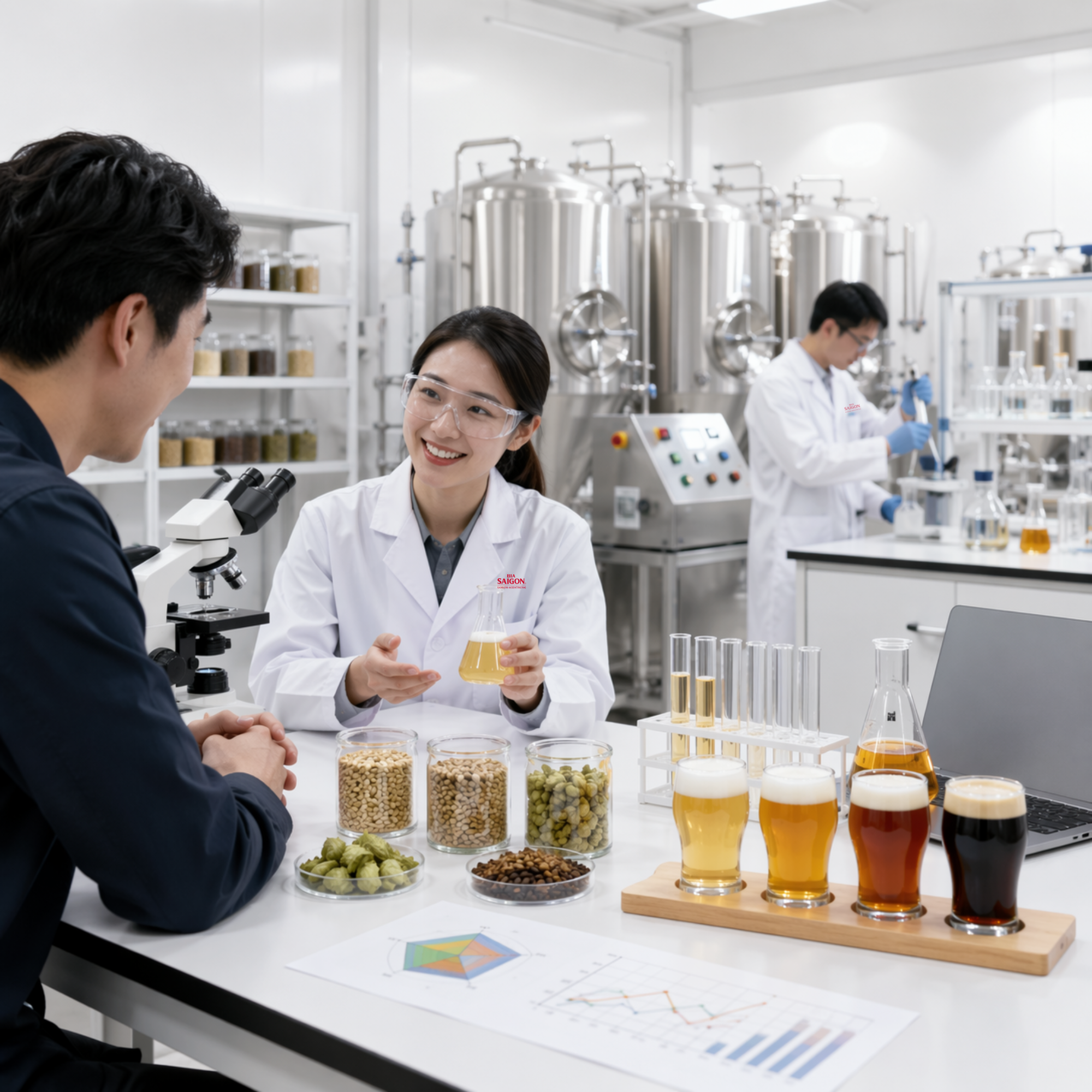
Today, OEM manufacturing turns R&D into a service. Businesses only need an idea and a positioning strategy; the rest is handled by a professional system.
This significantly lowers barriers to entry in the beer industry. Startups, F&B chains, or even non-industry brands can participate in the beer market without heavy investment in technical infrastructure.
More importantly, it allows businesses to focus on their core value: understanding customers and building a brand.
OEM Is the Future of the Beer Industry, Not Just a Trend
The shift toward OEM manufacturing is not a temporary trend. It is the result of a fundamental transformation in how the beer industry operates.
In a world where:
- Markets are fragmented
- Trends change rapidly
- Costs are increasing
- Competition is becoming increasingly intense
owning a brewery is no longer a sustainable competitive advantage. Instead, flexibility, speed, and financial management have become the decisive factors.
OEM manufacturing provides exactly that. It allows businesses to:
- Launch products quickly
- Optimize costs
- Reduce risks
- Focus on the market
Therefore, the question is no longer “should we adopt OEM or not,” but rather “which OEM partner should we work with, and how do we optimize it best.”
Company: Saigon Beer – Central Region Joint Stock Company (SMB)
Address: 01 Nguyen Van Linh Street, Tan An Ward, Buon Ma Thuot City, Dak Lak Province
OEM Hotline: (+84) 94 1127575
Email: oem@biasaigonmt.com
Website: https://oem.biasaigonmt.com/
If you are looking to build or expand your beer brand in 2026, OEM is not just an option — it is a strategy that helps you move faster, safer, and more efficiently.