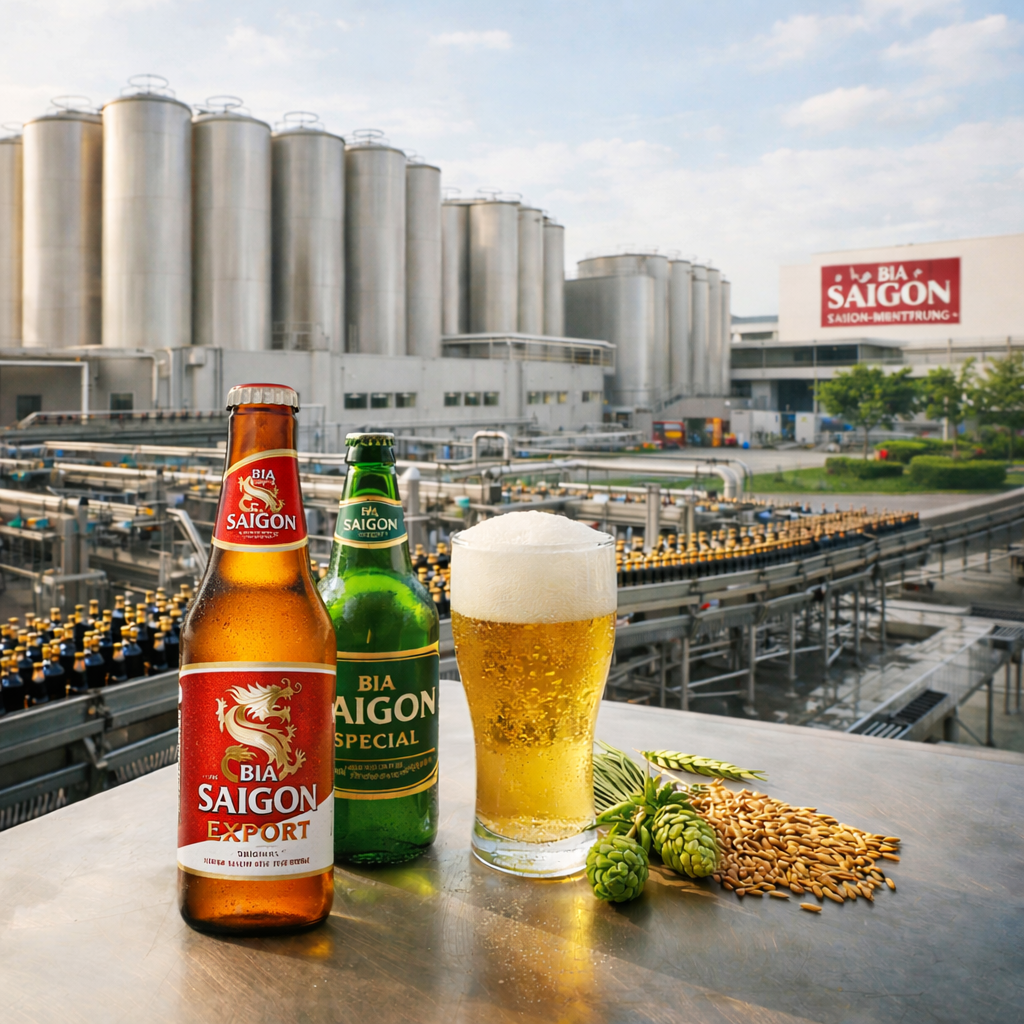


Over the past decade, the global beverage industry has witnessed a significant shift in value-creation models. Whereas owning a factory was once considered the “power standard” of a brand, today—amid rising capital costs, shorter product life cycles, and rapidly changing consumer behavior—the OEM model is increasingly becoming a strategic choice for many modern beverage brands. In the beer industry in particular—an industry characterized by high capital intensity, substantial technical barriers, and complex regulatory requirements—the question of “contract brewing versus self-production” is no longer a purely operational consideration. Instead, it has evolved into a C-level strategic decision, directly impacting IRR, NPV, break-even points, and long-term market scalability.
The CAPEX challenge – Fixed asset investment costs
From the perspective of a CPO or an investment advisor, the first question to be answered is not “does the beer taste good,” but rather where cash flow will be locked in and for how long. Building an industrial-standard brewery in Vietnam today requires a CAPEX investment of approximately USD 10–20 million, depending on scale and level of automation. This investment includes costs for industrial land, civil construction, brewing–fermentation–filling lines, water treatment systems, wastewater treatment facilities, cold storage, QC laboratories, as well as initial working capital.
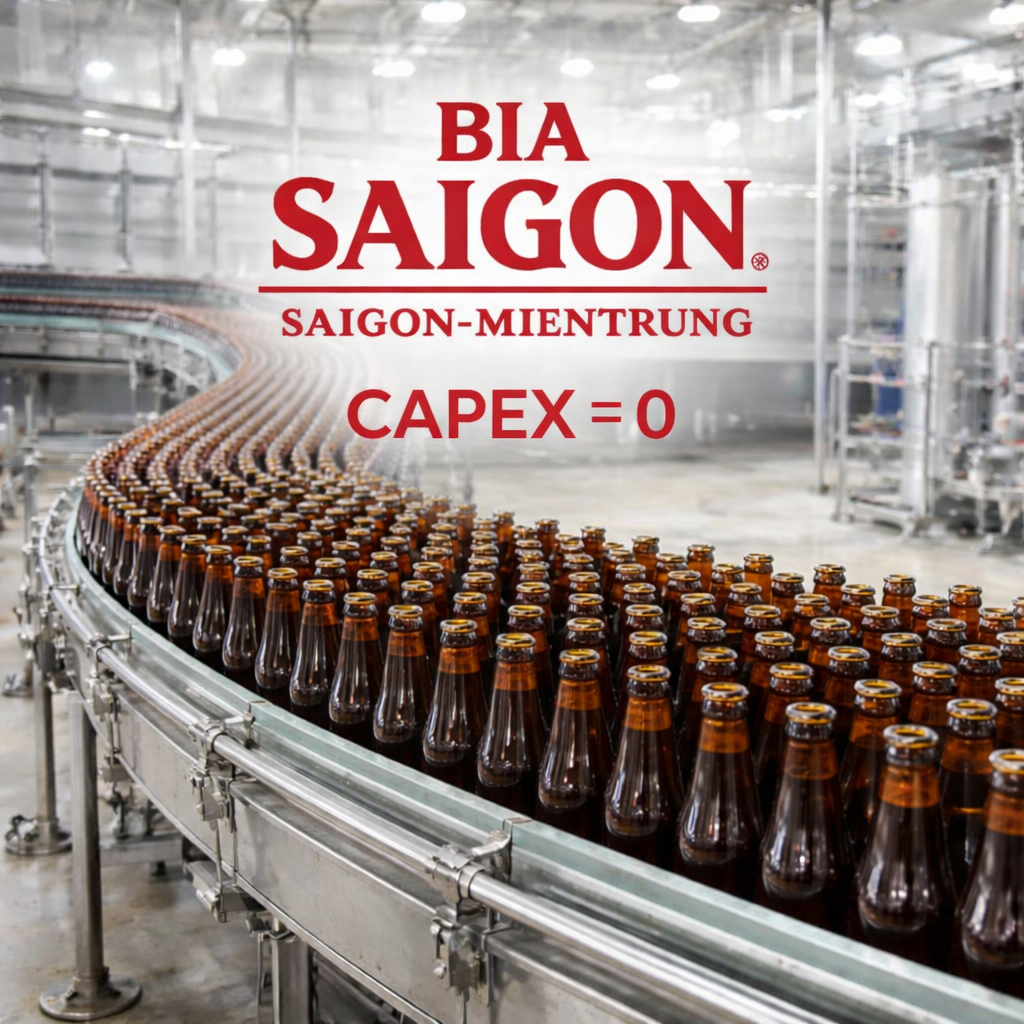
The critical point lies here: this CAPEX is “locked-in” over the medium and long term. Construction and commissioning typically take 18–24 months, while depreciation spans 10–15 years. In the early stages, capacity utilization usually reaches only 40–60%, causing fixed costs allocated per unit to rise sharply and extending the break-even point.
By contrast, when choosing OEM beer manufacturing with Bia Sài Gòn Miền Trung, a brand can launch a project with CAPEX = 0. All costs are converted into variable OPEX linked directly to output volume, resulting in significantly greater cash-flow flexibility.
CAPEX comparison: Self-production vs OEM at SMB
| Criteria | Build own brewery | OEM at SMB |
|---|---|---|
| Initial investment | USD 10–20 million | 0 |
| Time to launch | 18–24 months | 6–8 weeks |
| Asset depreciation | 10–15 years | None |
| Fixed-asset risk | High | Low |
| Liquidity | Very low | High |
From an opportunity-cost perspective, USD 15 million not “buried” in concrete and steel can be allocated to marketing, SKU development, distribution network building, or export market entry—areas that typically deliver significantly higher IRR. In an environment of rising global interest rates and capital costs, keeping CAPEX to a minimum is itself a strategic advantage.
To quickly assess whether the OEM model fits your scale and capital strategy, the advisory team at Bia Sài Gòn – Miền Trung is ready for detailed discussions:
Hotline: (+84) 94 1127575
Email: Oem@biasaigonmt.com
OPEX optimization – Operational advantages at SMB
If CAPEX is the entry barrier, OPEX determines long-term margins. In practice, very few self-operated breweries achieve an optimal OPEX structure within the first 5–7 years, due to insufficient scale to fully leverage economies of scale.
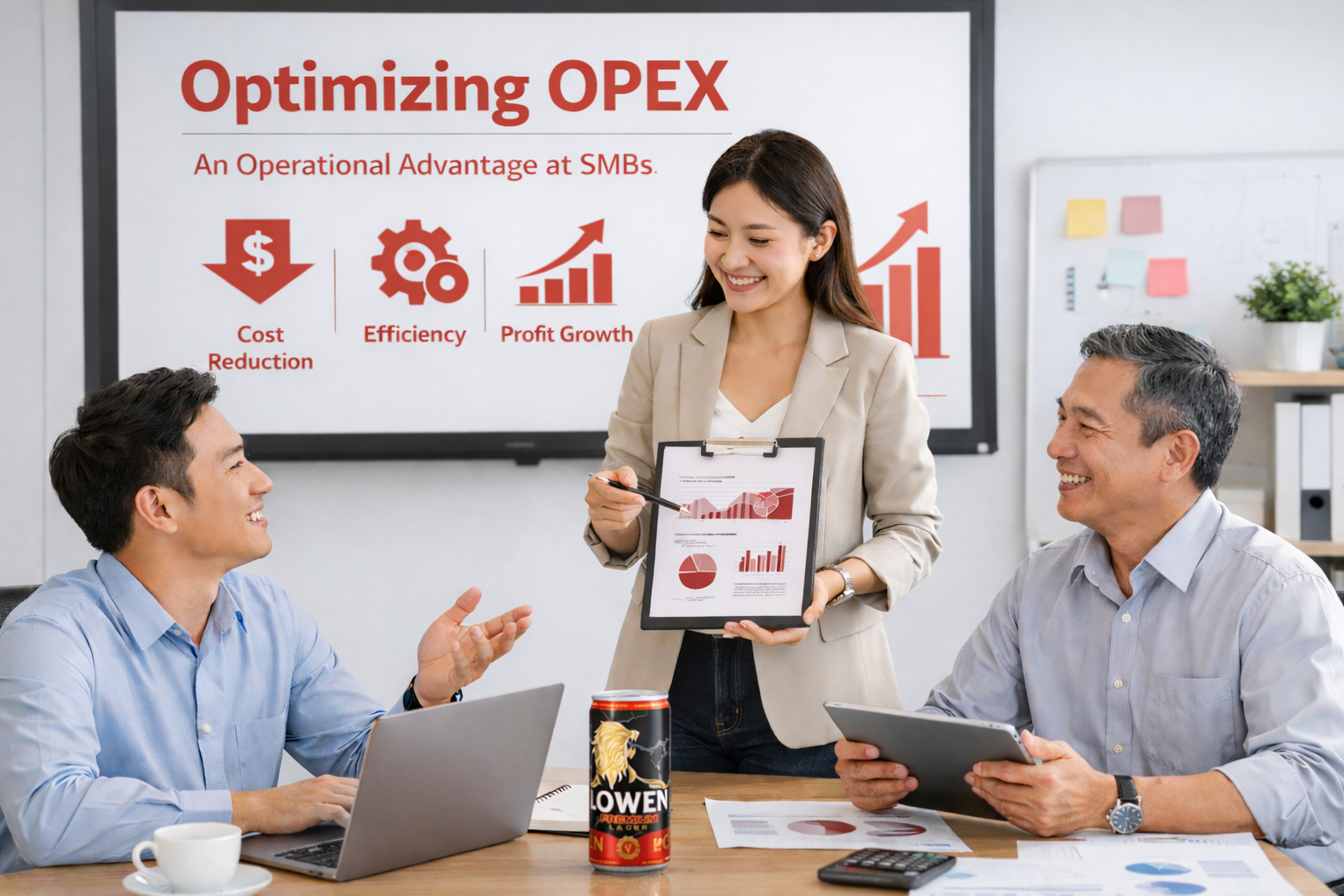
Vietnam has a natural cost advantage: labor costs are 35–60% lower than in many countries in the region, and industrial electricity prices are 20–25% cheaper. However, these advantages are only fully realized when spread across large volumes and high operating capacity. SMB operates multiple parallel production lines for various OEM brands, enabling capacity optimization, lower unit costs, and more stable OPEX.
Comparative OPEX structure (estimated)
| Cost item | Own brewery | OEM at SMB |
|---|---|---|
| Labor | High, fixed | Allocated, 35–60% lower |
| Electricity & water | High | 20–25% lower |
| Maintenance | Highly variable | Allocated |
| QA/QC | Costly | Shared |
| Unit cost | High | Low, stable |
Thanks to economies of scale, SMB can provide cost-efficient beverage contract manufacturing while maintaining consistent quality—something that standalone breweries find difficult to achieve without accepting low margins over a prolonged period.
Technical capability and R&D – Reducing operational risk
Operating a beer production line is not only a matter of equipment, but of people and accumulated know-how. The greatest risk of self-production lies not in cost, but in technical errors: microbial contamination, incorrect fermentation temperatures, improper CO₂ pressure, or poor dissolved oxygen control—all of which can result in an entire batch being discarded.
SMB has a team of engineers, brewmasters, and QA specialists who have operated hundreds of different SKUs. Instead of “learning with money,” OEM brands benefit from knowledge that has already been accumulated. In particular, SMB implements micro-brewing and pilot batches, allowing new products to be tested at low cost before scaling up, significantly reducing the risk of defective products.
Time-to-market – A decisive competitive advantage
In the beverage industry, time-to-market is often more critical than optimizing every percentage point of cost. A new brewery typically takes around two years to complete, whereas OEM manufacturing at SMB requires only 6–8 weeks to deliver a commercial-ready product.
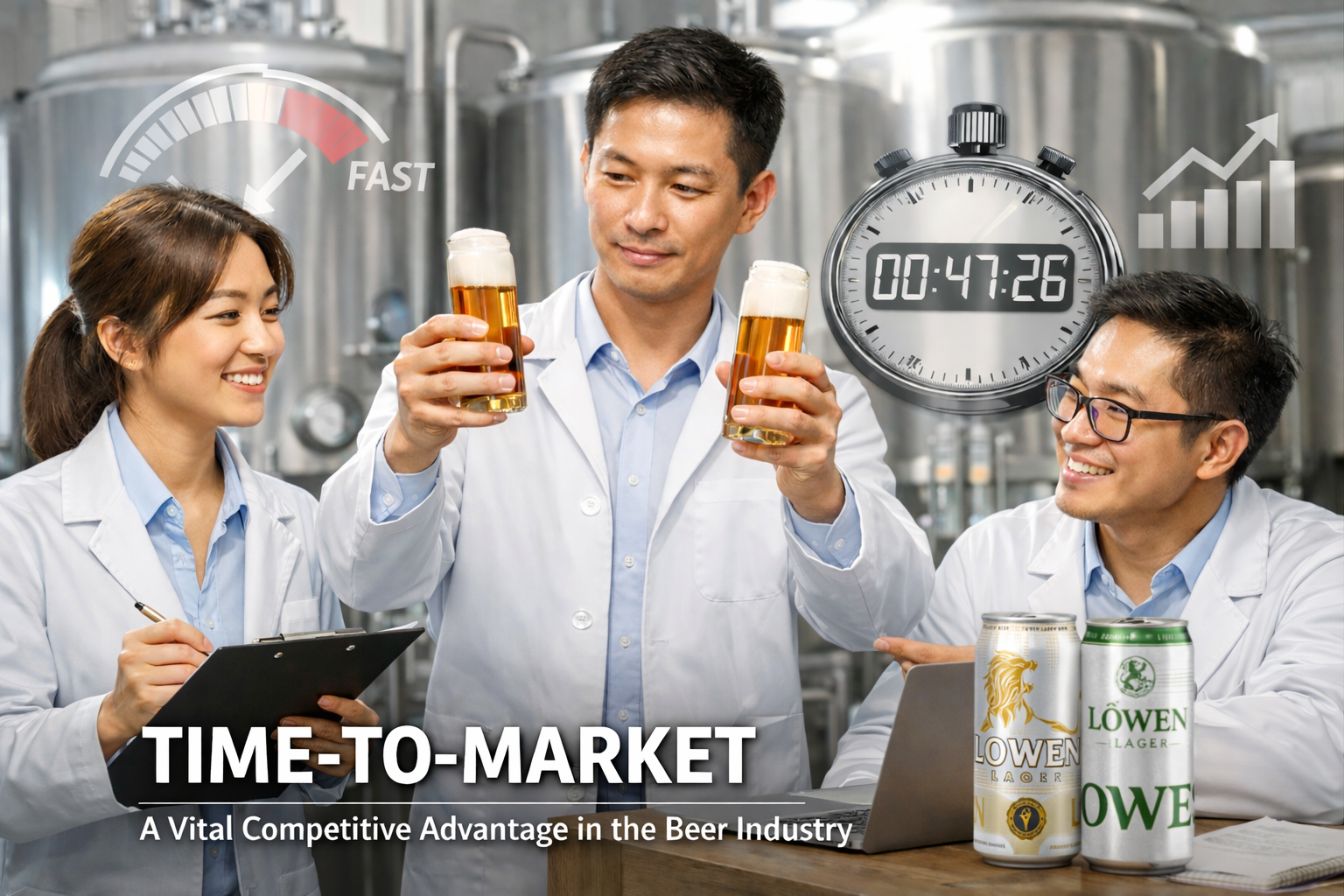
Fast market entry enables brands to:
-
Capture emerging consumer trends (low-alcohol, no-alcohol, functional beer)
-
Test multiple SKUs
-
Rapidly eliminate underperforming products
In an environment where product life cycles are increasingly short, shorter lead times are a decisive competitive advantage.
If you are considering shortening the lead time from concept to commercial product, engage with SMB to build an OEM roadmap tailored to your strategy:
Hotline: (+84) 94 1127575 | Email: Oem@biasaigonmt.com
Certification barriers and export advantages
Exporting beer requires complex certification systems such as FSSC 22000, ISO, and SMETA, along with FTA documentation such as EVFTA and CPTPP. Building and maintaining these certifications independently requires substantial time and cost, especially for small-scale breweries.
SMB already possesses established certification systems and hands-on experience in export documentation, allowing OEM partners to leverage beer export tariff advantages with 0% import duties in many markets. This is an advantage that self-operated breweries find difficult to achieve in the short term.
Export & international certification comparison
| Criteria | Small self-operated brewery | OEM at SMB |
|---|---|---|
| FSSC 22000 | Difficult to obtain | Available |
| ISO 9001 / 14001 | Costly | Available |
| SMETA | Rare | Available |
| International audits | High risk | Easy to pass |
| EVFTA / CPTPP | Difficult to implement | Well established |
| EU import duty | 15–20% | 0% |
| Export capability | Limited | Very high |
Risk management and agility
OEM manufacturing allows brands to scale production up or down seasonally without concerns over equipment maintenance costs or excess labor. In a context of highly volatile demand, this flexibility protects cash flow and significantly reduces financial risk.
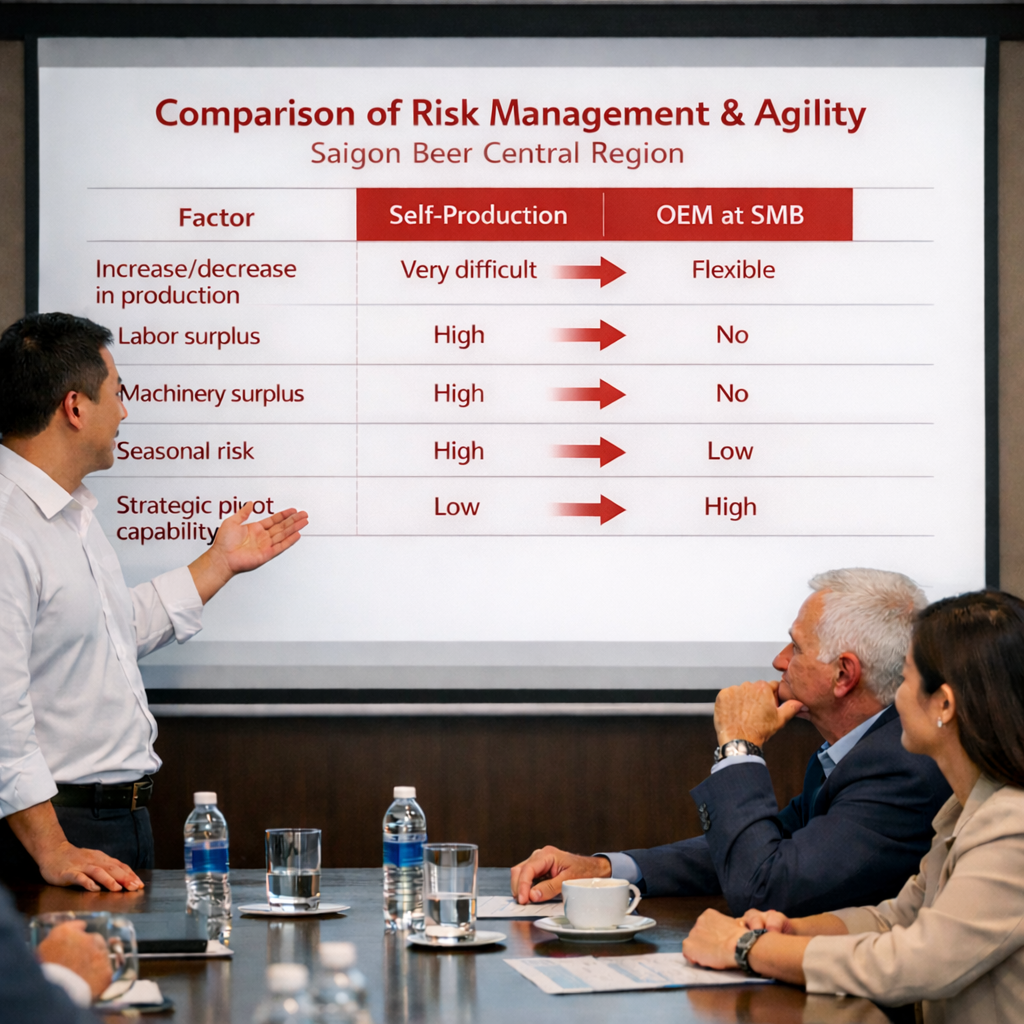
Agility & Risk Management Comparison
| Factor | Self-production | OEM at SMB |
|---|---|---|
| Scaling production up/down | Very difficult | Flexible |
| Excess labor | High | None |
| Excess machinery | High | None |
| Seasonal risk | High | Low |
| Strategic pivot capability | Low | High |
Case Study – From in-house production to OEM and profit acceleration
A domestic craft beer brand previously operated its own facility with an annual output of 1 million liters and a gross margin of 22%. After switching to OEM manufacturing at Công ty Cổ phần Bia Sài Gòn – Miền Trung, the brand freed up CAPEX and refocused on marketing and distribution, increasing output to 5 million liters per year within 18 months. Gross margin rose to 35%, project NPV improved significantly, and the break-even point was shortened by more than 40%.
Simulated financial case study
| Metric | Before (Self-production) | After (OEM at SMB) |
|---|---|---|
| Annual volume | 1 million liters | 5 million liters |
| CAPEX | Large upfront investment | 0 |
| Gross margin | ~22% | ~35% |
| Payback period | >7 years | <3 years |
| NPV | Low | Significantly higher |
| Scalability | Limited | High |
Self-production is suitable when a brand has already reached large scale, enjoys stable demand, and possesses strong factory management capabilities. By contrast, OEM is a strategic “lifeline” during growth phases—optimizing capital, reducing risk, and enabling market leadership.
Start the right beer OEM strategy—today
Contract brewing is not a “substitute” option, but a strategic lever that helps modern beverage brands optimize capital, mitigate risk, and expand markets faster. The key question is not whether to OEM, but with whom and under which model.
📞 OEM & Private Label beer consultation:
- Organization: Joint Stock Company Saigon Beer – Central Region (SMB)
- Head office address: 01 Nguyen Van Linh Street, Tan An Ward, Buon Ma Thuot City, Dak Lak Province
- OEM consultation hotline: (+84) 94 1127575
- Dedicated email: Oem@biasaigonmt.com
- Official website: https://oem.biasaigonmt.com/