

In 2026, building a private label beer brand is no longer a story of “whoever owns a brewery first wins.” The market has become highly fragmented according to consumption contexts, drinking preferences, lifestyles, and even local identity. Buyers are no longer simply comparing alcohol content or bitterness; they compare emotion, story, and the degree of “fit” for each moment.
That is why a new beer brand aiming for long-term success needs a roadmap that is both hands-on and strategic: establishing the right brand DNA, creating the right beer recipe, translating it into the right visual language, controlling costs properly, maintaining strict quality standards, selecting the right distribution channels, and ultimately expanding into the international market.
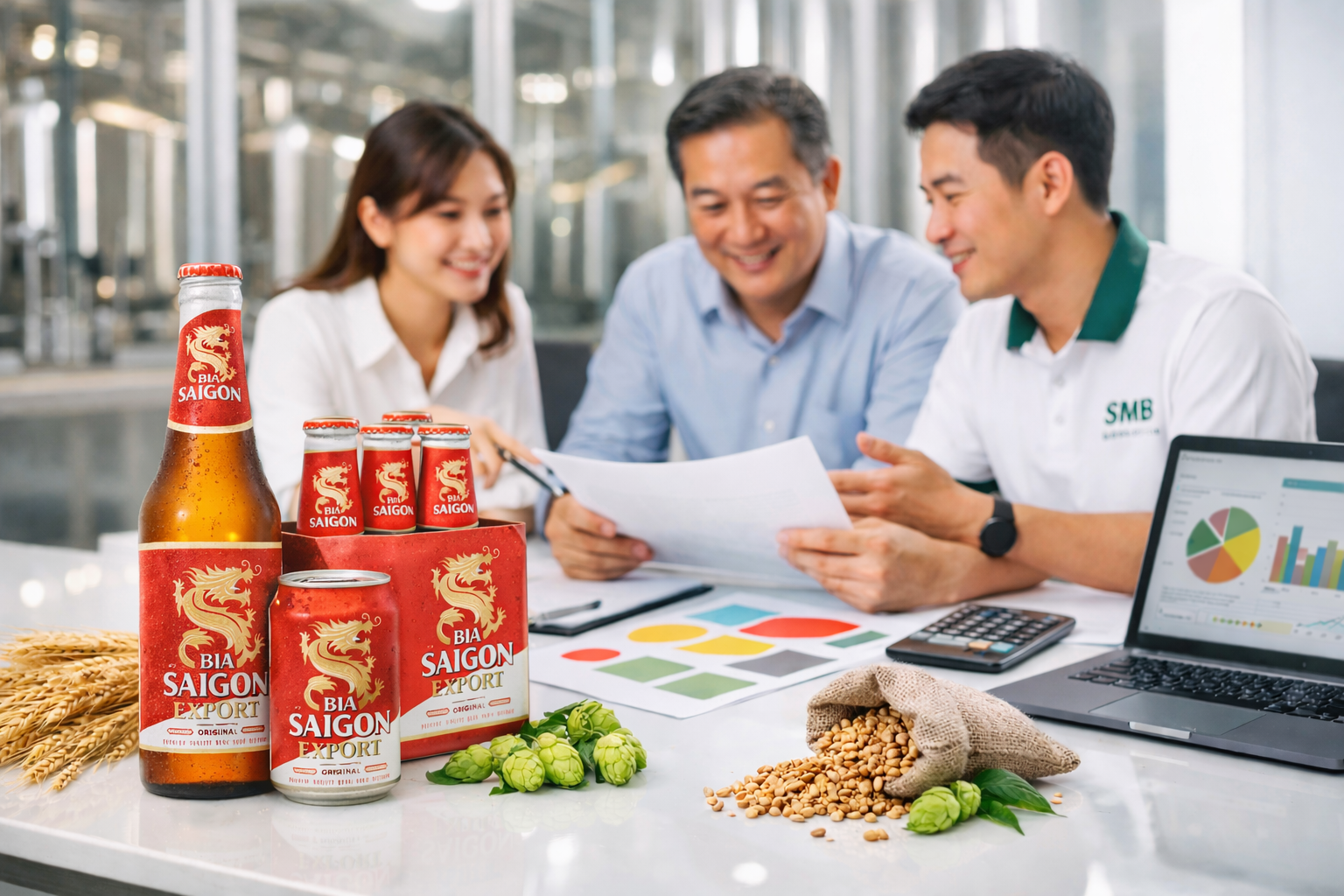
Within this landscape, partnering with a capable OEM brewery platform such as Saigon Beer – Central Vietnam (SMB) allows businesses to turn ideas into commercial products without locking capital into CAPEX, while also leveraging Vietnam’s operational cost advantages: labor costs 35–60% lower, energy 20–25% cheaper, and internationally recognized certifications such as FSSC 22000 and ISO to support long-term growth.
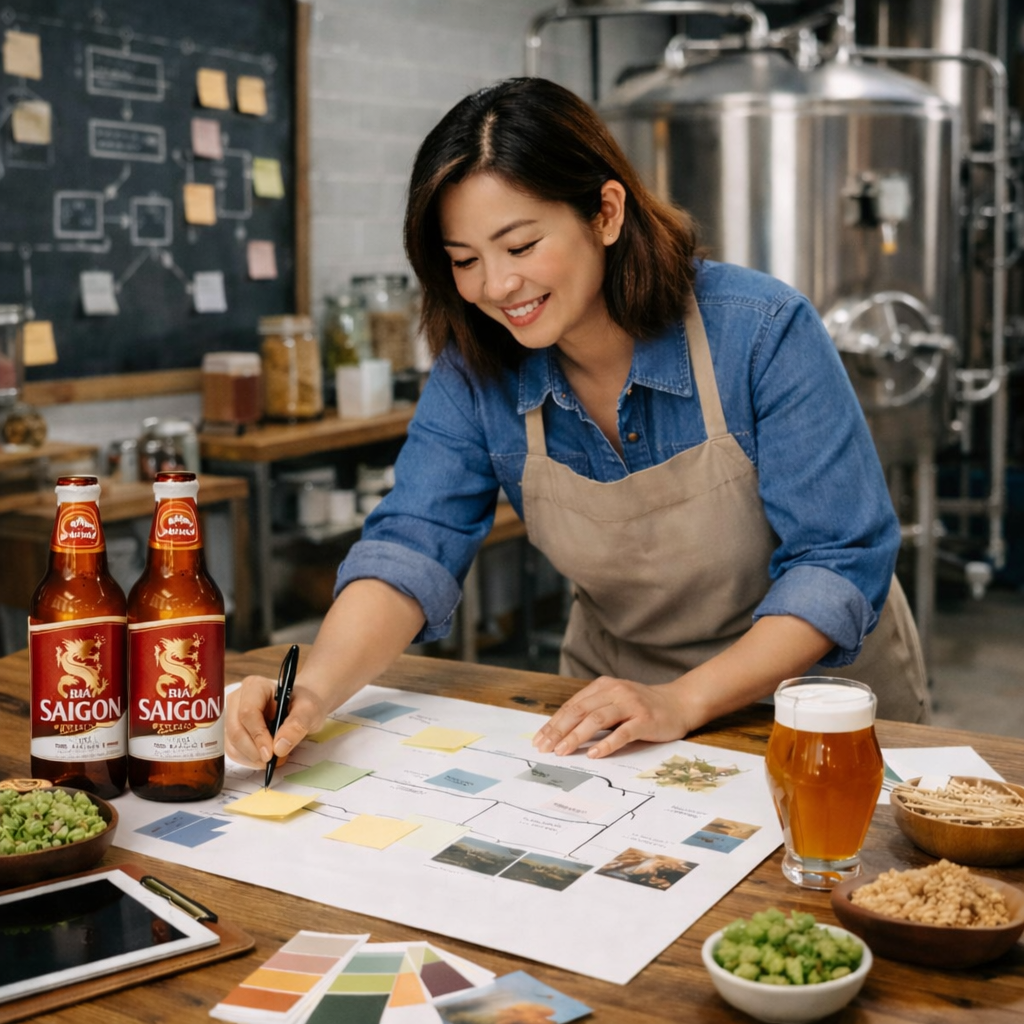
Market Research and Establishing Brand DNA – Getting It Right from the Start Determines 50% of Success
Many beer projects fail not because the product is poor, but because of “mispositioning.” The Vietnamese beer market may appear crowded, yet there are always gaps—not gaps in the number of beer brands, but gaps in the “reason for existence.” To find the right position, businesses need to read the market through behavior: who drinks, when they drink, and why.
One group drinks for refreshment during meals; another drinks for social interaction in HoReCa environments; another seeks a premium feeling and experiential drinking; and an increasingly visible segment consists of health-conscious consumers—they want low-ABV beer, fewer calories, transparent ingredients, or new fermented beverages. Alongside this is the growing wave of local identity: regional ingredients, cultural storytelling, and the sense that “this belongs to this place.”
Brand DNA is the answer to a key question: what version of themselves does your beer brand help consumers become in a specific moment? If the brand DNA is vague, everything that follows becomes vague: the beer recipe lacks direction, the packaging lacks language, distribution channels target the wrong audience, and marketing spends heavily without creating a recognizable personality. On the other hand, when the brand DNA is clear, businesses can make faster decisions and avoid costly mistakes.
At this stage, Saigon Beer – Central Vietnam (SMB) does not replace the brand positioning process, but acts as a practical counterpoint partner. When you propose a direction—for example health-oriented beer or local craft beer—SMB can evaluate industrial production feasibility, flavor stability, and the cost implications of different raw materials. A strong brand DNA is one that combines emotional differentiation with an operational structure robust enough for beer production and scalable growth.
Recipe Design and R&D – The Soul of the Product Lies in Turning “Taste Ideas” into Industrial Standards
In the beer industry, marketing may persuade consumers to purchase the first time, but the beer recipe is what brings them back. The issue is that many new brands approach recipe development in an intuitive way: wanting more aroma, more bitterness, or a fuller mouthfeel.
In reality, turning intuition into a commercial product requires the beer formula to be “encoded” into measurable parameters and repeatable processes—from selecting malt, hops, and brewer’s yeast, to controlling fermentation, dissolved oxygen, CO₂, and flavor stability. By 2026, consumers demand higher consistency than ever before; a single SKU can fail simply because the first two or three production batches are inconsistent.
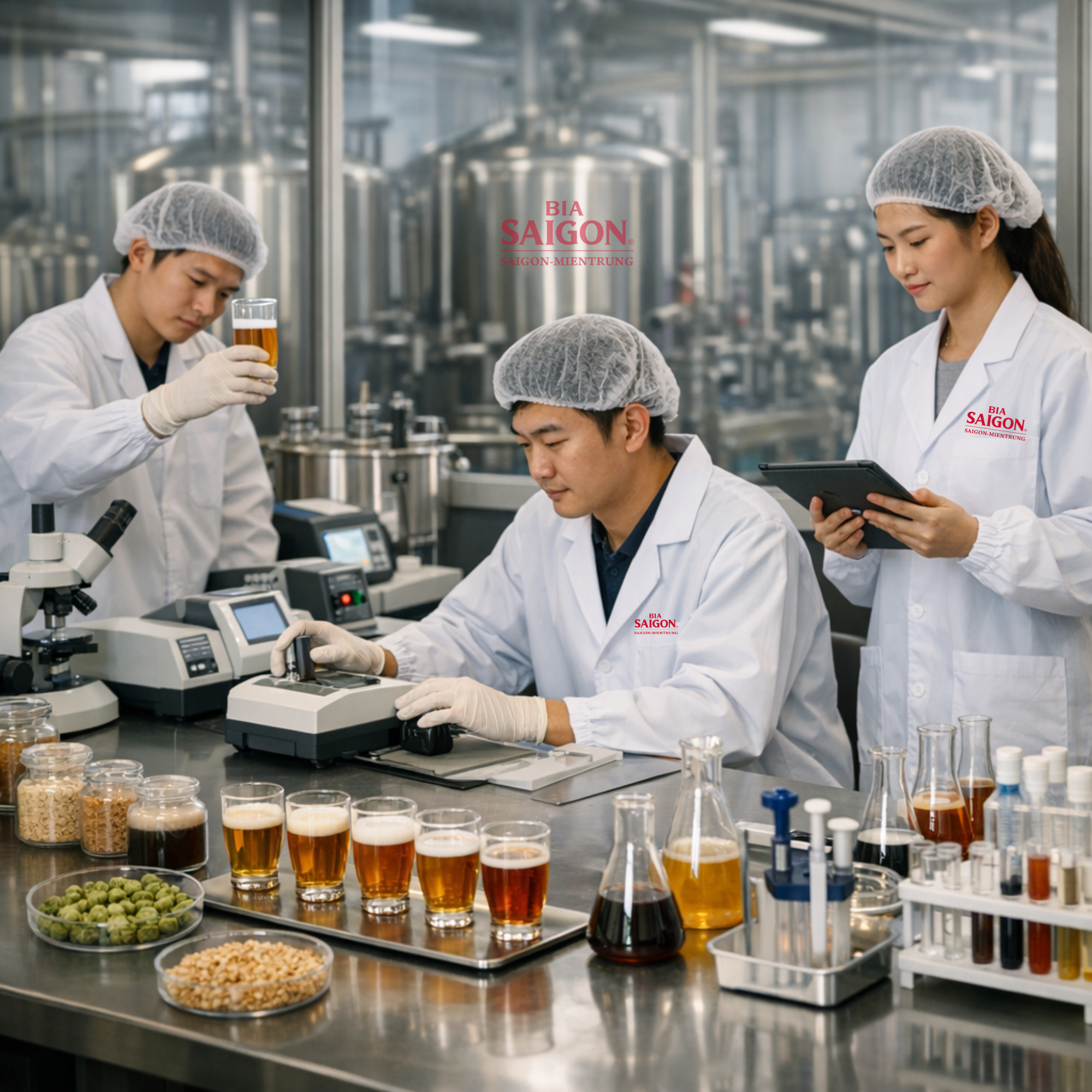
R&D therefore must solve two problems at the same time: creating differentiation while maintaining stability during scale-up. This is the boundary between craft beer that “tastes great at the bar” and commercial beer that “survives on the shelf.” Achieving this requires micro-brewing/pilot brewing processes, a laboratory, and a team experienced in translating a beer recipe from small-scale batches to large-scale beer production without distorting the flavor profile.
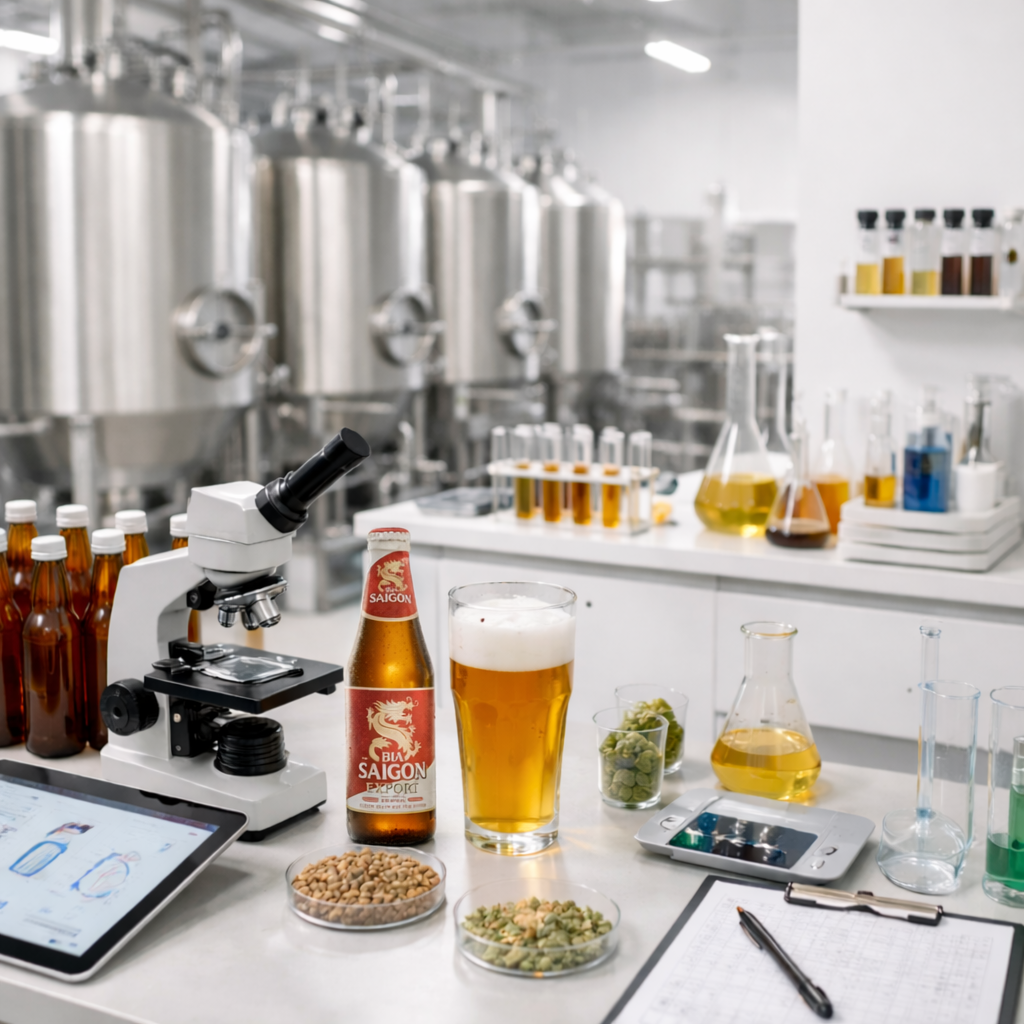
Saigon Beer – Central Vietnam (SMB) supports this stage through a structured R&D pipeline: receiving a sensory brief and target market requirements, developing the beer formula in the lab, and then running pilot batches to test stability. The key capability lies in preserving the “soul” of the recipe during mass production—something many self-developed projects struggle with. When SMB operates under industrial brewing standards, variables are better controlled, helping businesses reduce costly mistakes and shorten the trial-and-error cycle.
From a strategic perspective, a strong beer formula is not only “delicious,” but also channel-appropriate. Beer designed for HoReCa may require a stronger “impact” in flavor; beer for supermarkets needs drinkability and stability; export beer must withstand logistics conditions and maintain a reliable shelf life. R&D, therefore, is where the brand effectively chooses its future.
Packaging Design and Visual Language – When the Sleek Can Becomes the Brand’s “Handheld Billboard”
In the fast-moving consumer goods (FMCG) market, packaging is not merely a “layer of clothing”; it is a sales engine. Consumers make decisions within seconds in front of the shelf, and in those seconds they do not read brand introductions—they read visual signals. Therefore, visual language must translate the brand DNA into an immediate perception: are you a health-oriented beer, a local craft beer, a premium beer, or a youthful party beer? Using the wrong visual language essentially pushes the brand into the wrong target segment.
The sleek can is a powerful tool because it creates a modern and premium feeling, while also fitting products positioned as clean, premium, and lifestyle-oriented beverages. However, the strength of the sleek can format does not lie in its shape alone; it lies in how the design uses the surface as a handheld billboard: color, composition blocks, visual rhythm, tactile feel, and even the way it stands next to competitors on the shelf.
In the private label beverage segment, packaging also helps retail chains assert their identity: the product clearly belongs to their ecosystem.
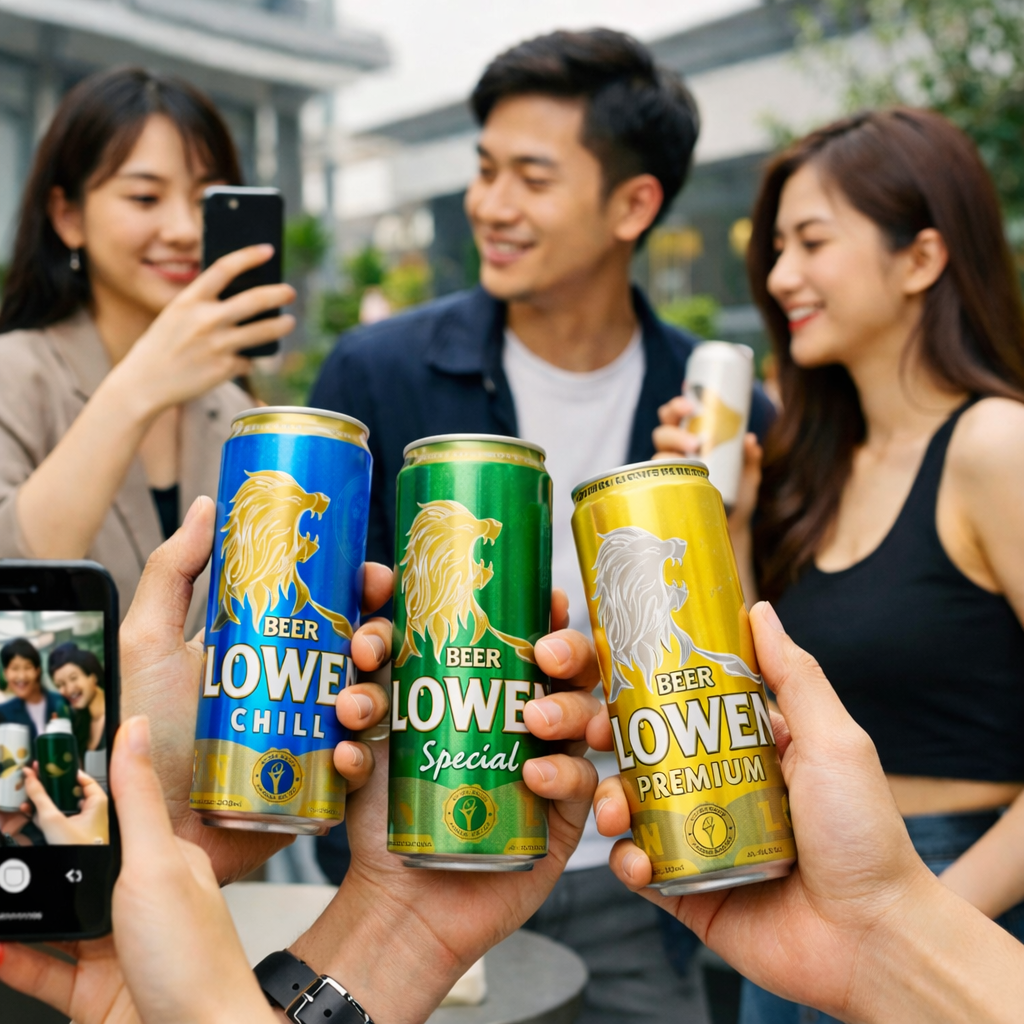
Saigon Beer – Central Vietnam (SMB) supports this stage by turning design concepts into finished products with optimized costs. Packaging decisions are always tied to MOQ (Minimum Order Quantity) and printing technology. If a business is still in the test market phase, selecting flexible packaging solutions helps avoid locking excessive capital into packaging materials. More importantly, SMB helps businesses choose packaging configurations that match both production capabilities and distribution channels—from aluminum cans and glass bottles to suitable packaging formats. When design language aligns with operational structure, packaging becomes a tool that accelerates market entry, rather than an attractive but ineffective cost.
The Financial Equation – Shifting from CAPEX to OPEX to Focus Resources on Marketing and Distribution
For a new beer brand, the biggest risk is not “being unable to produce beer,” but rather “being able to produce beer but lacking the capital to sell it.” Building a brewery requires massive CAPEX, followed by long-term depreciation, regulatory costs, operations staffing, maintenance, and capacity risk. Meanwhile, the market demands that companies invest heavily in rapid channel expansion: trade marketing, sampling, in-store displays, trade discounts, brand activation, sales teams, and distribution systems. If a company invests too much capital in building a brewery, it may run out of resources for the real battle: winning shelf space and a place in the consumer’s mind.
OEM beer production resolves this contradiction by turning manufacturing capability into a service. Instead of owning assets, businesses purchase production volume. Strategically, this approach minimizes fixed asset risk and increases flexibility: if an SKU underperforms, the company can adjust or replace it without being burdened by depreciation costs. At the same time, cash flow is freed to focus on marketing and branding—the factors that create longer-lasting competitive advantages than machinery.
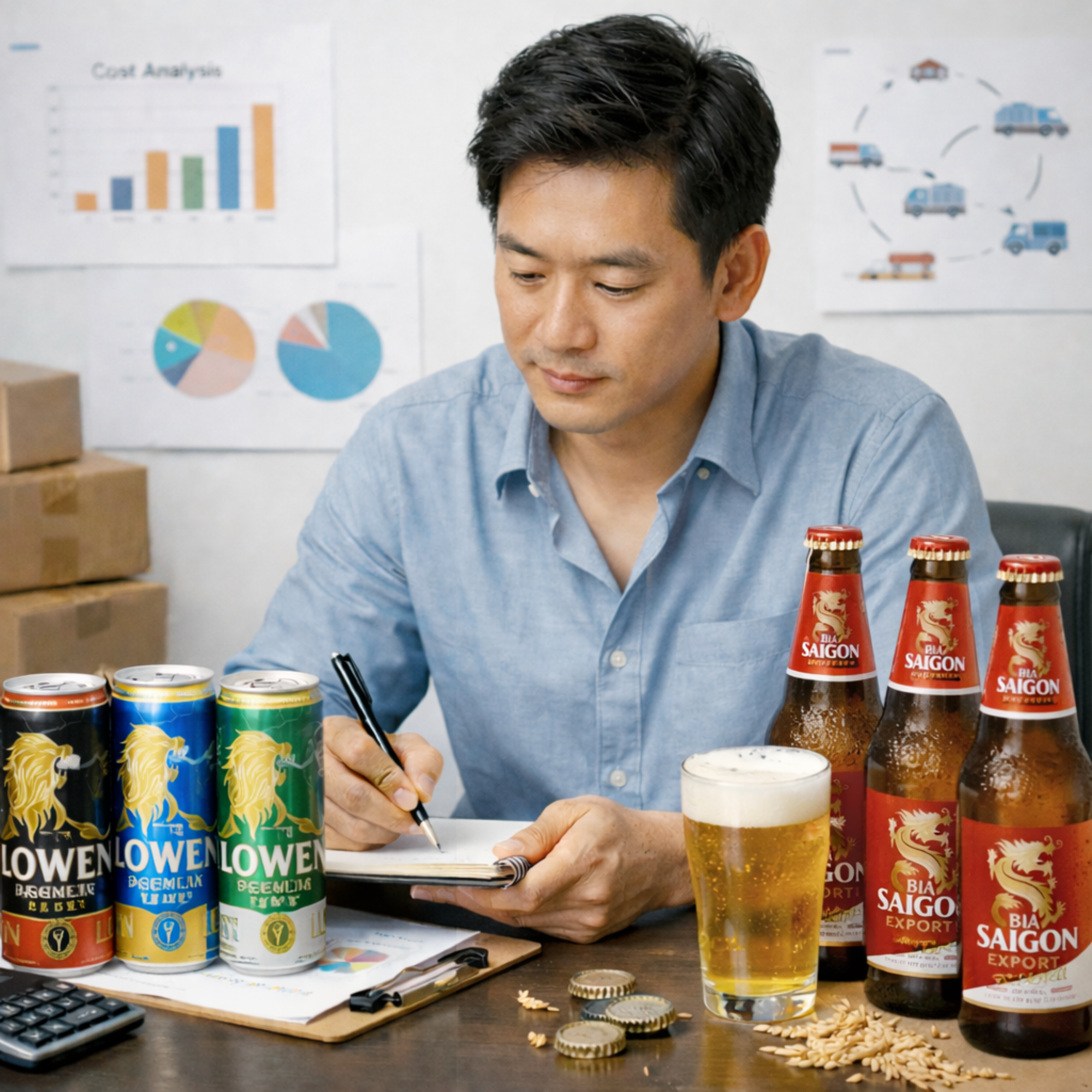
SMB strengthens this OEM brewery advantage through a competitive operational cost structure in Central Vietnam: labor costs 35–60% lower and energy costs 20–25% cheaper create a strong cost foundation when businesses need to scale up production. As revenue grows, these cost advantages are not quickly eroded as they often are in more expensive manufacturing regions. This difference ultimately separates profitable growth from exhausting growth.
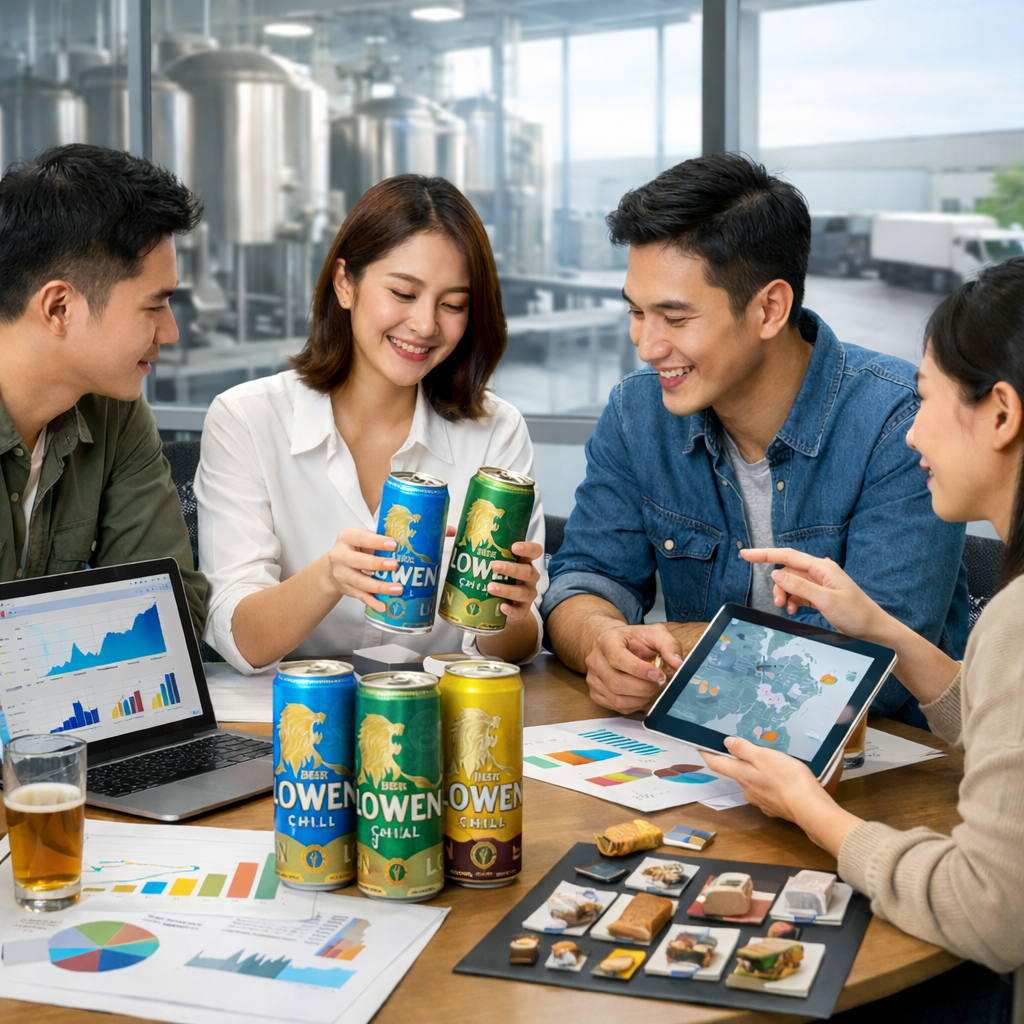
If you are considering a roadmap to shift from CAPEX to OPEX in order to focus budget on marketing and distribution systems, Saigon Beer – Central Vietnam (SMB) can advise on an OEM / Private Label beer production model that aligns with your production volume targets and brand positioning.
OEM Consultation Hotline: (+84) 94 1127575 | Email: oem@biasaigonmt.com
Standardized Production and International Quality Control – One Million Cans Must Be Identical to the First
When a brand enters the scale-up phase, quality is no longer about simply “brewing good beer,” but about “doing it right, repeating it consistently, and proving it.” Just a few unstable production batches can create a negative ripple effect, especially in the era of reviews and social media. Therefore, the QA/QC system becomes a core component of the brand, even though consumers may not see it directly.
Certifications such as FSSC 22000 and ISO quality management systems are not merely for display on a website. They represent the factory’s control framework: from raw material sourcing, sanitation procedures, and hazard control, to sample retention and batch traceability. When companies develop private label beer or produce custom beer for modern retail channels, having a strong certification platform helps them pass supplier onboarding requirements, distributor audits, and reduce regulatory risk. In beer export markets, these standards also become the common language for engaging with demanding international buyers.
SMB operates industrial-scale beer production with comprehensive process monitoring systems, enabling control of the sensitive variables in brewing—particularly those affecting drinkability and flavor stability. With proper control, businesses not only protect brand credibility, but also optimize indirect costs: fewer product disposals, fewer returns, and fewer incident management costs. In brand finance, these are the hidden costs that are often underestimated but can cause the greatest damage.
In other words, OEM brewing does not simply help businesses obtain a product; high-standard OEM production helps them maintain their brand promise over time, while still expanding production volume.
Market Entry Strategy and Distribution Systems – The Brand Story Must Align with Channel Structure
A beer brand cannot grow through advertising alone. It grows through distribution channels and repetition. Therefore, the market entry stage requires a clear strategy: do you enter HoReCa channels first to build an on-premise drinking experience, or enter supermarkets and retail chains first to achieve off-premise visibility? These two paths require very different brand storytelling strategies.
-
HoReCa prioritizes drinking experience and table-side storytelling.
-
Retail and supermarkets prioritize visual signals, packaging, and value positioning.
-
E-commerce channels prioritize shareable content and digital storytelling.
In this context, branding is not simply about naming a product or designing a logo. Brand building means designing the entire consumer journey: why consumers try the beer for the first time, how they talk about it with friends, and why they choose to repurchase. Many new beer brands make the mistake of telling stories that are too long and complicated. Effective brand stories must be concise, repeatable, and emotionally engaging.
-
If you produce local identity beer, the emotional hook is memory and regional pride.
-
If you produce health-oriented beer, the hook is confidence and lifestyle.
-
If you produce premium sleek-can beer, the hook is style and social status.
The role of SMB at this stage lies in its supply chain operations capability: production planning, material preparation, packaging, and logistics coordination. When businesses activate distribution channels, their greatest fear is stockouts or batch inconsistency. OEM breweries reduce this risk because the factory already has established systems and operational experience.
At the same time, SMB’s geographic advantage in Central Vietnam supports multiple logistics routes, especially when businesses begin handling large orders or need to optimize lead times.
In short, channel strategy is where marketing meets operations. A sustainable beer brand is one whose distribution structure aligns with the rhythm of its production capacity.
Export and Sustainable Scaling – When the Brand Evolves from a Product to a Global System
Beer export is not simply selling products abroad. It is a system challenge involving quality standards, regulatory documentation, export certificates, rules of origin, transport-ready packaging, and the ability to maintain consistent production volumes. Many brands with excellent products fail in export markets because they underestimate the cost of compliance. By 2026, demanding markets no longer ask only, “Is the beer good?”—they ask, “Do you operate like a responsible company?”
Here, OEM manufacturing becomes a strategic advantage because the brewery can provide both a certification platform and standardized documentation systems. For Vietnam, an additional advantage lies in free trade agreements (FTAs) such as EVFTA and CPTPP. When rules of origin are met, products can benefit from preferential tariffs, sometimes even 0% tariffs in certain routes—creating a significant competitive advantage. However, fully leveraging these benefits requires the ability to manage documentation, certifications, and an appropriately structured supply chain. With its OEM experience and certification platform, SMB helps businesses reduce friction when entering international markets.
Sustainable scaling is also about profit margins. As production volume increases, structural advantages such as labor costs 35–60% lower and energy costs 20–25% cheaper become extremely important. These advantages allow the beer brand to maintain competitive production costs while preserving resources to reinvest in brand growth. Without healthy margins, export growth only makes a business “busier,” not “wealthier.”
If you are planning to bring private label beer to international markets and want to build a sustainable roadmap for documentation, standards, and production capacity, SMB can advise on the right OEM brewing model and support implementation based on brewery capabilities.
CONTACT SMB FOR FREE OEM CONSULTATION
Company: Saigon Beer – Central Vietnam Joint Stock Company (SMB)
Address: 01 Nguyen Van Linh Street, Tan An Ward, Buon Ma Thuot City, Dak Lak Province, Vietnam
OEM Consultation Hotline: (+84) 94 1127575
Email: oem@biasaigonmt.com
Website: https://oem.biasaigonmt.com/