

In Vietnam, beer Saigon – Mien Trung (SMB) is one of the pioneering breweries in the Central region in systematically investing in modern beer production technology. With a strategic orientation toward OEM manufacturing for both domestic and export markets, SMB has developed a comprehensive technological ecosystem, covering water treatment, brewing – fermentation, filtration – refinement, filling – packaging, QA/QC, as well as green technology and the circular economy. This essay analyzes each technological component in detail to clarify why SMB is increasingly regarded as a new benchmark for high-tech beer OEM manufacturing in Vietnam.
Overview of Industry 4.0 Technology in the Brewing Industry
In traditional beer production models, operational knowledge typically resides in the personal experience of the brewer. While this creates unique characteristics for each batch, it also leads to two major limitations: lack of consistency and difficulty in scaling production. Industry 4.0 technology has fundamentally transformed this approach by standardizing knowledge through automation and data systems.
At SMB, production lines are controlled by PLC (Programmable Logic Controller) systems integrated with production data collection and analytics platforms. Every stage — from mash, boil, and fermentation to filling — is digitized into specific technical parameters such as temperature, time, pressure, and flow rate. As a result, operations no longer depend on individual experience but instead run on tightly programmed and controlled systems.
Additionally, operational data from thousands of brewing batches are continuously stored and analyzed. This dataset enables engineering teams to identify deviation trends, optimize energy consumption, reduce downtime, and improve overall efficiency. Data-driven operations have allowed SMB to achieve operating costs 35–60% lower than semi-industrial or expanded craft production models.
As Central Vietnam emerges as a new OEM manufacturing hub, SMB functions as a technology hub where automation, international standards, and scalable production capabilities converge — a rare position within the regional brewing industry.
Water Treatment Technology and Raw Material Preparation
In beer production, water is not merely a solvent but a strategic ingredient, accounting for more than 90% of the final product composition. SMB approaches water as a component that can be engineered, rather than treated only at a basic level. The water treatment system at SMB includes:
-
Multi-layer coarse filtration (sand and activated carbon)
-
RO (Reverse Osmosis) for removing unwanted minerals
-
Controlled re-mineralization
-
UV and ozone sterilization
After RO processing, water is not used directly but is re-mineralized according to specific beer recipes. The controlled addition of ions such as Ca²⁺, Mg²⁺, and HCO₃⁻ enables SMB to recreate water profiles from famous brewing regions such as Pilsen or Munich, ensuring flavor precision and high repeatability.
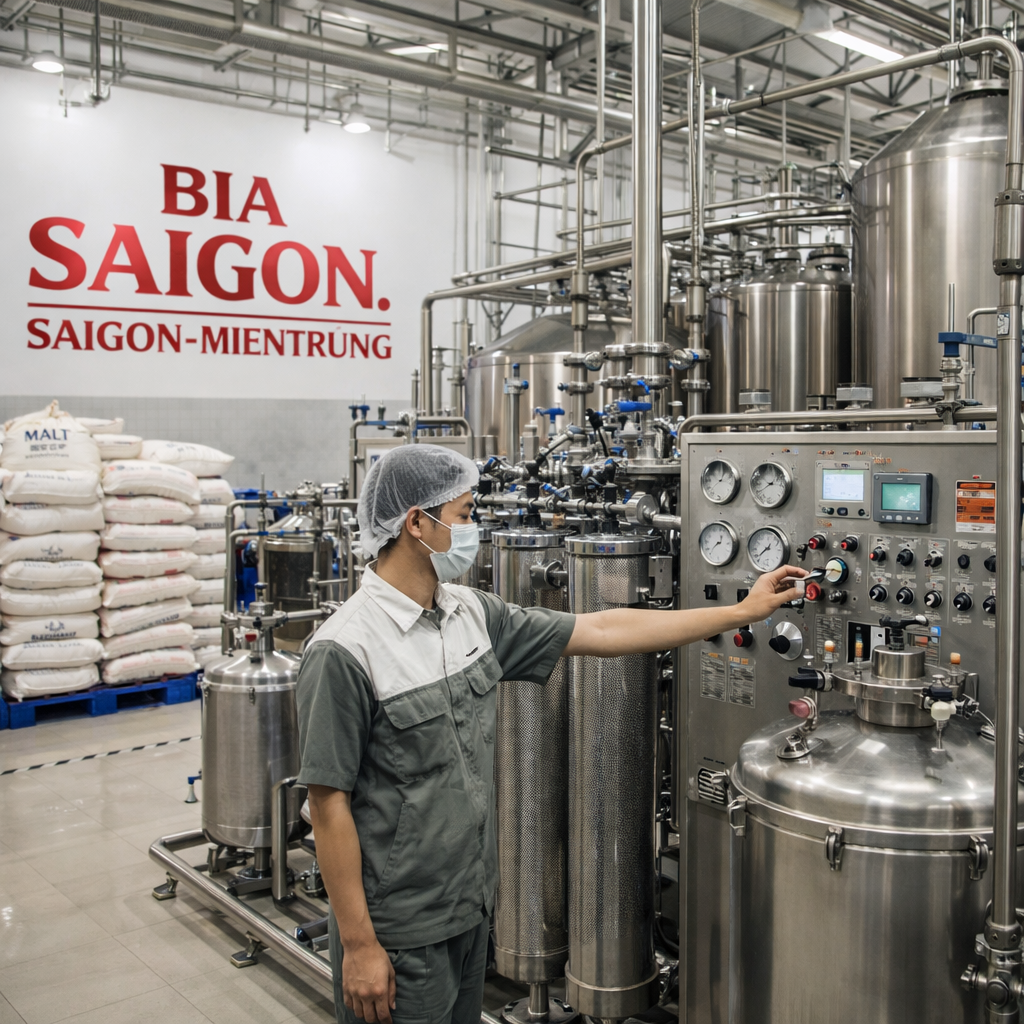
For raw materials, SMB applies a strict control chain:
-
Malt is stored in sealed silos with controlled humidity and temperature
-
The malt milling process is optimized to balance extraction efficiency and filtration performance
-
Hops are cold-stored to minimize alpha acid oxidation
-
All ingredients maintain clear traceability of origin
This approach preserves the full integrity of flavor compounds while reducing material loss — a critical factor in cost optimization for large-scale beer OEM manufacturing.
Brewhouse & Fermentation System
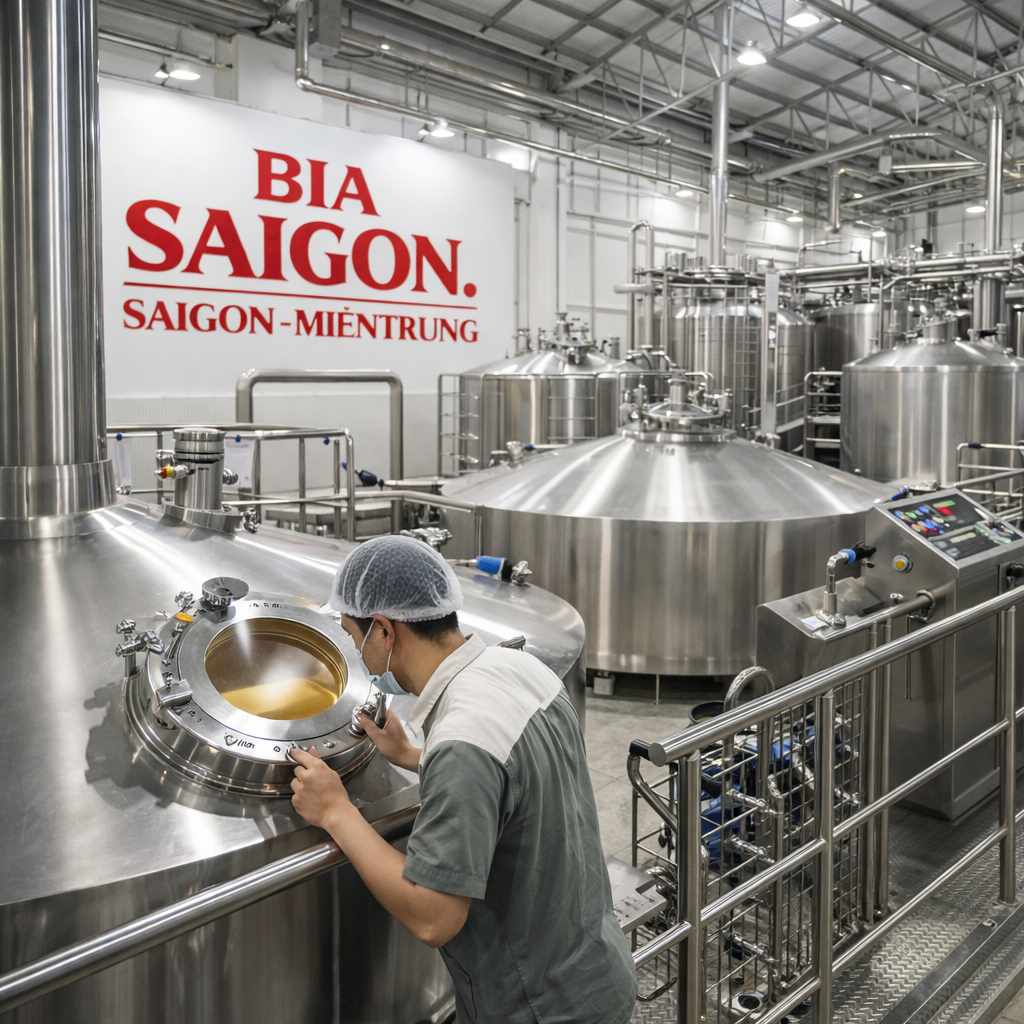
The Brewhouse is the heart of a brewery. SMB utilizes stainless-steel brewing vessels integrated with temperature, pressure, and flow sensors, all controlled via PLC systems. Brewing profiles are pre-programmed, enabling precise control of each enzymatic stage during the mash process.
-
Regulation of alpha-amylase and beta-amylase activity to determine beer body and dryness
-
Control of boiling time and boil intensity in the boil kettle
-
Rapid wort cooling using a plate heat exchanger
The cold fermentation process is continuously monitored. SMB places particular emphasis on:
-
Yeast propagation: managing the yeast lifecycle while monitoring cell viability and cell density
-
Precise tank-level pressure and temperature control
-
Maintaining extremely low DO (Dissolved Oxygen) levels to prevent oxidation
Controlling Dissolved Oxygen (DO) throughout the entire process is a critical factor in ensuring freshness, flavor stability, and extended shelf life — especially essential for export-oriented OEM beer production.
Filtration and Refinement Technology
After fermentation, beer must be filtered to achieve the desired clarity while preserving its sensory characteristics. SMB simultaneously deploys two filtration technologies:
-
Candle filtration for Lager lines requiring high clarity
-
Membrane filtration for Craft beer lines that need to retain flavor complexity
Unlike the traditional mindset of “the more filtration, the better,” SMB approaches beer filtration through sensory optimization. Filtration levels are customized for each OEM SKU, ensuring every product maintains its unique character identity. Reducing dependence on conventional filter aids also lowers solid waste generation and environmental treatment costs.
Automated Filling and Packaging Lines
Filling is the most sensitive stage in the entire production process. SMB utilizes isobaric filling, balancing CO₂ pressure between the beer and the filling environment to minimize gas loss and reduce foam formation.
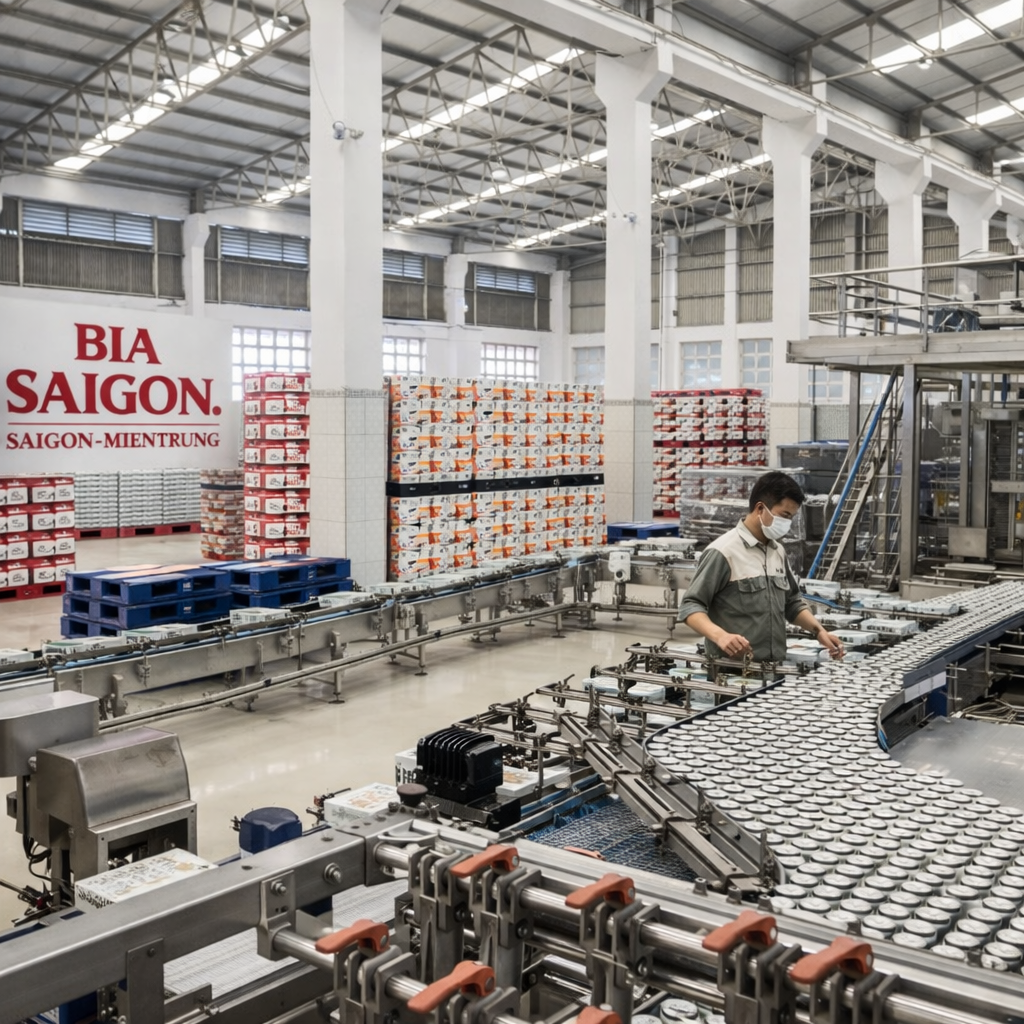
SMB’s packaging lines include:
-
Cans: 250ml, 330ml (Standard & Sleek), 500ml
-
Glass bottles: multiple volume options
-
PET packaging for lightly fermented beverages
The system integrates:
-
Automatic fill-level control
-
AI camera inspection for foreign object detection and label defects
-
Tunnel pasteurization with flexible PU (Pasteurization Unit) control
QA/QC System and Laboratory
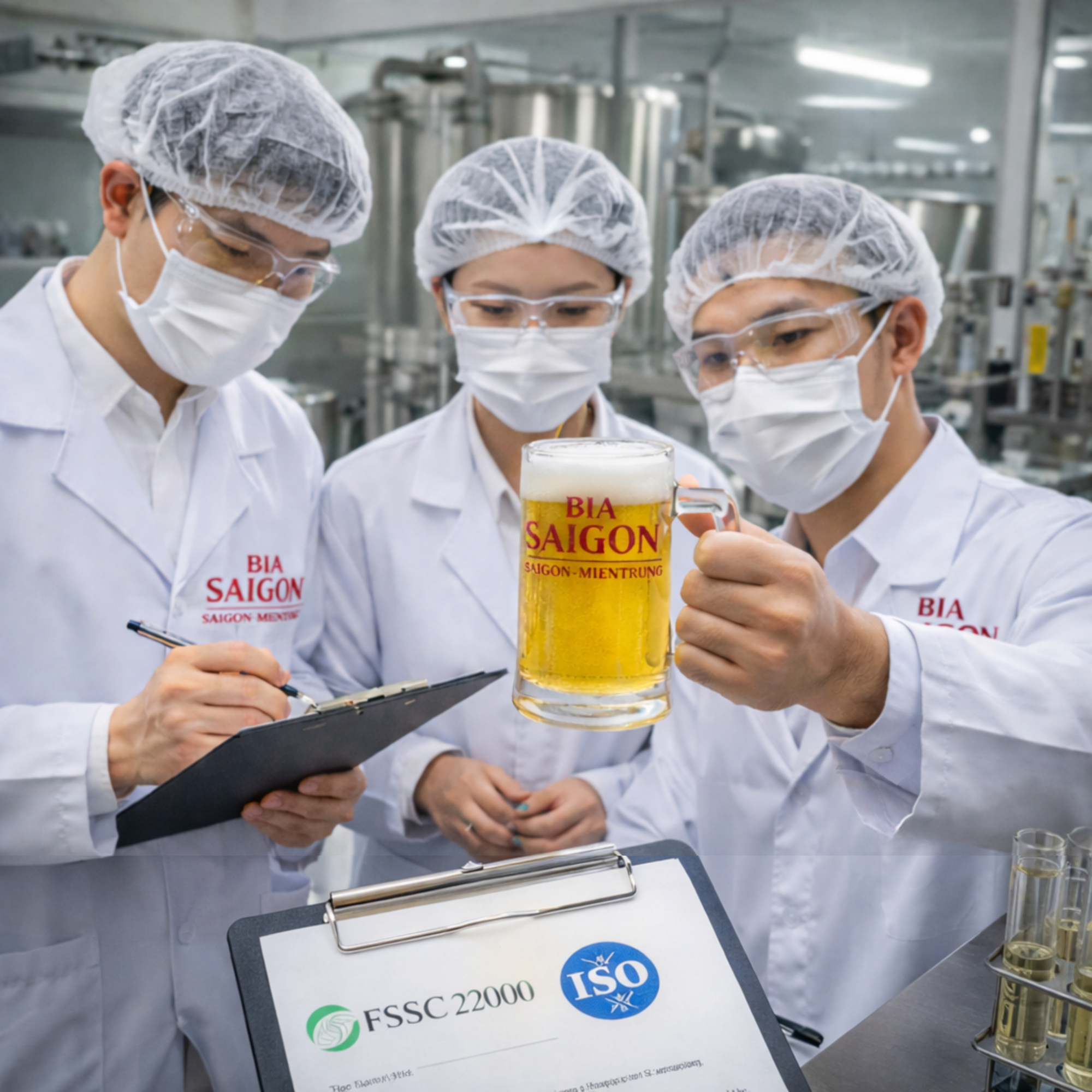
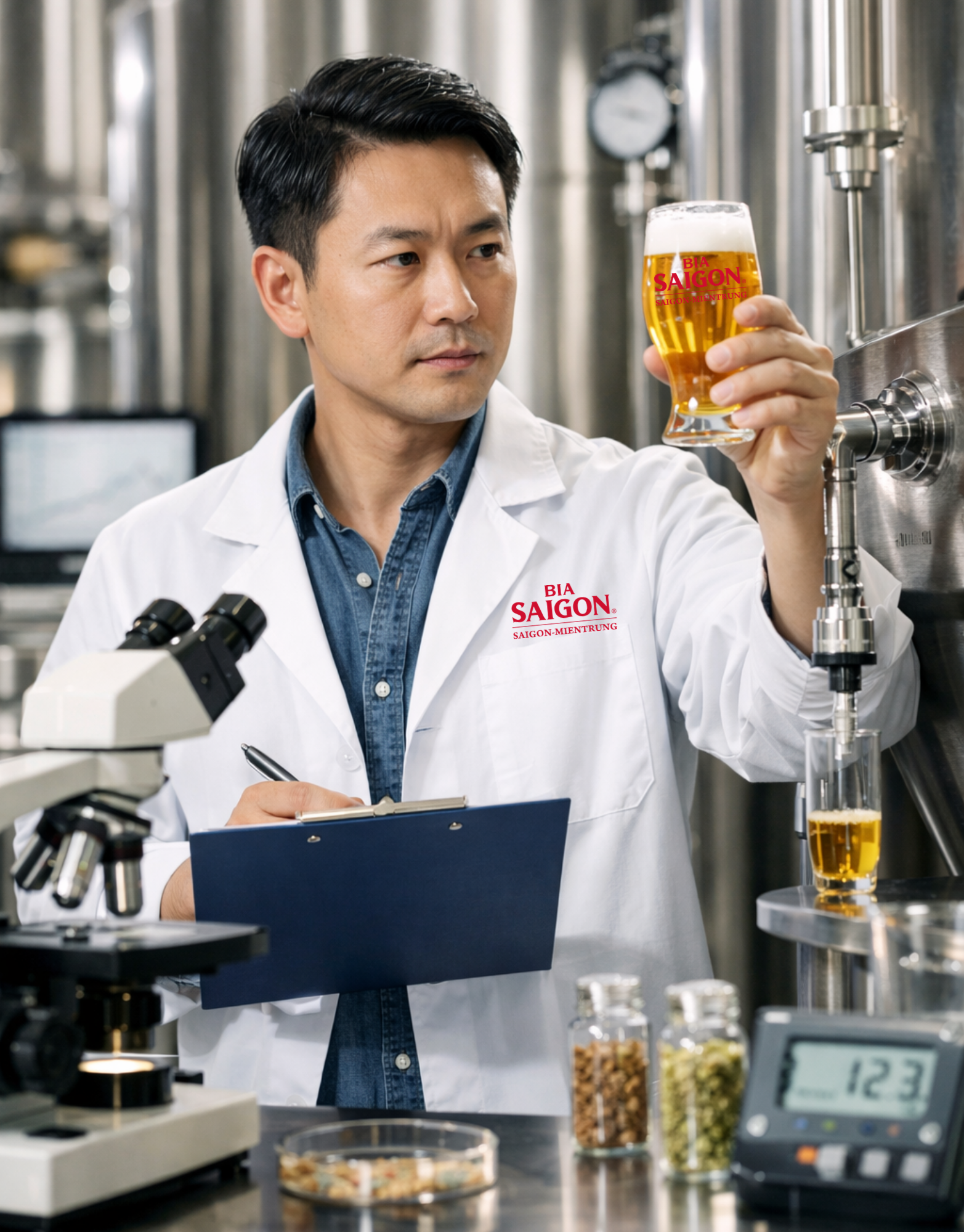
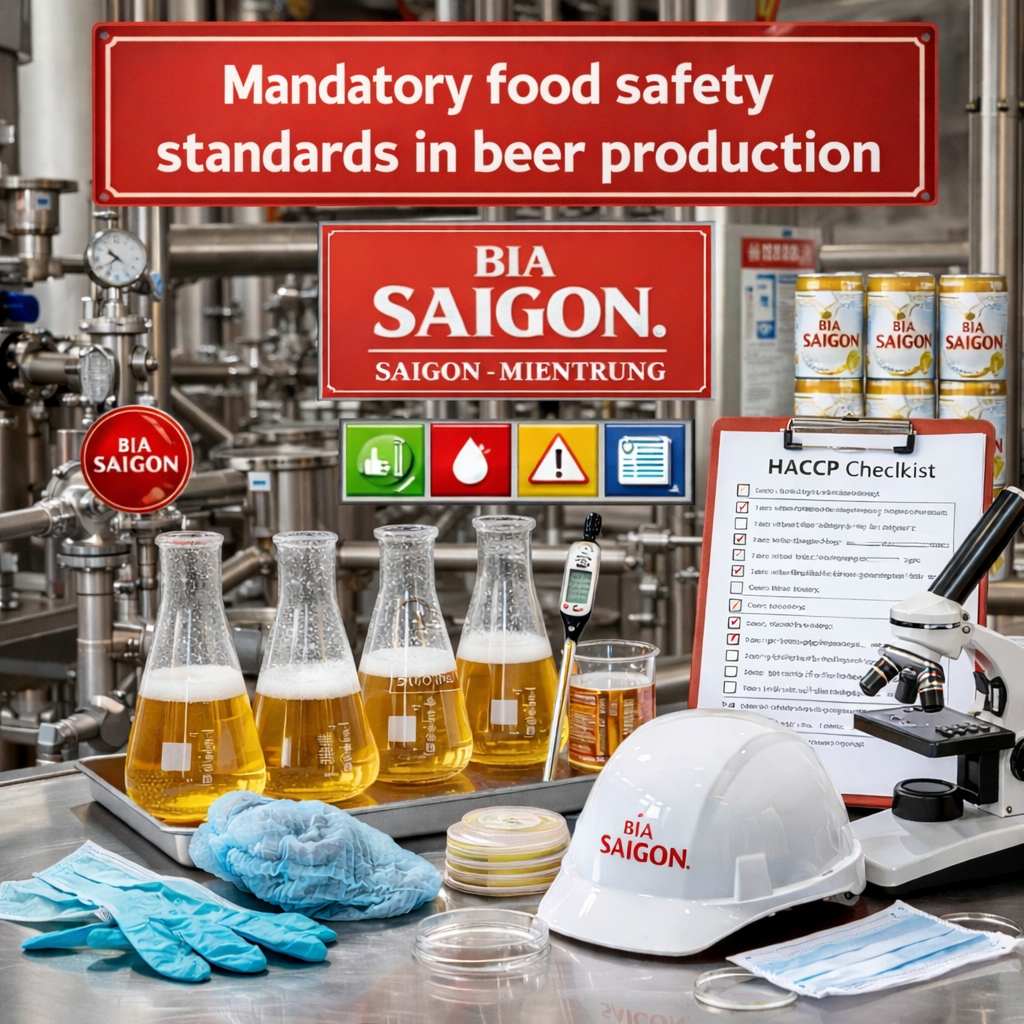
SMB operates a laboratory compliant with FSSC 22000 and ISO standards, conducting comprehensive analyses including:
-
Physicochemical testing: pH, ABV, IBU, turbidity
-
Microbiological testing for contamination detection
-
Sample retention and full batch traceability