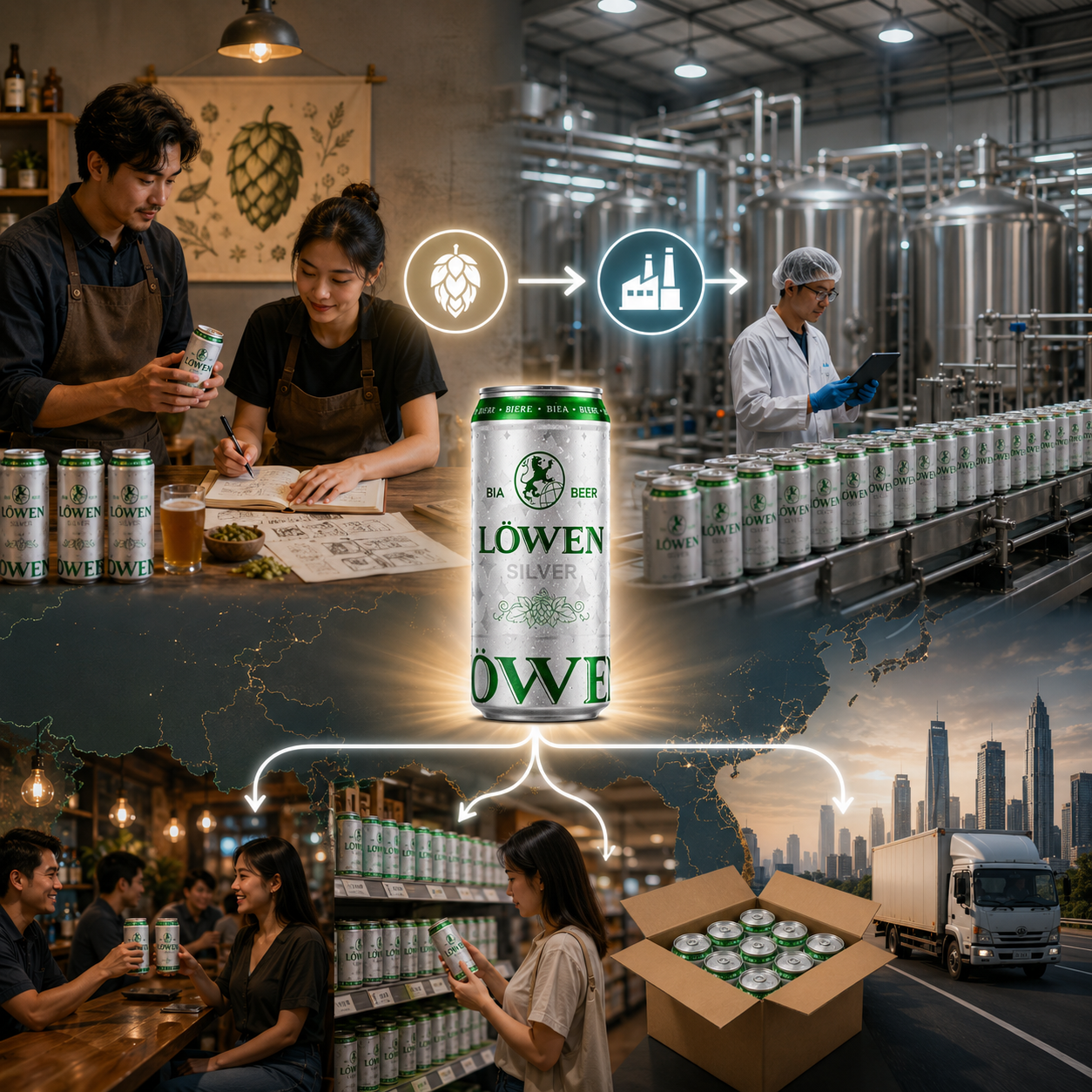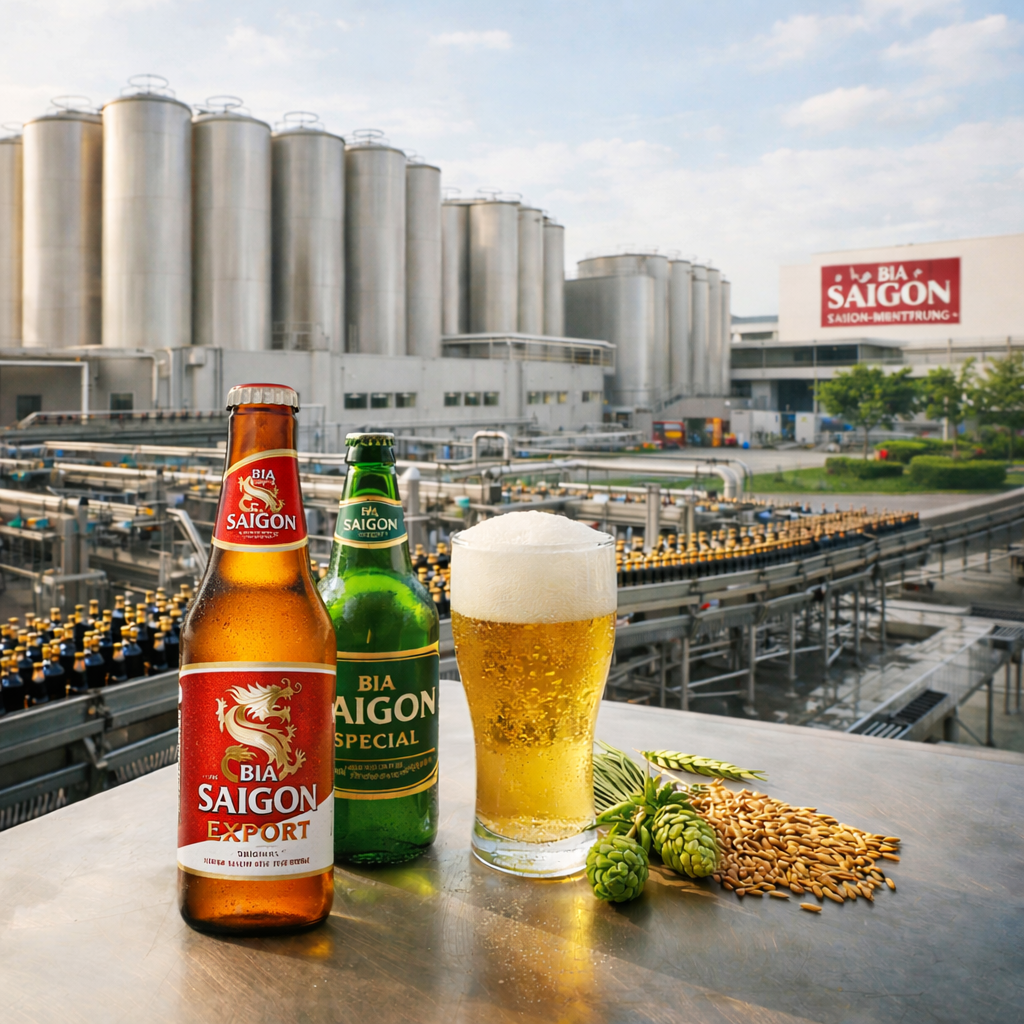


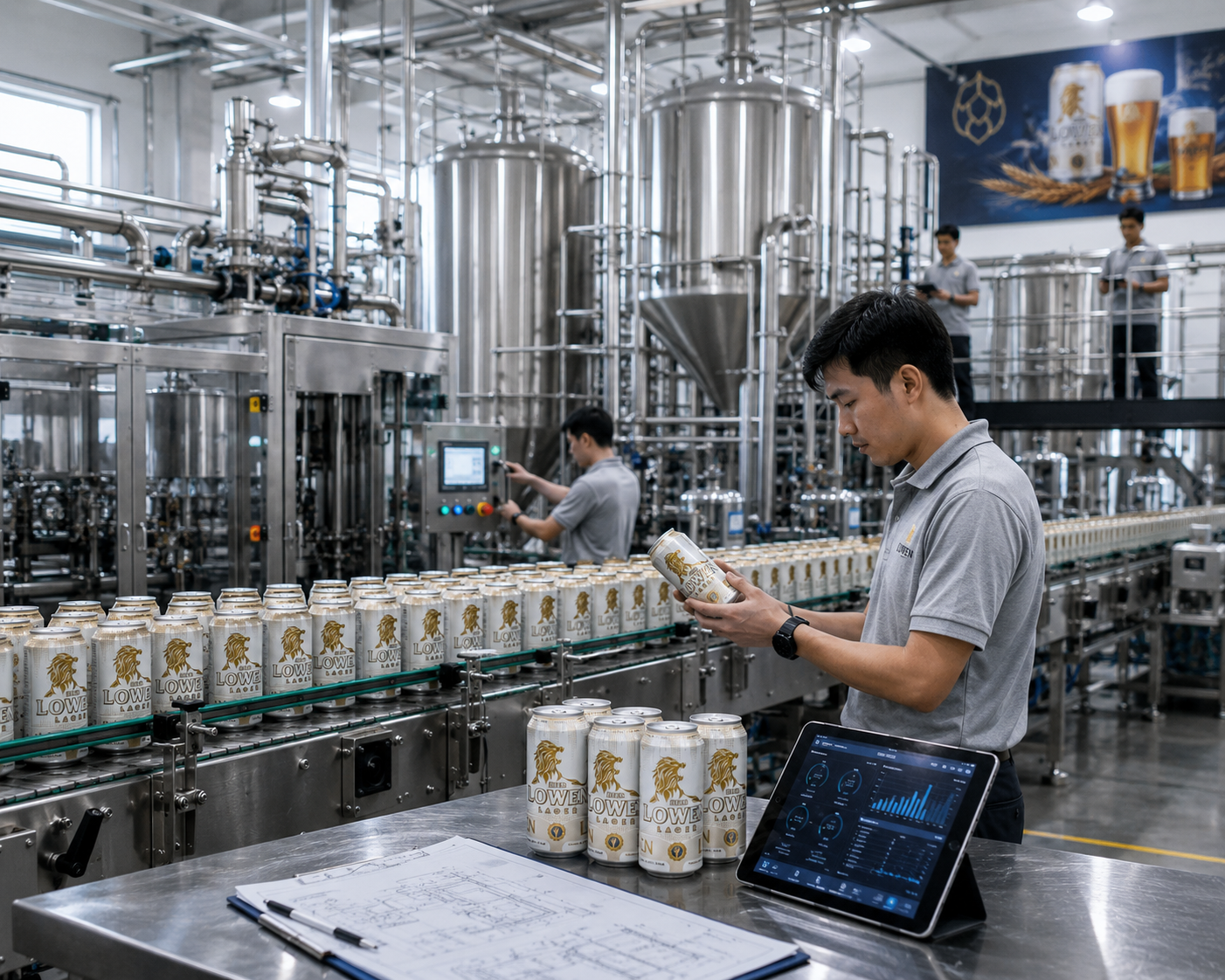
The difference does not lie in “where the beer is produced,” but in how each model affects the company’s entire business ecosystem.
Cost Structure: The Advantage Belongs to Domestic Production
When evaluating costs, many businesses are initially attracted to the image of “imported beer” being associated with premium quality. However, when the entire cost structure is analyzed, the difference becomes very clear.
Domestic beer contract manufacturing, especially in production hubs such as Central Vietnam, benefits from structural cost advantages: significantly lower labor costs, cheaper energy, and a well-developed domestic packaging supply chain. These factors help maintain stable production costs and create opportunities for cost reductions as production volume increases.
In contrast, imported OEM beer includes not only manufacturing costs but also:
- International shipping costs
- Cargo insurance
- Import duties (if no suitable FTA applies)
- Higher inventory holding costs due to longer lead times
More importantly, import costs often fluctuate with exchange rates and fuel prices, making profit forecasting more difficult.
Therefore, from a long-term perspective, domestic production is not only more cost-effective but also more stable and easier to manage financially.
Speed to Market: Domestic OEM Holds a Clear Advantage
In the beverage industry, speed determines opportunity. A product launched a few months late may miss an entire peak sales season.
Domestic beer OEM manufacturing allows businesses to:
- Shorten production timelines
- Adjust plans proactively
- Respond quickly to market trends
Typically, a domestic OEM project can be completed within a few weeks to a few months, depending on its complexity.
Meanwhile, imported OEM products are always associated with:
- Long lead times (production plus transportation)
- Logistics delay risks
- Limited flexibility in adjusting orders
This creates a significant disadvantage in the 2026 market, where trends evolve rapidly and businesses need to continuously test new products.
Flexibility: Domestic Production Fits the “Test & Scale” Model
One of the defining characteristics of the modern market is that there is no fixed formula for success. Businesses must continuously test, adjust, and optimize their strategies.
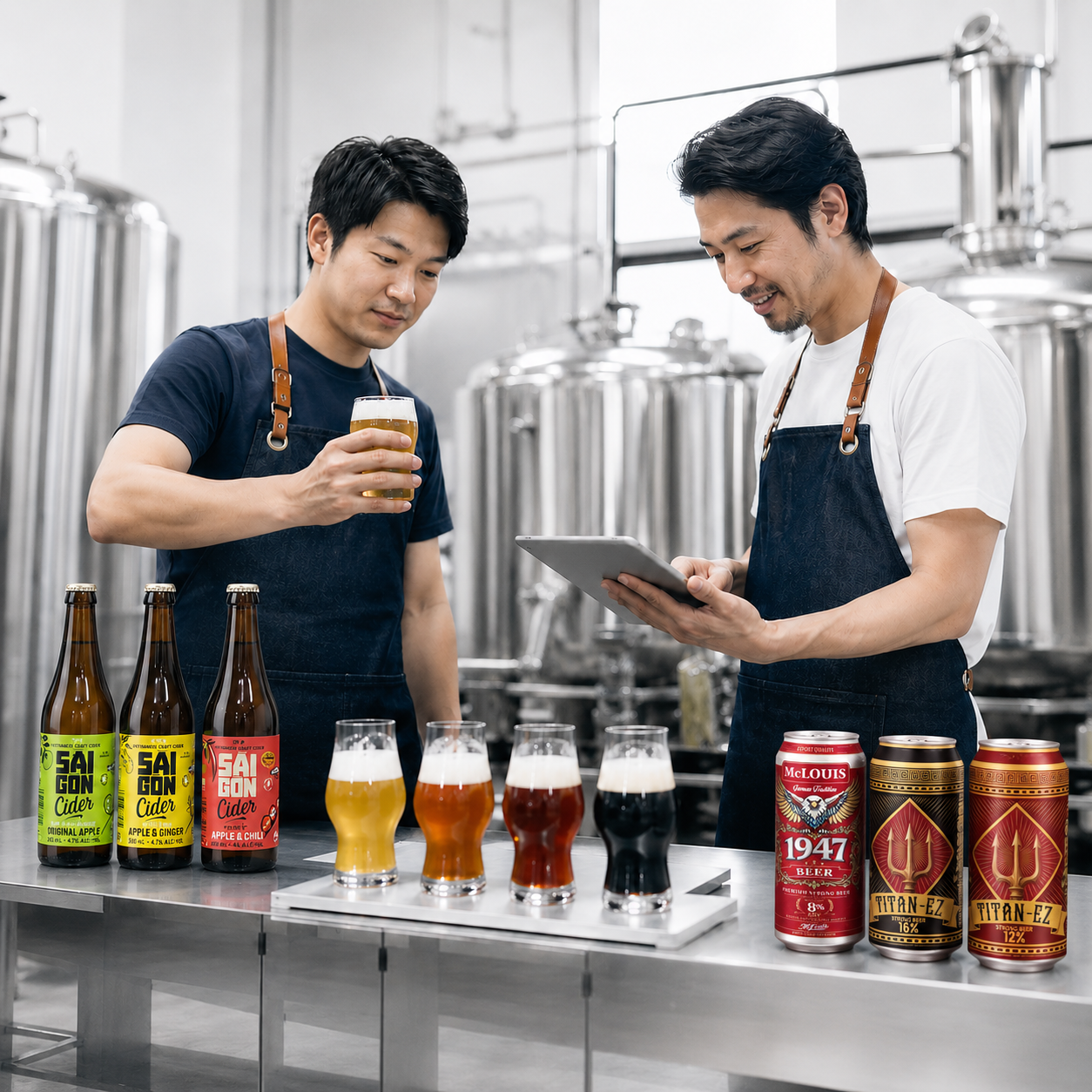
Domestic contract manufacturing allows businesses to:
- Produce small batches to test the market
- Quickly adjust the formula or packaging
- Increase or decrease production volume flexibly
In contrast, imported OEM production typically requires:
- Large MOQs (Minimum Order Quantities)
- Long-term planning
- Limited ability to make mid-course changes
This makes the import model more suitable for established brands, but less effective for startups or businesses that are still searching for product-market fit.
Quality and Standards: The Gap Is Rapidly Narrowing
In the past, imported OEM production was often viewed as the “safe” option in terms of quality. However, this gap is narrowing rapidly.
Modern breweries in Vietnam, such as Bia Sài Gòn Miền Trung (SMB), have achieved international certifications including:
- FSSC 22000
- ISO 9001, ISO 14001, ISO 50001
- SMETA
This means that domestically manufactured beer products can fully:
- Meet export standards
- Enter modern retail systems
- Compete with international products
In reality, quality no longer depends on the country of production, but on the effectiveness of the management system and production control processes.
Tariff and FTA Advantages: Domestic Production Opens the Door to Export Opportunities
One of the major advantages of domestic production is the ability to leverage Free Trade Agreements (FTAs) such as EVFTA, CPTPP, and UKVFTA.
When products are manufactured in Vietnam and comply with rules of origin, they can:
- Benefit from 0% import tariffs
- Improve competitiveness in international markets
Conversely, if OEM products are imported from a country without a suitable FTA, they may be subject to higher import duties, significantly reducing profit margins.
In many cases, the profitability of a beer project is determined not by manufacturing costs, but by tariff advantages.
Risk Management: Domestic OEM Helps Reduce Variables
Domestic OEM manufacturing significantly reduces the number of variables that businesses must manage throughout the supply chain. Communication is faster, production oversight is easier, and businesses can respond more effectively to market fluctuations.
By contrast, imported OEM projects face additional risks related to international logistics, customs procedures, geopolitical developments, exchange-rate fluctuations, and shipping disruptions. Any issue within the global supply chain can directly impact product availability and market performance.
For businesses seeking sustainable growth, reducing uncertainty is often just as important as reducing costs. This is one of the key reasons why many emerging beer brands are increasingly favoring domestic OEM manufacturing as their long-term strategic choice.
Imported OEM production always comes with multiple variables:
- Exchange rates
- Trade policies
- Logistics bottlenecks
- Shipping lead times
Meanwhile, domestic production helps businesses:
- Gain better control over the supply chain
- Reduce the risk of disruptions
- Improve forecasting capabilities
In a context where global supply chains still face significant uncertainty, this is a major advantage.
There Is No Perfect Choice, Only the Choice That Fits the Strategy
Looking at the overall picture, it can be seen that:
- Imported OEM production is suitable for an “imported” positioning strategy, or when a business needs a brand story associated with a specific country.
- Domestic beer contract manufacturing is suitable for a strategy focused on flexible growth, cost optimization, and rapid expansion.
However, in the context of 2026, where:
- Speed is more important than scale
- Costs must be tightly controlled
- The market is constantly changing
Domestic production, especially through OEM partners such as Bia Sài Gòn Miền Trung (SMB), is becoming the strategic choice for the majority of businesses.
Because ultimately, what determines success is not where the beer is produced, but how quickly, efficiently, and sustainably a business can bring its product to market.
OEM Beer Contract Manufacturing Consultation
Organization: Bia Sài Gòn Miền Trung (SMB)
Address: 01 Nguyen Van Linh Street, Tan An Ward, Buon Ma Thuot City, Dak Lak Province, Vietnam
OEM Consultation Hotline: (+84) 94 1127575
Email: oem@biasaigonmt.com
Website: https://oem.biasaigonmt.com/
If you are considering between domestic production and imported OEM production, start with your business strategy—and let SMB help you choose the most optimal path.