

The beer market in recent years has witnessed a clear shift from competition based on scale to competition based on value. While the playing field was once dominated by major players with extensive distribution networks and massive production capacities, consumers today have begun seeking new experiences: distinctive flavors, unique brand stories, or simply an option that is “not mass-produced.”
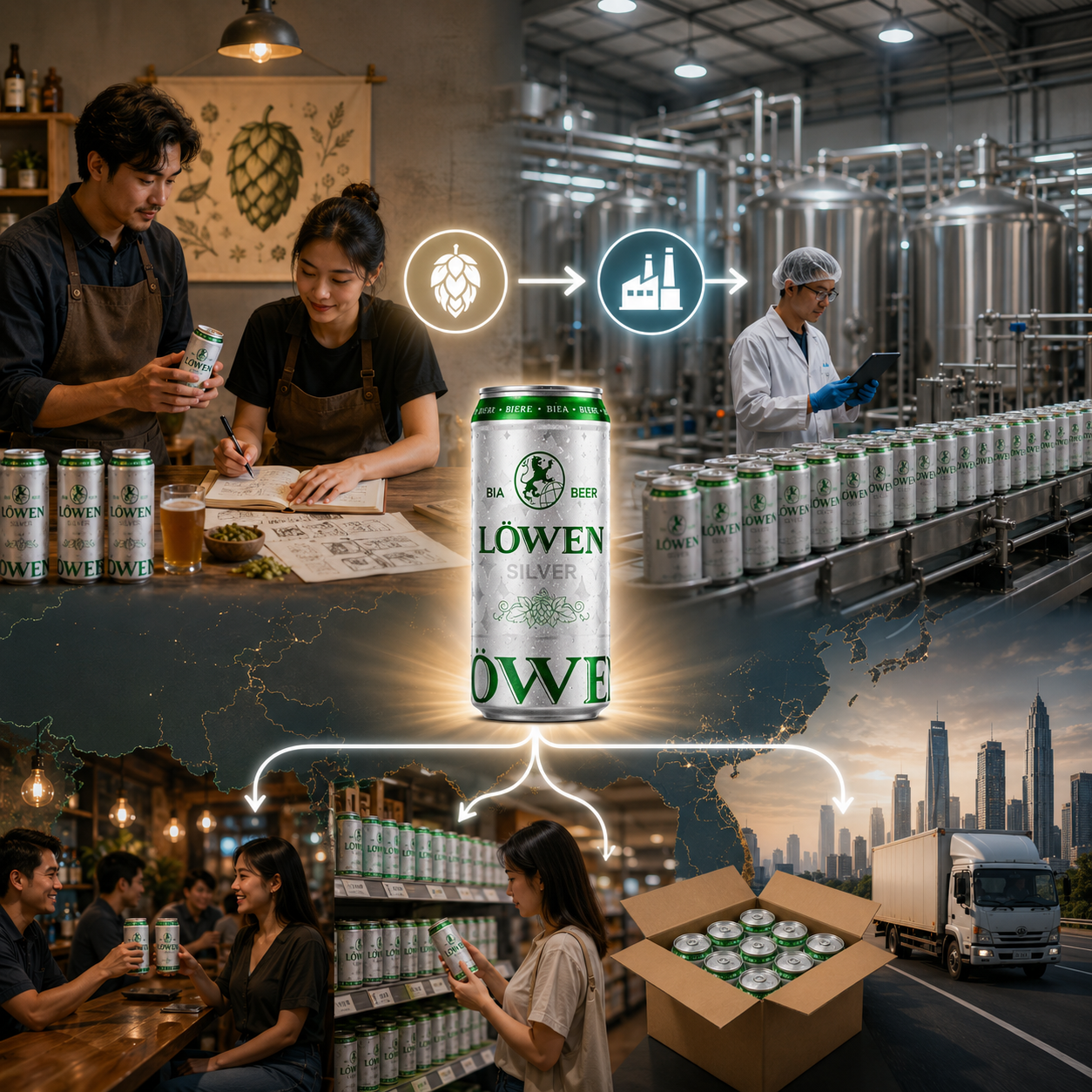
This shift in consumer behavior has created an opening for small brands. However, that opening does not necessarily mean an easy path. The biggest barriers still lie in production capabilities, quality standards, and cost structures. Building a complete brewery requires substantial capital, considerable time, and complex operational expertise—factors that not every startup is capable of meeting.
This is where the beer OEM (Original Equipment Manufacturing) model becomes a strategic lever. Instead of building everything from scratch, small brands can leverage the existing capabilities of large breweries to bring products to market quickly. This not only shortens development time but also allows them to focus their resources on branding, marketing, and distribution.
From the perspective of a long-established manufacturer like SMB, we have observed that the OEM trend is not merely a temporary solution; it is becoming part of the industry’s structure. Small brands, if they know how to use OEM intelligently, can create their own positions and even compete directly with traditional products.
OEM – The “Behind-the-Scenes Factory” That Optimizes Cost and Speed
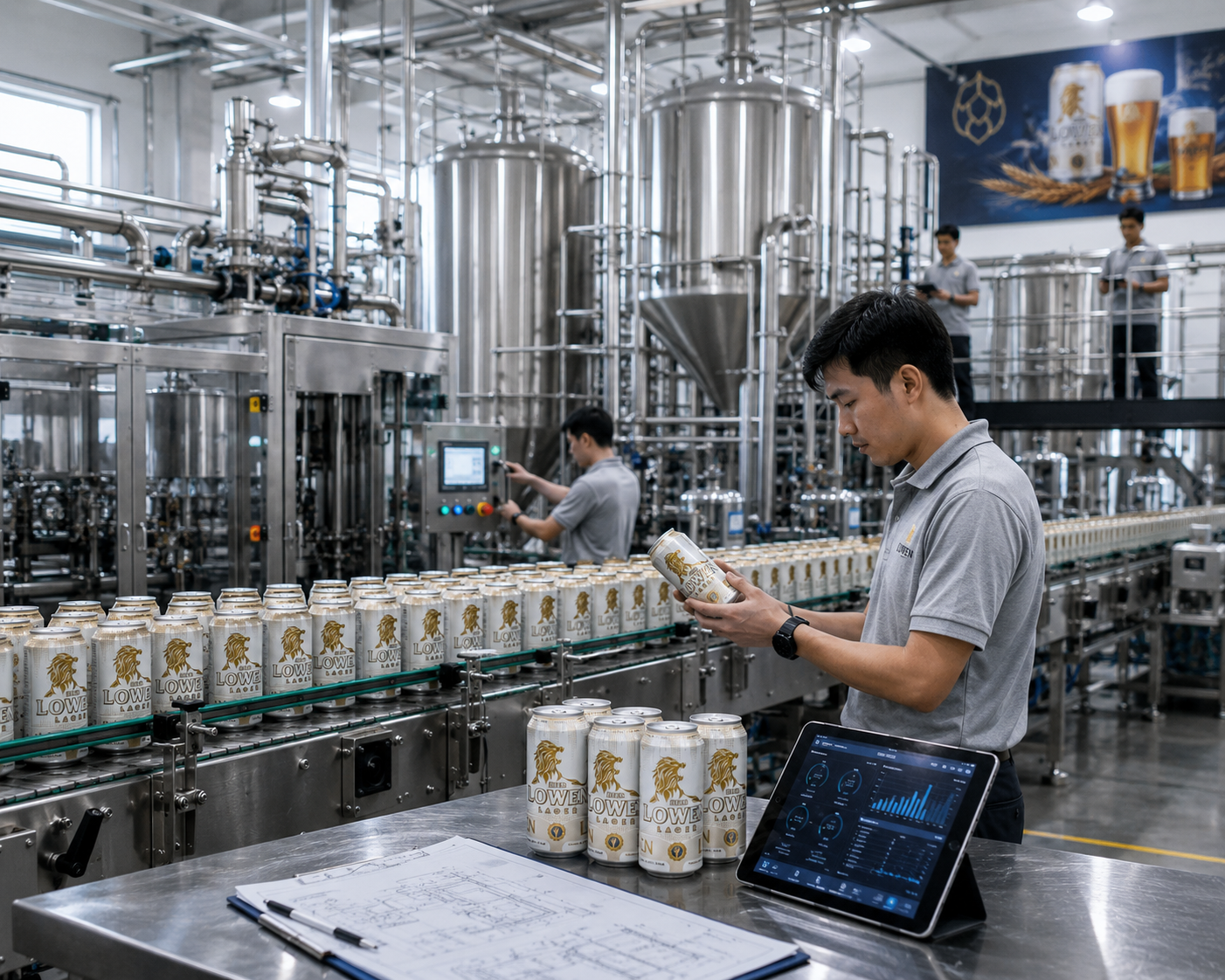
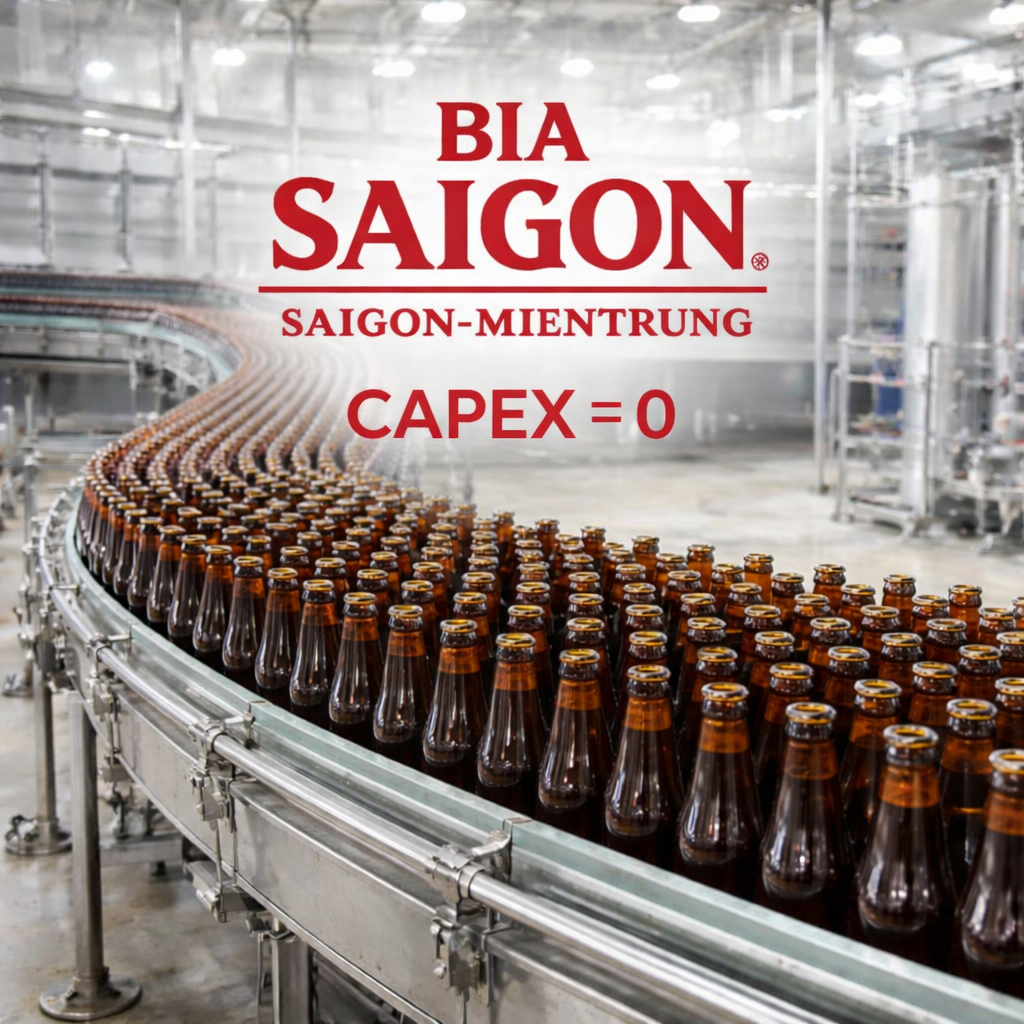
One of the greatest advantages of beer OEM manufacturing is its ability to optimize initial investment costs. By eliminating the need to build a brewery, brands can save tens to hundreds of billions of Vietnamese dong while avoiding complex operating expenses such as technical personnel, equipment maintenance, and quality control.
However, cost is not the only factor. In today’s market, speed to market plays a decisive role. A good idea that is not executed promptly can quickly become obsolete. Through OEM, the process from recipe development to production and packaging can be significantly shortened thanks to standardized systems and established processes.
More importantly, OEM breweries such as SMB do not merely provide manufacturing services; they also accompany partners throughout the product development process. From advising on raw material selection and fine-tuning flavor profiles to designing packaging aligned with brand positioning, every step contributes to making the final product more competitive.
From a strategic perspective, OEM enables small brands to shift from an “asset investment” mindset to a “capability utilization” approach. This is especially important during the early stages when resources are limited and must be allocated efficiently. Rather than investing heavily in a brewery, businesses can focus on building their brand story and expanding their market presence—factors that create long-term value.
Quality and Standards – Critical Factors in Competition
One of the most common concerns among small brands when choosing OEM is whether the product will achieve the desired level of quality. This is a completely legitimate question because, in the beer industry, quality is not only a competitive factor but also the foundation of brand reputation.

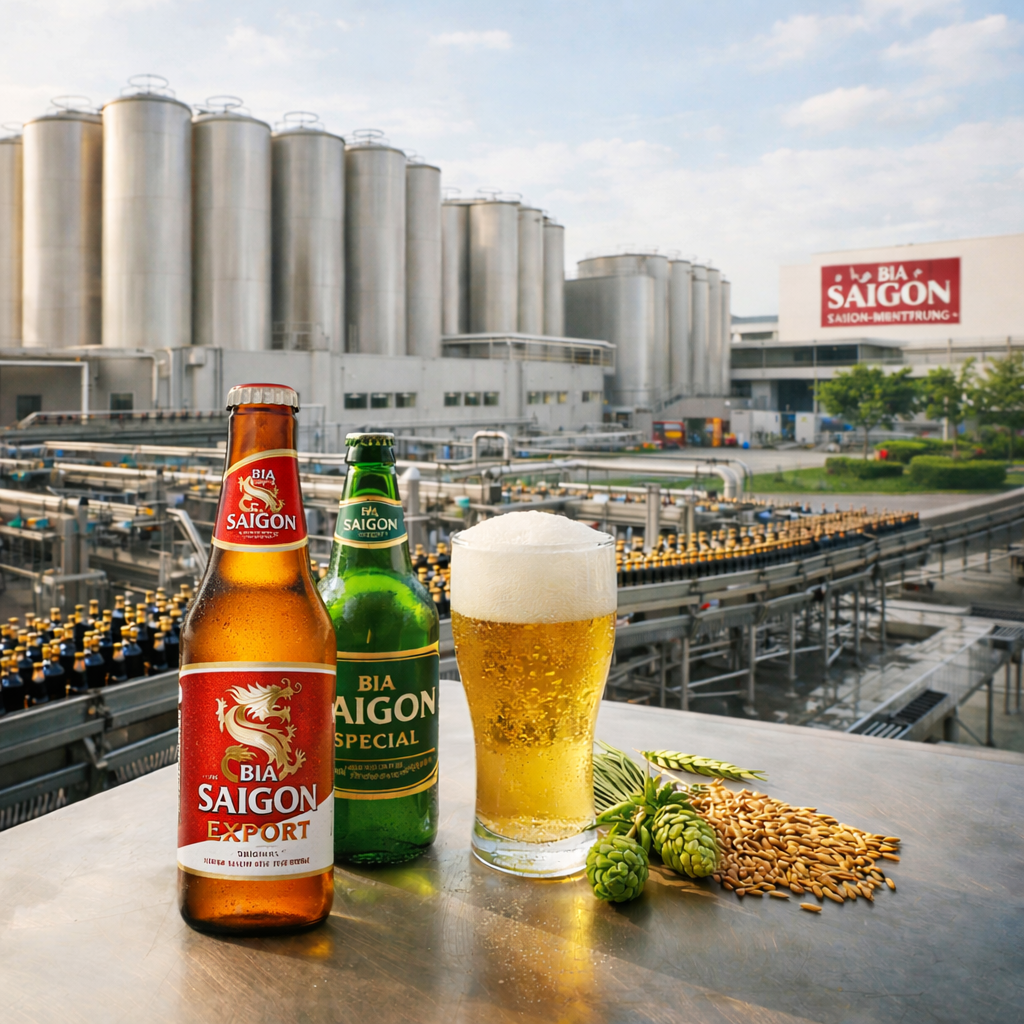
However, when partnering with manufacturers that maintain rigorous quality management systems, such as SMB, this concern is not only addressed but can actually become an advantage. Modern production lines, strict quality control procedures, and years of accumulated experience help ensure that every batch of beer consistently meets established standards.
Importantly, OEM does not mean “mass-produced products.” On the contrary, thanks to flexible manufacturing capabilities, brands can develop distinctive recipes that align with their positioning. From light beer for younger consumers and craft beer with unique flavor profiles to products designed around health-conscious trends, all of these concepts can be realized on a professional brewing platform.
As consumers become increasingly demanding, ensuring quality from the outset helps small brands avoid significant risks later on. A high-quality product not only retains customers but also generates word-of-mouth effects—an extremely important factor in the digital media era.
Brand Building – The Real Playing Field for Small Businesses
If production can be outsourced, then the brand itself is the core asset that businesses must build on their own. This is also where small brands can create meaningful differentiation.
OEM provides a significant advantage by freeing up resources so that businesses can focus on marketing and customer experience. Instead of worrying about operating a brewery, companies can invest in telling their brand story, creating innovative packaging, or building a loyal consumer community.
In practice, many successful new beer brands have succeeded not because they own large factories, but because they understand their customers. They know how to create a compelling reason to choose their products, whether through unique flavors, the lifestyle represented by the brand, or simply the feeling of being different from familiar alternatives.
OEM also allows businesses to be more flexible in experimentation. Rather than producing large volumes from the beginning, brands can launch small batches to test market reactions and quickly adjust their products or marketing strategies. This is an advantage that self-owned factories often struggle to achieve because of capacity pressures and fixed costs.
From SMB’s perspective, we do not view OEM merely as a manufacturing service, but as part of an ecosystem that supports brand growth. When our customers succeed, we succeed as well.
OEM – A Long-Term Strategy Rather Than Just a Temporary Solution
Many companies initially regard OEM as a stepping stone before building their own brewery. However, in an increasingly volatile market, maintaining the OEM model over the long term can actually be a smart strategic choice.

OEM enables businesses to maintain flexibility—an extremely important factor in the fast-moving consumer goods industry. As trends evolve, companies can quickly adapt their products without being constrained by fixed production infrastructure. At the same time, partnering with large-scale manufacturers helps ensure the capacity to scale when demand increases.
At SMB, we have partnered with numerous brands at different stages of development—from startups to established companies with strong market positions. Each brand has its own story, but they all share one thing in common: they leverage OEM as a tool to accelerate growth and optimize resources.
If you are nurturing an idea for a beer brand, or if you want to expand your product portfolio without being ready to invest in a brewery, OEM is an option worth considering. With modern production facilities, an experienced technical team, and deep market knowledge, Saigon Beer – Central Region Joint Stock Company (SMB) is ready to accompany you from concept to finished product.
Contact SMB’s OEM services for consultation on developing your own beer products, optimizing costs, and shortening time to market.
Company: Saigon Beer – Central Region Joint Stock Company (SMB)
Address: 01 Nguyen Van Linh Street, Tan An Ward, Buon Ma Thuot City, Dak Lak Province, Vietnam
OEM Consultation Hotline: (+84) 94 1127575
Email: oem@biasaigonmt.com
Website: https://oem.biasaigonmt.com/
We do more than manufacture—we help you build your brand.