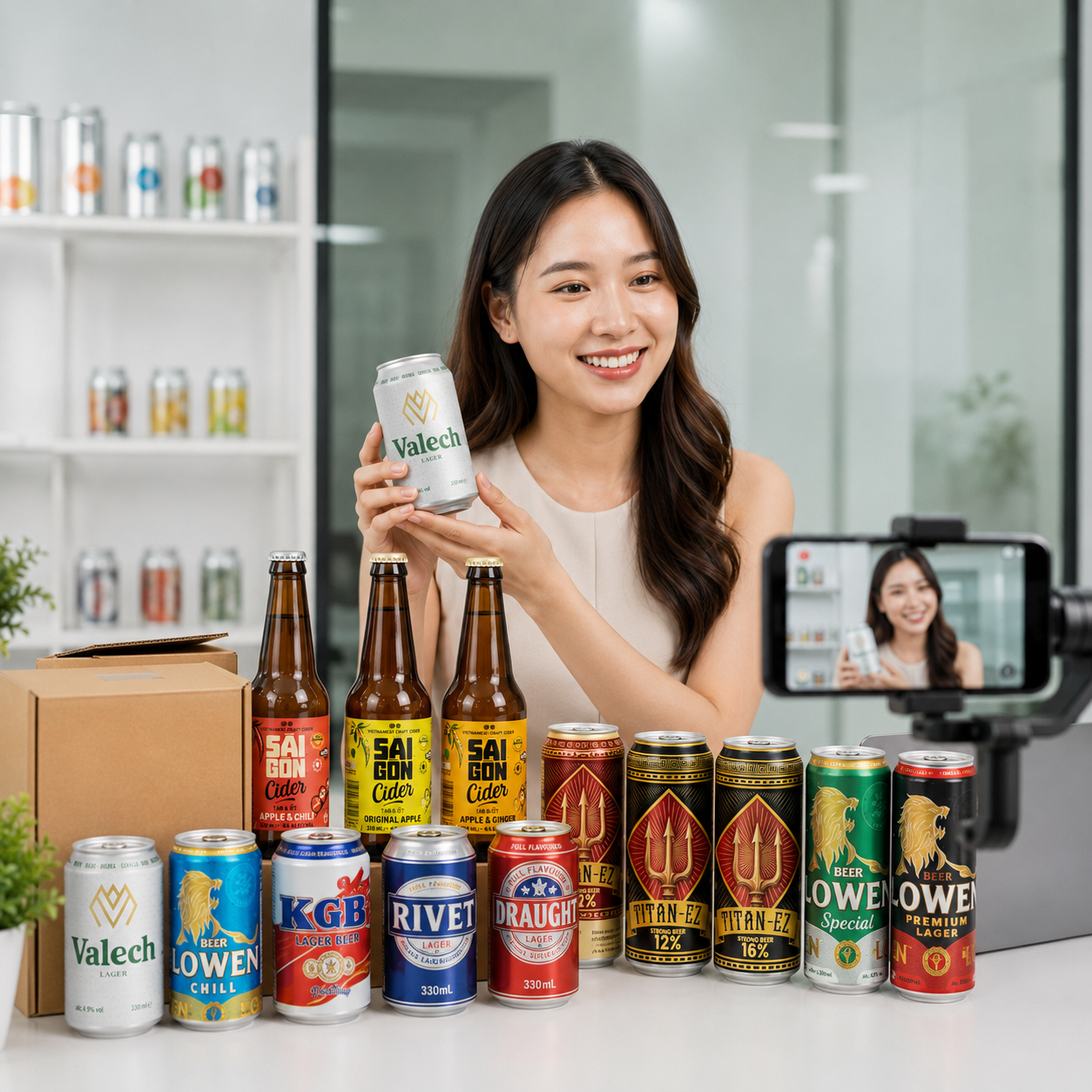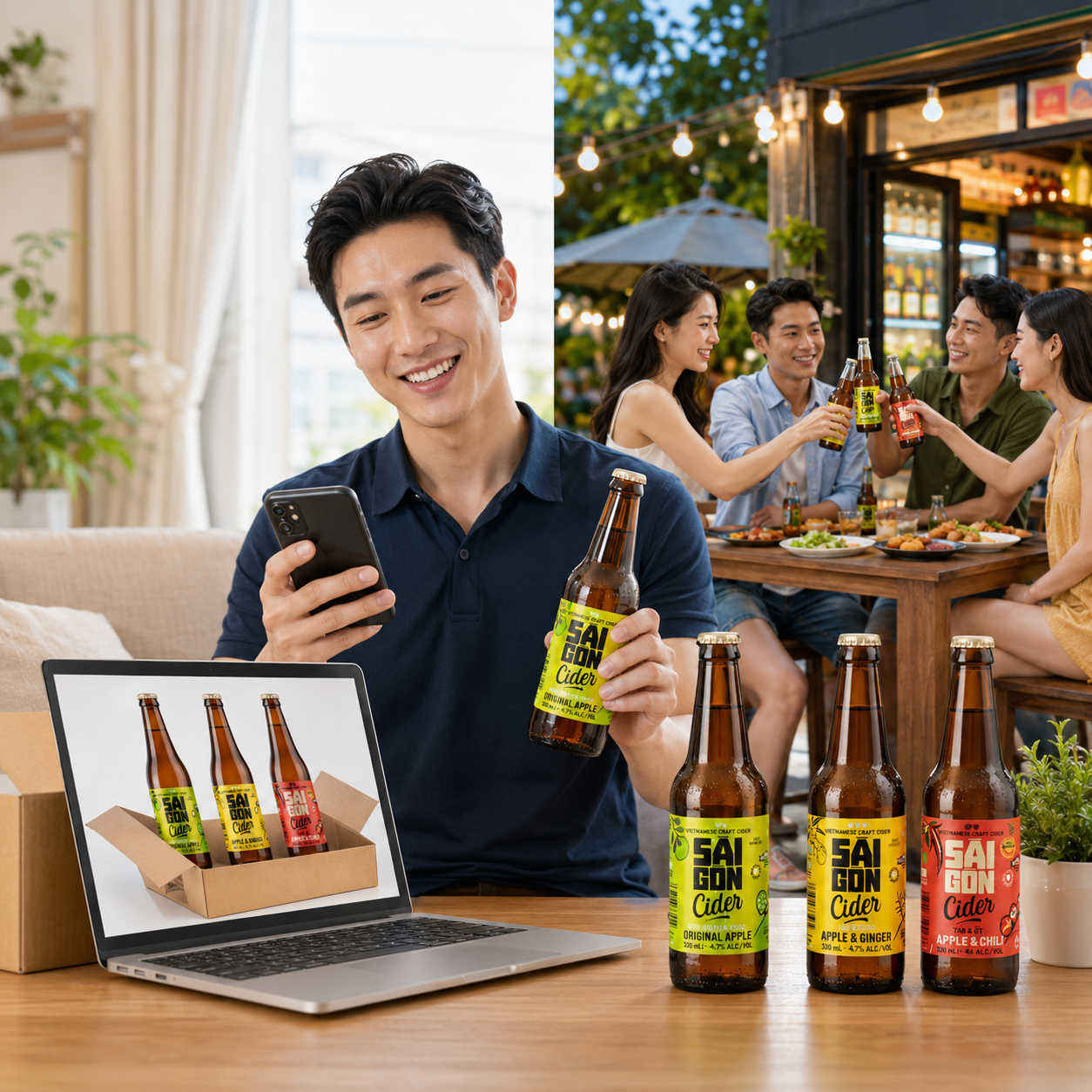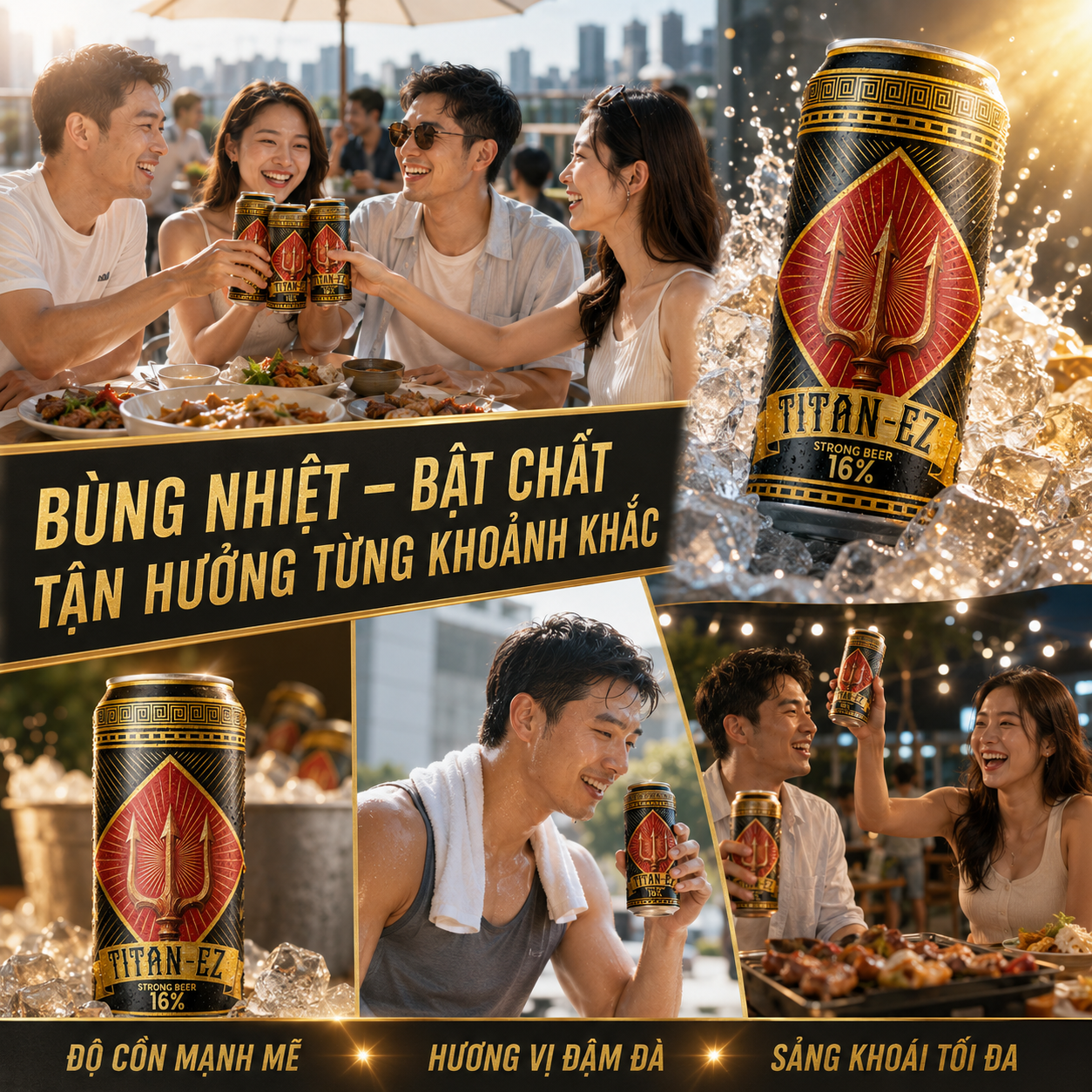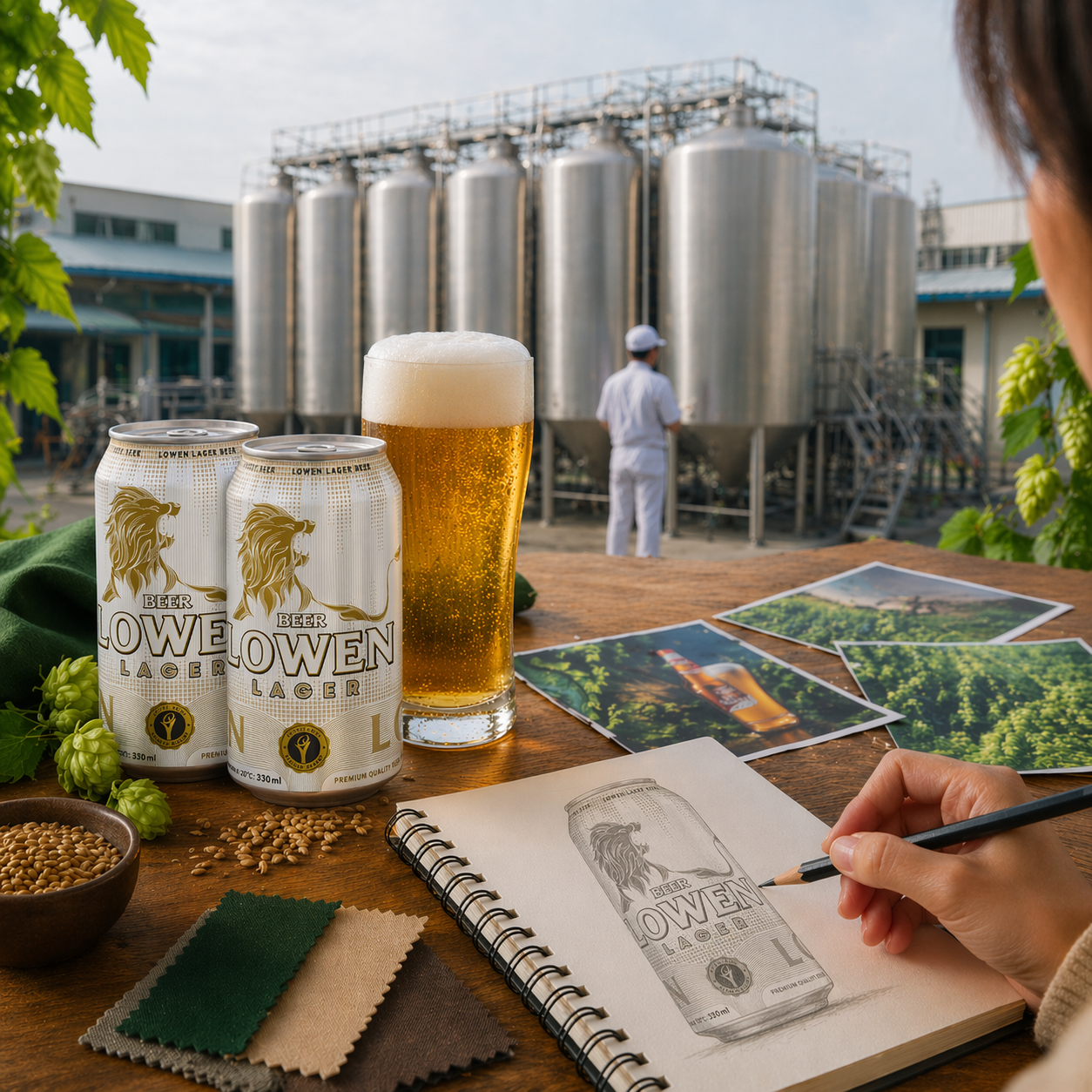


When a private-label beer brand begins entering the market, the challenge lies not only in creating a suitable product but also in answering the question: How can customers become aware of, understand, and remember the product?

A distinctive packaging design can help a product attract attention at the point of sale. A strong distribution network allows the product to appear in more locations. However, for a brand to gradually establish a position in customers’ minds, businesses also need a consistent content strategy.
In this context, content should not simply be understood as posting regularly on social media. Websites, product images, point-of-sale information, stories about the production process, and the way businesses introduce each beer line are all content touchpoints.
For businesses developing products through OEM beer manufacturing, the content strategy should be prepared alongside the product’s market launch. A manufacturing facility can help bring the product to life, but defining its meaning and determining how the brand communicates with customers must still originate from the business’s own brand positioning.
So, how should a private-label beer brand develop its content to attract attention and support business performance?
Define the Core Message Before Creating Content
A common mistake in content development is starting with the question, “What should we post this month?”
Before that, businesses need to answer a more important question: What should customers remember about the brand?
A new brand may struggle to communicate too many messages at once. If every post discusses a completely different topic, the brand’s image can become fragmented, making it difficult for customers to develop a clear perception of the brand.
The core message should originate from the product’s positioning.
Which customer segment is the brand targeting? For what occasions or situations was the product developed? Does the differentiation the business wants to emphasize lie in the experience, design, story, or another specific value?
Once these elements are clearly defined, content has a central direction around which it can develop.
For example, if a brand focuses on culinary experiences, its content can place greater emphasis on consumption occasions and food pairings. If a product is developed specifically for a hotel or resort group, the content can connect the product with the destination experience.
The key is maintaining consistency.
Customers rarely remember a brand after encountering just one post. Brand recognition is usually built through repeated exposure to interconnected messages.
Therefore, an effective content strategy does not necessarily require constantly searching for entirely new topics. Instead, brands need to communicate the same positioning from different perspectives.
If your business is preparing to develop a beer product under its own brand, SMB is ready to discuss product requirements and contract manufacturing options via Email: Oem@biasaigonmt.com.
Turning Product Characteristics into Content Customers Can Understand
Businesses often have extensive product information, including ingredients, formulations, production processes, packaging, and technical specifications.

However, customers are not always interested in information from the same perspective as the production team.
Therefore, an important task of content marketing is to translate product characteristics into value that readers can easily understand.
Instead of simply presenting a series of technical terms, brands need to explain what those elements mean for the product experience.
Similarly, content about the production process should not merely describe the production line. Businesses can help customers understand why ingredient control, production batch management, and maintaining consistent processes are important to the quality of the finished product.
This approach creates content with greater depth than direct advertising.
A brand’s website can feature articles explaining its products, production processes, packaging, and brand development journey. Social media can then transform this long-form content into images, short videos, or more accessible stories.
This allows a single topic to be used across multiple channels without constantly creating content from scratch.
Businesses should also avoid making unsupported quality claims. Information relating to standards, certifications, or product characteristics must be verified before being used in marketing communications.
In the long term, credible content delivers greater value than exaggerated advertising messages.
Businesses developing OEM beer products and seeking to clarify product information for their commercial plans can contact SMB’s OEM department via Email: Oem@biasaigonmt.com.
Developing Content Around Real-Life Product Usage Contexts
One way to make content more relevant to customers is to place products in real-life usage contexts.
Instead of always displaying the product alone against a background, brands can show customers the situations in which the product is appropriate.
For the restaurant channel, content can focus on culinary experiences and how the product fits into a meal. For hotels or resorts, the context can be connected to the environment and experiences offered at the destination.
This helps customers better understand the role of the product in their experience.
However, businesses should avoid creating content that encourages excessive alcohol consumption or presents the amount consumed as a measure of happiness, confidence, or social status. Brand content should focus on the product, culinary culture, design, storytelling, and appropriate experiences while complying with applicable advertising regulations.
Usage contexts also help businesses differentiate between product lines.
If a brand offers multiple SKUs designed to meet different needs, each product line can have its own content themes while remaining part of a unified brand identity system.
This is more effective than simply changing the images of beer cans or bottles while using the same message across the entire product portfolio.
When products are presented in the right context, customers not only understand “what beer the brand sells” but also gain a clearer understanding of the needs the product was developed to meet.
If your business is developing a private-label beer portfolio for restaurants, hotels, distribution networks, or a specific market segment, you can contact SMB via Email: Oem@biasaigonmt.com to discuss suitable product development options.
Connecting Online Content with Physical Points of Sale
A content strategy that generates views but does not help customers understand where to purchase the product will struggle to directly support business performance.

Therefore, as a brand begins expanding its distribution network, its content needs to connect with physical points of sale.
The website can provide information about relevant geographic areas or distribution networks. The brand’s communication channels can introduce new retail outlets, recently expanded markets, or locations where customers can find its products.
This is particularly important for new brands.
When consumers discover a product online but do not know where to purchase it, their interest may quickly fade.
Point-of-sale content should also be considered part of the overall strategy.
Packaging, shipping cartons, menus, promotional materials, and product displays all communicate information about the brand. If the online brand image follows one style while the presentation at retail outlets is completely different, the brand experience will lack consistency.
Businesses should create a system in which customers can discover the brand through content, recognize the product at the point of sale, and continue identifying the brand after purchase.
When expanding into new regions, content can also support distribution teams. Instead of simply announcing that a product “is now available,” brands can introduce the product’s story, key characteristics, and locations where customers can find it.
In this way, content marketing no longer operates separately from sales but becomes a tool for turning customer interest into action in the marketplace.
Businesses expanding production volumes and distribution networks for their private-label beer brands can contact SMB to discuss contract manufacturing plans via Email: Oem@biasaigonmt.com.
Developing a Content System Instead of Posting Based on Inspiration
When a brand first launches, marketing teams often have plenty of ideas. However, after some time, constantly searching for new topics can become a challenge.
The solution is to build a content system rather than relying on inspiration.
Businesses can establish several content categories centered on products, production processes, brand development stories, points of sale, culinary experiences, and brand activities. Each category can then be developed across multiple formats.
An in-depth website article can be transformed into several shorter pieces of social media content. A product photography session can generate visual assets for the website, social media posts, promotional materials, and points of sale. A story about the packaging development process can be turned into behind-the-scenes content.
This approach helps reduce content production costs while improving consistency.
Businesses should also establish a library of images, product information, and brand identity guidelines. When sales teams, distributors, or partners need materials, they can use the same official content resources instead of creating different versions independently.
It is particularly important to distinguish between short-term content and content with long-term value.
Posts introducing promotional campaigns or time-specific activities generally have relatively short lifespans. Meanwhile, content explaining products, production processes, brand development stories, and related knowledge can continue delivering value to the website over an extended period.
Combining these two categories allows brands to maintain up-to-date communications while building a substantial and informative content foundation.
If your business is preparing to add a new beer product to its portfolio, SMB is ready to receive project information and provide consultation on contract manufacturing options via Email: Oem@biasaigonmt.com.
Measuring Content Performance Through Its Impact on Brand Recognition and Business Results
Views, likes, and follower counts are easily observable metrics, but they are not sufficient to evaluate the effectiveness of a content strategy.

Businesses need to return to their original objectives.
If the goal is to increase brand awareness, businesses can monitor branded search volume, direct website traffic, or the reach of key content. If the objective is to support distribution, they should also pay attention to the number of customers searching for points of sale, inquiries received, or changes in sales within regions targeted by marketing communications.
More importantly, brands need to identify which content generates valuable actions.
An article with relatively modest traffic that encourages many visitors to explore the product page may deliver greater value than content that attracts numerous views but generates almost no further engagement with the brand.
Point-of-sale data should also be integrated with marketing data.
If a region receives substantial content marketing investment but sales velocity remains unchanged, businesses need to determine whether the issue lies in the messaging, distribution coverage, or product itself. Conversely, if marketing activities are accompanied by improvements in branded searches and sales velocity, businesses have a stronger basis for continued investment.
Measurement also helps brands identify which topics attract the greatest customer interest.
Over time, the content strategy will shift from what the team “thinks customers like” toward using data to understand which content customers actually respond to.
This provides the foundation for increasingly effective marketing as the brand expands.
SMB respectfully invites businesses developing or expanding their private-label beer brands to contact its OEM department via Email: Oem@biasaigonmt.com to discuss product requirements and contract manufacturing plans.
Effective Content Should Help Customers Understand, Remember, and Find the Brand
Developing content for a private-label beer brand should not be understood as a requirement to publish as many posts as possible or maintain a presence on every platform.
What matters more is building a purposeful content system.
Customers need to understand what the product is, recognize what makes the brand different, and know where they can find it. Through repeated exposure, the brand’s visual identity and messaging must remain consistent enough to create lasting recognition.
Therefore, a content strategy should begin with brand positioning, which can then be translated into content categories that support long-term development. Product information should be communicated in ways customers can easily understand. Visual content should place products in appropriate contexts. Online content should connect with physical points of sale, and ultimately, performance should be evaluated using data.
For businesses using the OEM beer manufacturing model, content development should also be prepared alongside the product development process.
While the manufacturing facility handles production according to the agreed cooperation arrangements, the brand owner needs to develop the brand story, identity system, distribution channels, and customer communication strategy.
When these two aspects are prepared simultaneously, the product is not simply “manufactured and completed” but also has a stronger foundation for entering the market.
Ultimately, effective content is not content that talks the most about the brand.
It is content that helps customers understand the product correctly, remember the brand, and easily connect their interest with actual points of sale.
When these three objectives are achieved consistently, content marketing can become a direct contributor to the long-term development of a private-label beer brand.
Contact Information
To learn more about the company and receive consultation on OEM beer manufacturing services, please contact Sai Gon – Mien Trung Beer Joint Stock Company (SMB) through its official contact channels.
Company: Sai Gon – Mien Trung Beer Joint Stock Company (SMB)
Head Office Address: 01 Nguyen Van Linh, Tan An Ward, Dak Lak Province
OEM Consultation Hotline: (+84) 94 1127575
Dedicated Email: Oem@biasaigonmt.com
Official Website: https://oem.biasaigonmt.com/