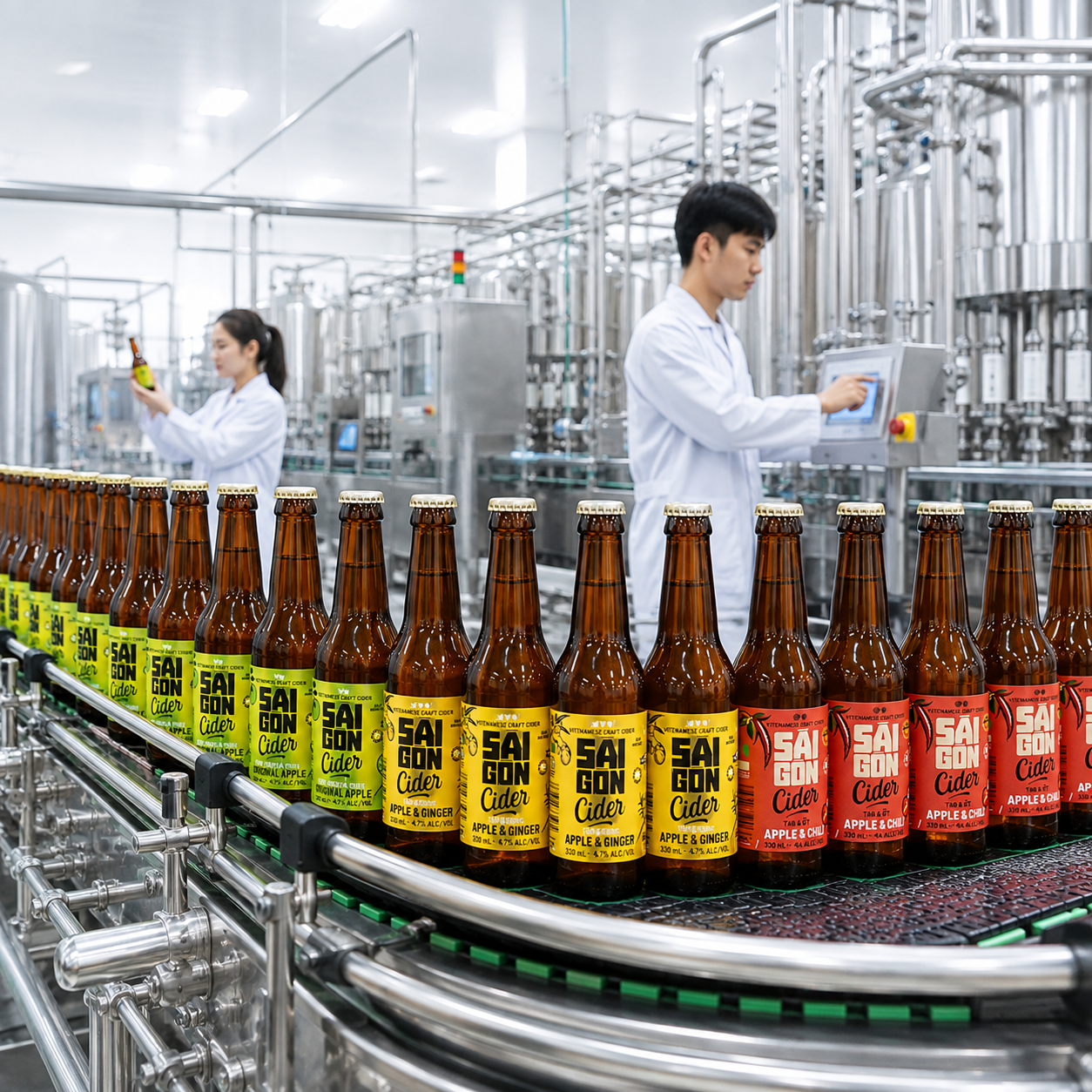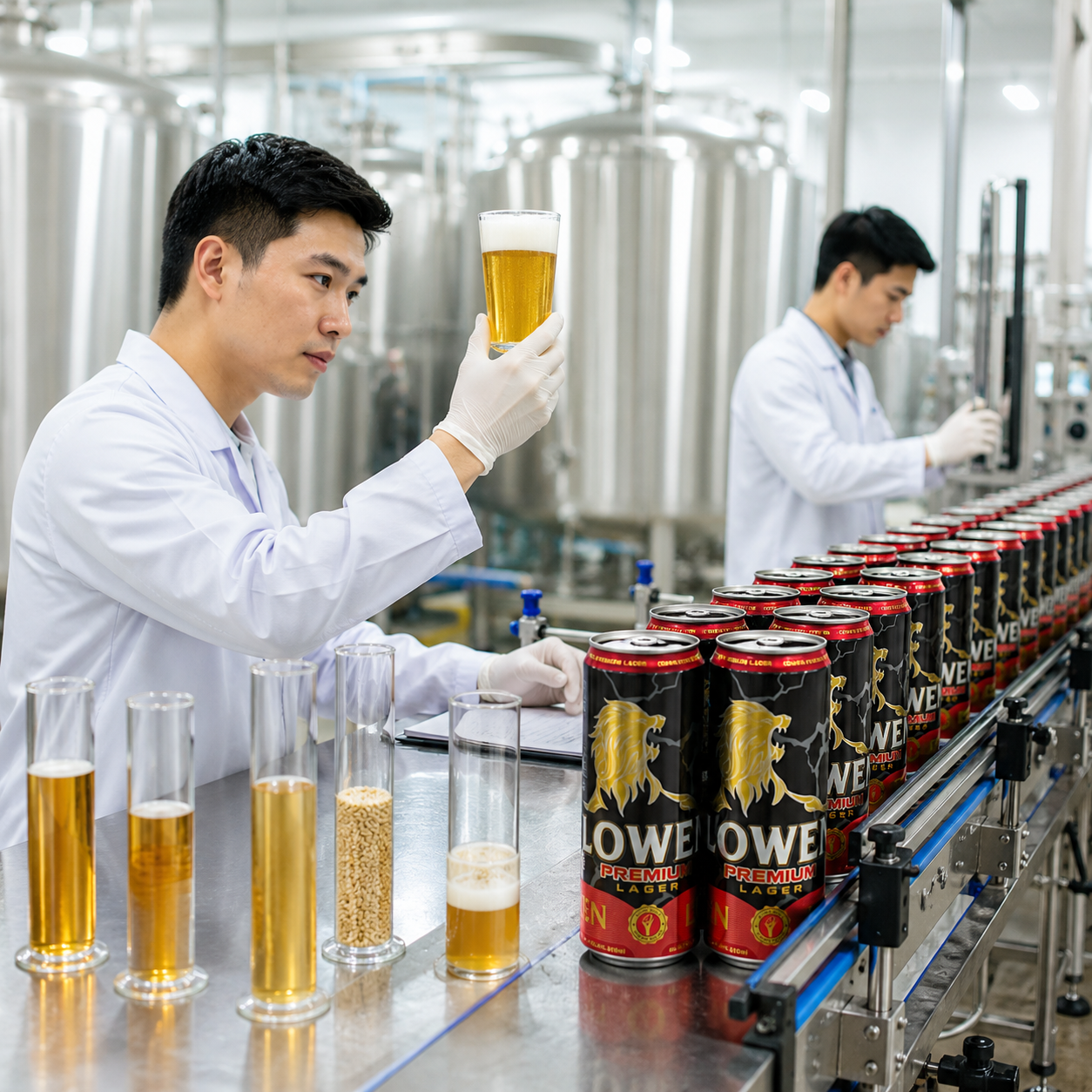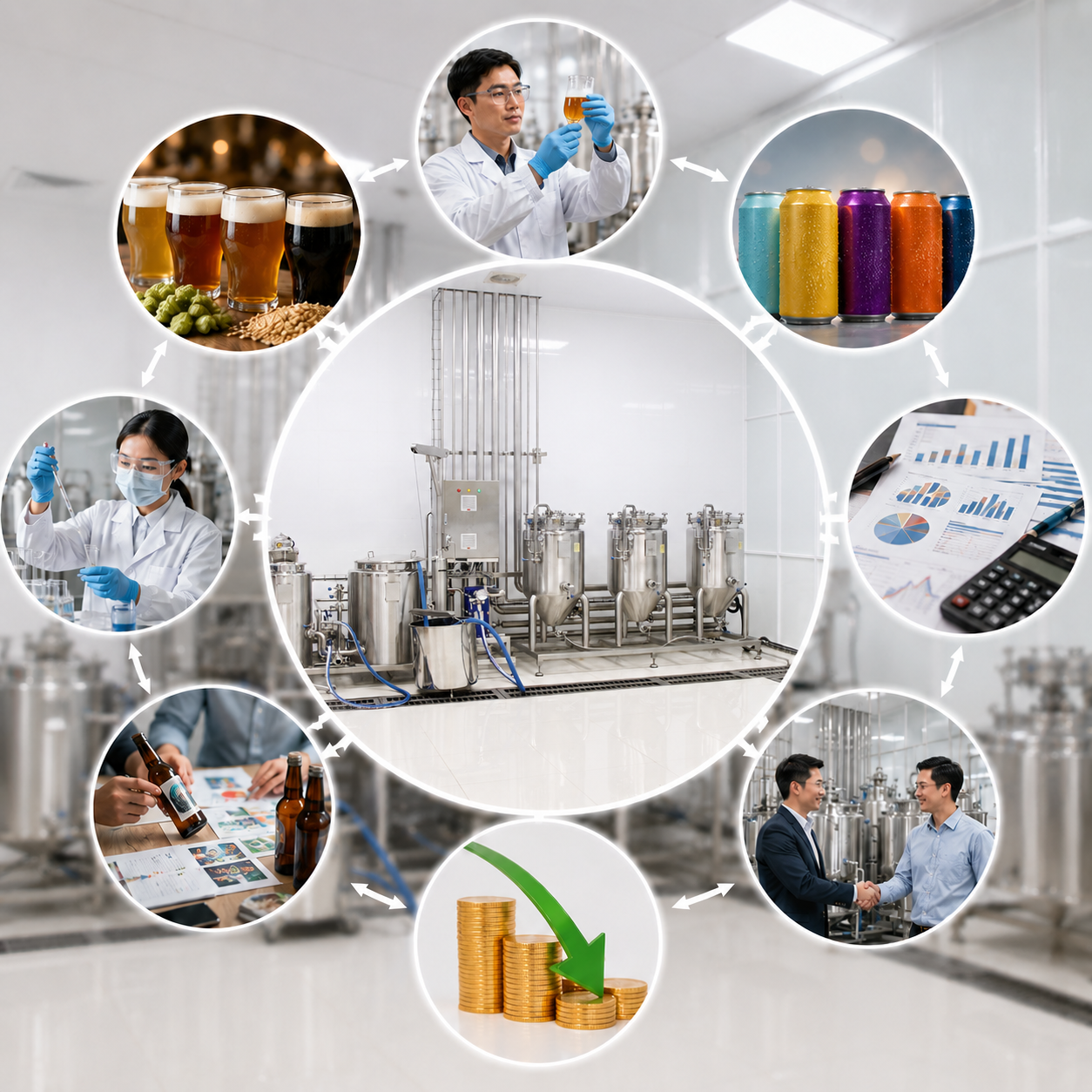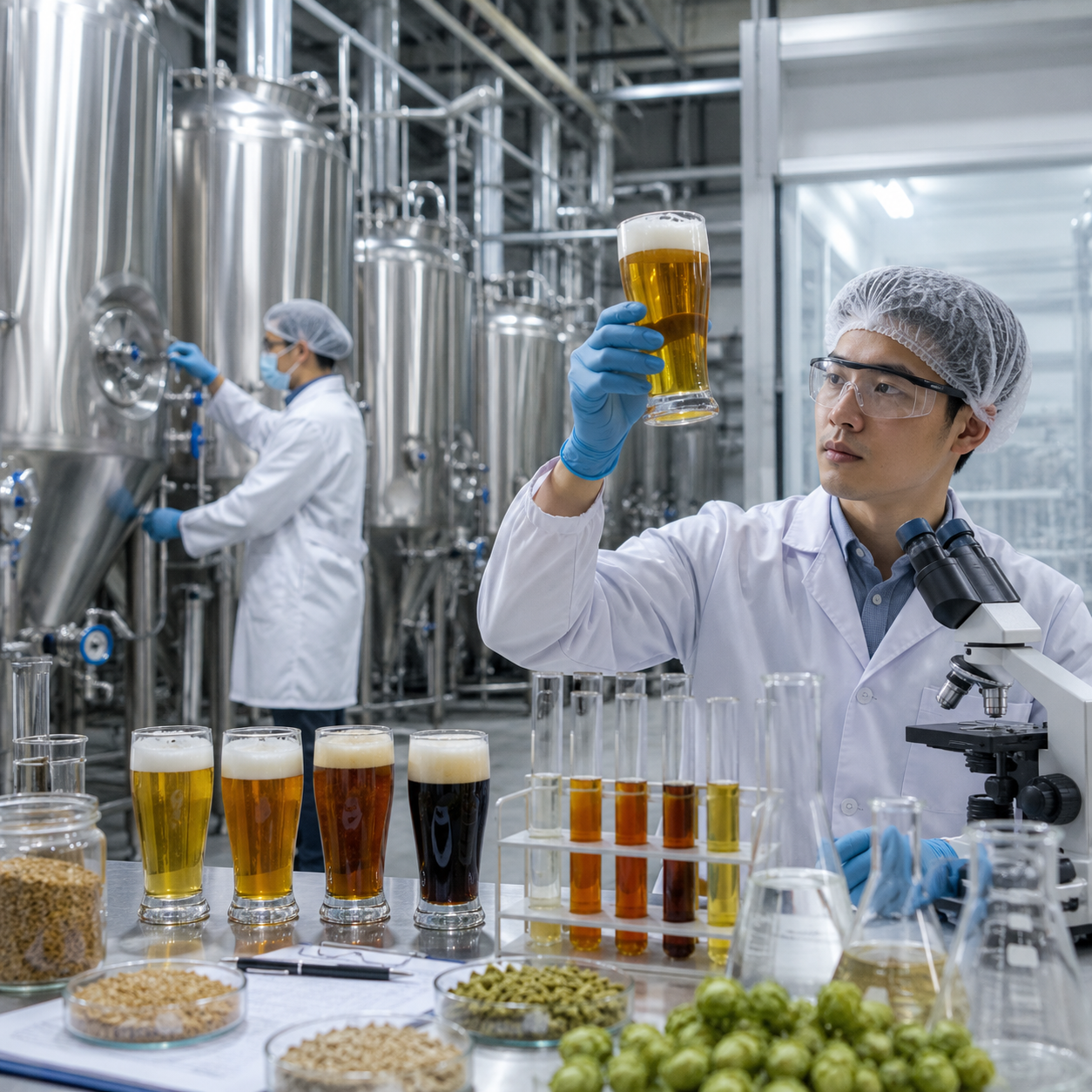


Understanding fermentation technology correctly is also the key to understanding why two beers made from the same ingredients can still taste completely different.
Fermentation does not just create alcohol—it creates the entire “flavor system”
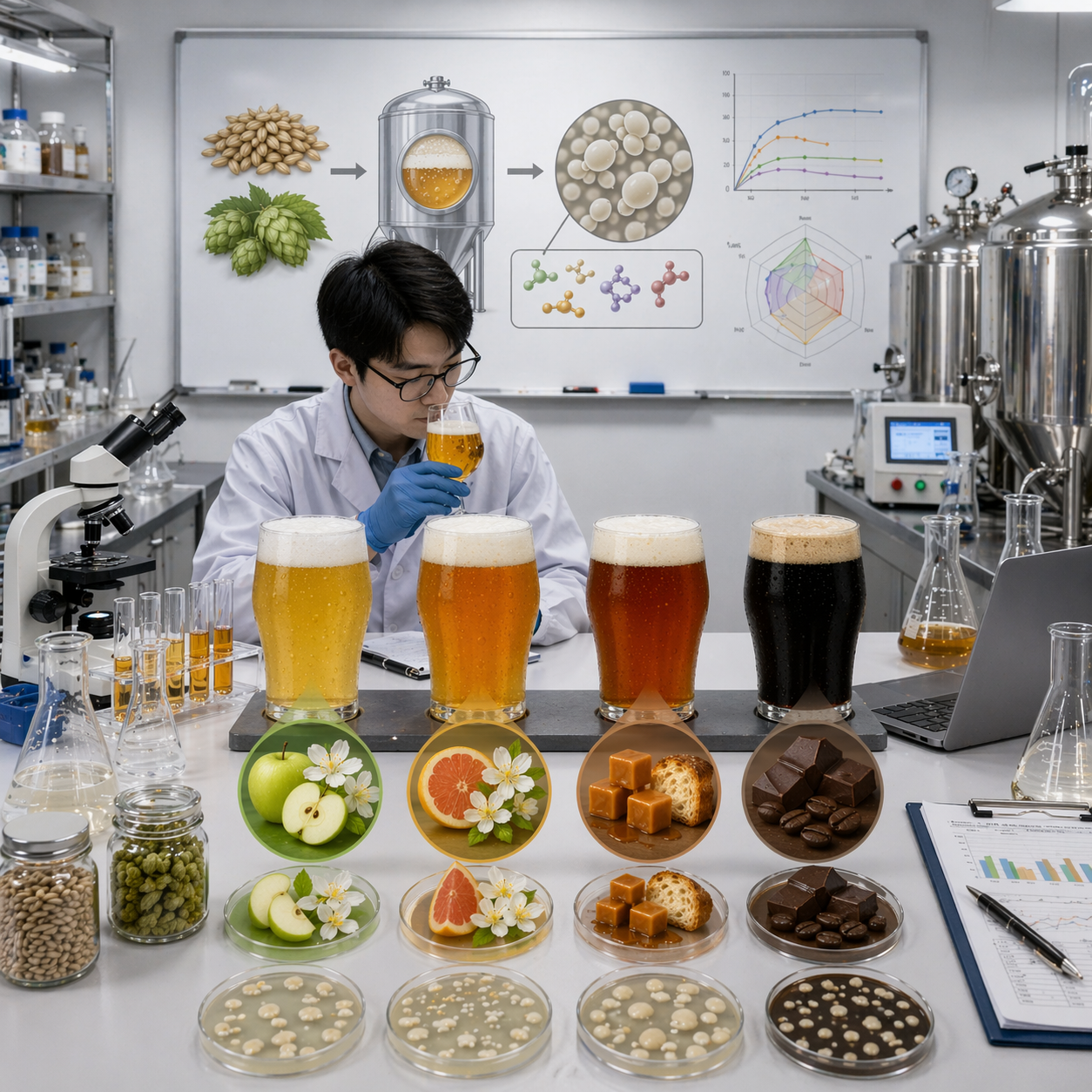
Many people assume that fermentation is simply the process of converting sugar into alcohol. In reality, during this process, brewer’s yeast produces hundreds of different compounds—from esters (which create fruity aromas), phenols (which create spicy or smoky notes), to higher alcohols and organic acids.
These compounds combine to create the distinctive flavor profile of each beer style. Therefore, fermentation technology affects not only alcohol content, but also directly influences:
- Aroma (fruity, floral, spicy)
- Aftertaste (clean, dry, lingering)
- Mouthfeel (smooth, harsh, light, full-bodied)
In other words, fermentation is where beer “becomes itself.”
Fermentation temperature – the factor that shapes beer styles
One of the most important factors in fermentation technology is temperature. A difference of just a few degrees Celsius can completely change the flavor of a beer.
At lower temperatures (commonly used for lager), the fermentation process occurs more slowly and cleanly. The result is a beer with a lighter taste, fewer off-flavors, and high drinkability. In contrast, at higher temperatures (ale fermentation), the yeast becomes more active, producing more esters and aromatic compounds, resulting in a more complex flavor profile.
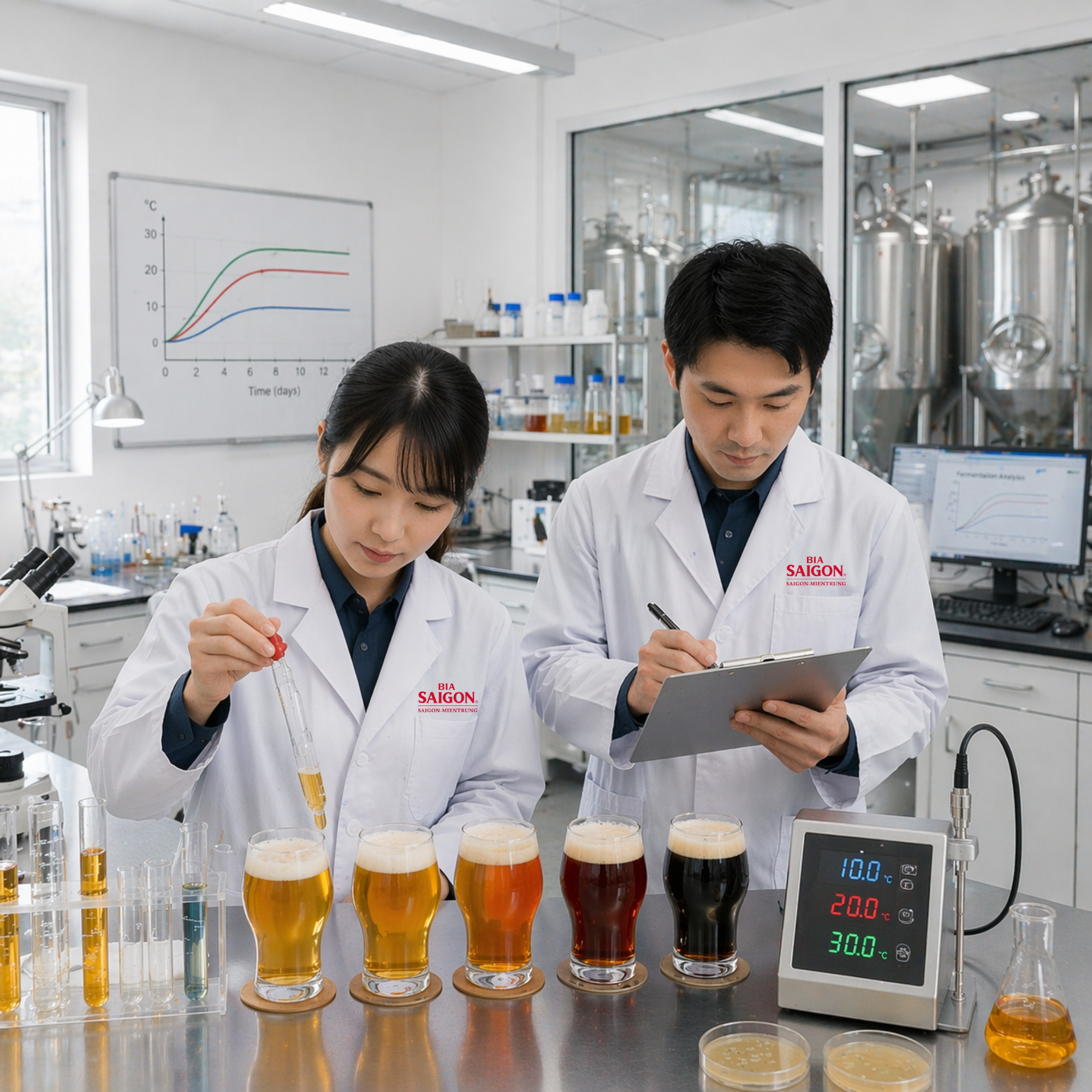
What matters is not only choosing the right temperature, but maintaining a stable temperature throughout the entire fermentation process. If the temperature fluctuates, the flavor will become inconsistent between batches, leading to unstable quality—a major risk in commercial beer production.
At modern breweries such as Bia Sài Gòn Miền Trung (SMB), automated systems help maintain precise temperatures at each stage of fermentation, ensuring that every batch reaches the same standard.
Yeast strains – the “DNA” of flavor
If temperature is the environment, then brewer’s yeast is the “main actor” of the fermentation process. Each yeast strain produces different flavor compounds, and this is what creates the distinction between various beer styles.
Some yeast strains produce light fruity aromas, suitable for easy-drinking beer. Others create bold, spicy, or even slightly funky characteristics, commonly found in specialty beer styles. Therefore, selecting yeast is not only a technical decision, but also a product positioning decision.
In the OEM beer production model, the ability to work with multiple yeast strains is a major advantage. It allows businesses to:
Customize flavors for target markets
Differentiate themselves from competitors
Develop flexible product portfolios
At SMB, the R&D system can test and select the appropriate yeast strains for each product concept, helping brands create their own unique “flavor signature.”
Fermentation time – the factor that creates smoothness in beer
Not only temperature and yeast, but also fermentation time plays an important role in shaping flavor. A sufficiently long fermentation and conditioning process helps the beer become:
Smoother
Less harsh
Cleaner in the finish
In contrast, shortening the process to accelerate production may leave unstable compounds in the beer, creating a “young” or unfinished taste.
In industrial production, this becomes a balance between speed and quality. Breweries must optimize time for efficiency while still maintaining product refinement.
Modern systems such as SMB use data and operational expertise to optimize fermentation time for each beer style, ensuring both quality and production efficiency.
Oxygen and pressure control – invisible factors that shape the drinking experience
One factor that is rarely discussed but extremely important is the control of oxygen and pressure during fermentation and filling processes.
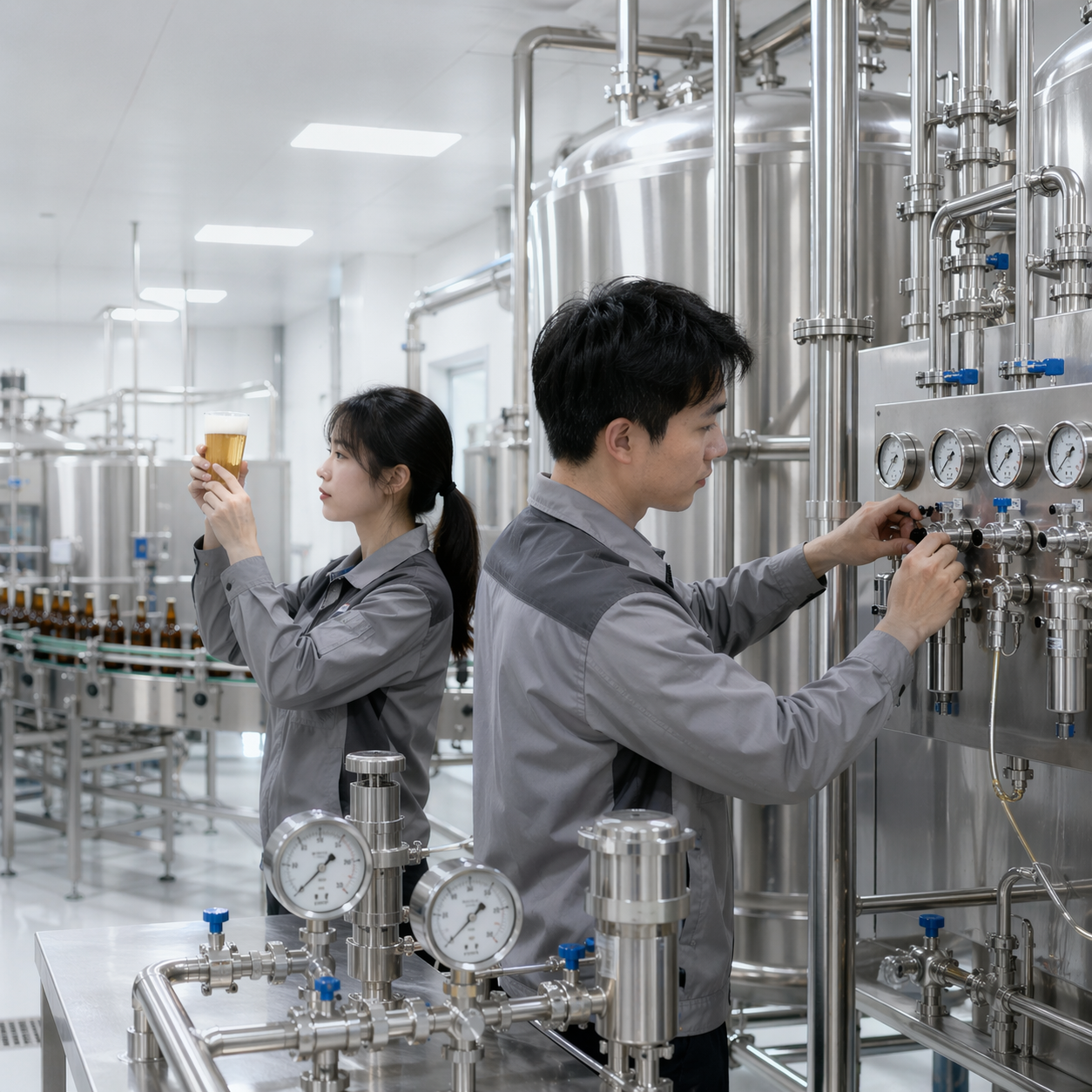
If oxygen is not properly controlled, the beer can become oxidized, resulting in stale or less fresh flavors. Meanwhile, CO₂ pressure directly affects carbonation and mouthfeel.
These are factors that consumers may not notice visually, but they can clearly feel when drinking. A product may have the “correct recipe,” but if oxygen and pressure are not properly controlled, the overall experience will still be negatively affected.
Modern control systems at Bia Sài Gòn Miền Trung (SMB) help maintain these parameters at optimal levels, ensuring that the product reaches consumers in its best possible condition.
Fermentation is the “technological soul” of beer
When looking at the entire beer production process, it becomes clear that fermentation is the only stage where:
Ingredients are “transformed” into flavor
Technology directly affects the drinker’s sensory experience
Small deviations can create major differences
For this reason, in building a beer brand, fermentation technology is not merely a technical factor—it is a strategic factor. It determines where your product will stand in the market: mass-market easy-drinking or uniquely distinctive, stable or inconsistent, premium or mainstream.
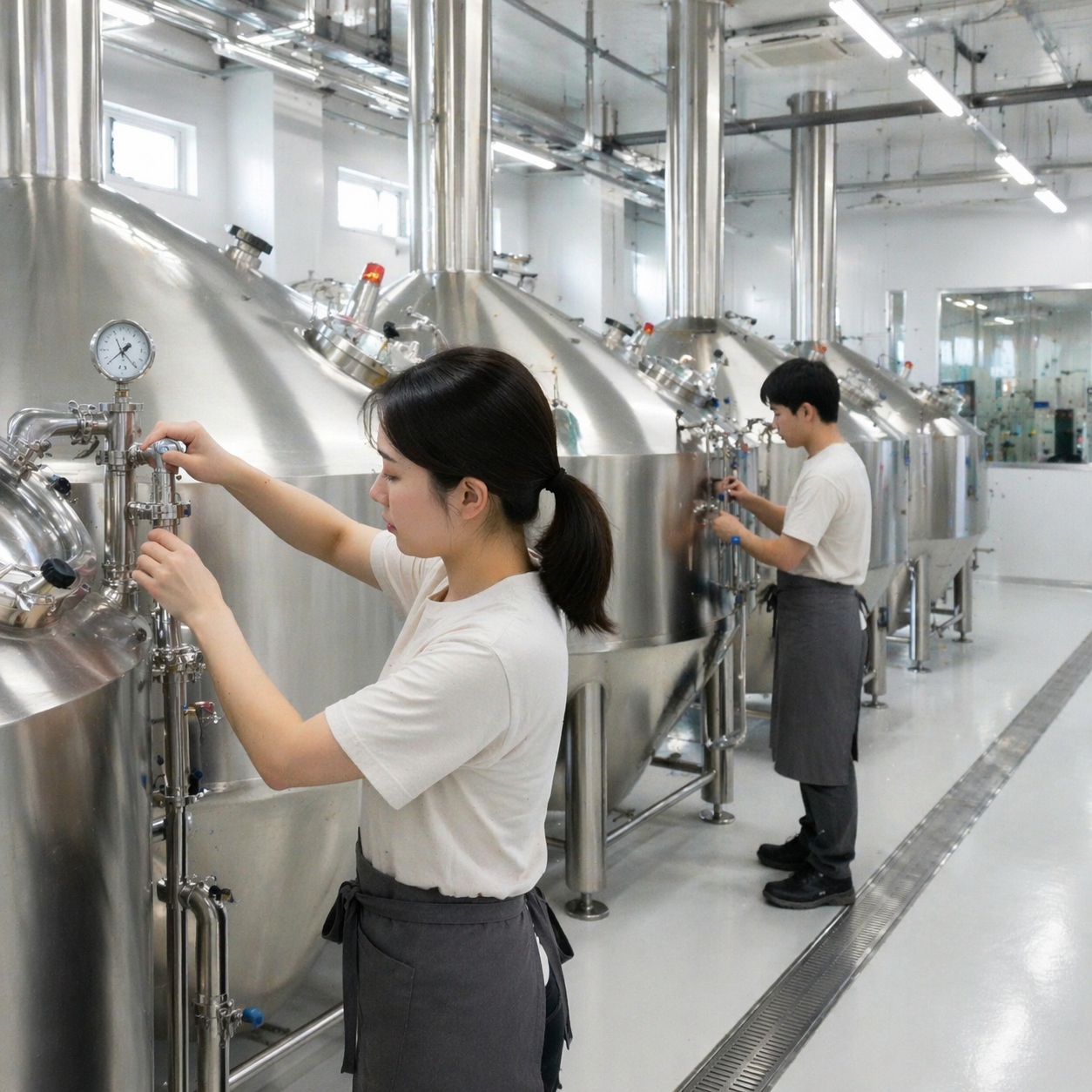
In the OEM beer model, partnering with a brewery that has strong fermentation control capabilities such as Saigon Central Beer Joint Stock Company (SMB) helps businesses:
- Ensure consistent quality
- Customize flavor profiles according to strategy
- Reduce technical risks
And most importantly, it allows brands to focus on the core objective: building the market instead of worrying about production.
Beer formula development & OEM beer consulting
Company: Saigon Central Beer Joint Stock Company (SMB)
Head Office Address: 01 Nguyen Van Linh Street, Tan An Ward, Buon Ma Thuot City, Dak Lak Province
OEM Consulting Hotline: (+84) 94 1127575
Dedicated Email: Oem@biasaigonmt.com
Official Website: https://oem.biasaigonmt.com/
If you want to create a distinctive and consistent beer flavor, start with fermentation technology—and let SMB help you control it right from the beginning.