

Therefore, quality standards in beer production are not merely a collection of technical regulations. They form the foundation for building trust, expanding markets, and protecting a brand over the long term.
Food Safety Systems – The Essential Foundation of Every Brewery
At its core, a brewery is a food processing system. Therefore, the most important standard is not capacity or technology, but food safety.
In practice, systems such as FSSC 22000 are more than just certifications; they represent a comprehensive risk management framework. They cover everything from raw material sourcing, facility hygiene conditions, and microbiological hazard control to incident response procedures. When a brewery operates according to this standard, every production batch is placed within a tightly controlled system, minimizing the likelihood of serious defects.
The significance lies in the fact that this standard not only protects consumers but also safeguards the brand itself. In the beer industry, a food safety incident is not merely a technical issue—it can destroy an entire brand’s reputation within a very short period of time.
Quality Control (QC) – Ensuring Consistency Across Production Batches
One of the greatest challenges in beer manufacturing is not creating a single excellent batch of beer, but reproducing that exact flavor profile thousands or even millions of times.
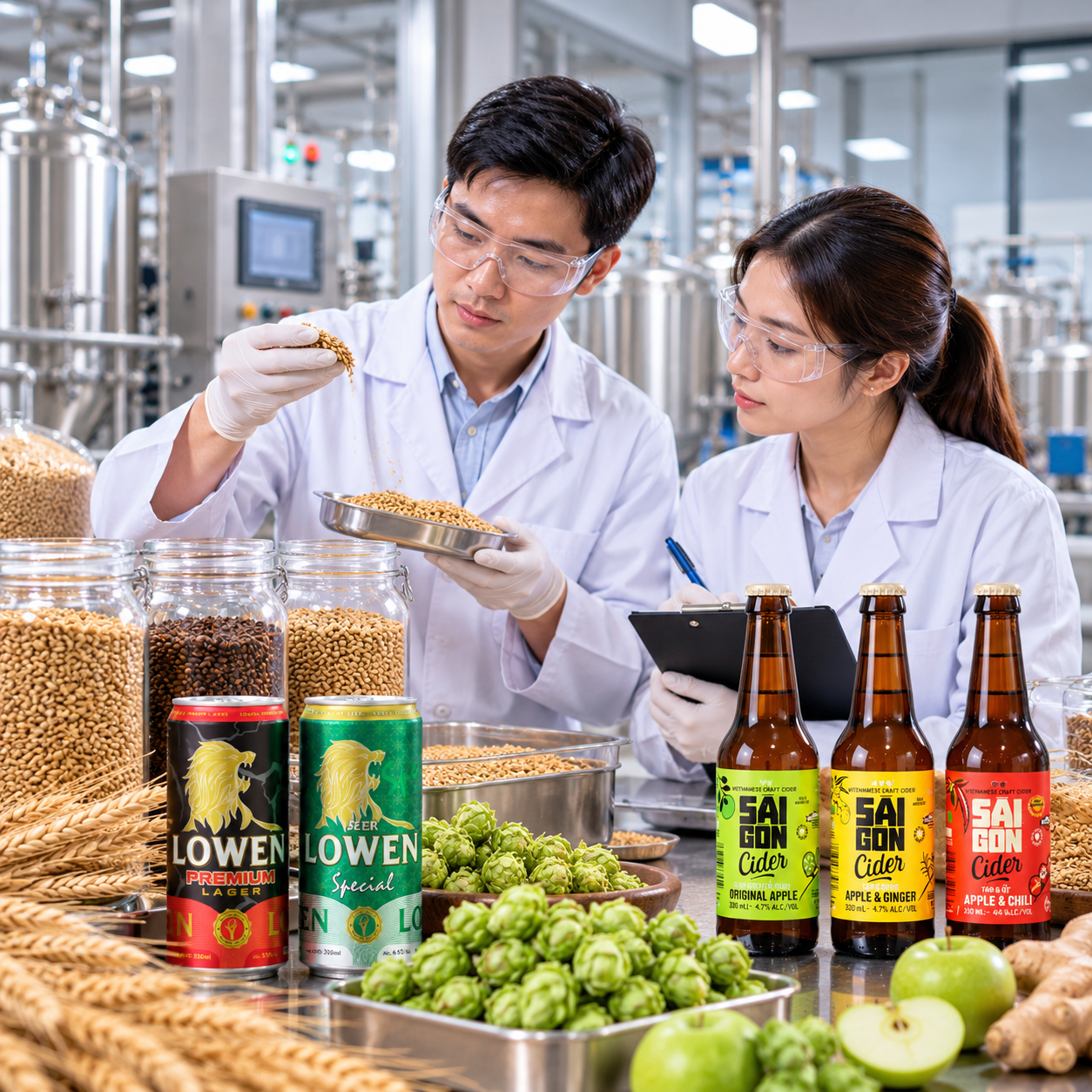
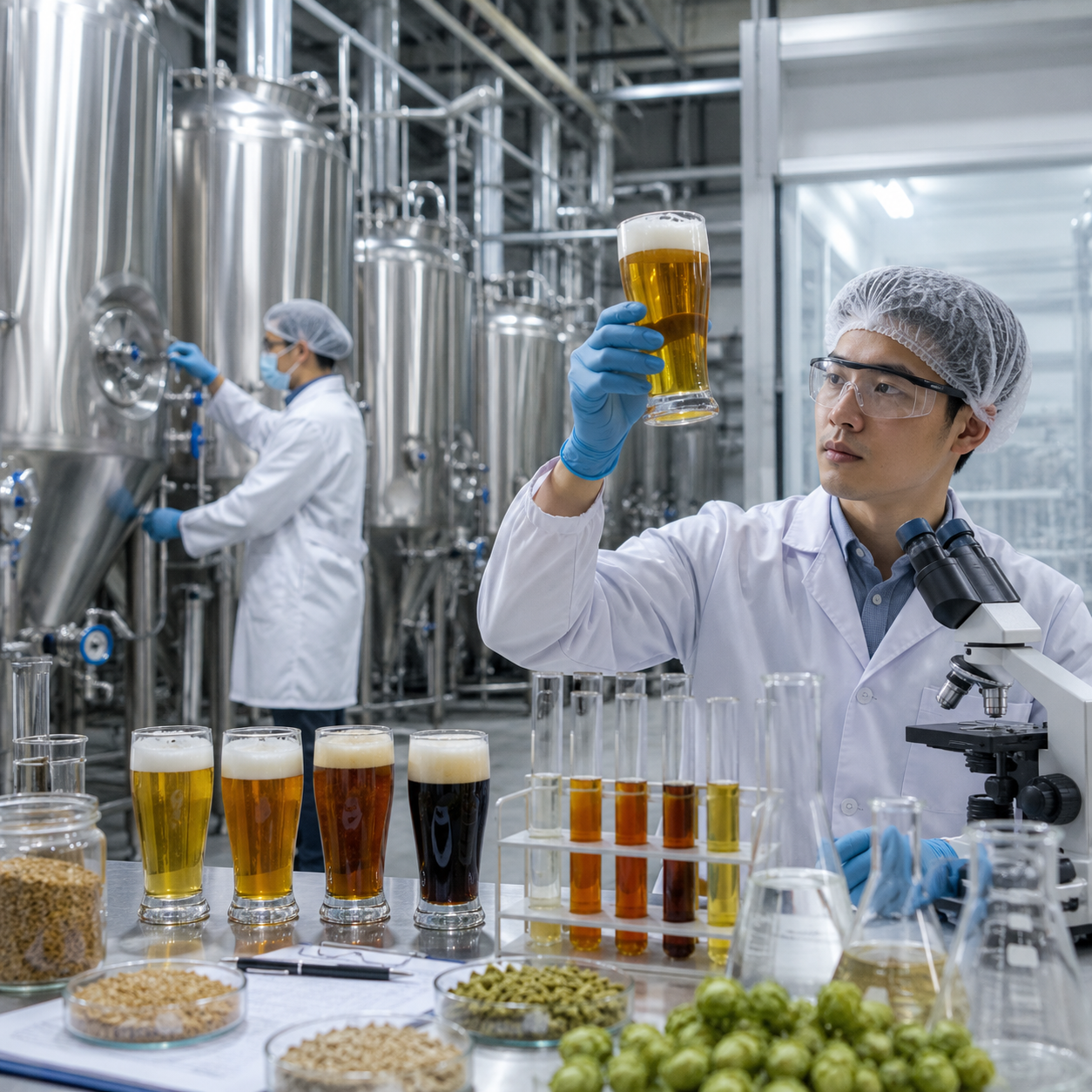
This is where the Quality Control (QC) system plays a critical role. QC is not limited to inspecting the final product; it is a continuous monitoring process that spans the entire production chain:
- From raw material inspection
- Through the brewing and fermentation processes
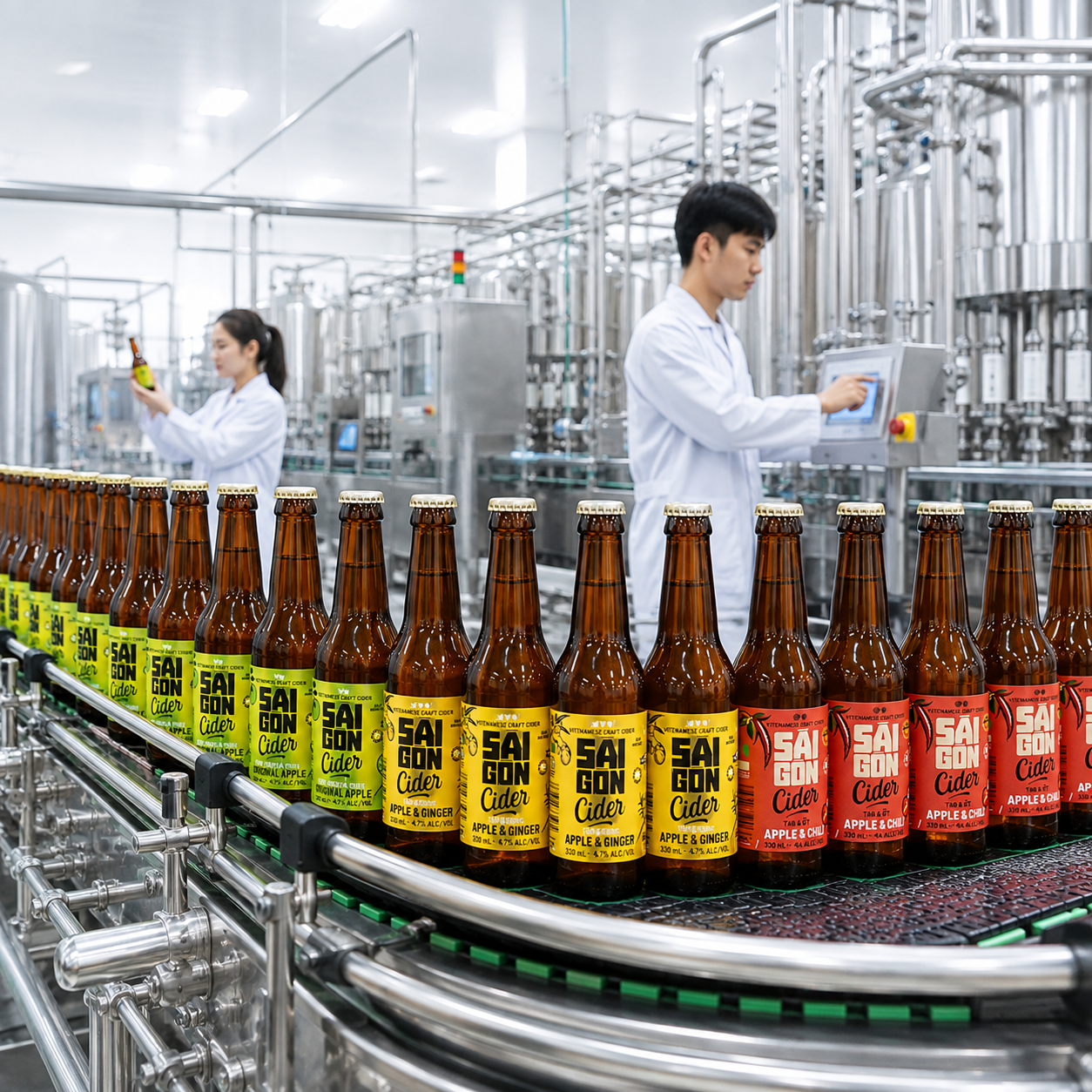
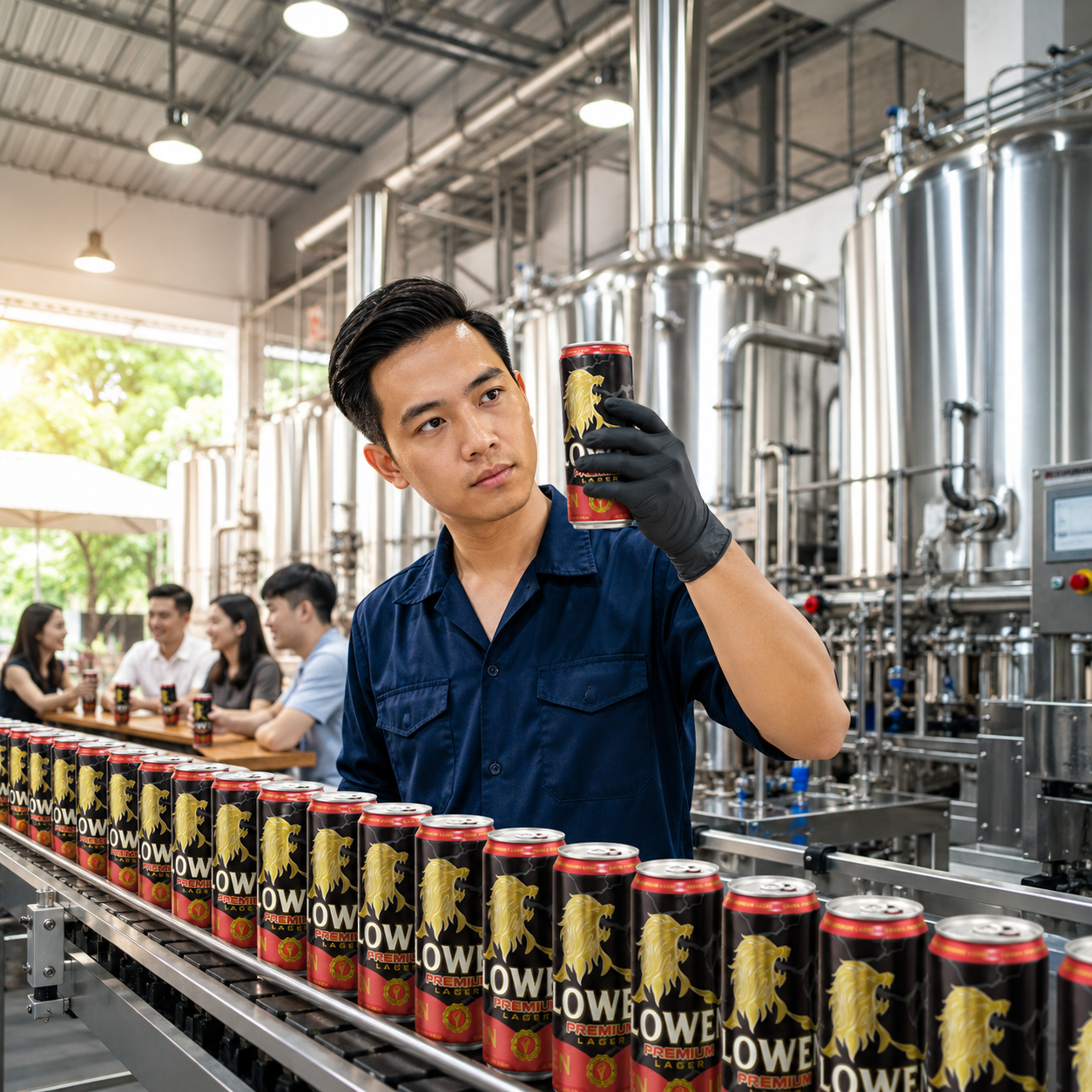
- To filling and packaging stages

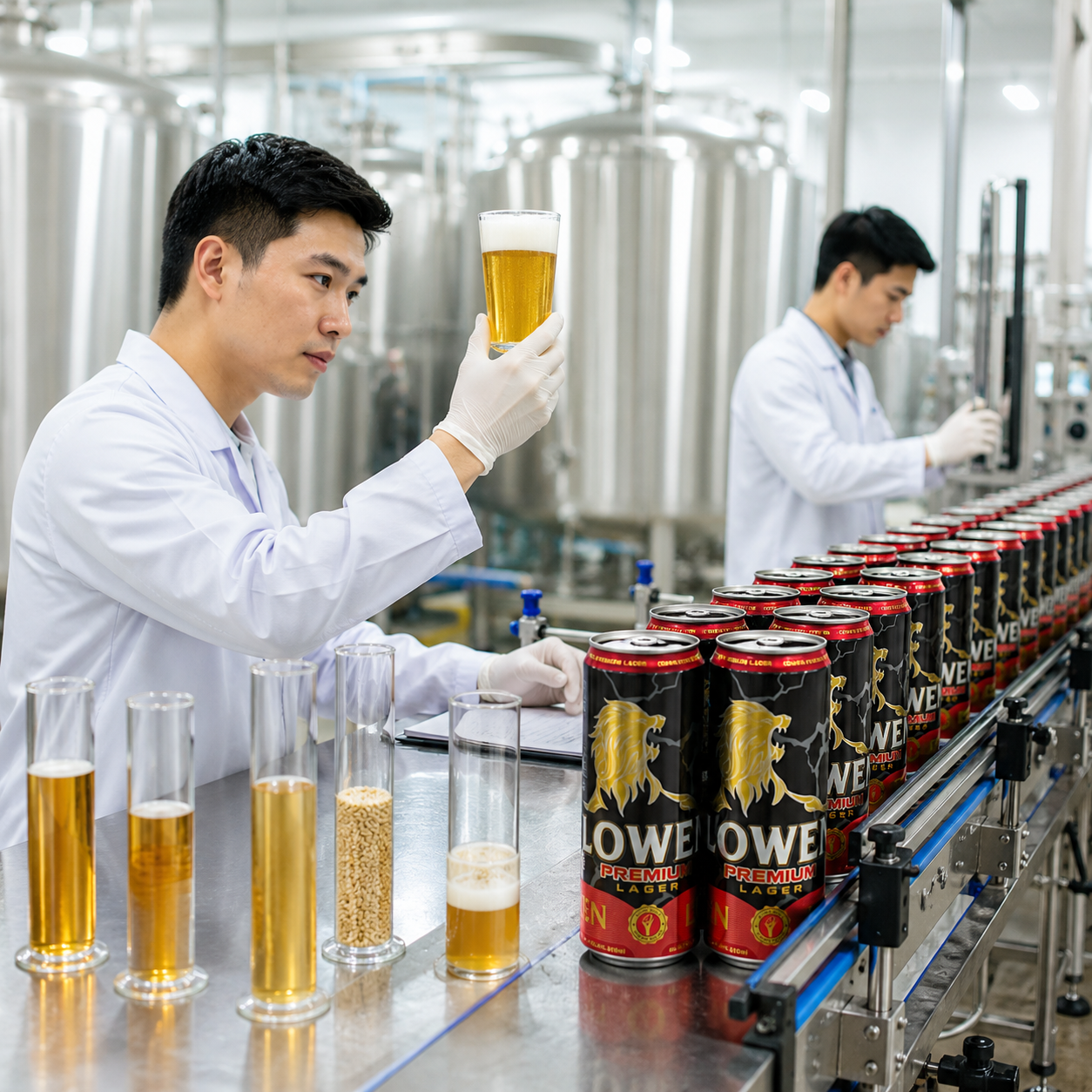
Parameters such as alcohol content, bitterness, color, dissolved oxygen, and CO₂ levels are continuously measured. Even the smallest deviations are detected early to prevent them from escalating into major defects.
In industrial-scale beer production, consistency is what builds trust. Consumers may be willing to try a new product, but they will only return if their next experience matches the first one.
Quality Management Systems – Standardizing the Entire Operation
If QC serves as the “eyes and ears” of a brewery, then quality management systems such as ISO 9001 act as the “brain.” They help standardize every aspect of operations, from production and inspection to storage and personnel training.
The distinguishing characteristic of an ISO-certified brewery is not its machinery, but the way everything is managed through clearly defined procedures. Every step is documented, every deviation has a corrective mechanism, and every improvement is recorded.
In the OEM environment, this becomes particularly important. When manufacturing for multiple brands, the brewery must ensure that every project is executed consistently, without relying on individual judgment or subjective decisions.
Production Environment Control – A Factor That Directly Impacts Beer Quality
Beer is highly sensitive to its environment. Temperature, humidity, light exposure, and even airborne microorganisms can influence the fermentation process and the final product quality.
Therefore, standards such as ISO 14001 (Environmental Management Systems) and ISO 50001 (Energy Management Systems) are not only related to sustainability but are also directly linked to product quality. A stable environment enables fermentation to proceed accurately, reducing variability and increasing consistency.
In addition, effective energy management helps optimize production costs—an important factor for businesses seeking to scale up while maintaining healthy profit margins.

Traceability – The Foundation of Market Trust
In today’s marketplace, a product not only needs to be “good,” but it must also be able to explain where it comes from.
A traceability system enables manufacturers to:
- Accurately identify the raw materials used in each batch
- Monitor the entire production process
- Respond quickly in the event of any issues
This is especially important when working with international markets, where transparency requirements are extremely high. A brand may be rejected simply because it cannot provide sufficient traceability information, even if the product itself meets all quality standards.
Ethical Standards and Social Responsibility – An Increasingly Important Factor
Beyond product quality, today’s market is also concerned with how products are made. Standards such as SMETA (Sedex) assess a facility’s labor conditions, workplace safety, and social responsibility practices.
This is not only an ethical consideration, but also a commercial one. Many international distributors require these certifications as a prerequisite for cooperation.
At the same time, the trend toward sustainable development has made factors such as emissions reduction, the use of renewable energy, and resource optimization integral parts of manufacturing strategies.
Quality Is Not a Cost – It Is a Brand Asset
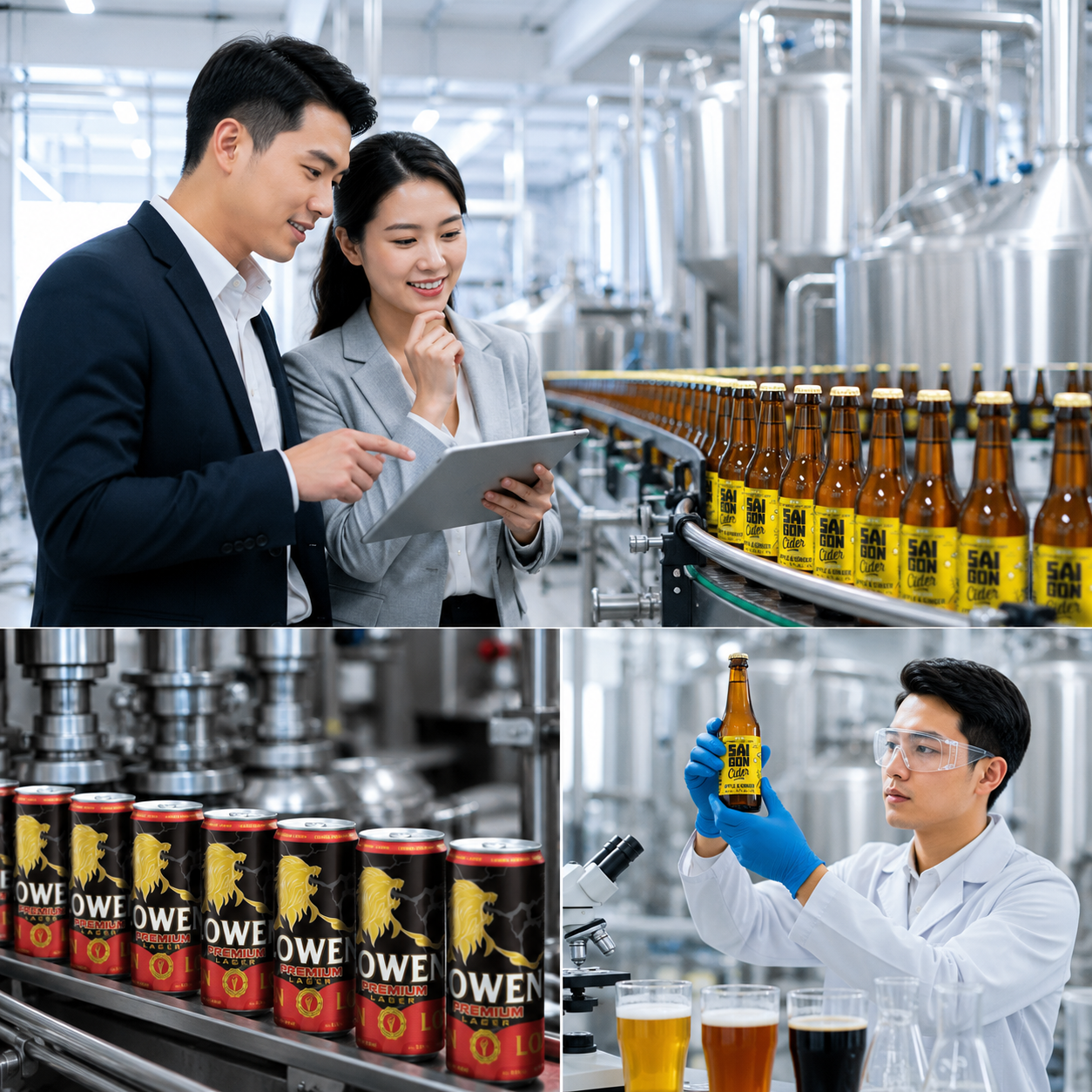
Overall, quality standards in beer production do not exist in isolation. They form an interconnected ecosystem in which each element supports the others to ensure that products are:
- Safe
- Consistent
- Transparent
- And trustworthy
For modern breweries, quality is no longer viewed as an expense. It is a long-term investment that strengthens brand value, protects reputation, and creates sustainable competitive advantages in an increasingly demanding beer market.

In the OEM model, selecting a brewery that fully complies with these standards is a decisive factor. It enables businesses to:
- Shorten time to market
- Reduce technical risks
- And build their brands on a solid foundation
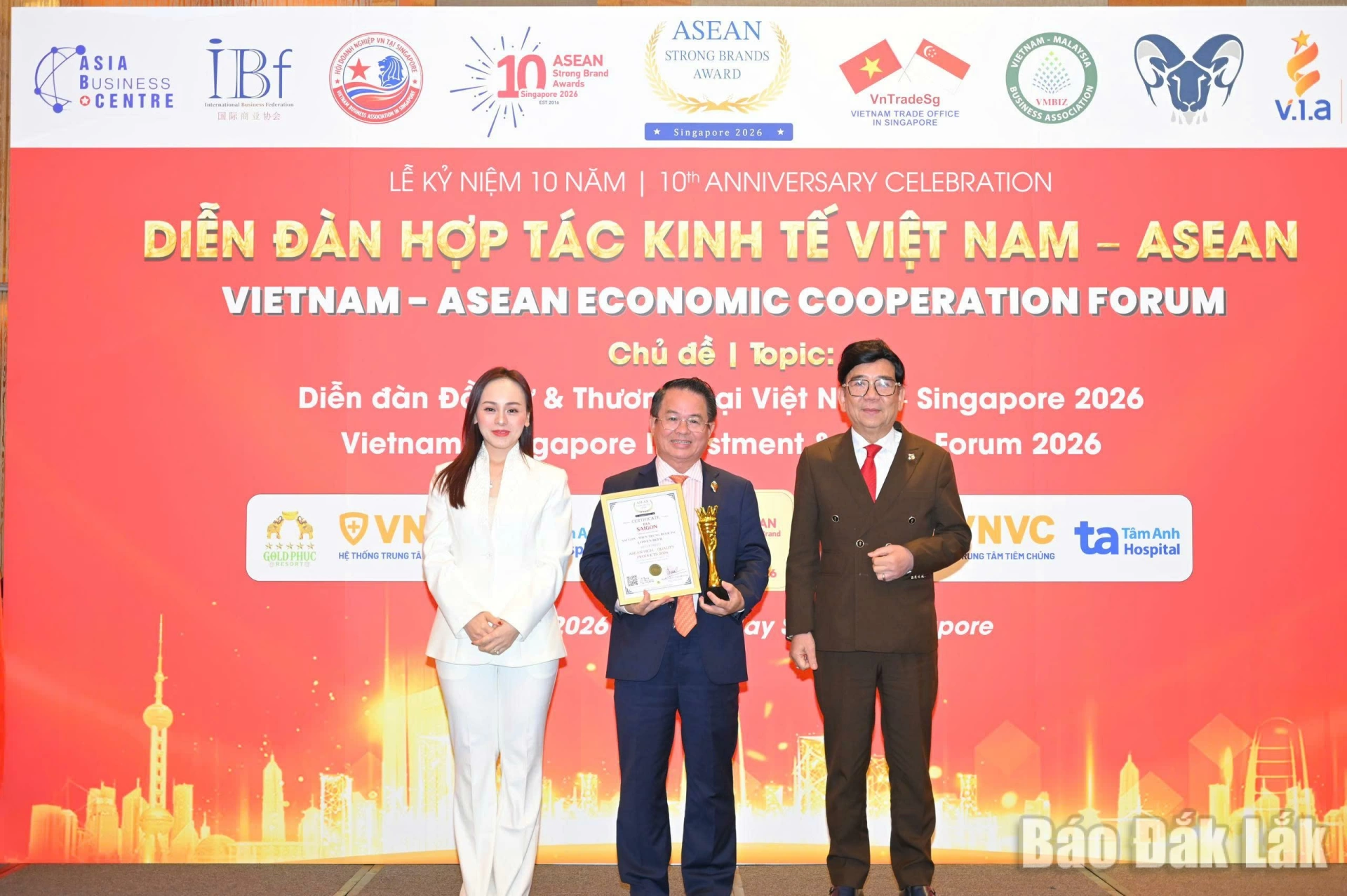
At Saigon Beer – Central Region (SMB), international certification systems such as FSSC 22000, ISO, and SMETA are more than just documents—they are the foundation of day-to-day operations. This allows OEM partners to obtain not only high-quality products, but also a robust system capable of supporting long-term market expansion.
International-Standard Beer OEM Consulting
Company: Saigon Beer – Central Region Joint Stock Company (SMB)
Address: 01 Nguyen Van Linh Street, Tan An Ward, Buon Ma Thuot City, Dak Lak Province, Vietnam
OEM Consultation Hotline: (+84) 94 1127575
Email: oem@biasaigonmt.com
Website: https://oem.biasaigonmt.com/
If you want to build a beer brand that is not only great-tasting but also meets international standards, start with a strong quality foundation—and let SMB accompany you from the very beginning.