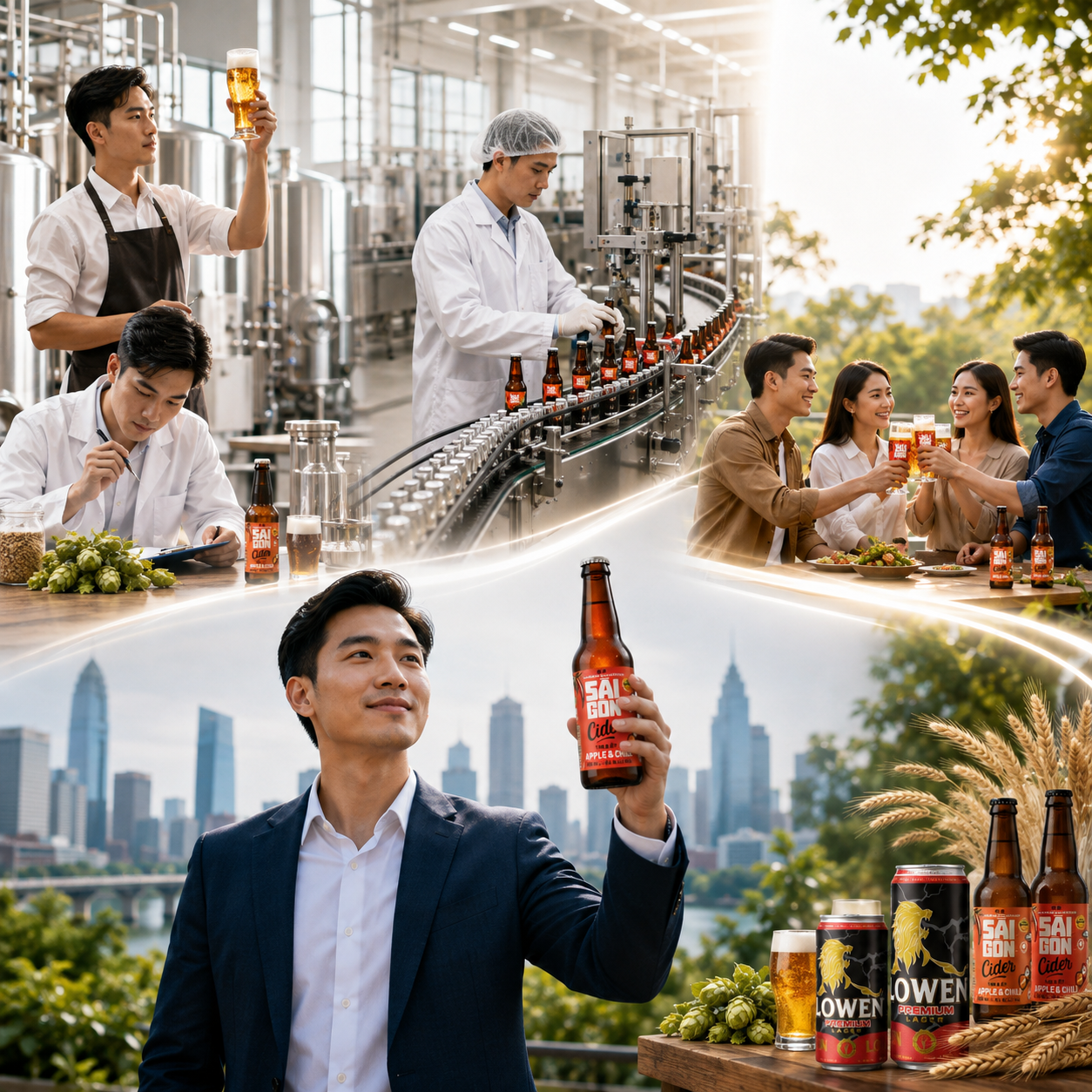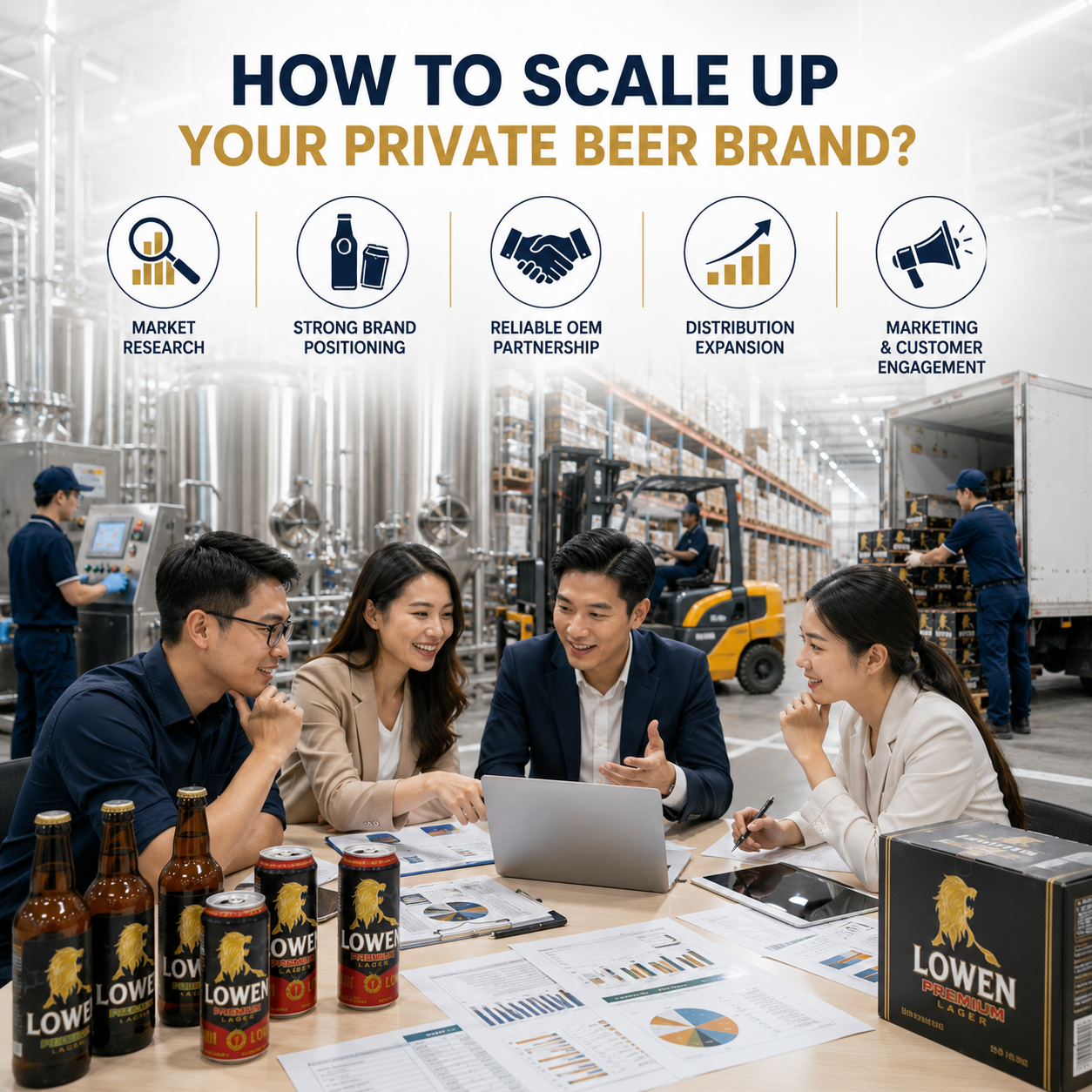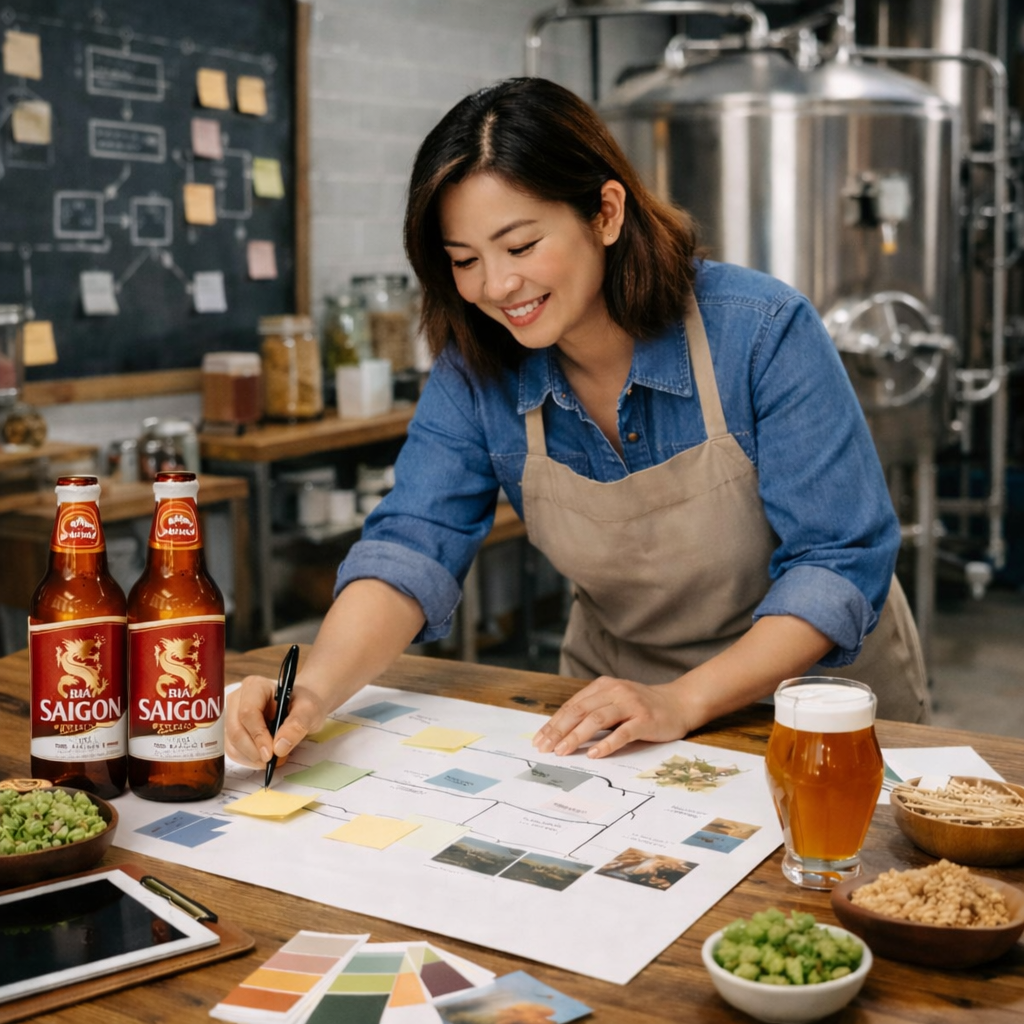


In the context of the beer market in 2026 becoming increasingly fragmented and driven by experience-based competition rather than scale, building a private beer brand is no longer a privilege reserved for large corporations. However, the journey from an initial idea to having the product appear on store shelves remains a complex process, requiring close coordination between strategy, finance, and production capabilities. The difference between successful brands does not lie in simply “brewing beer,” but in how they design the entire brand journey from the very beginning.
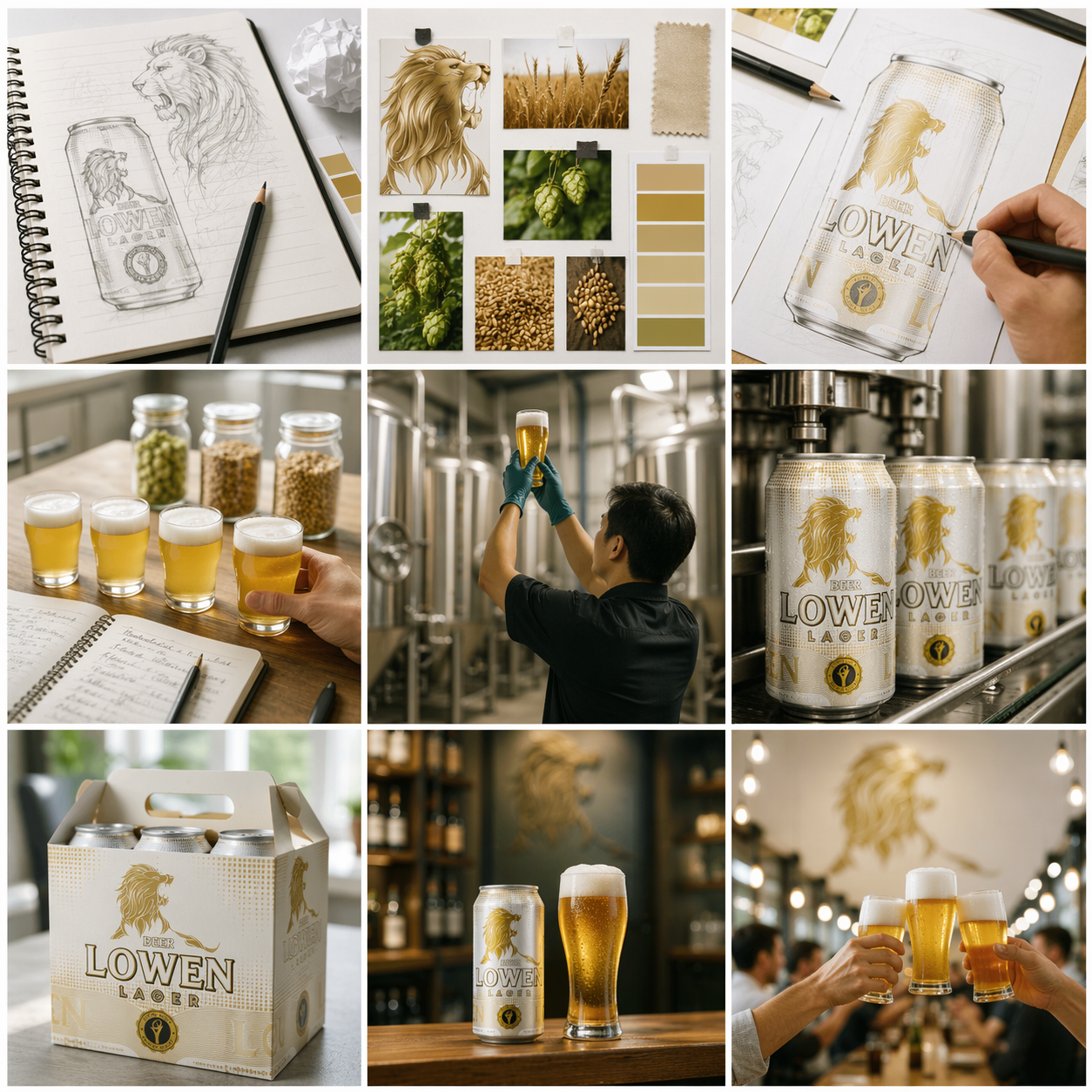
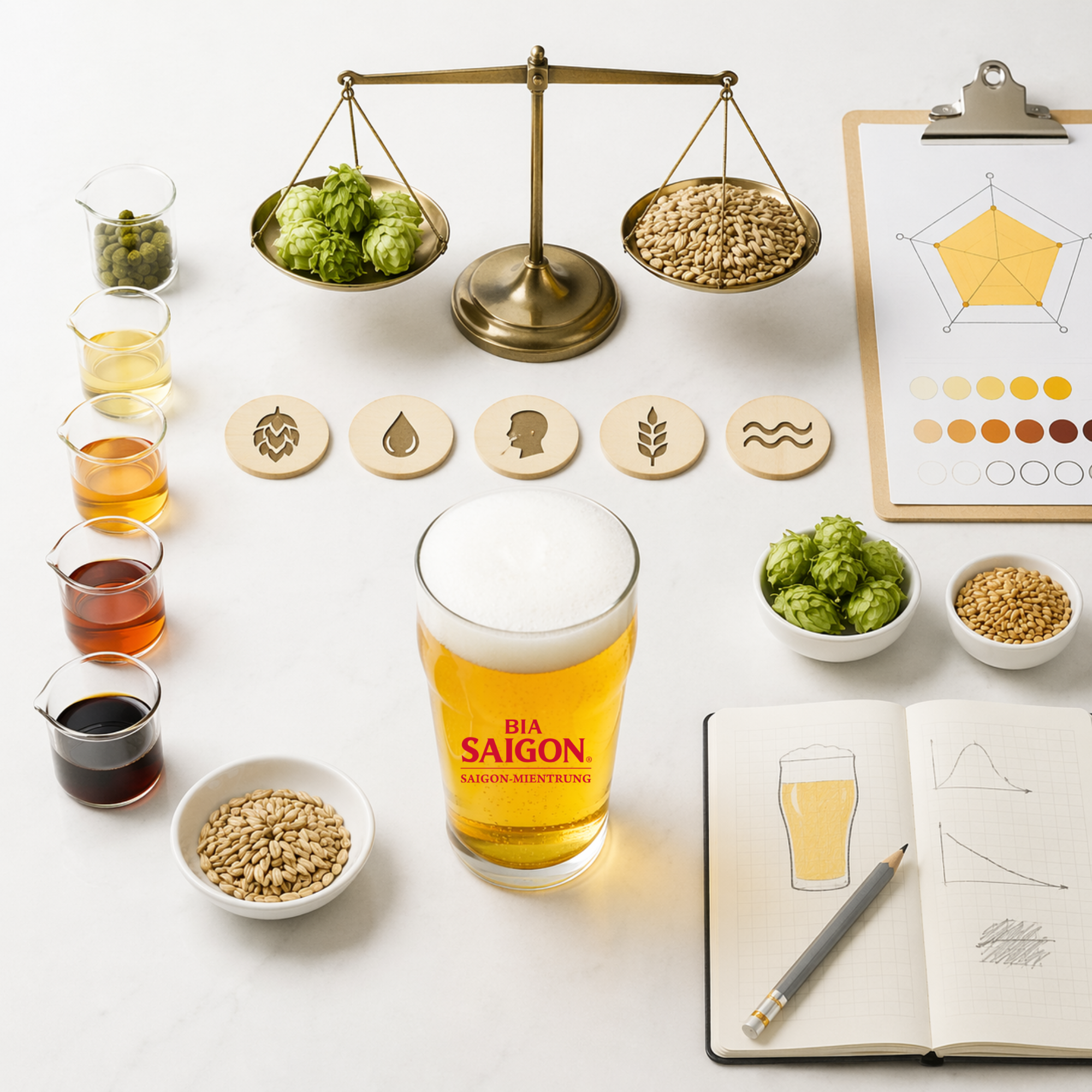
A beer formula needs to balance many factors: bitterness, alcohol content, aftertaste, color, and mouthfeel. More importantly, however, it must align with the chosen brand positioning. A beer line intended for the mass market needs to be easy-drinking and consistent, while a premium beer line can embrace a stronger personality.
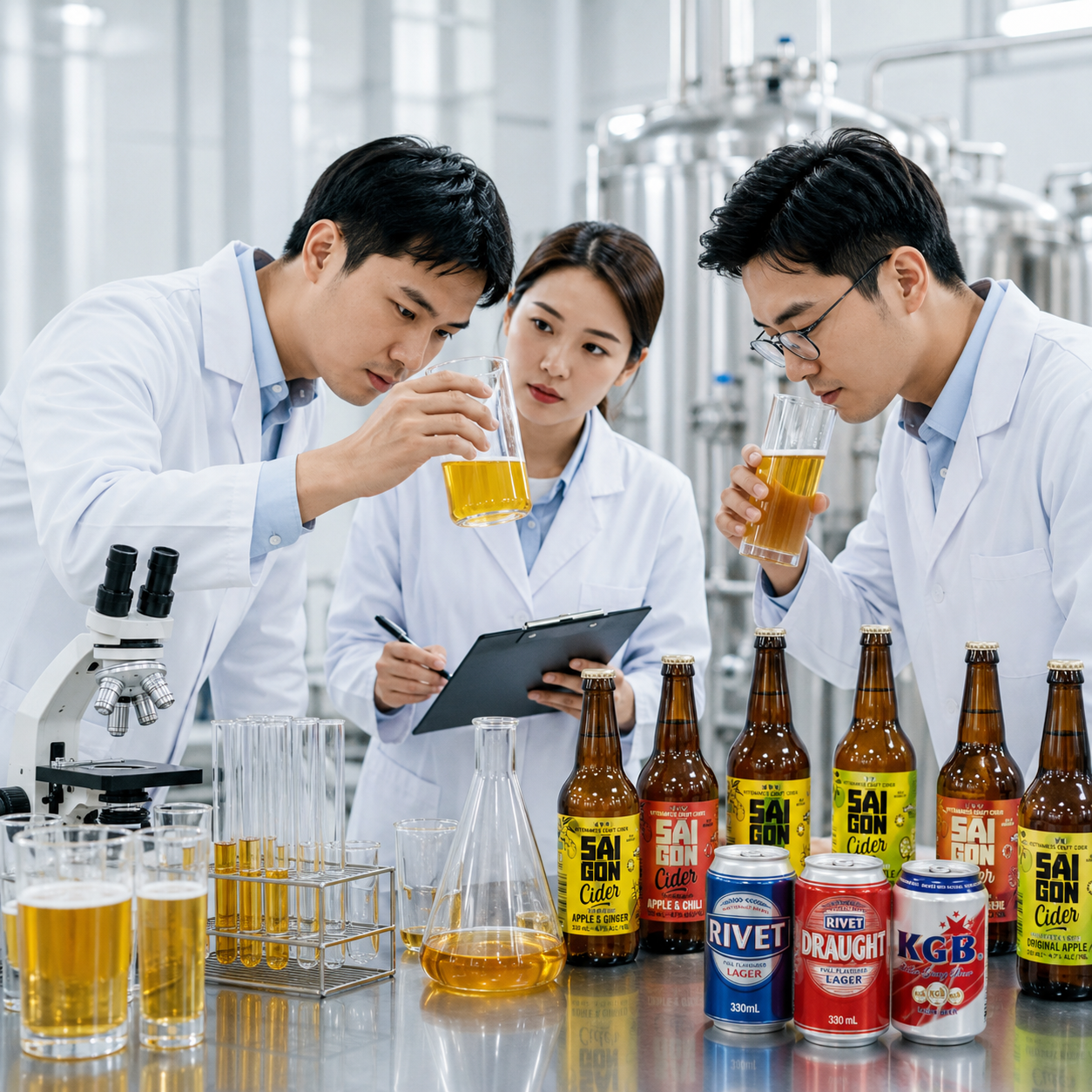
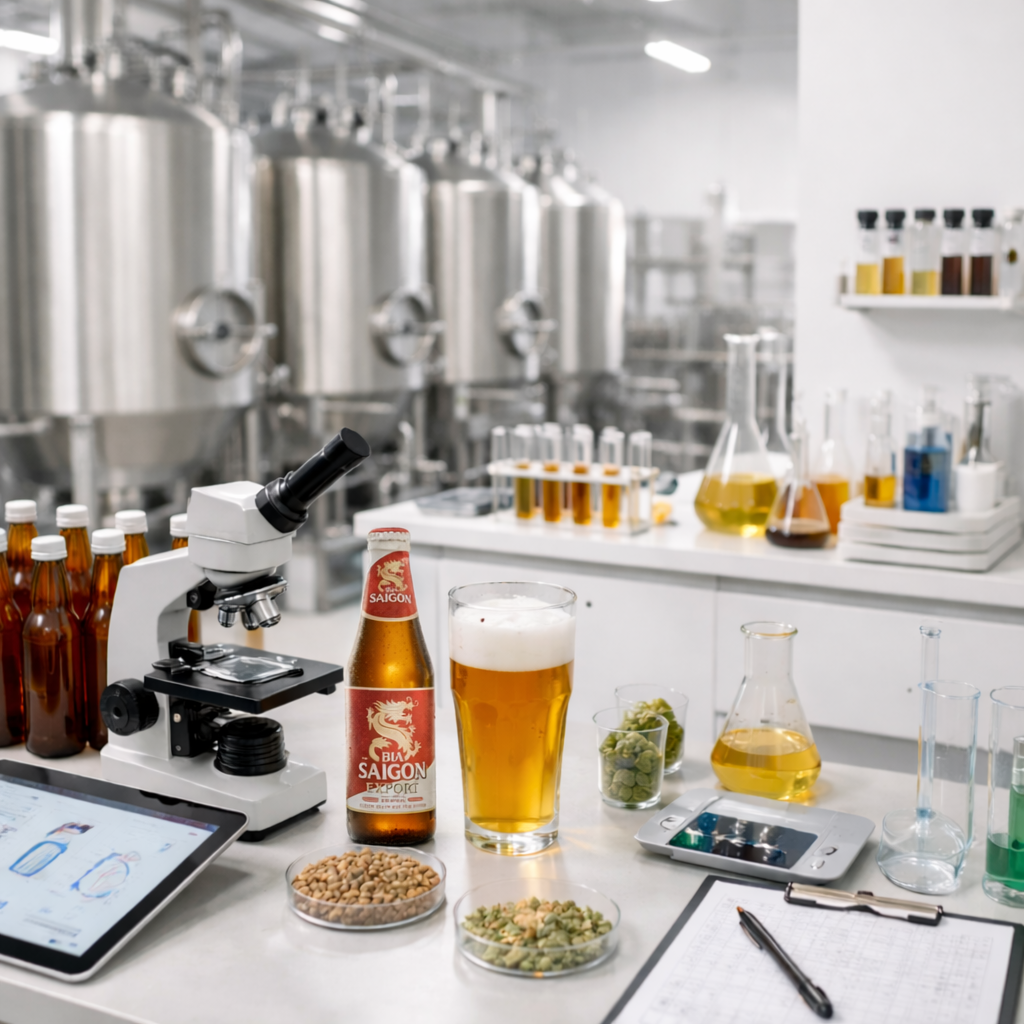
In practice, formula development usually goes through multiple testing rounds. Pilot batches are brewed on a small scale and then gradually adjusted until the desired balance is achieved. This stage is time-consuming and can easily generate high costs if there is no well-structured R&D system.
For this reason, many brands choose to collaborate with factories that already possess R&D capabilities such as Saigon Beer – Central Region (SMB). With its laboratory system and technical team, SMB helps shorten the testing process while ensuring that the final formula can be scaled up to industrial production without distorting flavor characteristics.
Packaging – The First Touchpoint with Customers
In the beverage industry, packaging is not just a shell; it is the most powerful brand communication tool. Consumers often make purchasing decisions within seconds, and during that short moment, packaging becomes the “silent salesperson.”
Packaging design must accurately reflect the brand DNA. A product positioned as premium will require a minimalist and sophisticated design language, while a product aimed at younger consumers may use bold colors and energetic visuals. There is no universal formula, but there is one principle: packaging must communicate exactly what the brand wants to say.
Sleek cans are increasingly becoming a popular choice because of their ability to create a modern and distinctive appearance on shelves. However, packaging selection is not only about aesthetics; it also relates to cost and logistics. A beautiful design that is difficult to manufacture or too expensive will directly impact profit margins.
This is where the role of an OEM brewery like SMB becomes important. Beyond manufacturing, SMB also supports businesses in choosing packaging solutions that match their budgets and scale, helping balance brand image with financial efficiency.
Finance – The Decisive Survival Equation
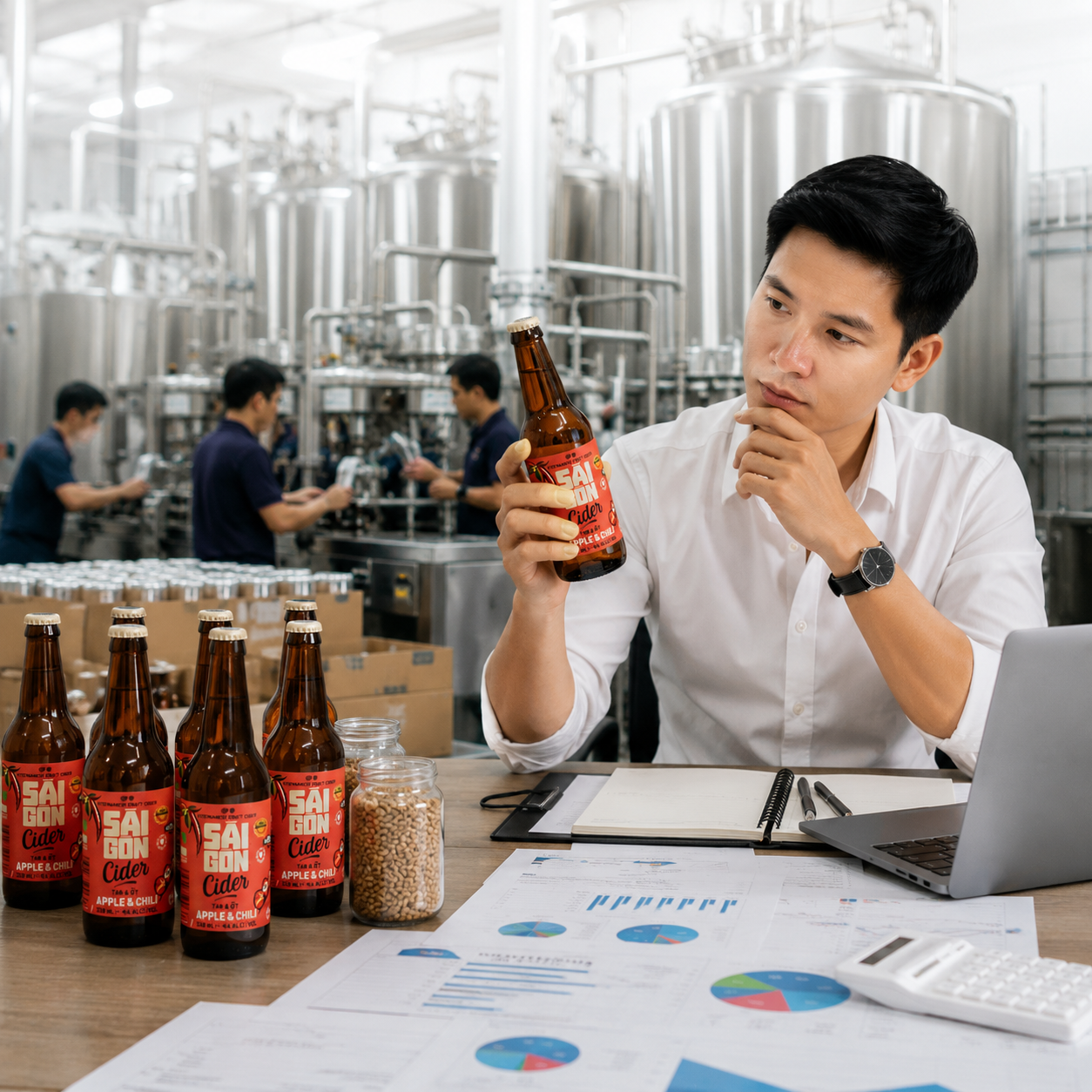
One of the biggest decisions in building a beer brand is choosing between self-production and OEM manufacturing. This is not merely an operational decision, but a strategic decision that affects the entire financial structure of the business.
Building a brewery means making major investments in fixed assets, leading to depreciation pressure and capacity risks. Meanwhile, OEM manufacturing allows businesses to convert these costs into operational expenses that flexibly scale with output volume.
More importantly, OEM enables businesses to preserve resources for investment in marketing and distribution. In the beer industry, these are the factors that truly determine whether a product will be accepted by the market.
With cost advantages in Central Vietnam, SMB provides a more efficient production structure:
- Labor costs 35–60% lower
- Energy costs 20–25% cheaper
This helps businesses not only reduce initial costs, but also maintain profitability while scaling.
Production – Turning Ideas into Real Products
Once the formula and packaging are finalized, production is the stage that turns everything into reality. It is also the stage where risks are most likely to arise, because any deviation in the process can affect product quality.
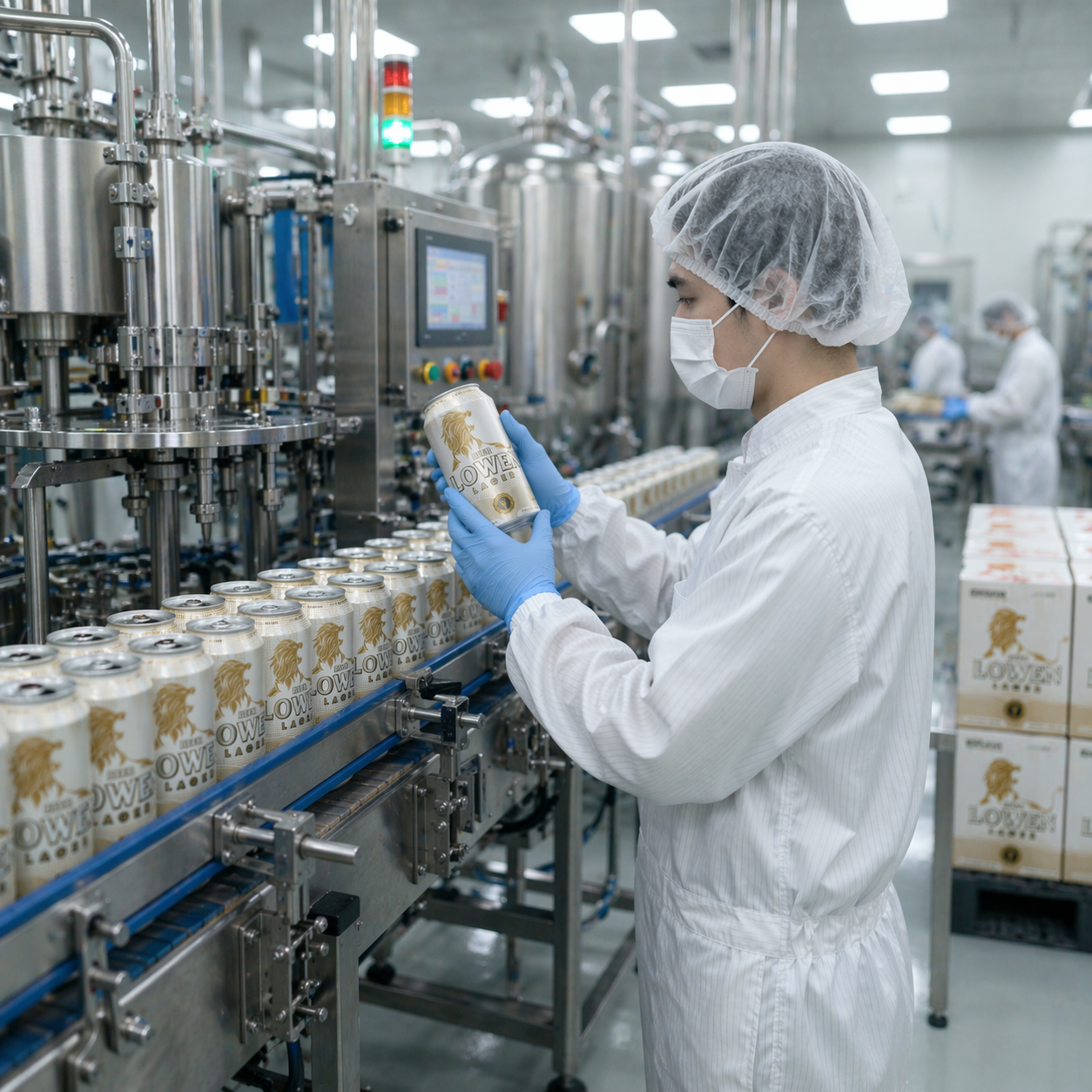
A modern production system must ensure:
- Strict control of technical parameters
- Rigorous sanitation procedures
- Precise repeatability across production batches
Standards such as FSSC 22000 or ISO are not merely certifications, but ways to ensure that products consistently maintain stable quality.
At SMB, the production process is automated and continuously monitored, ensuring that every can of beer meets the same standard. This is especially important when a brand begins scaling up.
Market Launch – Where Strategy Is Tested
Launching a product is not the end point, but the beginning of a brand journey. This is when every assumption is tested by the market.
An effective launch strategy requires synchronization between:
- The product
- Distribution channels
- Marketing activities
Businesses need to clearly identify priority channels: HoReCa, retail, or online, and build suitable storytelling for each channel. At the same time, collecting customer feedback from the early stages is extremely important for product optimization.
OEM manufacturing helps shorten launch timelines, allowing businesses to bring products to market quickly and make adjustments when necessary.
Expansion – From Local Brand to International Market
Once the product has been accepted by the market, the next step is scaling up. This is the stage where many brands encounter difficulties if they lack the right production and logistics foundation.
Exporting is not just about selling products overseas; it also involves quality standards, legal documentation, and supply chain management. Trade agreements such as EVFTA and CPTPP create major opportunities, but they also impose higher requirements.
With its factory system and export experience, SMB can support businesses in:
- Meeting international standards
- Optimizing logistics
- Leveraging tariff advantages
This helps brands not only grow domestically, but also expand sustainably into global markets.
Company: Saigon Beer – Central Region Joint Stock Company (SMB)
Address: 01 Nguyen Van Linh Street, Tan An Ward, Buon Ma Thuot City, Dak Lak Province
OEM Consultation Hotline: (+84) 94 1127575
Email: oem@biasaigonmt.com
Website: https://oem.biasaigonmt.com/
If you have an idea for your own beer brand, the journey from concept to product does not have to begin with building a brewery — start with strategy, and let SMB help turn the rest into reality.