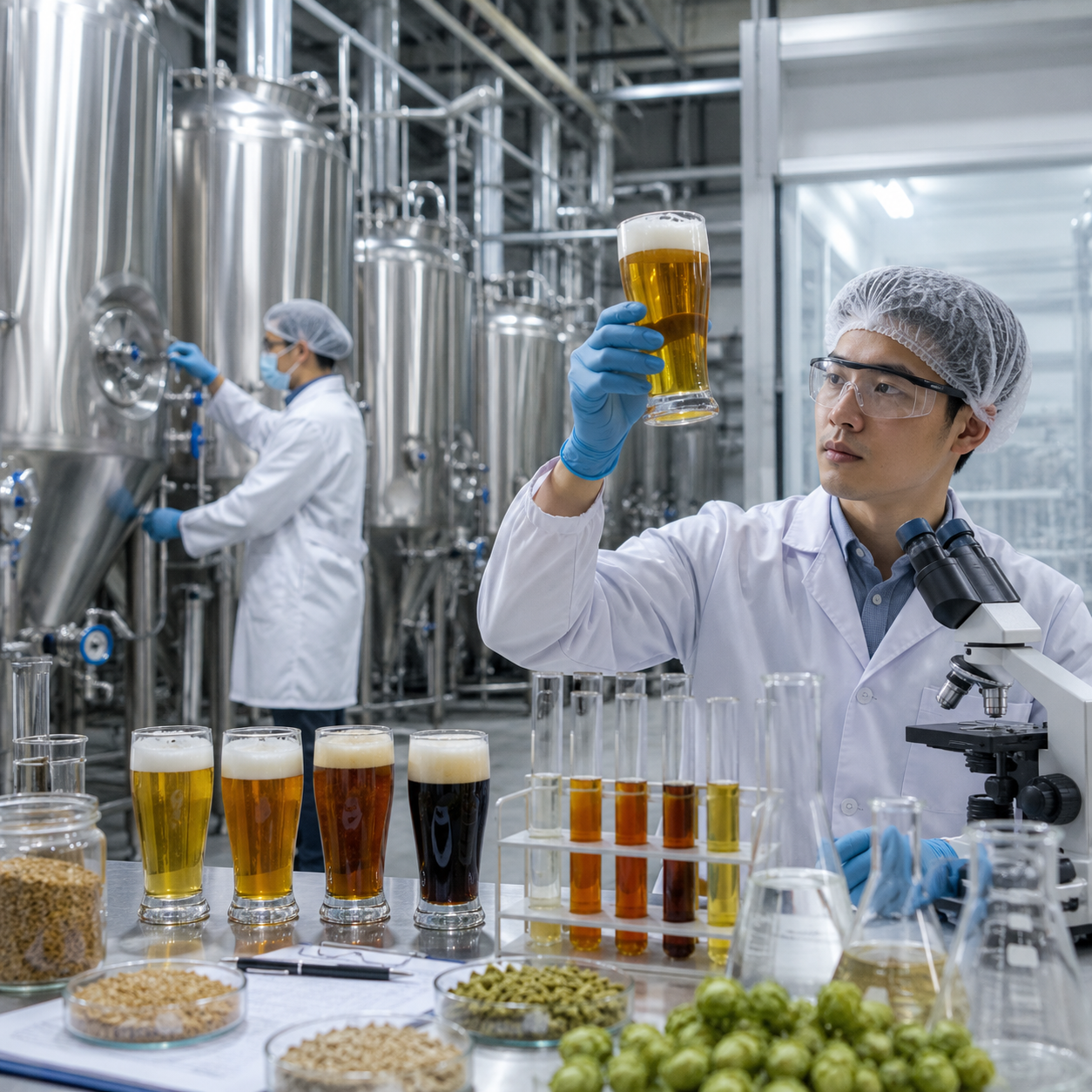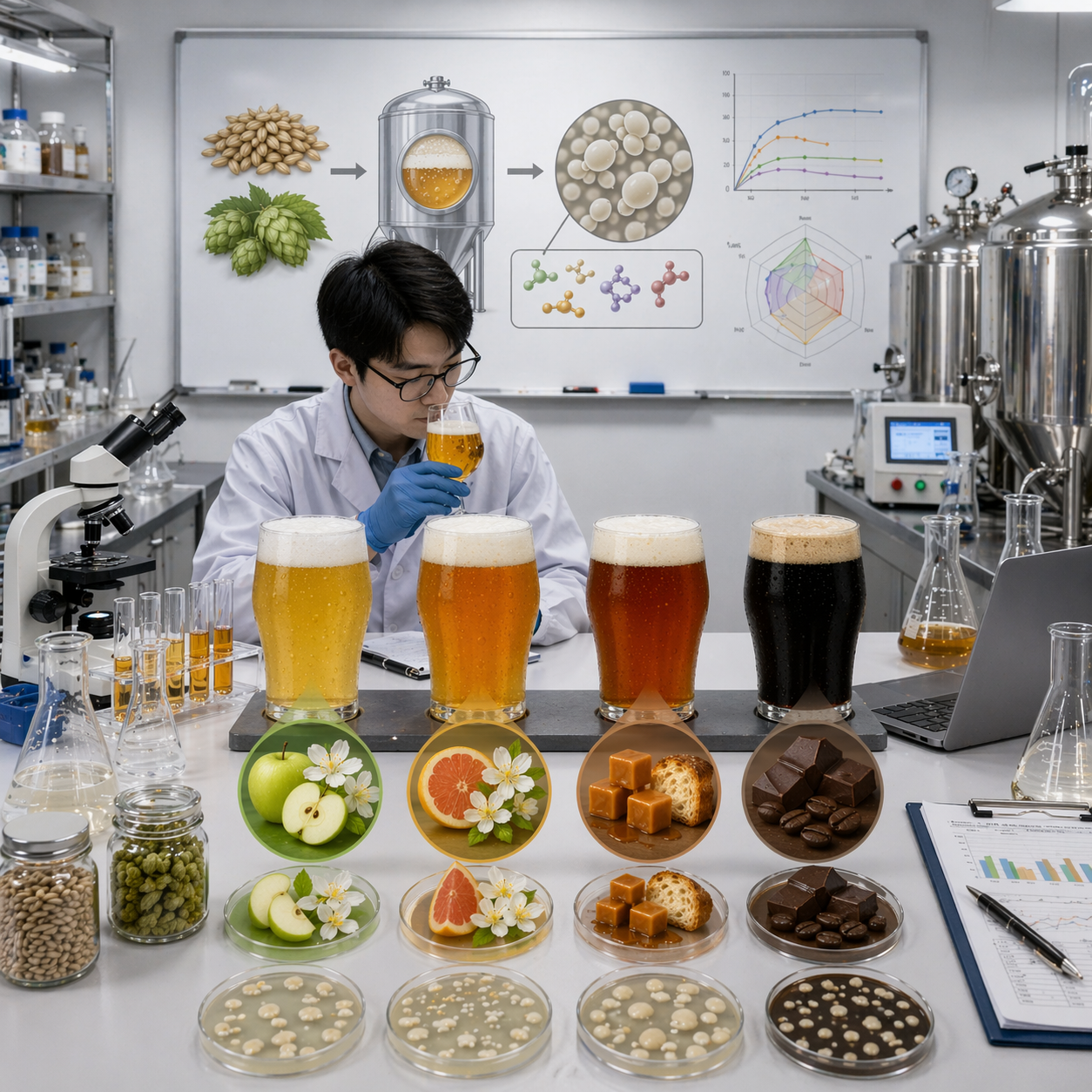


For any beer brand, flavor is the key factor that creates its identity and retains customers. A beer product may feature attractive packaging design and receive systematic investment in marketing communications, but if its quality and flavor are inconsistent across production batches, it will be very difficult to build long-term trust in the market.
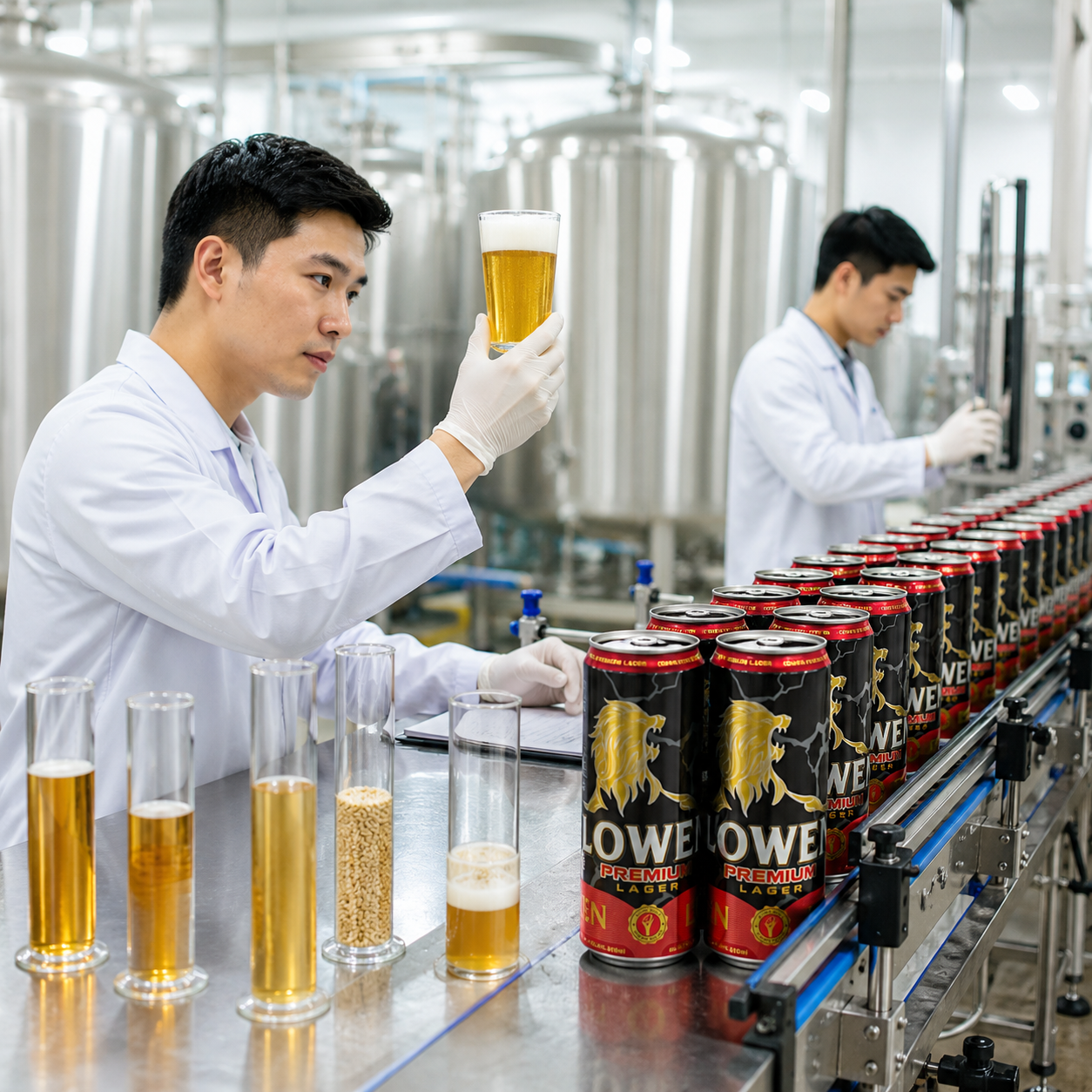
This is also why businesses developing private-label beer brands are increasingly paying attention to the production technology and quality control systems of OEM breweries. In particular, when production volume increases from tens of thousands to hundreds of thousands or millions of liters per year, maintaining consistent beer flavor becomes a major challenge without appropriate processes and technology.
So, what role does modern technology play in stabilizing beer flavor during large-scale production?
Why Does Beer Flavor Easily Change When Production Is Scaled Up?
At a small scale, controlling each batch of beer is usually simpler because the volume of raw materials and the production process remain limited. However, when businesses increase production volume, many factors can affect the quality of the finished product if they are not strictly controlled.
Some factors that commonly affect flavor stability include:
- The quality of raw materials across different batches.
- Deviations in raw material blending ratios.
- Temperature fluctuations during different stages of the production process.
- Inconsistent fermentation.
- Suboptimal control of maturation time.
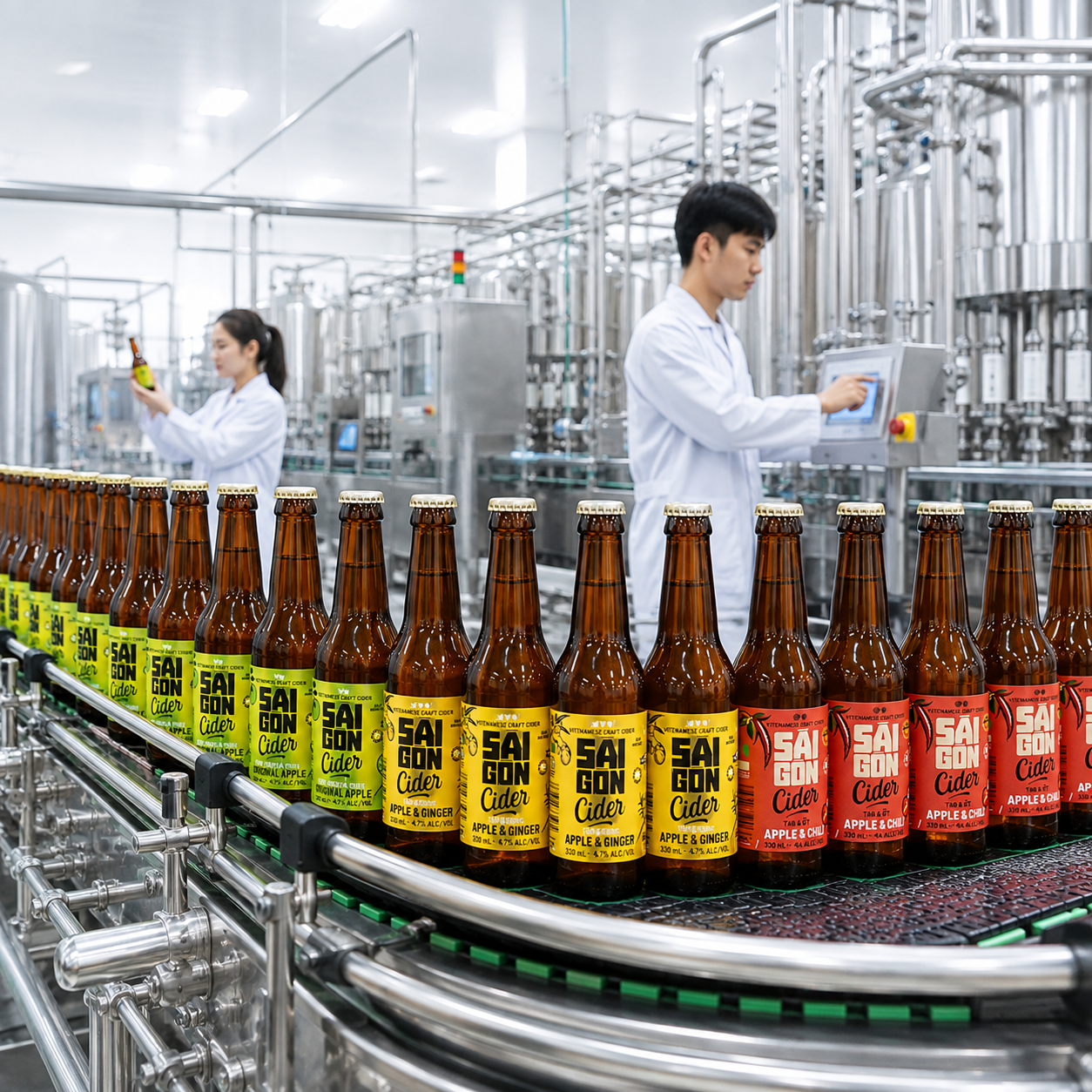
- Filling and packaging conditions.
- Storage and transportation after production.
If these factors are not managed in an integrated manner, the beer product may show differences in color, aroma, beer flavor, or aftertaste.
Raw Material Standardization – The Foundation of Consistent Flavor
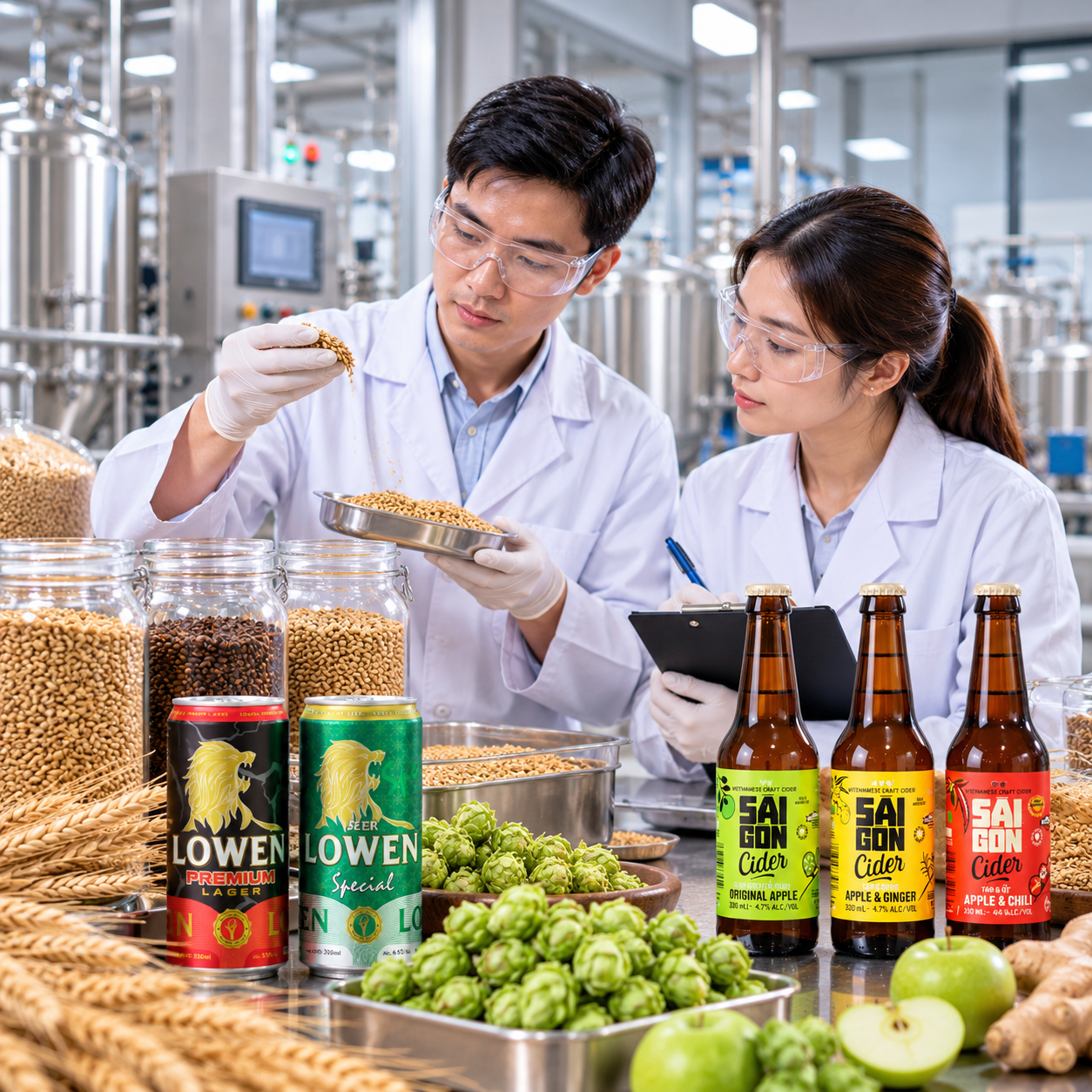
To maintain consistent quality, standardizing raw material sources is an important requirement from the very beginning of the production process.
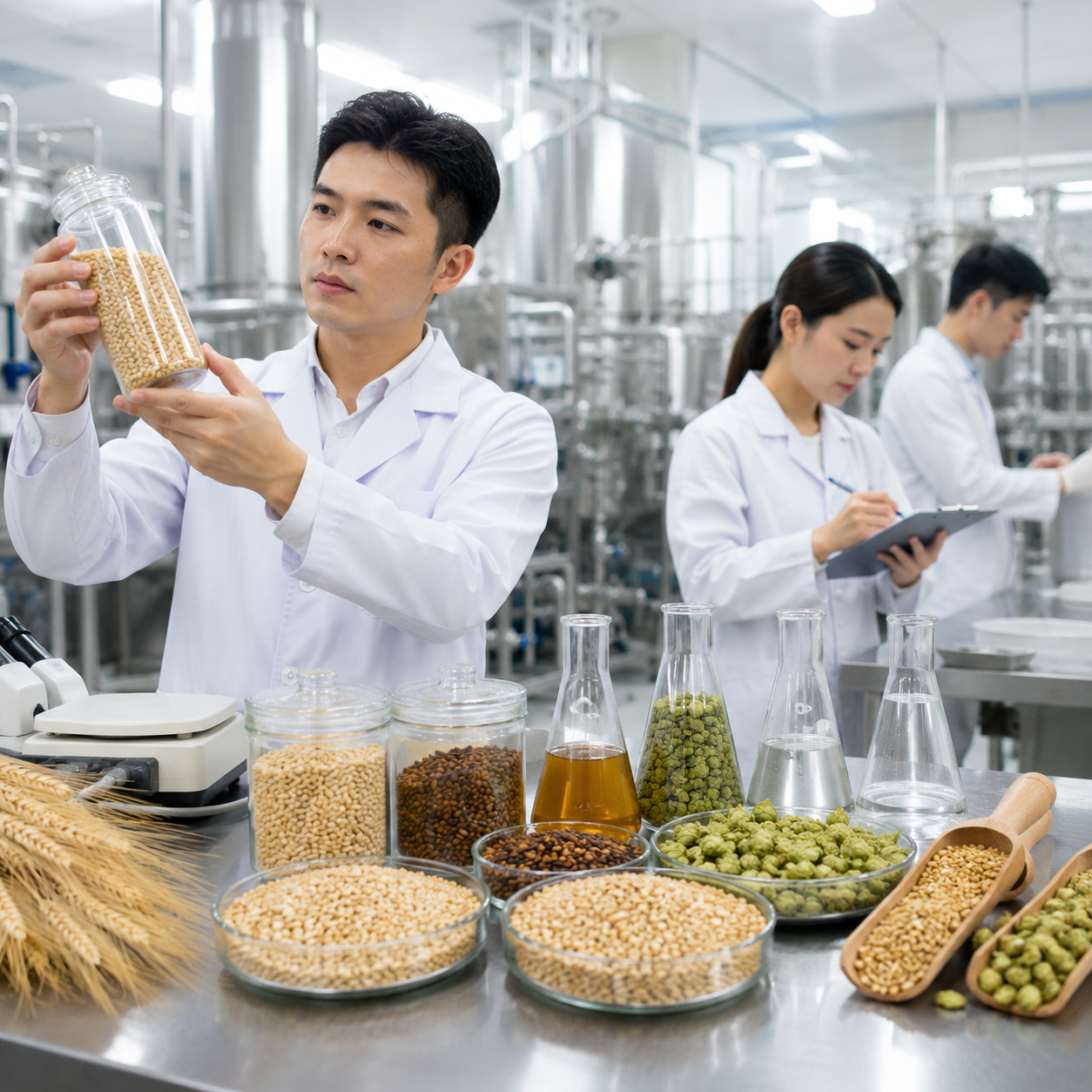
The brewery needs to establish strict control procedures for:
- Malt.
- Hops.
- Brewer’s yeast.
- Water source.
- Additional ingredients according to the recipe.
Evaluating the quality of incoming raw materials helps minimize variations between production batches and creates a foundation for consistent flavor.
Automation Helps Reduce Production Errors
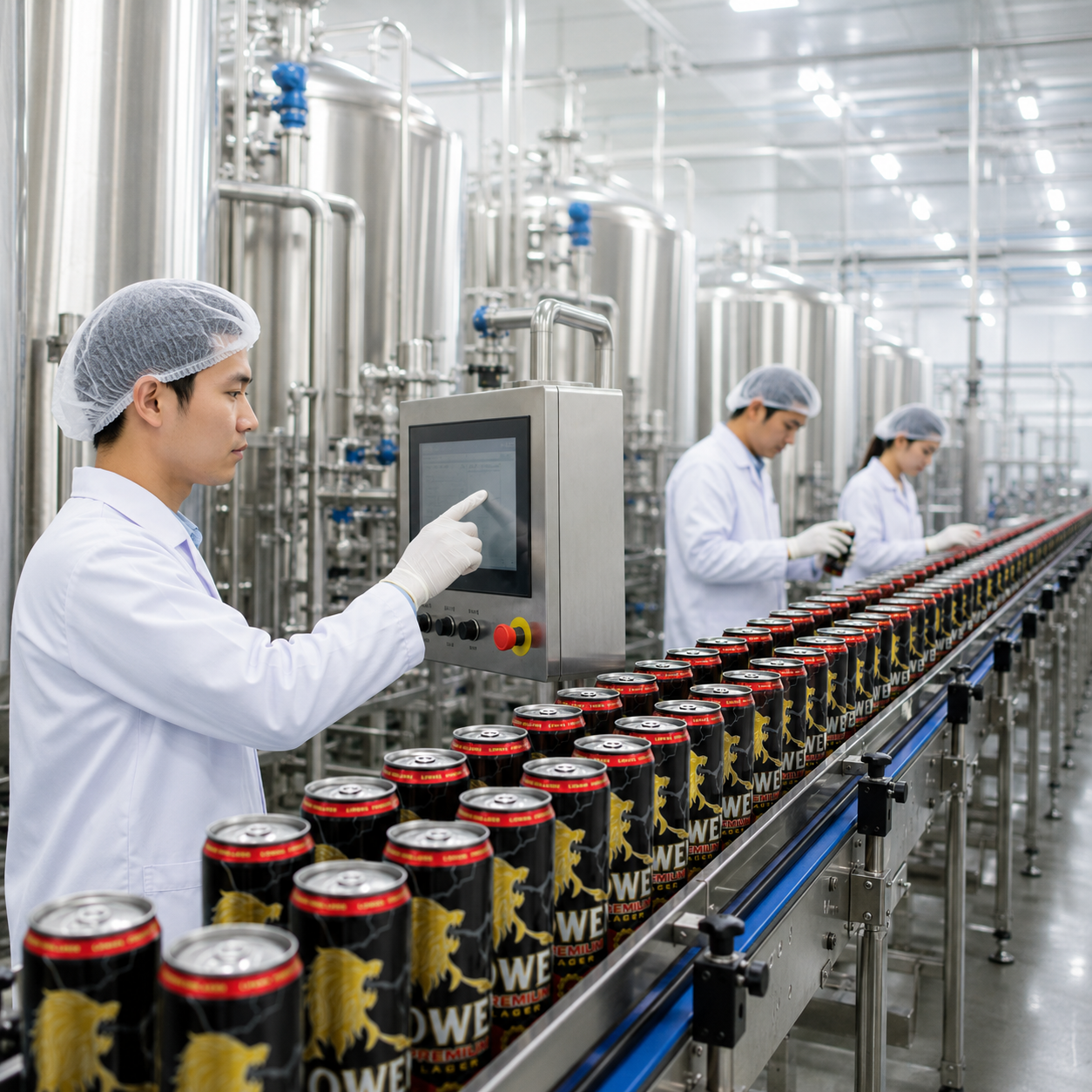
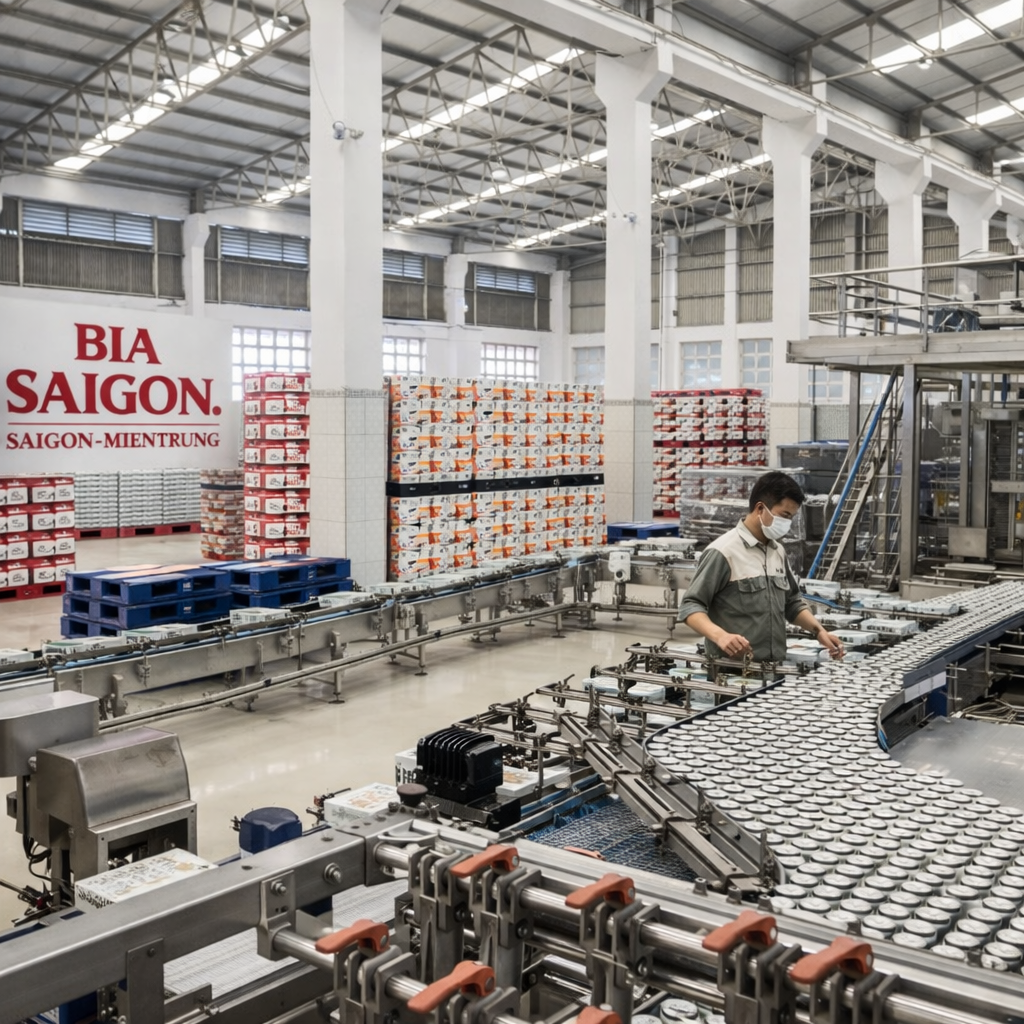
One of the outstanding advantages of modern breweries is their high level of automation.
Automated control systems help precisely control many important parameters such as:
- Brewing temperature.
- The duration of each production stage.
- Raw material blending ratios.
- The fermentation process.
- System pressure.
- Filling flow rate.
By reducing dependence on manual operations, automation technology helps minimize errors and improve consistency between beer batches.
Controlling the Fermentation Process with Modern Technology
Fermentation is the stage that determines many characteristics of beer, such as aroma, flavor, and product structure.
Modern systems allow continuous monitoring of important parameters throughout the fermentation process, enabling the technical team to make timely adjustments when necessary.
Strict control of this process helps:
- Maintain consistent flavor.
- Ensure quality across production batches.
- Reduce the rate of non-conforming products.
- Improve production efficiency.
Multi-Level Quality Control System
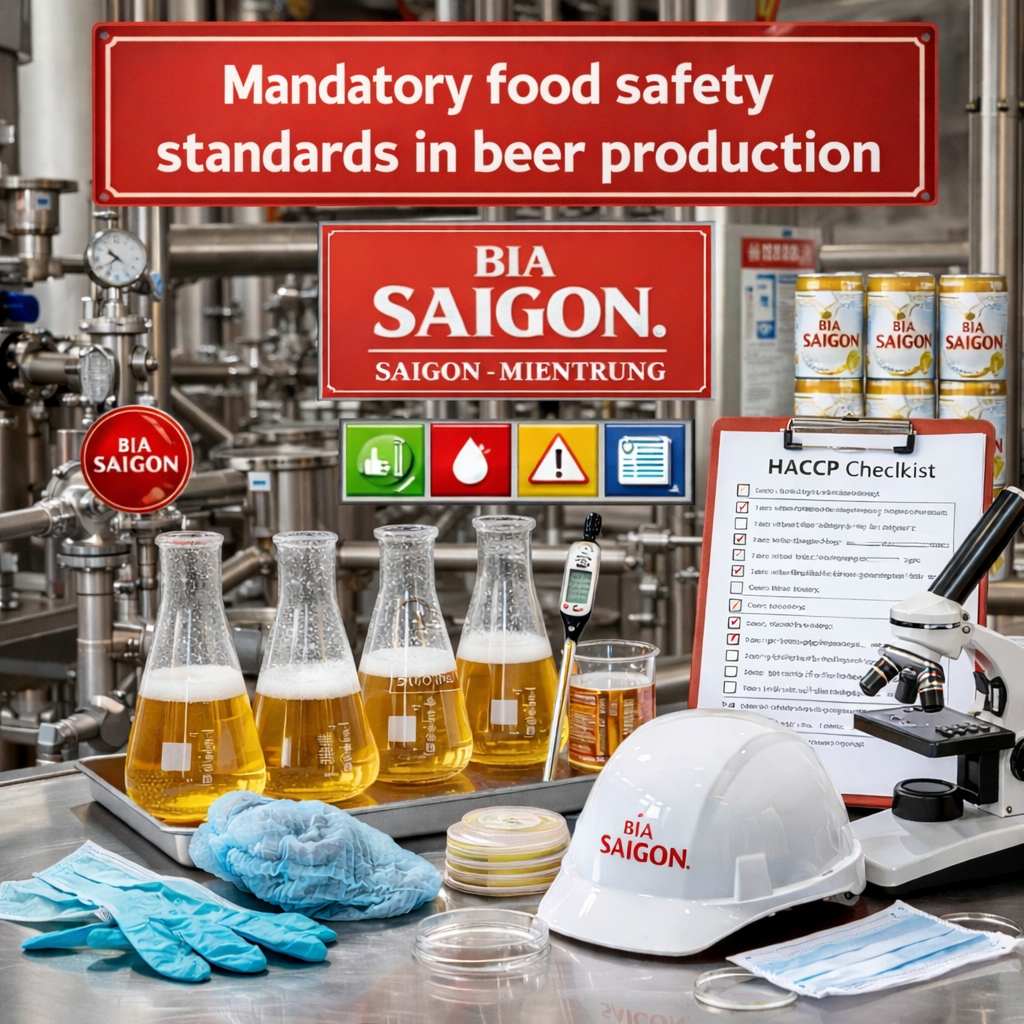
To ensure that every product batch meets established standards, modern breweries often apply quality control processes at multiple stages.
This process may include:
- Inspection of incoming raw materials.
- Monitoring during the production process.
- Laboratory sample analysis.
- Sensory evaluation.
- Inspection of finished products before leaving the brewery.
Multi-level quality control helps detect deviations early and minimize risks that could affect product quality.
Standardizing Large-Scale Production Processes
When production volume increases significantly, every stage needs to follow a standardized production process.