

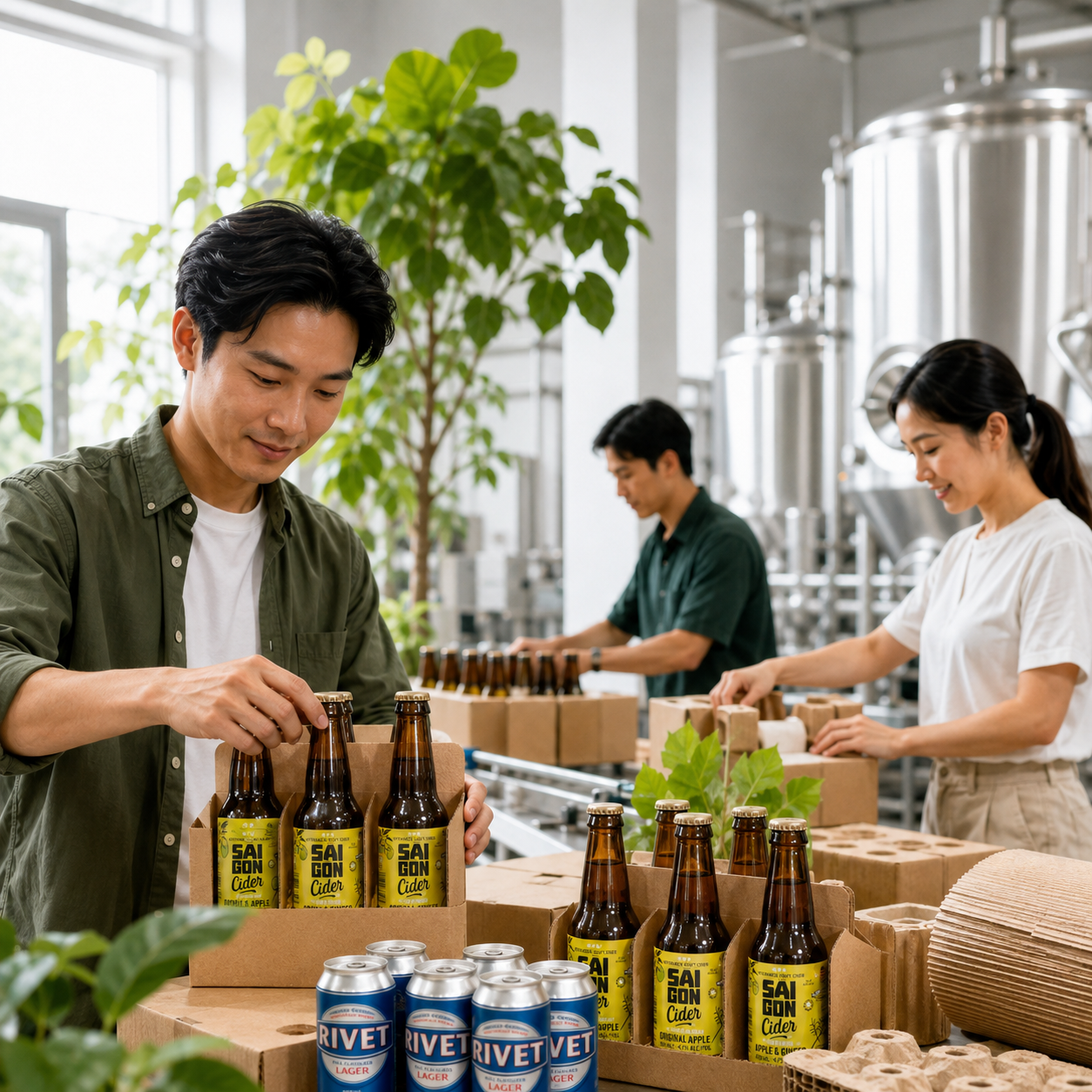
Today, beer packaging is no longer only a reflection of brand image but also demonstrates a company’s responsibility toward the environment and the community. For the beer industry—an industry that uses large volumes of aluminum cans, glass bottles, bottle caps, cartons, and shrink wrap—transitioning to environmentally friendly packaging solutions is becoming an inevitable trend.
For businesses developing private-label beer brands (Private Label), this is not only a requirement for keeping up with the market but also an opportunity to enhance brand value, create differentiation, and strengthen long-term competitive advantage.
Consumers Are Increasingly Concerned About Sustainable Values
Beer purchasing decisions today are no longer based solely on flavor or price.
Especially among younger customers, consumers are increasingly concerned about how businesses manufacture products, the origin of ingredients, operational processes, and commitments to environmental protection.
A brand that uses recyclable packaging, reduces plastic materials, or optimizes its design to minimize waste often creates a more favorable impression than products without a clear sustainable development orientation.
This shows that eco-friendly packaging is not only meaningful in terms of social responsibility but also directly influences brand image and purchasing decisions.
Sustainable Packaging Does Not Necessarily Mean Higher Costs
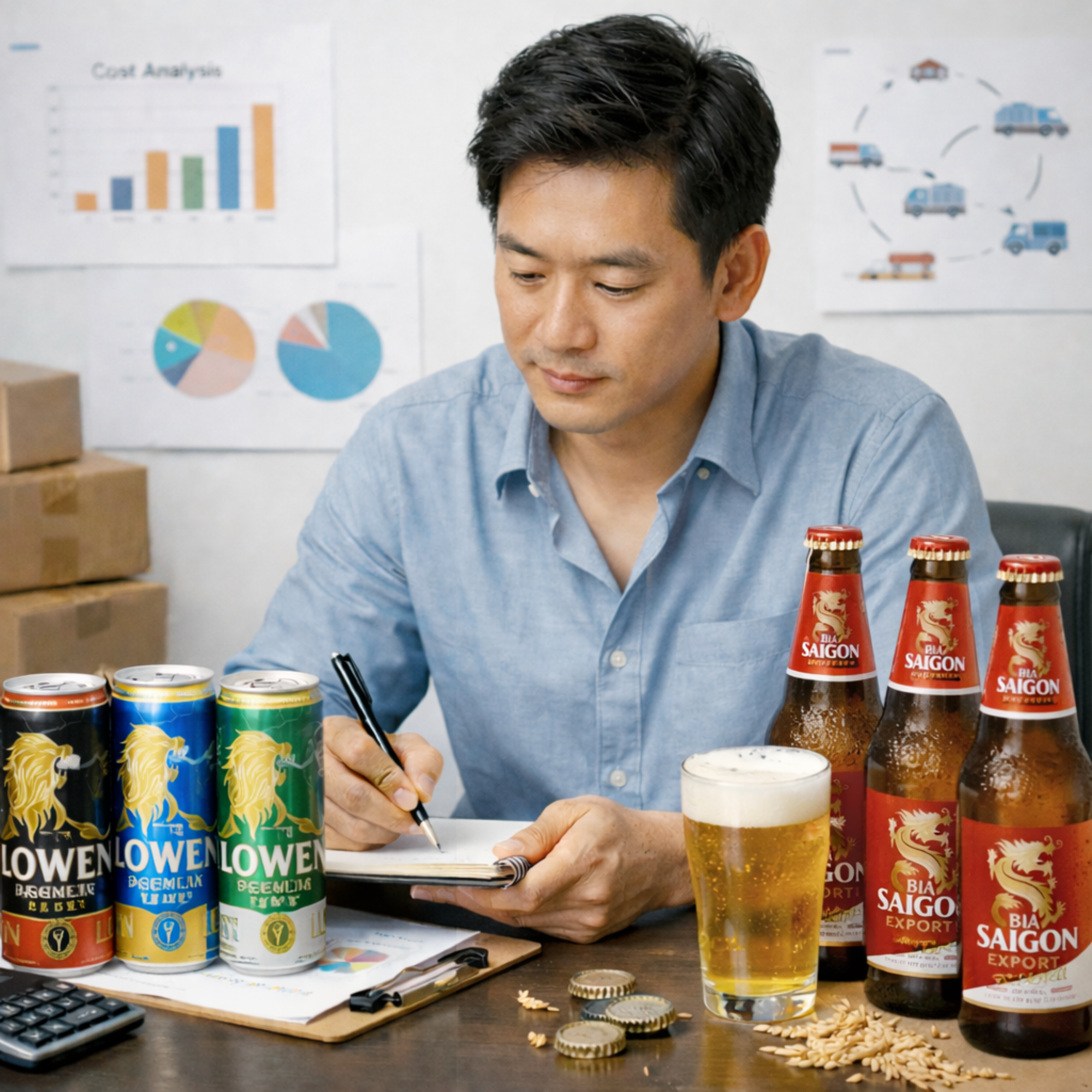
One of the common concerns businesses have when switching to environmentally friendly packaging is the risk of increasing product costs.
In reality, when researched and implemented from the product development stage, many green packaging solutions can help businesses optimize costs in the long term.
Reducing the weight of glass bottles, optimizing the thickness of aluminum cans, using appropriately designed cartons, or eliminating unnecessary layers of packaging can all reduce material and transportation costs while maintaining product quality.
This is also a trend adopted by many beverage manufacturers worldwide to balance business efficiency with sustainable development goals.
Minimalist Design Helps Reduce Environmental Impact
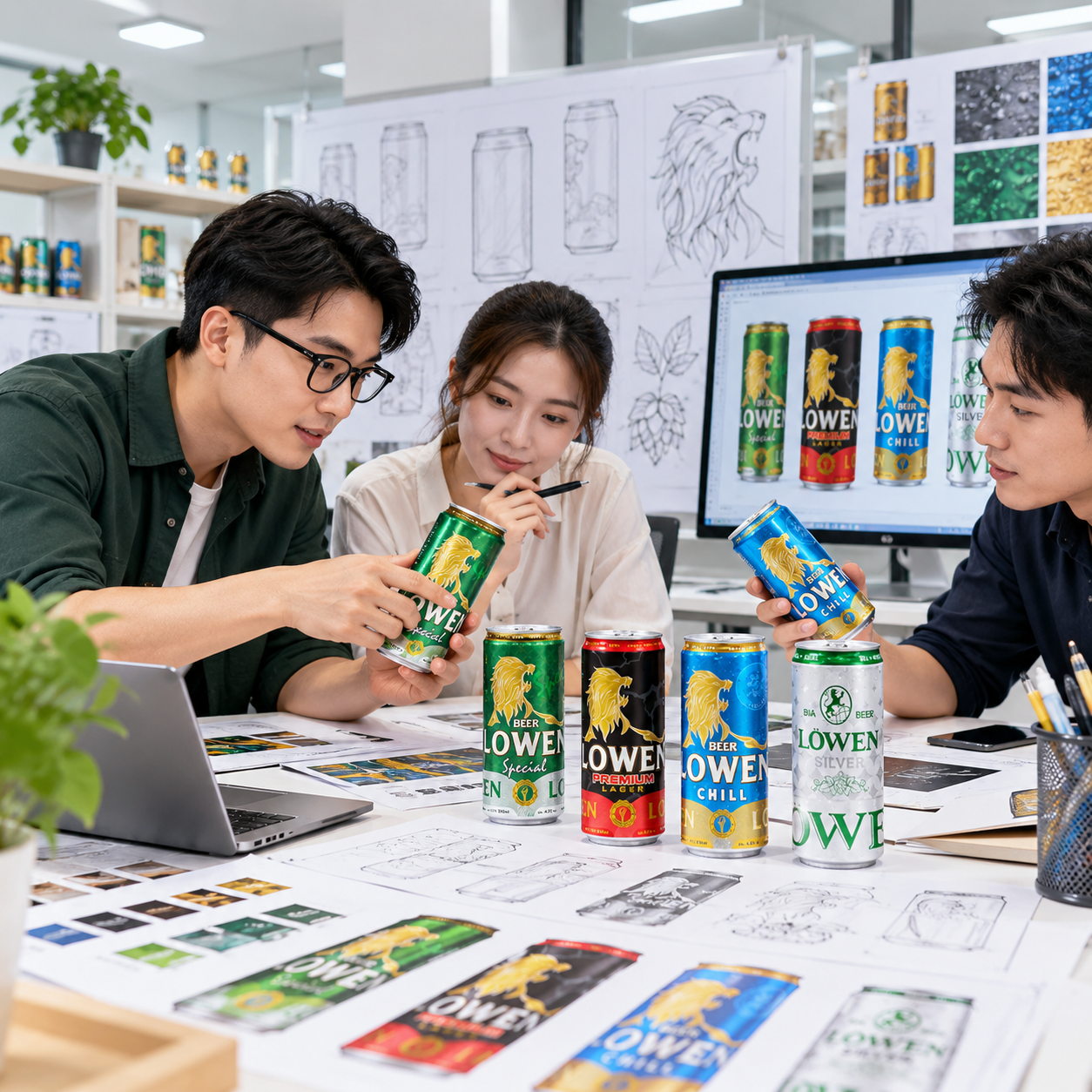
Environmentally friendly packaging is not only about changing materials but also begins with a design mindset.
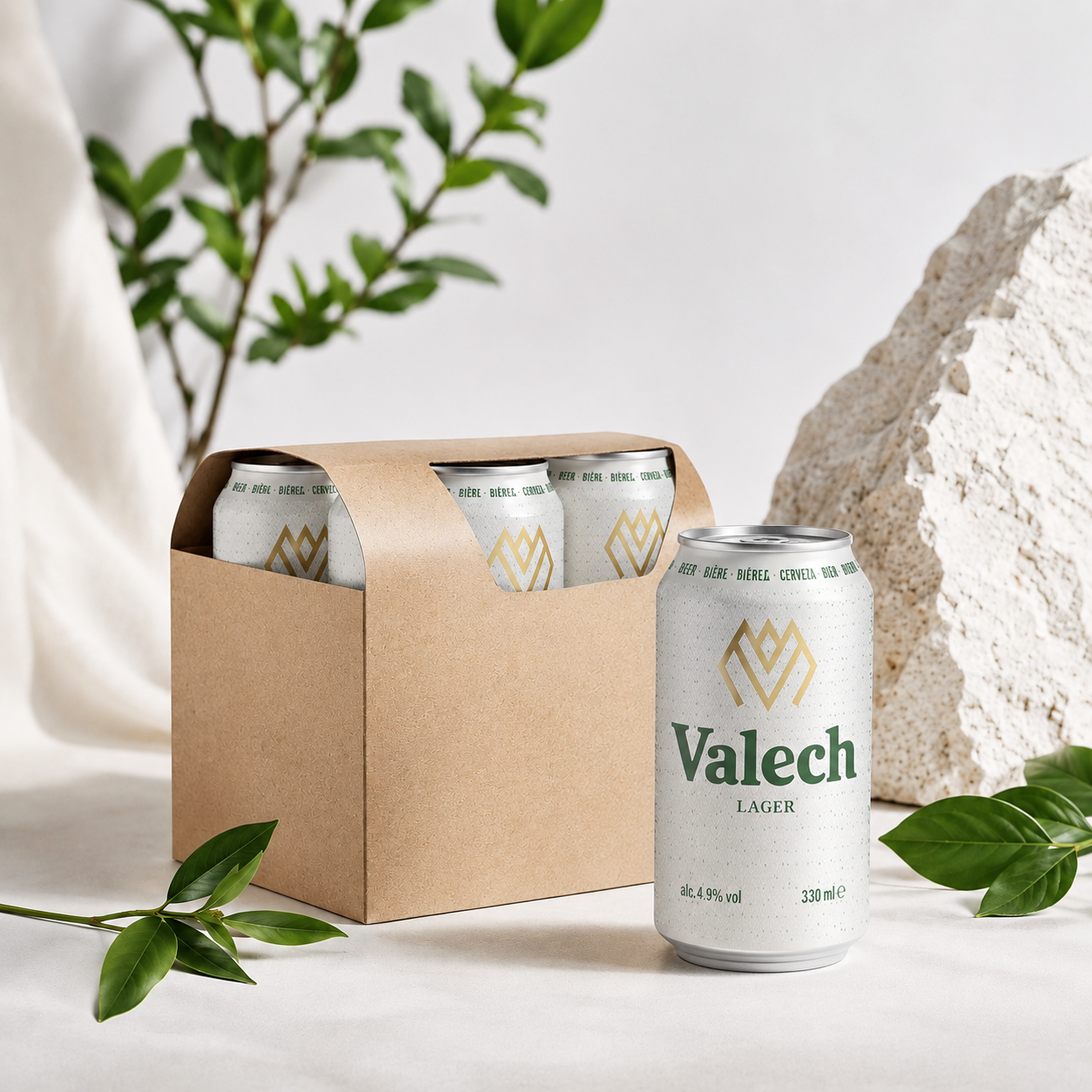
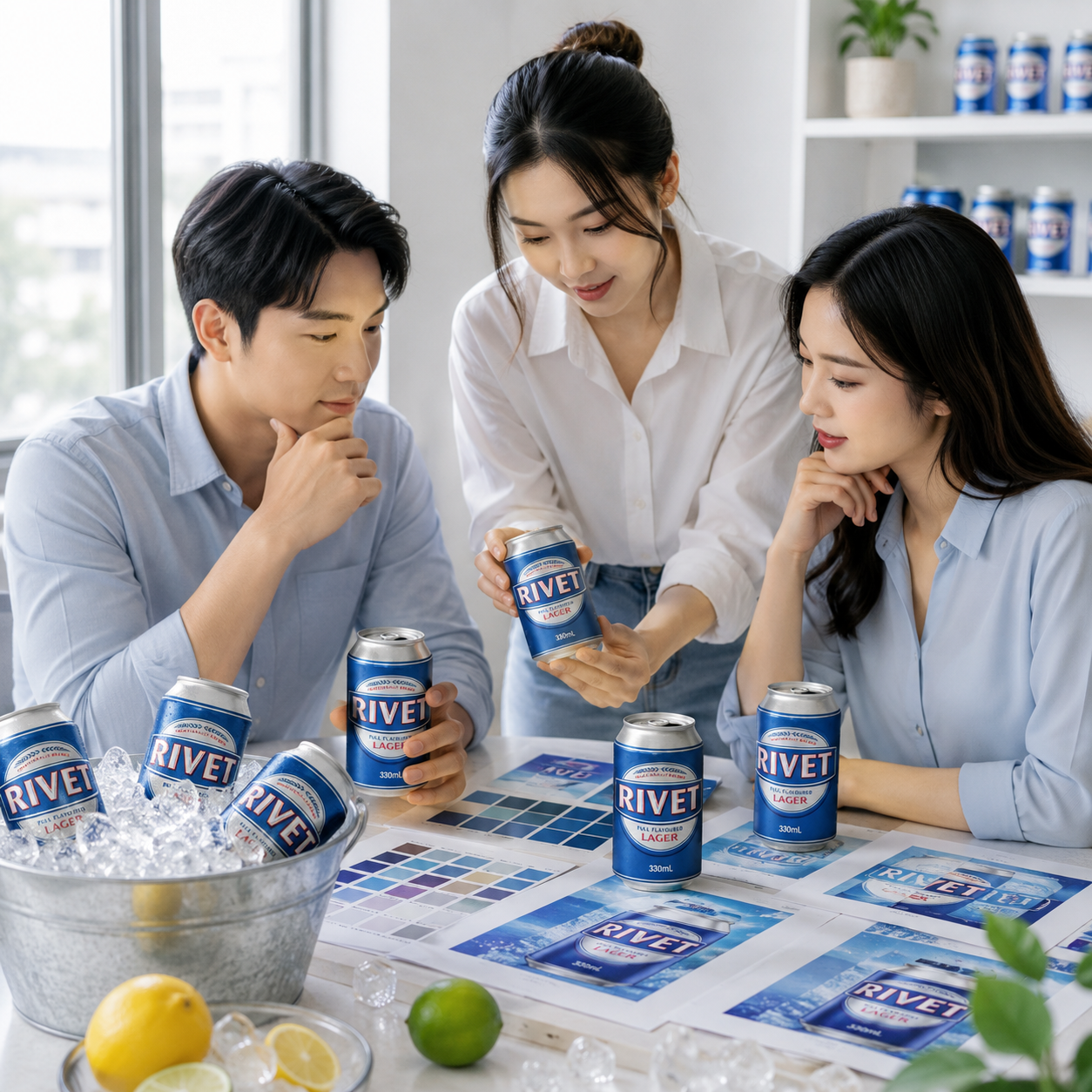
A minimalist design helps reduce the amount of printing ink, limit unnecessary details, and optimize the production process. At the same time, using a clear brand identity system with a streamlined layout also makes the product more modern and easier for consumers to remember.
For a private-label beer brand, this is an opportunity to combine modern design trends with a sustainable development orientation, creating a professional image from the very first interaction with customers.
Investing in sustainable packaging should not be viewed as an additional cost, but as an investment in future brand value. As consumers become increasingly concerned about environmental factors, brands that prepare early will have greater advantages in building trust and expanding their markets.
Packaging Needs to Meet Both Aesthetic Requirements and Production Capabilities
A beautiful design idea only truly has value when it can be implemented consistently on the production line.
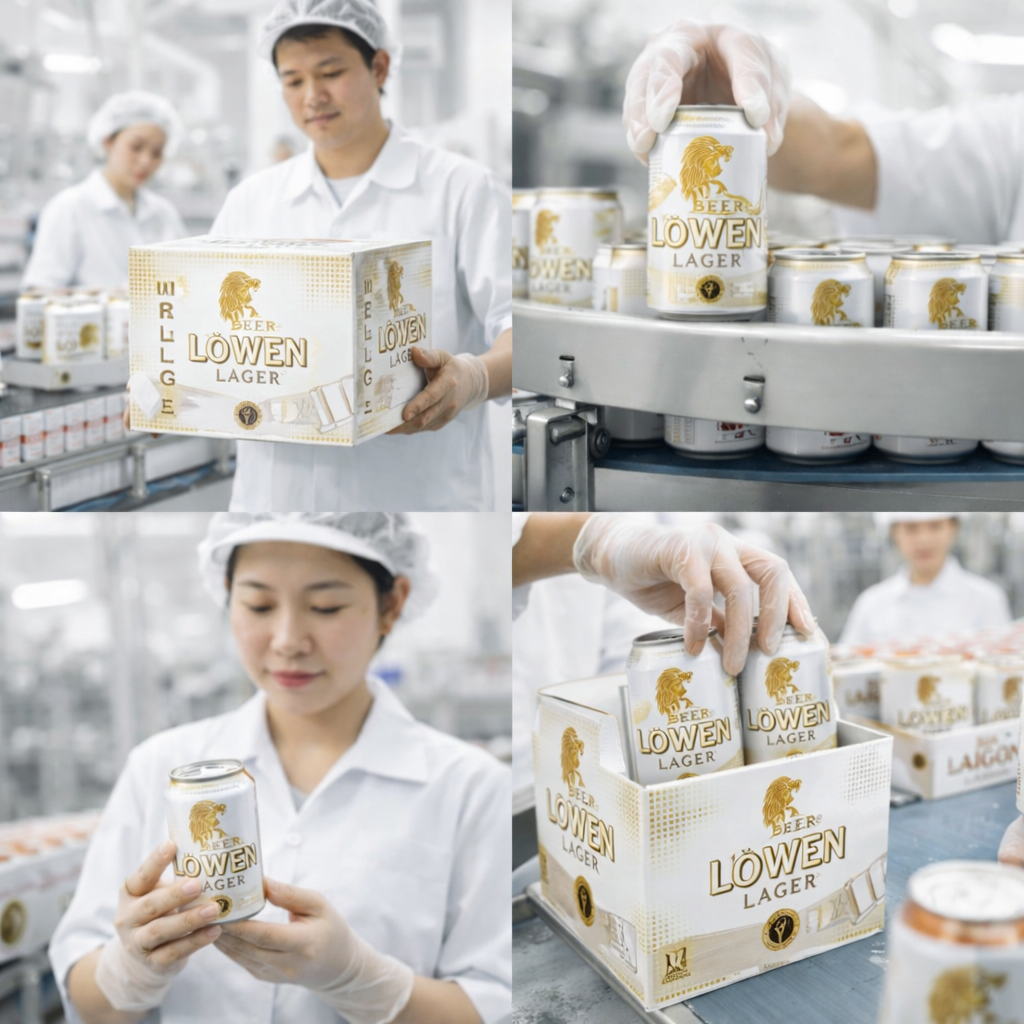
In the beer industry, packaging must meet multiple criteria at the same time, such as product preservation, resistance to impact during transportation, maintaining printing quality, and compatibility with the operating speed of filling and packaging lines.
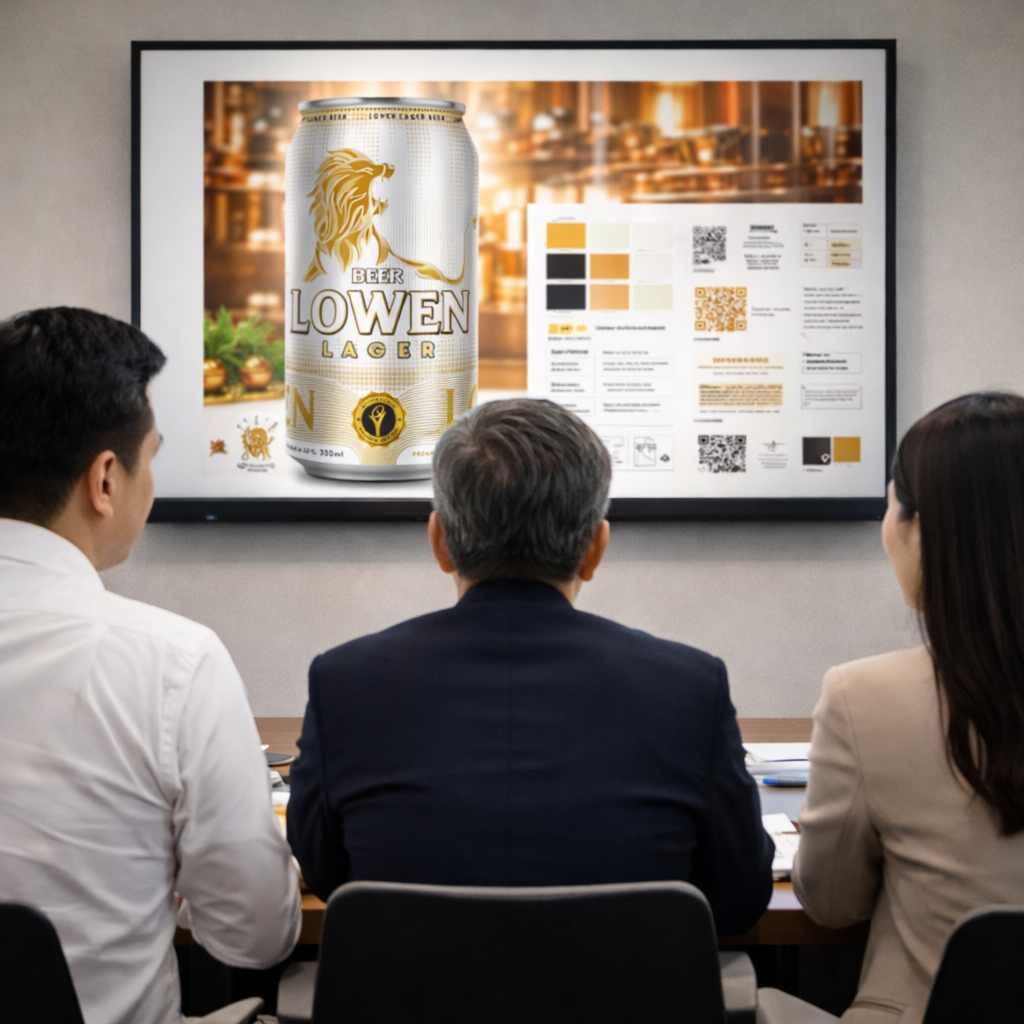
Therefore, the packaging development process needs coordination between the design team, marketing team, and manufacturer from the beginning.
The selection of materials or changes to packaging specifications should be evaluated simultaneously from aesthetic, technical, and economic efficiency perspectives to avoid additional costs when the product enters mass production.
Building a Sustainable Brand Starts With Small Changes
Not every business can immediately convert its entire packaging system to new solutions.
In reality, many brands choose a step-by-step approach. They begin by reducing the amount of plastic in secondary packaging, optimizing carton dimensions, improving can or bottle designs to save materials, and gradually increasing the proportion of recyclable materials.
Although these changes may not be significant individually, they can deliver positive results in both operational costs and brand image.
More importantly, businesses can demonstrate their commitment to sustainable development through concrete actions rather than stopping at communication messages.
Green Packaging Contributes to Increasing the Value of Private-Label Beer Brands
For businesses building private-label beer brands, packaging is one of the first elements that creates differentiation.
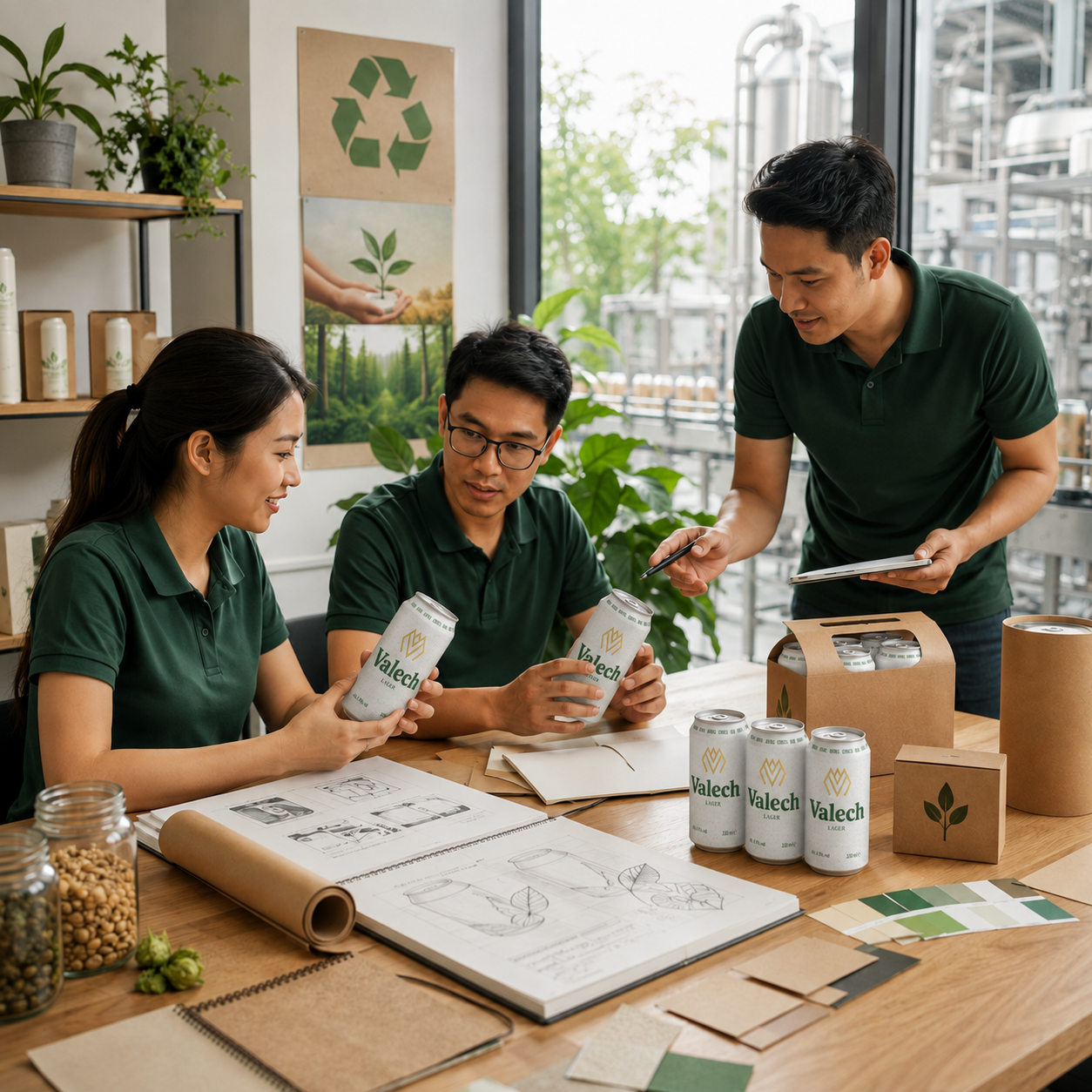
A product with a modern design, using appropriate materials and clearly conveying a sustainable development orientation will help enhance customers’ perceived value.
This is particularly important for restaurant chains, hotels, resorts, or businesses seeking to position their products in the mid-range and premium segments.
Instead of competing on price, businesses can create an advantage through a professional, responsible brand image that aligns with modern consumer trends.
If a business is developing its own beer brand, selecting a packaging solution from the product research stage will help optimize costs, improve consistency, and create a foundation for a long-term development strategy.
The Role of OEM in Developing Environmentally Friendly Packaging
The transition to sustainable packaging depends not only on design ideas but also on practical implementation capabilities.
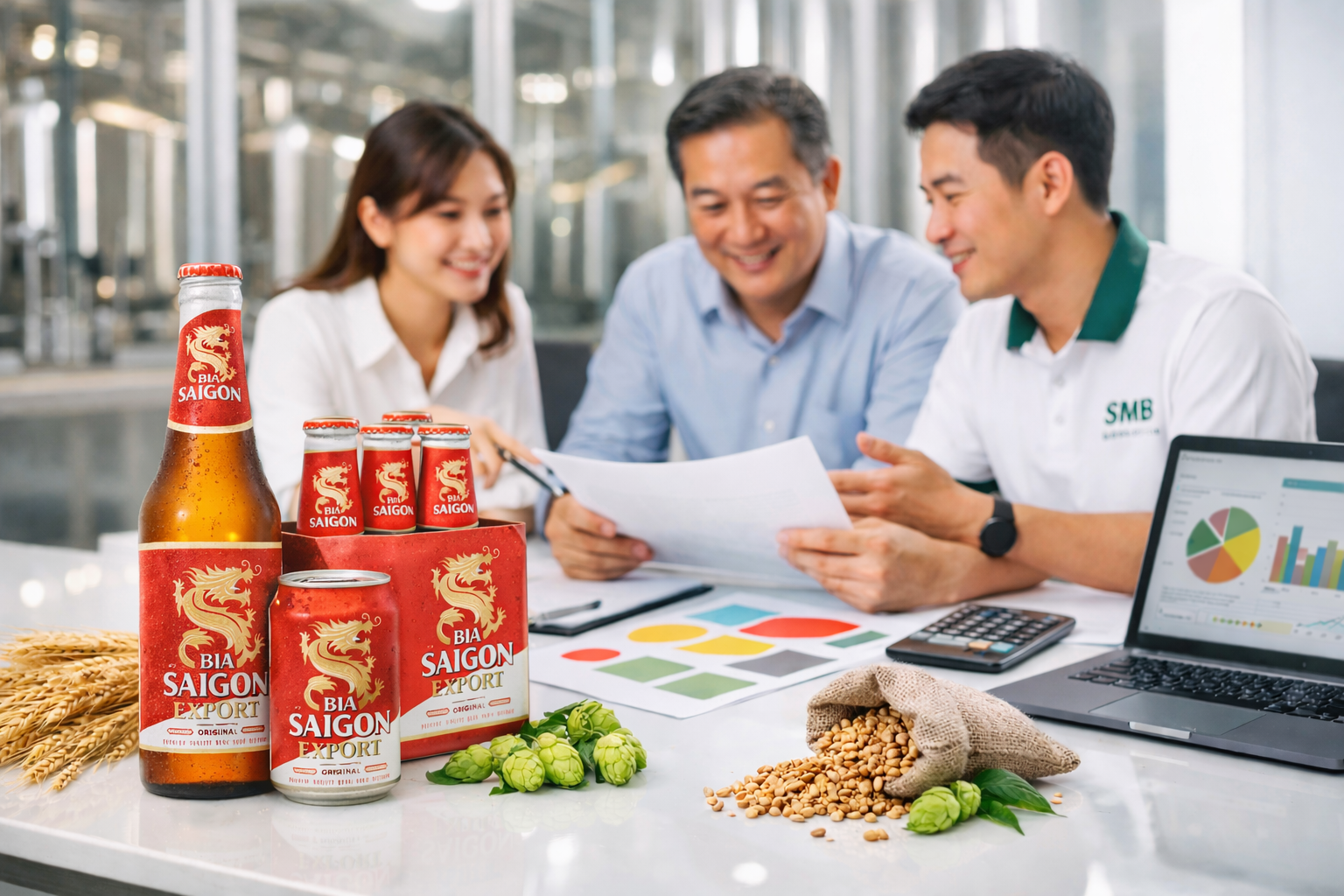
An experienced OEM partner can support businesses in selecting suitable materials, evaluating design feasibility, optimizing packaging specifications, and ensuring that packaging is compatible with the production line.
At Sai Gon – Mien Trung Beer Joint Stock Company (SMB), OEM services are implemented with a focus on accompanying businesses throughout the process, from product research, packaging consultation, material selection, and brand identity development to production organization and quality control.
Thanks to a modern production system, together with an experienced technical and R&D (Research & Development) team, SMB supports businesses in developing packaging solutions that meet aesthetic requirements while also aligning with sustainable development trends and actual production capabilities.
Environmentally friendly packaging is becoming an important part of the development strategy of the beer industry. This is not merely a change to meet market requirements but also an opportunity for businesses to enhance brand value, optimize operations, and build long-term competitive advantages.
For private-label beer brands, investing in sustainable packaging early will help establish a professional image, increase customer trust, and be ready to meet the increasingly high standards of the market in the future.
When combined with consistent product quality, a clear brand strategy, and the support of a capable OEM partner, packaging is not only a protective layer for the product but also becomes a tool for conveying brand value and the business’s commitment to sustainable development.
Contact Information
- Company: Sai Gon – Mien Trung Beer Joint Stock Company (SMB)
- Address: 01 Nguyen Van Linh Street, Tan An Ward, Buon Ma Thuot City, Dak Lak Province
- OEM Consultation Hotline: (+84) 94 1127575
- Email: Oem@biasaigonmt.com
- Website: https://oem.biasaigonmt.com