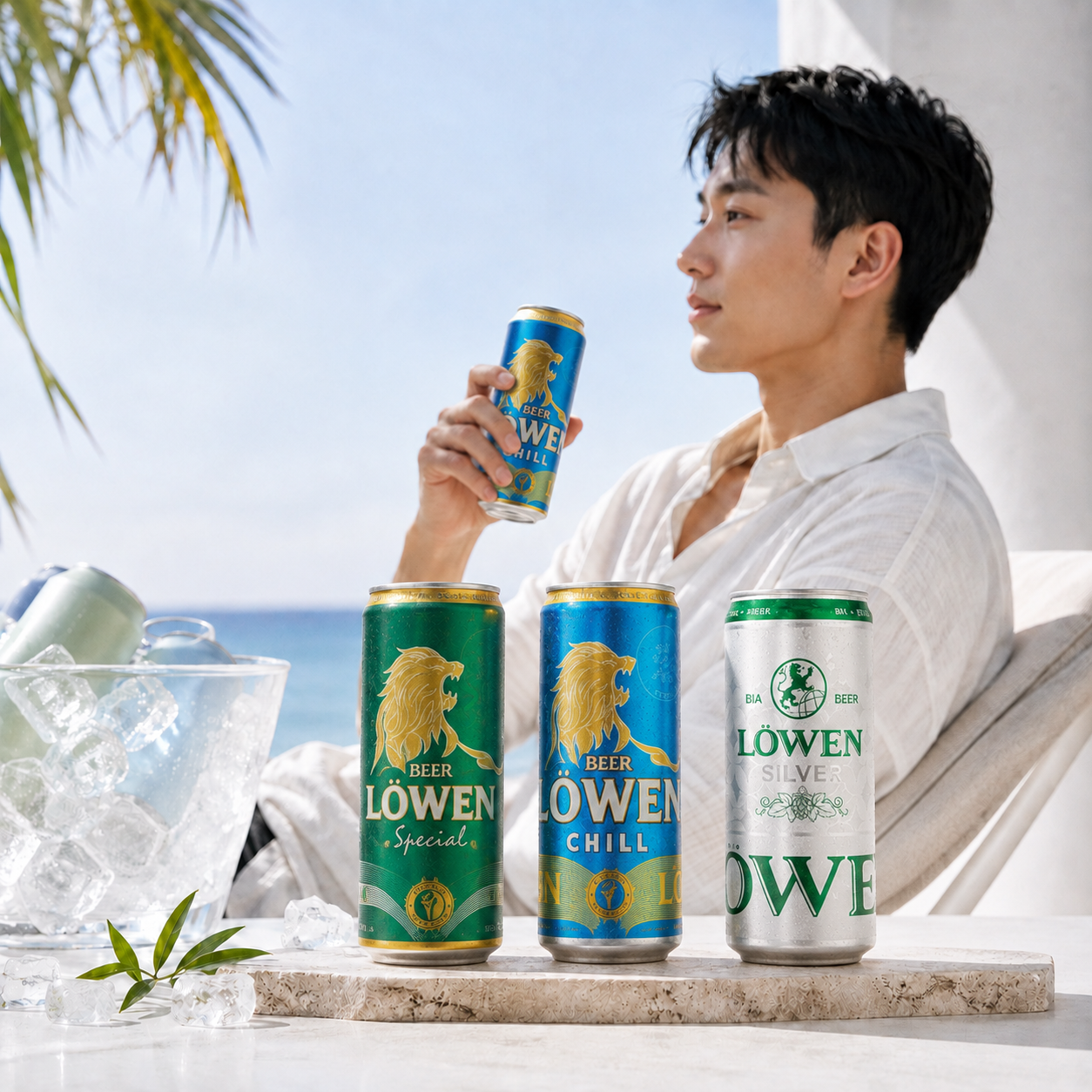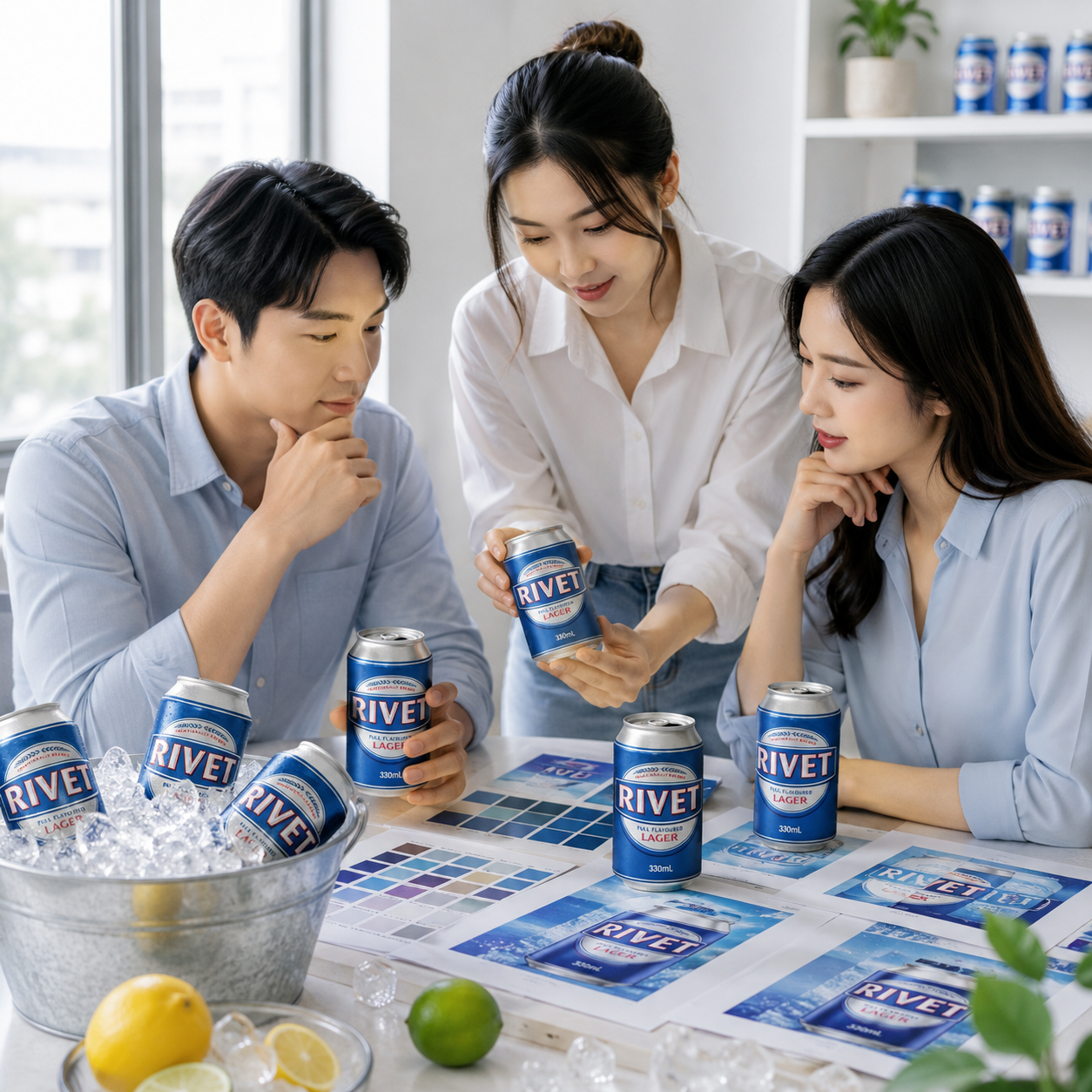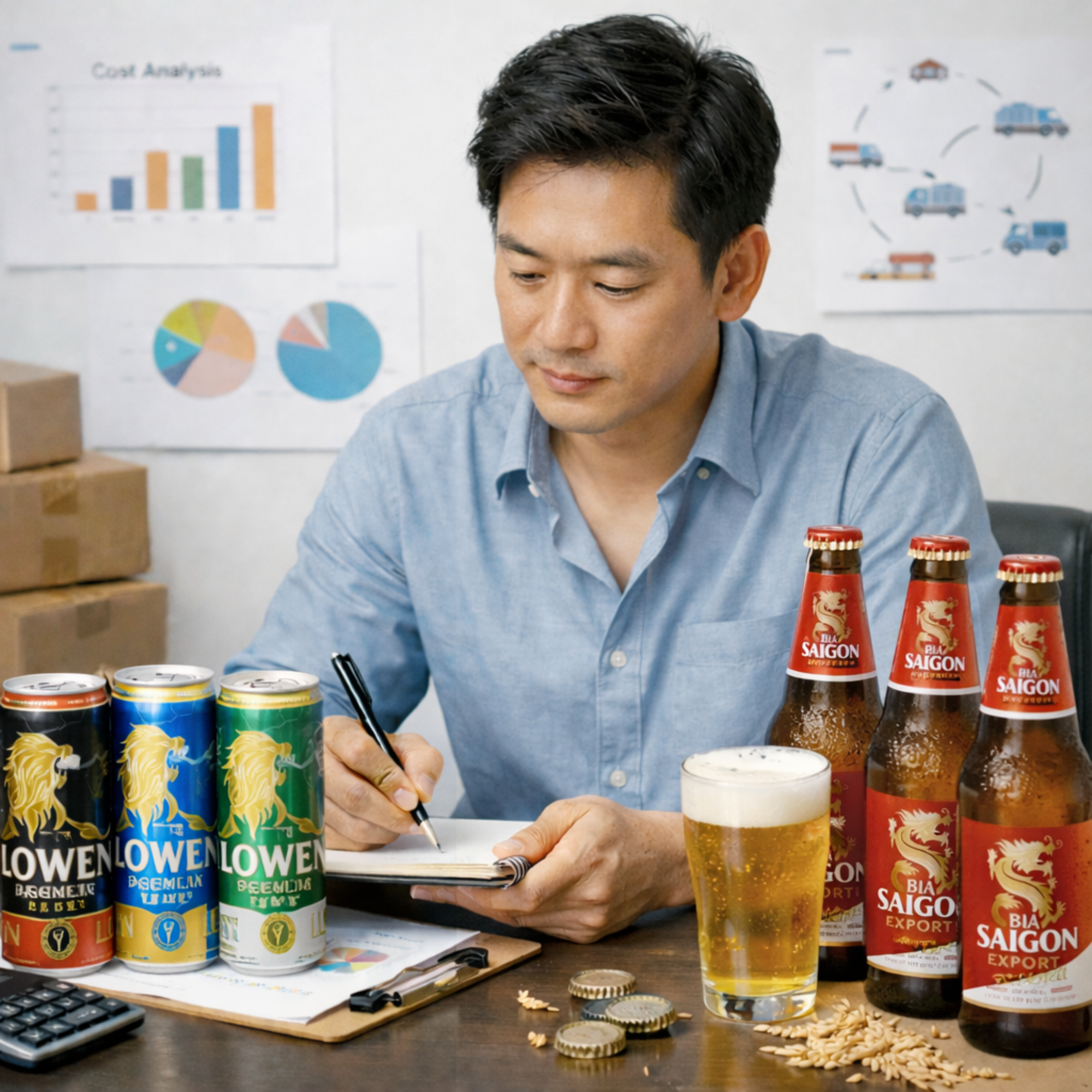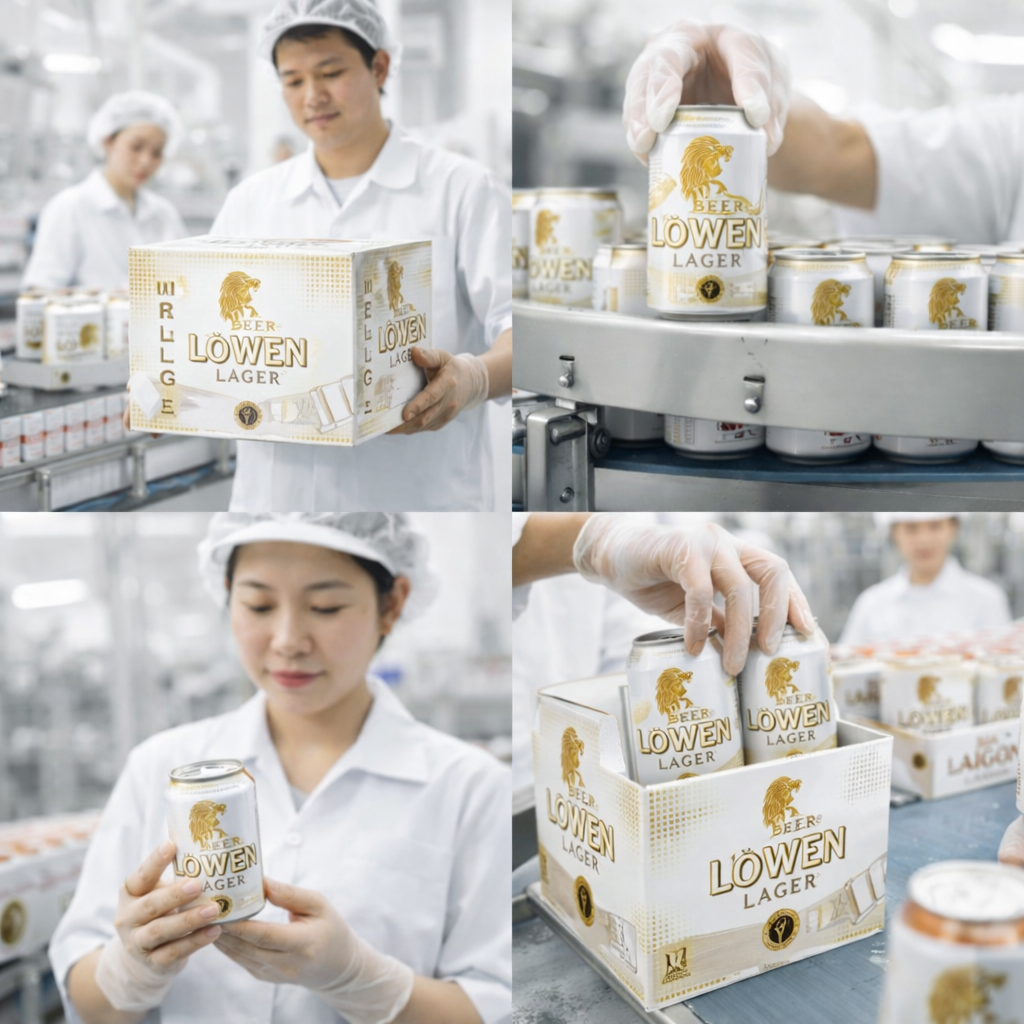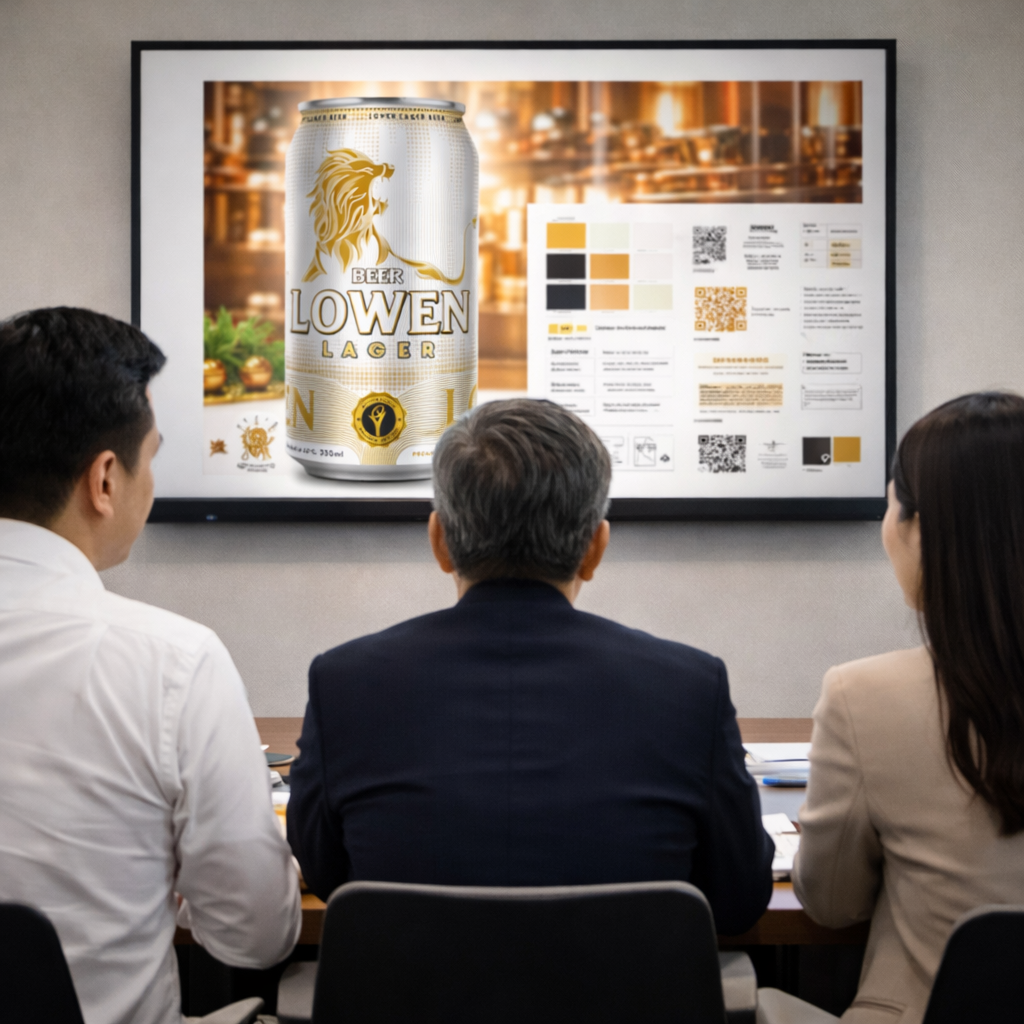


At stores, supermarkets, restaurants, and beverage distribution outlets, consumers are often faced with multiple beer options at the same time. When the quality of the product itself cannot be experienced immediately, beer packaging becomes one of the first factors that help the product attract attention and communicate the brand’s image.
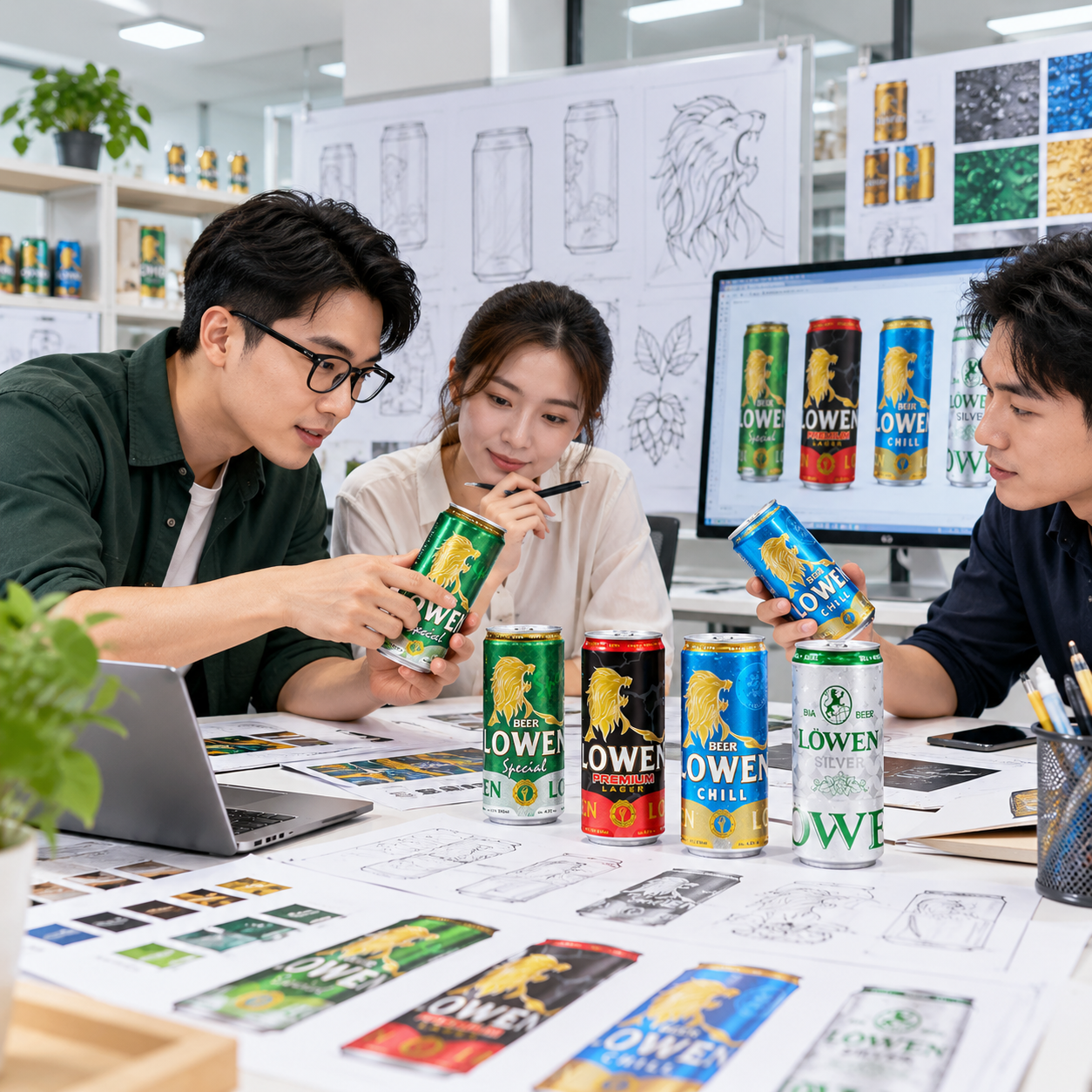
For a private-label beer brand entering the market, this role becomes even more important. An attractive design that lacks visibility when placed alongside other products may not achieve the desired results. Conversely, packaging developed based on brand positioning, target customers, and the retail environment can help a brand make an impression from the very first interaction.
Therefore, packaging development should not begin simply with the question, “How can we make the design look attractive?” Businesses need to consider brand recognition, colors, information, packaging specifications, and production feasibility simultaneously.
Below are 6 important criteria businesses can consider when developing packaging for OEM-manufactured beer products.
1/ Packaging Needs to Clearly Reflect the Beer Brand’s Positioning
An effective packaging design must first answer the question: How does the brand want customers to remember it?
Without clear positioning, businesses can easily choose designs based on personal preferences. The result may be a visually appealing can or bottle when viewed individually, but one that fails to communicate the intended brand image when introduced to the market.
For example, a product targeting mainstream consumers generally requires quick recognition, easy-to-understand information, and visuals suitable for a broad consumption environment. Meanwhile, a product line aimed at offering a distinctive experience may adopt its own design language, focusing more on storytelling and identifying characteristics.
What matters is that the packaging must be consistent with the product inside.
If the external appearance creates expectations of a premium product but the actual experience does not match, customers may perceive a gap between marketing communication and the product. Conversely, a well-developed product whose packaging fails to communicate its value may also face disadvantages at the point of sale.
Therefore, before beginning the design process, businesses should establish a relatively clear understanding of their target customers, expected pricing, product style, and desired market positioning.
Once these factors are aligned, the design team will have a foundation for translating the brand’s positioning into specific colors, typography, imagery, and visual identity elements.
Businesses preparing to develop beer products under their own brands can contact SMB’s OEM department via Email: Oem@biasaigonmt.com for consultation on suitable implementation options.
2/ Visibility from a Distance Is More Important Than Having Too Many Details
A common mistake in packaging design is attempting to include too much information and too many graphic elements within a relatively small space.
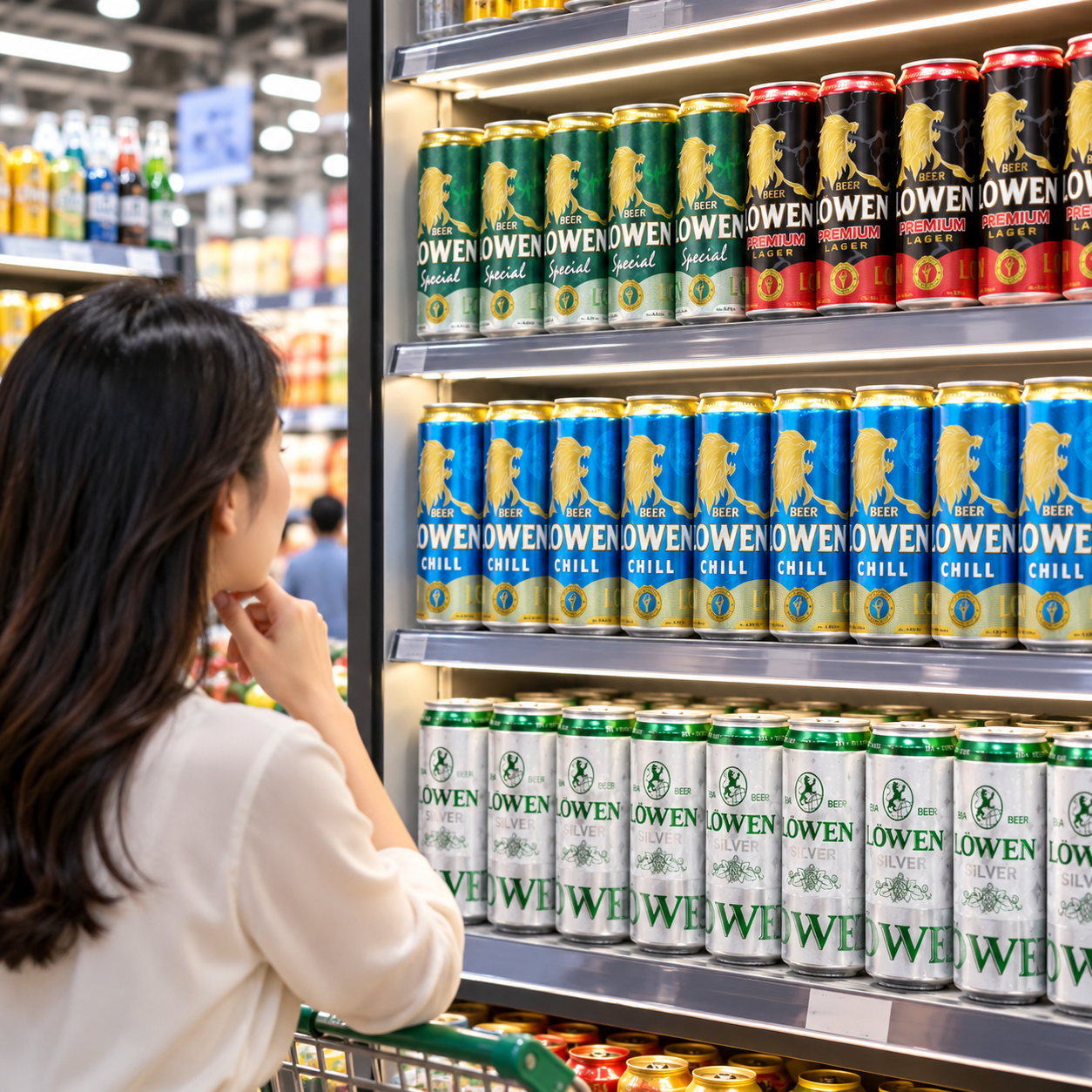
In actual retail environments, customers do not always pick up each product to read all the information. They may look at a row of products on a shelf, inside a refrigerator, or from a certain distance before deciding which product deserves their attention.
Therefore, packaging needs to have a sufficiently clear primary identifying element.
This could be the brand name, logo, color system, or a consistently used graphic element. At a glance, customers should be able to distinguish the product from the surrounding options.
This does not mean that packaging must use overly bold colors or highly complex designs to stand out. In an area filled with colorful products, a simple design with a clear structure can sometimes create a stronger distinction.
White space also plays a significant role in design. When every area of the packaging is filled with text, images, and messages, viewers may find it difficult to identify the most important information.
A good design needs to establish a clear visual hierarchy. Consumers should be able to recognize the brand first, followed by the product line, and then explore more detailed information.
For a new brand, this capability is particularly important because consumers do not yet have an established memory of the product. The packaging must introduce the brand within the first few seconds.
If businesses are developing an OEM product and need to discuss packaging specifications before finalizing the design, SMB is ready to receive inquiries via Email: Oem@biasaigonmt.com.
3/ Colors Must Create Differentiation While Maintaining Consistency
Color is one of the elements consumers can recognize most quickly on packaging.
However, choosing colors for a beer brand should not be based solely on standing out. Colors need to align with the brand’s positioning and have the potential to become part of its long-term visual identity system.
A brand that uses too many primary colors or continuously changes its style across products may struggle to build brand recognition. When looking at a retail display, customers may find it difficult to recognize that the products belong to the same brand.
Conversely, with a clear color system, businesses can develop multiple product lines while maintaining a visual connection between them.
For example, a brand can retain certain fixed identity elements while using secondary colors to distinguish different beer lines or product versions. This allows customers to recognize the brand while easily differentiating between options within its product portfolio.
Businesses should also evaluate colors in actual retail environments, rather than viewing designs only on a computer screen.
Store lighting, material surfaces, printing processes, and placement alongside other brands can all change how colors are perceived.
Therefore, evaluating physical samples before large-scale production can help businesses identify areas that need adjustment.
Packaging that stands out does not necessarily use the boldest colors. More importantly, consumers should be able to remember and recognize it during subsequent encounters.
To discuss product requirements and packaging specifications for an OEM beer manufacturing project, businesses can contact SMB via Email: Oem@biasaigonmt.com.
4/ Packaging Information Needs to Be Clear and Properly Prioritized
Packaging serves both as a brand identification tool and as a source of information for consumers. Therefore, businesses need to balance aesthetic appeal with readability.
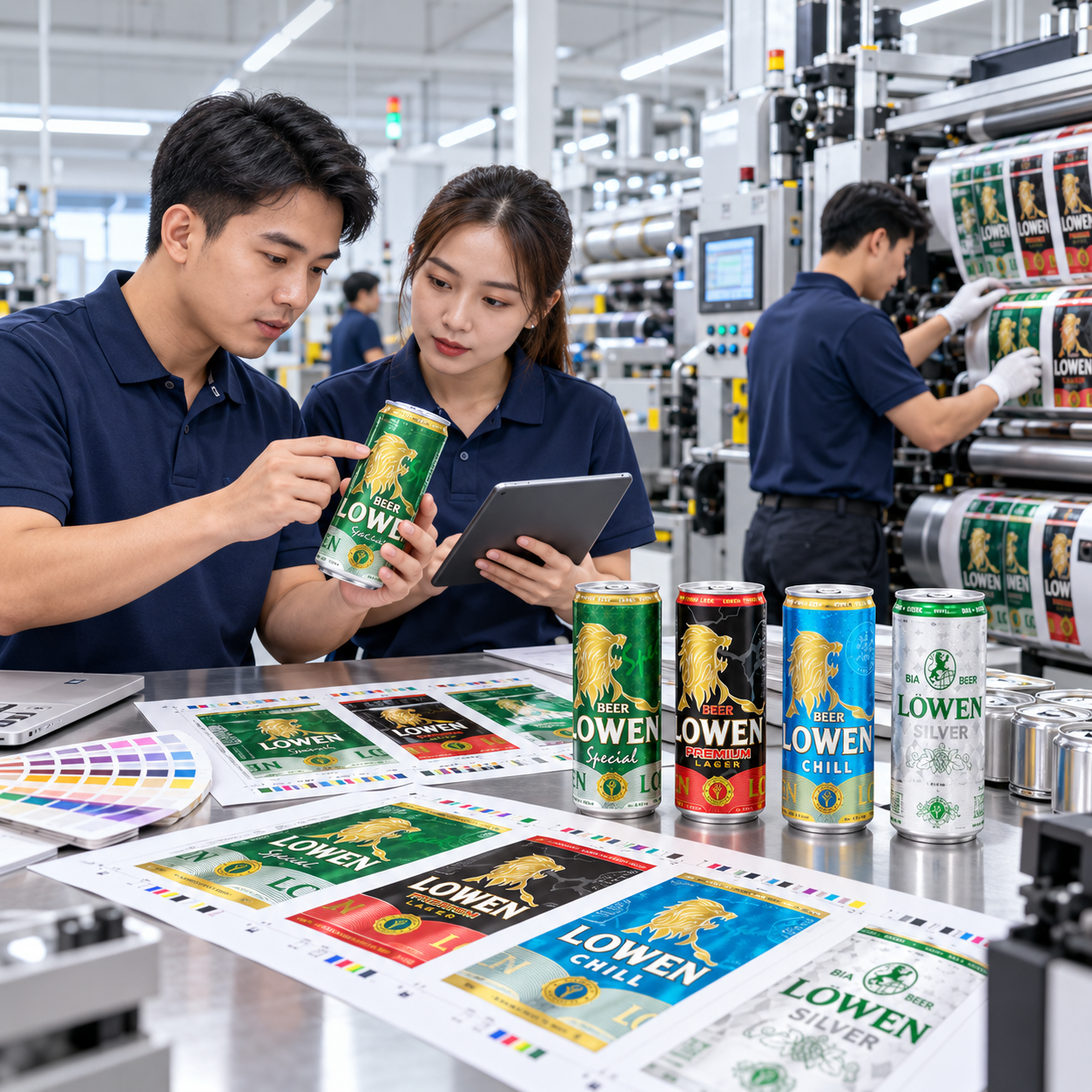
One useful question when evaluating a design is: If customers spend only a few seconds looking at the product, what will they read first?
Generally, the brand name and the product name or its main characteristics need to be positioned clearly enough to be noticed. Other information should be organized according to priority rather than competing for attention.
This is particularly important for new brands that are not yet familiar to consumers.
If the brand name is too small while most of the packaging space is devoted to illustrations, the product may attract attention, but customers may not remember the brand. When they encounter the product again at another point of sale, their ability to recognize it will be limited.
In addition to content used for brand recognition and communication, businesses also need to pay attention to the information required on the packaging under the applicable requirements for the product.
Therefore, businesses should not finalize packaging designs based solely on artistic considerations and then address the necessary information at the final stage. Content and technical requirements should be considered from the beginning to ensure the layout provides sufficient appropriate space.
This also demonstrates that designing packaging for a commercial product differs from designing an advertising image. Packaging must simultaneously meet requirements for brand recognition, information communication, and production feasibility.
Businesses that have packaging ideas but have not yet determined a production implementation plan can send their requirements to Oem@biasaigonmt.com to discuss them with SMB’s OEM department.
5/ Packaging Must Be Designed for the Right Retail Environment
A packaging design may look highly impressive in a design mockup but may not achieve the same effectiveness when displayed at the point of sale.
This is why businesses should consider the design within its actual usage environment.
If the product is primarily sold in refrigerators at retail stores, the brand needs to consider which parts of the packaging are typically visible to customers. If the product is sold by the carton through distributors, carton design also becomes an important part of the brand identity system.
In restaurants or eateries, the environment in which consumers encounter the product is different. Consumers may see the product on tables, in menus, or in display areas. In such cases, the way the brand is presented needs to align with the experience of that distribution channel.
Businesses should therefore identify their primary distribution channels before finalizing packaging.
If a business attempts to design a product that accommodates every situation without identifying a priority environment, the result may not truly stand out in any particular channel.
In addition, packaging should be evaluated as a complete system rather than focusing solely on individual cans or bottles. When multiple products are placed next to one another on a shelf, do they create a clearly recognizable visual presence? When arranged in cartons, is the brand still easy to identify?
These questions help businesses move from the mindset of “designing an attractive beer can” toward building a brand identity system at the point of sale.
SMB respectfully invites businesses developing their own beer brands to discuss product requirements, packaging specifications, and contract manufacturing plans via Email: Oem@biasaigonmt.com.
6/ Distinctive Design Must Still Be Compatible with Production Capabilities and Budget
A packaging concept only has genuine commercial value when it can be implemented at an appropriate production scale.
Businesses may want to use special materials, distinctive printing methods, or develop custom packaging specifications to create a unique identity. However, each choice can affect costs, minimum order quantities, and project timelines.
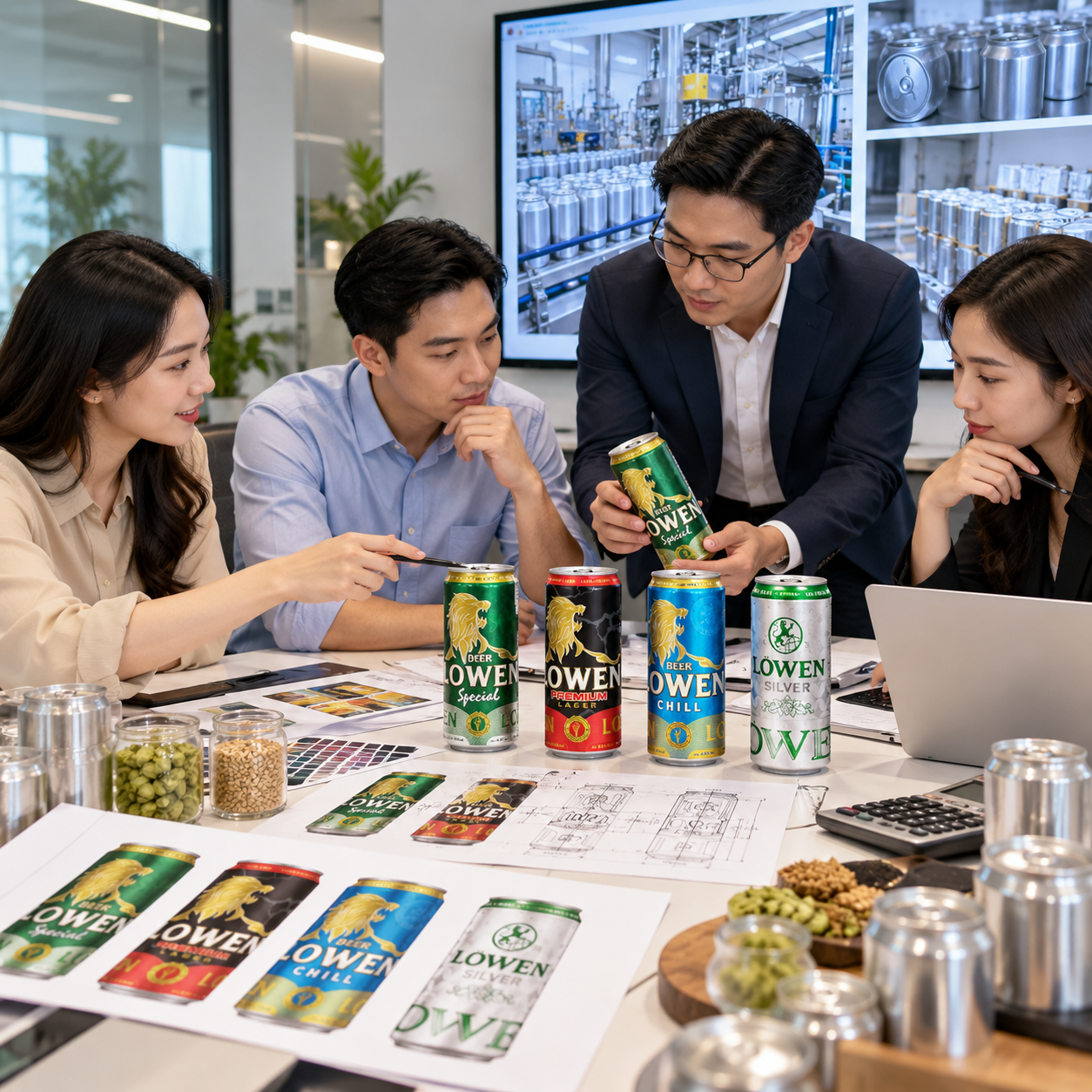
This is where packaging design and OEM planning need to be connected from the outset.
If the design team completes the entire brand identity before the business discusses the project with the manufacturer, certain details may need to be adjusted when moving into actual implementation. This results in additional time and costs.
A more appropriate approach is to determine the basic product parameters and packaging specifications first, then develop the design based on that foundation.
Especially for new brands, businesses need to balance the level of customization with their budget.
An overly complex packaging solution may create a strong visual impact, but if it significantly increases production costs or minimum order quantities (MOQ), the financial pressure associated with the first production batch will also increase.
Meanwhile, an intelligently developed design system can create differentiation even with packaging specifications that are compatible with production conditions.
Differentiation, therefore, does not necessarily have to come from using the most expensive solution. It can result from how businesses consistently combine brand names, colors, typography, layouts, and product stories.
If businesses want to evaluate the feasibility of a packaging solution before putting it into production, they can contact SMB’s OEM department via Email: Oem@biasaigonmt.com for consultation based on their project requirements.
Packaging Needs to Help Customers Recognize the Brand Before Persuading Them to Buy
At the point of sale, a beer brand has only a relatively short period to attract consumers’ attention. Packaging should therefore not be viewed merely as the product’s outer covering but should be developed as an important touchpoint between the brand and its customers.
Packaging that creates differentiation generally does not depend on a single factor.
Positioning needs to be clear to define the style. The brand identity system must be strong enough for the product to be recognized. Colors should create a distinctive impression while remaining consistent. Information needs to be prioritized so customers can easily understand it. The design must suit the retail environment, and ultimately, all these elements need to be translated into an actual product within the business’s budget.
For new beer brands, businesses should also avoid pursuing differentiation at any cost.
An overly unconventional design that leaves customers uncertain about what the product is or which market segment it belongs to may not necessarily provide an advantage. Conversely, if the packaging looks too similar to existing products on the market, the brand may struggle to establish its own distinctive identity in consumers’ minds.
A more appropriate objective is to create purposeful differentiation: distinctive enough to attract attention, clear enough for customers to understand, and consistent enough to be remembered after repeated exposure.
When packaging is developed alongside the product, distribution plan, and production capabilities, businesses will have a stronger foundation for building their brand image from the very first points of sale.
Contact Information
To learn more about the company and receive consultation on OEM beer manufacturing services, please contact Sai Gon – Mien Trung Beer Joint Stock Company (SMB) through its official contact channels.
Company: Sai Gon – Mien Trung Beer Joint Stock Company (SMB)
Head Office Address: 01 Nguyen Van Linh, Tan An Ward, Dak Lak Province
OEM Consultation Hotline: (+84) 94 1127575
Dedicated Email: Oem@biasaigonmt.com
Official Website: https://oem.biasaigonmt.com/