

Consumers may accept a new brand if the product delivers a good experience from the first trial. However, they only truly become loyal customers when every purchase consistently delivers the quality they expect. Therefore, consistency in flavor, color, aroma, foam, and drinking experience becomes an important foundation for building a sustainable beer brand.
To achieve this, the experience of the production team alone is not enough. As the beer industry becomes increasingly modern, technology has become a core factor in ensuring quality is controlled accurately, consistently, and repeatably at large scale.
For businesses developing a private-label beer brand (Private Label), choosing an OEM partner with a modern technology system not only helps create products that meet standards but also protects brand reputation in the long term.
Consistent Quality Is the Factor That Builds Customer Trust
A beer brand may invest heavily in marketing, build an extensive distribution network, or have impressive packaging design. However, if quality varies between production batches, all efforts to build the brand can be affected.
Just one batch of beer with a different flavor, inaccurate alcohol content, or inconsistent quality can cause consumers to question the reliability of the brand.
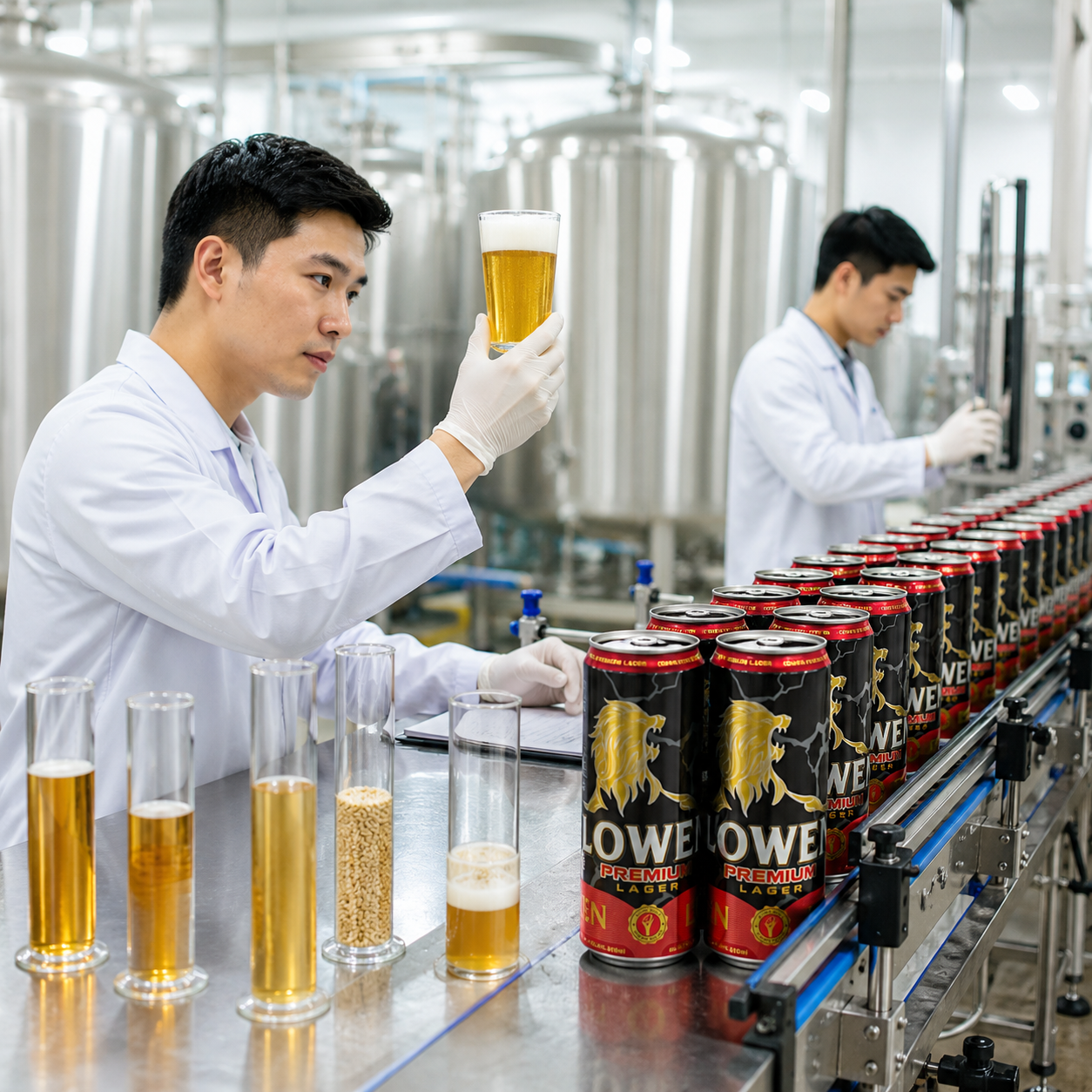
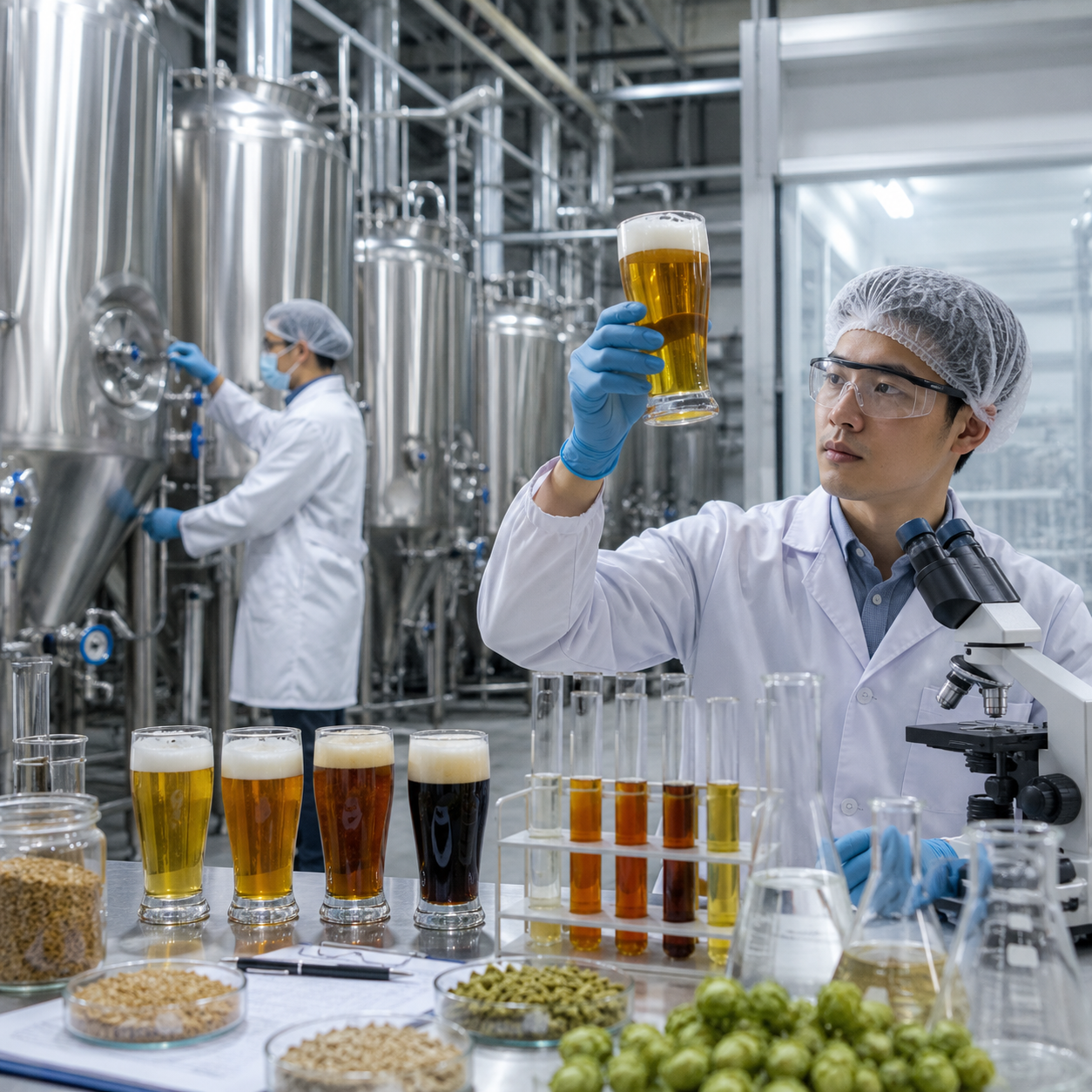
This is why modern breweries no longer conduct quality inspections only at the final stage but instead establish a control system throughout the entire production process.
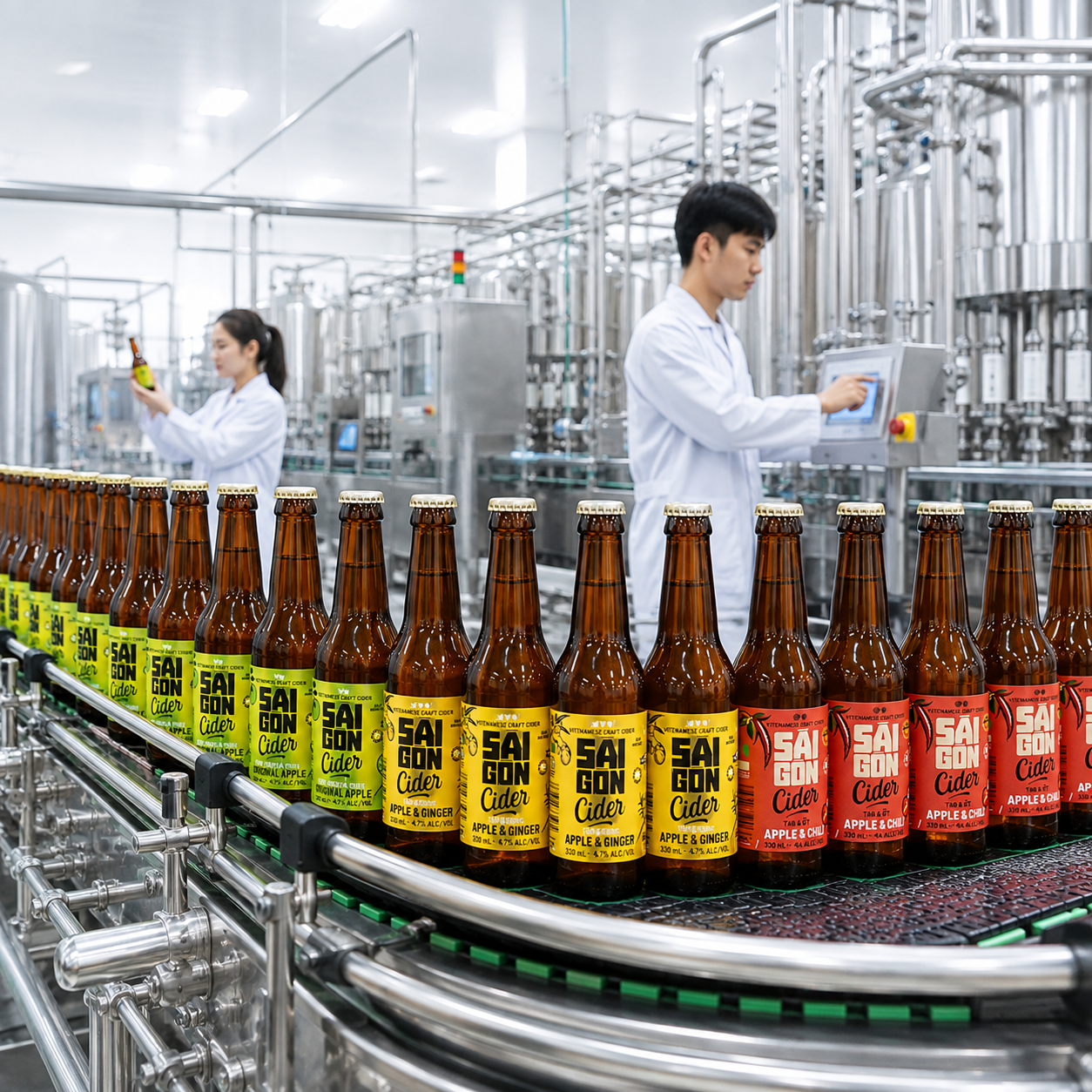
From incoming raw materials, blending, fermentation, beer filtration, filling, to finished-product packaging, all stages are monitored through technical parameters and automated monitoring systems to minimize errors.
Technology Helps Reduce Dependence on Human Factors
In the past, many stages of beer production depended significantly on the experience of technicians. Temperature control, fermentation time, and blending ratios were primarily monitored manually, resulting in a higher risk of variation between production batches.
Today, automation systems have transformed the way breweries operate.
Key parameters are continuously monitored through sensors and control software. When there are signs of exceeding permitted limits, the system issues alerts so technicians can make timely adjustments before product quality is affected.
As a result, the role of people shifts from direct operation to monitoring, data analysis, and process optimization, helping improve accuracy and minimize risks arising during production.
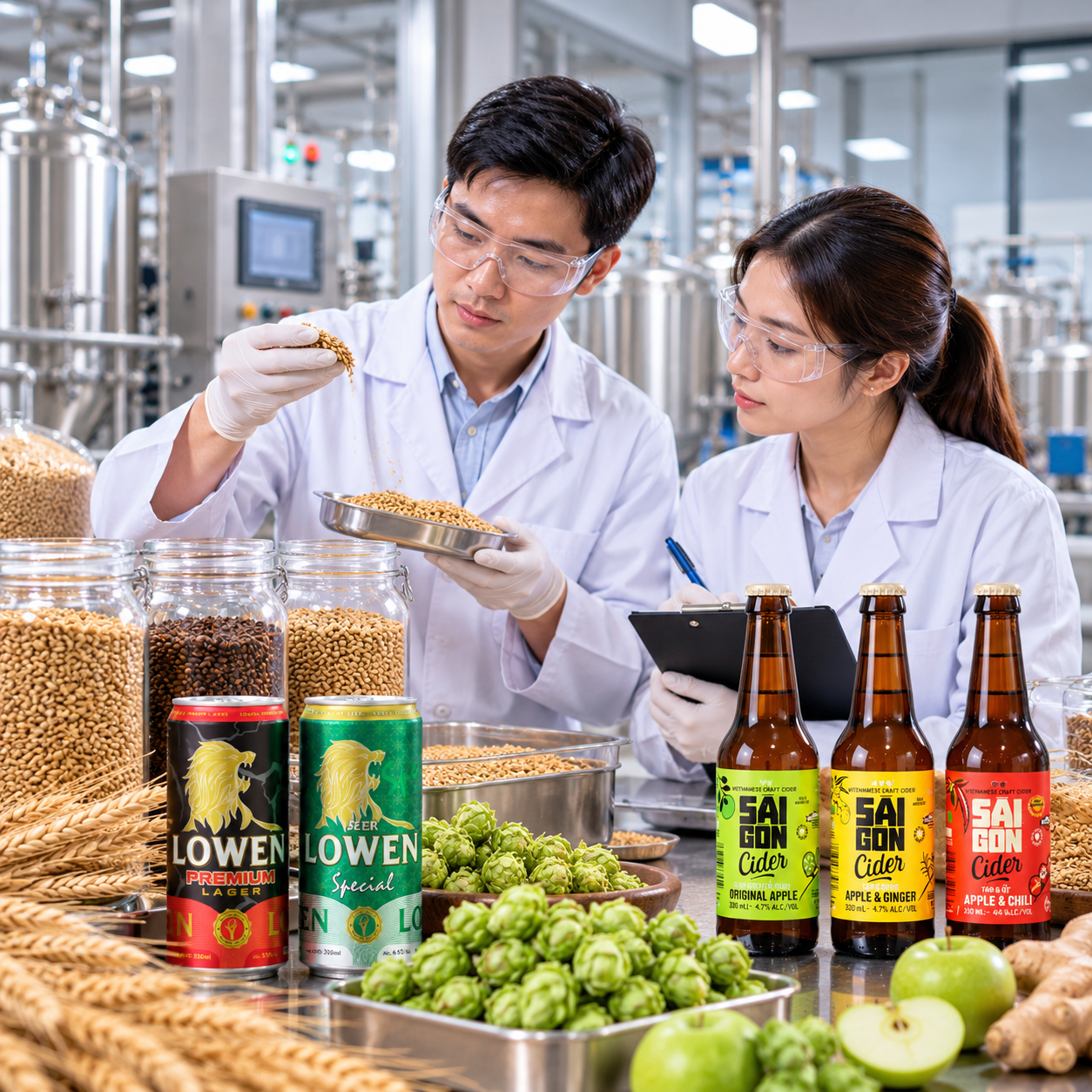
Controlling Raw Materials From the Beginning
Beer quality always starts with the quality of raw materials.

No matter how modern the production line is, if malt, hops, yeast, or the water supply do not meet standards, the finished product will also struggle to meet market expectations.
Therefore, modern breweries all establish strict raw material incoming inspection procedures before materials are introduced into production.
Each batch of raw materials is evaluated according to technical criteria, helping ensure consistency between different deliveries and creating a foundation for maintaining consistent quality of the final product.
QA and QC systems help ensure comprehensive quality control
In modern beer production, quality is not only evaluated after the product has been completed.
Businesses are increasingly focusing on combining QA (Quality Assurance) – a quality assurance system throughout the entire process – and QC (Quality Control) – quality inspection activities at each stage.
QA focuses on establishing standardized production procedures and minimizing the risk of defects from the outset. Meanwhile, QC continuously samples and checks technical specifications throughout the production process to detect and address deviations in a timely manner.
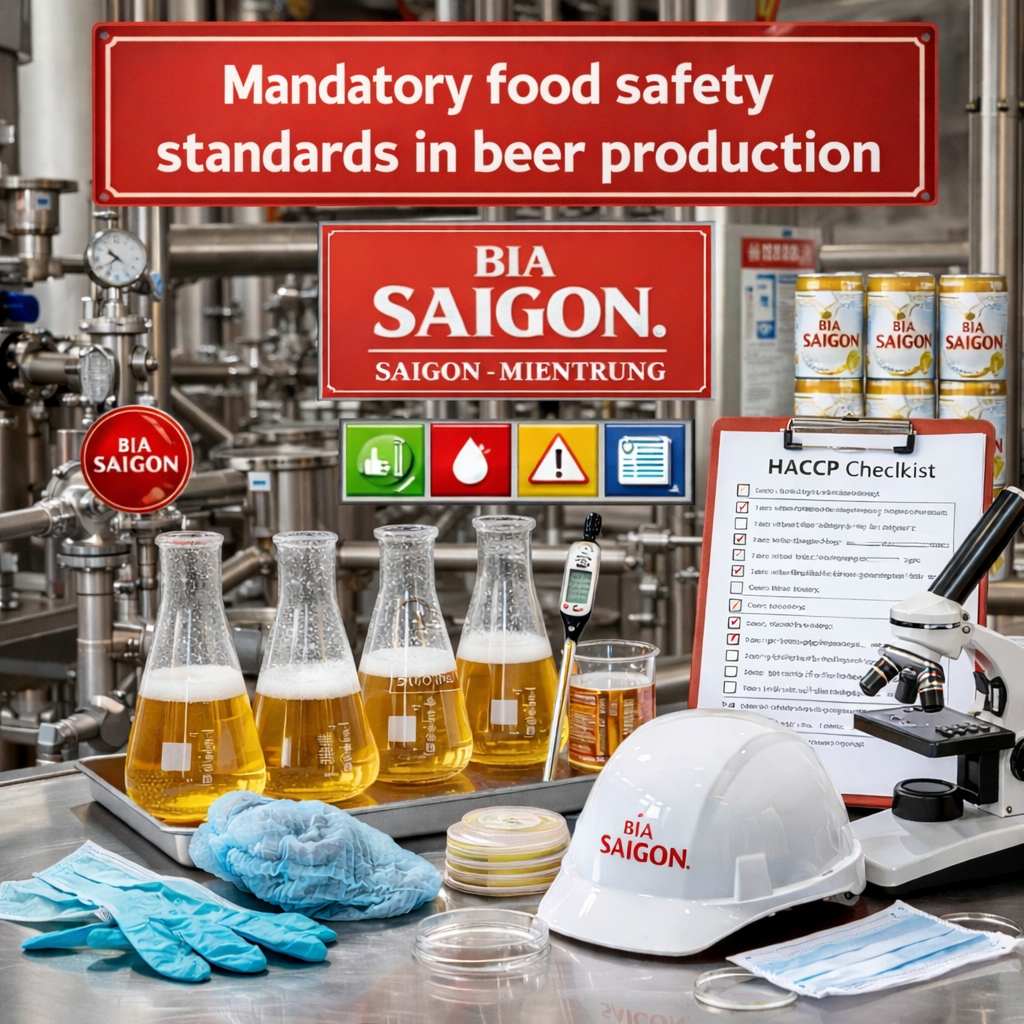
The combination of these two systems helps reduce the rate of products that fail to meet standards, while ensuring that every beer batch leaving the factory meets requirements for quality and food safety.
For businesses developing their own Private Label beer brand, choosing an OEM partner with a well-established QA and QC system will contribute to maintaining brand reputation, especially when production volume increases or the business expands its scale.
Production data becomes a tool for continuous improvement
One of the major changes in the modern beer industry is that all production parameters are stored and analyzed.
Instead of only dealing with issues when quality problems arise, businesses can monitor the operating trends of the production line, evaluate the efficiency of each stage, and make adjustments to optimize the process.
Data-driven management enhances traceability, supports quality control between production batches, and creates conditions for improving products based on actual market feedback.
This is also an important foundation for beer brands to develop sustainably in a context where requirements for transparency and food safety are becoming increasingly stringent.
Technology helps shorten the development time of new products
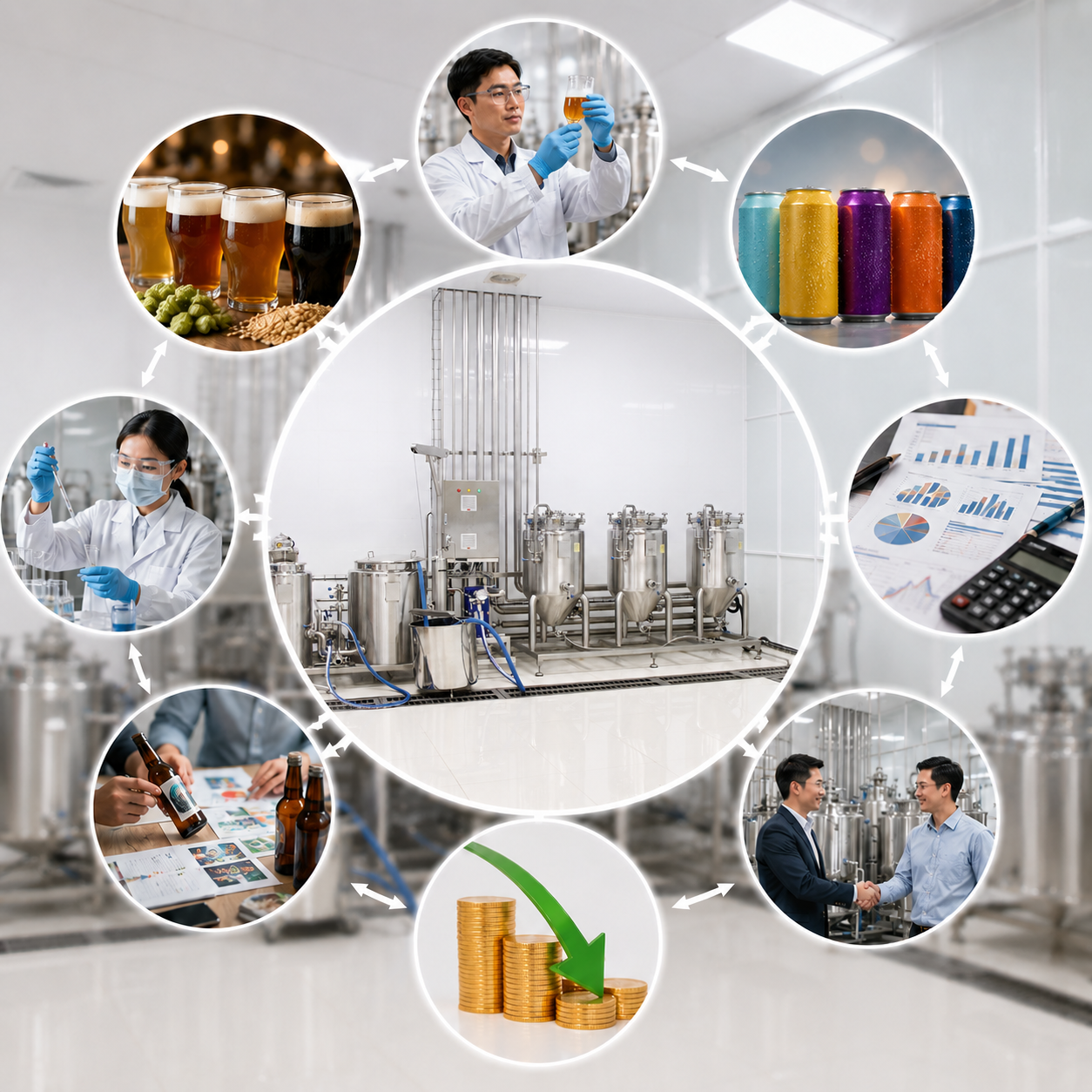
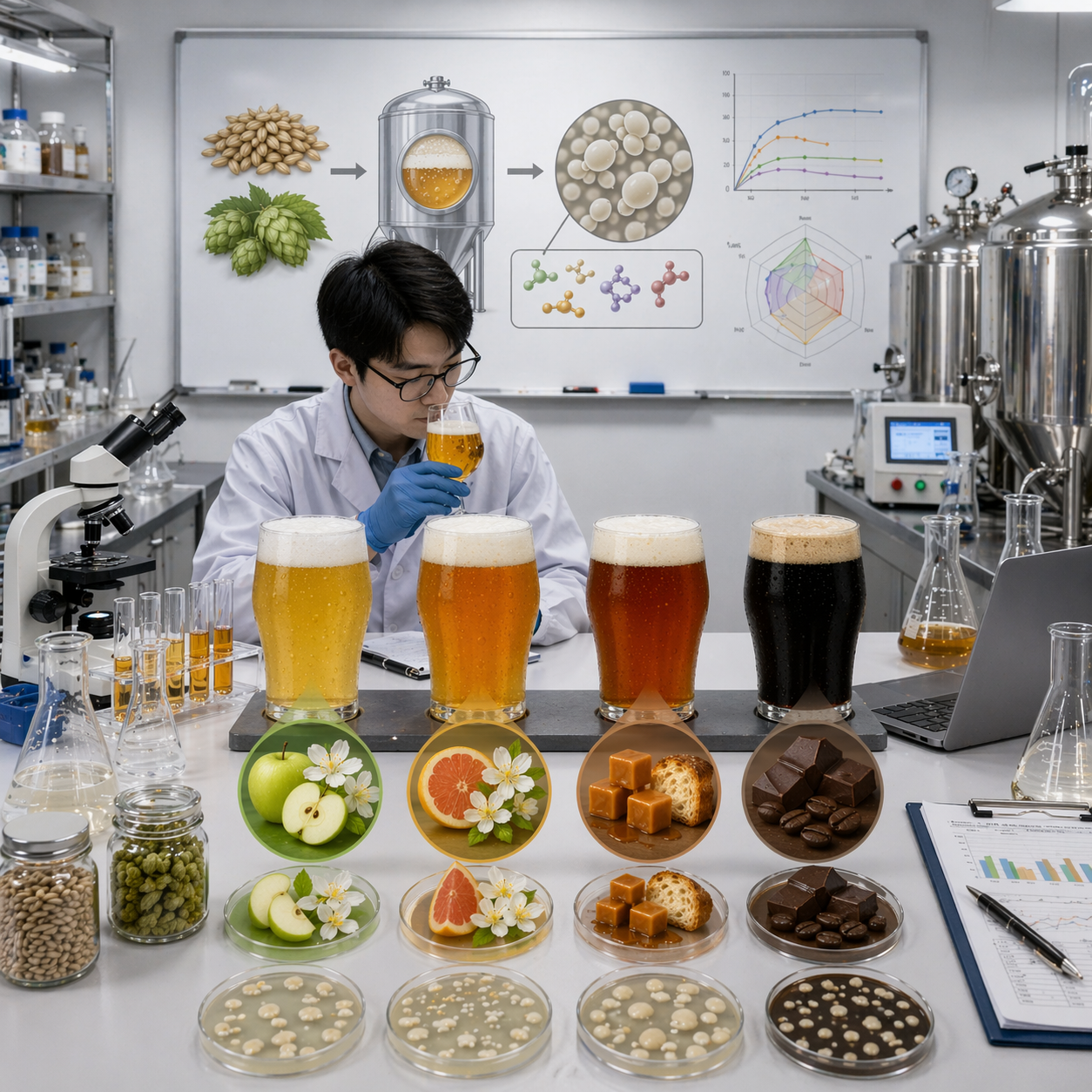
Technology not only serves production but also plays an important role in R&D (Research & Development) activities.
Through modern analytical equipment and testing systems, businesses can evaluate different beer formulations within a short period of time, thereby selecting the most suitable option before large-scale production.
This significantly reduces testing costs while also shortening Time-to-market – the period from when an idea is formed to when the product officially appears on the market.
For Private Label beer brands, the ability to develop products quickly while still ensuring consistent quality will create a significant competitive advantage, especially during peak seasons.
Technology is the foundation for expanding production scale
Many businesses can successfully produce on a small scale but face difficulties when market demand increases.

As production volume expands, even a small deviation in the process can affect tens of thousands of products.
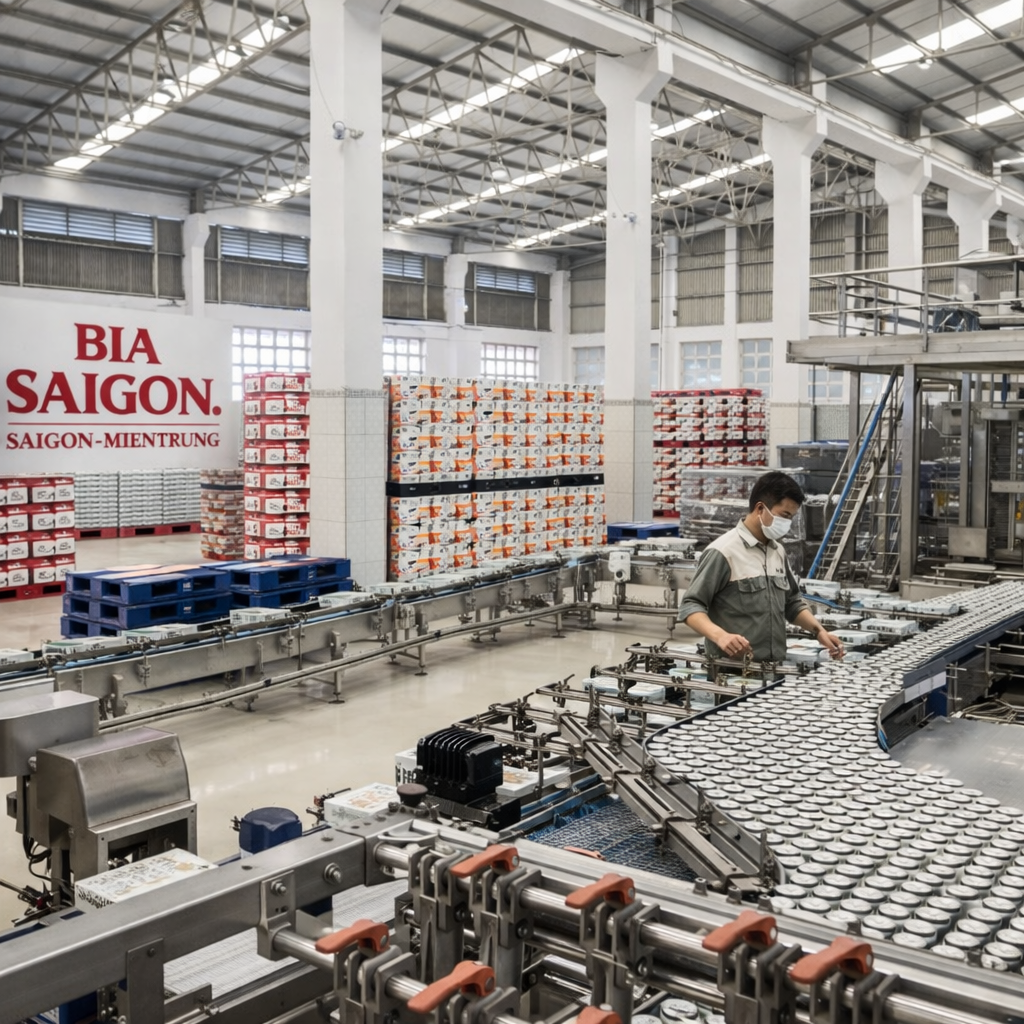
Modern production lines with automated control systems help maintain consistency even as production scale increases several times over.
This is particularly important for businesses developing their own Private Label beer brand, because customers always expect the quality of the product on their hundredth purchase to be the same as on their first purchase.
If your business is planning to expand its Private Label beer brand, partnering with an OEM brewery with modern technological capabilities will help ensure consistent product quality even when production scale increases rapidly.
SMB – Investing in technology to support Private Label beer brands
At Sai Gon – Mien Trung Beer Joint Stock Company (SMB), technology is considered one of the important foundations for delivering high-quality OEM beer services.
Modern production line systems are combined with comprehensive QA and QC processes, an experienced R&D team, and a strict quality management system to ensure that every product batch meets standards for flavor, color, alcohol content, and food safety.
Not only supporting production, SMB also accompanies businesses throughout the process of developing formulations, optimizing processes, finalizing packaging, and controlling quality before products are launched onto the market.
As a result, businesses can focus on developing their brand, distribution system, and business strategy while remaining confident in product quality.
In the beer industry, consistent quality is not the result of luck but the outcome of a modern production system, strict management processes, and the ability to control operations through technology.
For businesses building their own Private Label beer brand, investing in technology through a capable OEM partner will help reduce risks, improve production efficiency, and protect brand reputation in the long term.
As consumers increasingly have higher expectations for quality, technology is no longer an exclusive advantage of large breweries but has become a necessary condition for building a sustainable beer brand capable of competing in the market.
Contact information
- Company: Sai Gon – Mien Trung Beer Joint Stock Company (SMB)
- Address: 01 Nguyễn Văn Linh, Phường Tân An, TP. Buôn Ma Thuột, Tỉnh Đắk Lắk
- OEM Consulting Hotline: (+84) 94 1127575
- Email: Oem@biasaigonmt.com
- Website: https://oem.biasaigonmt.com