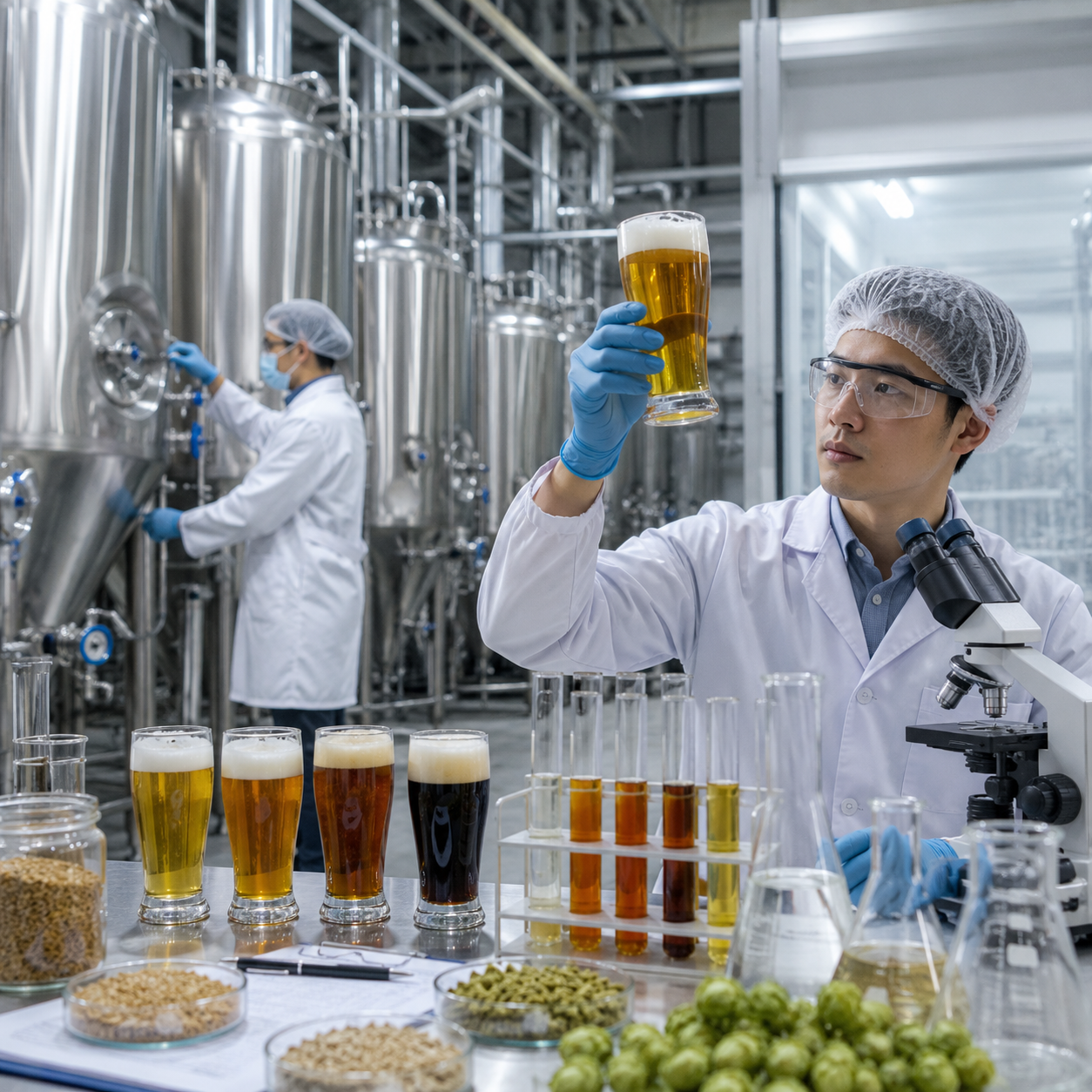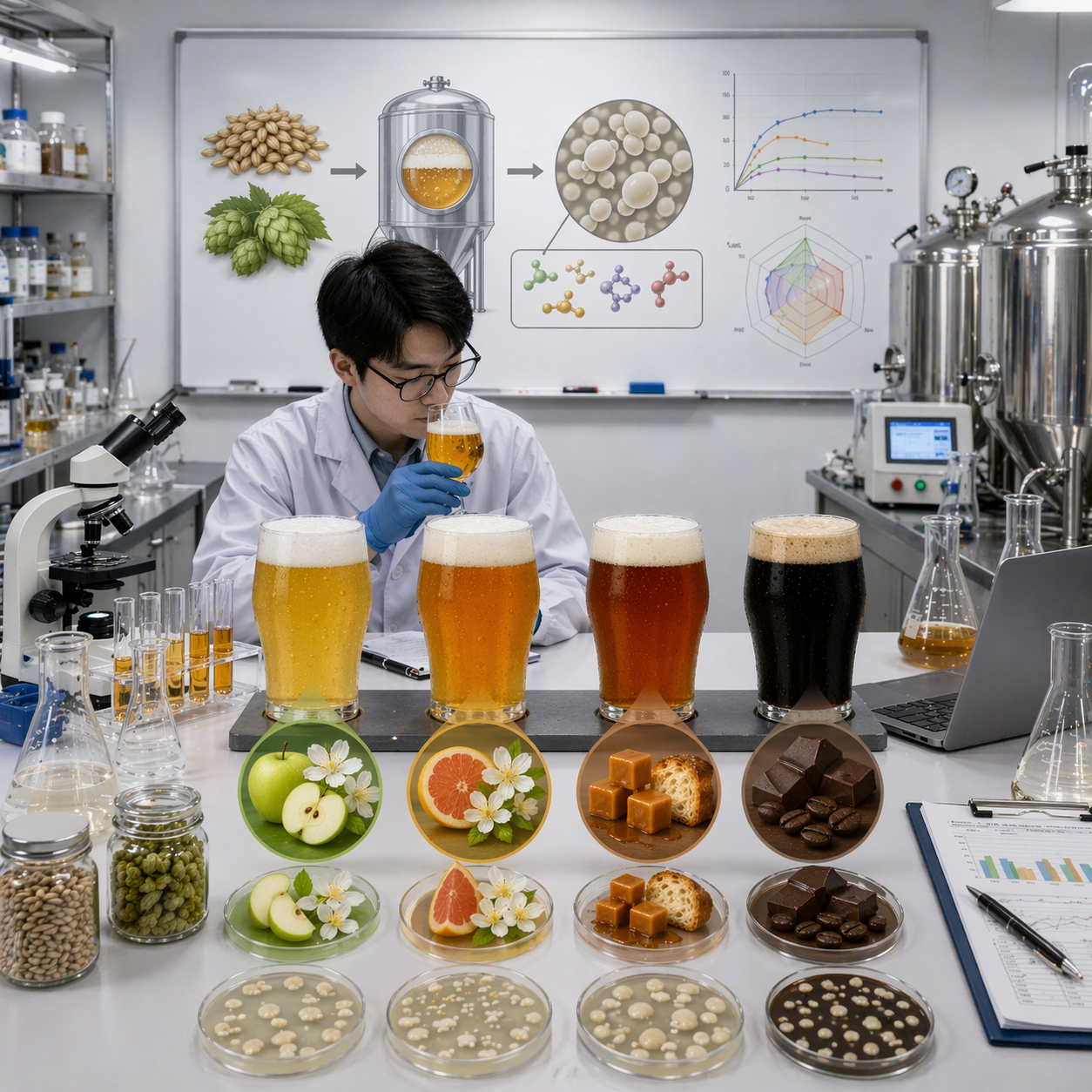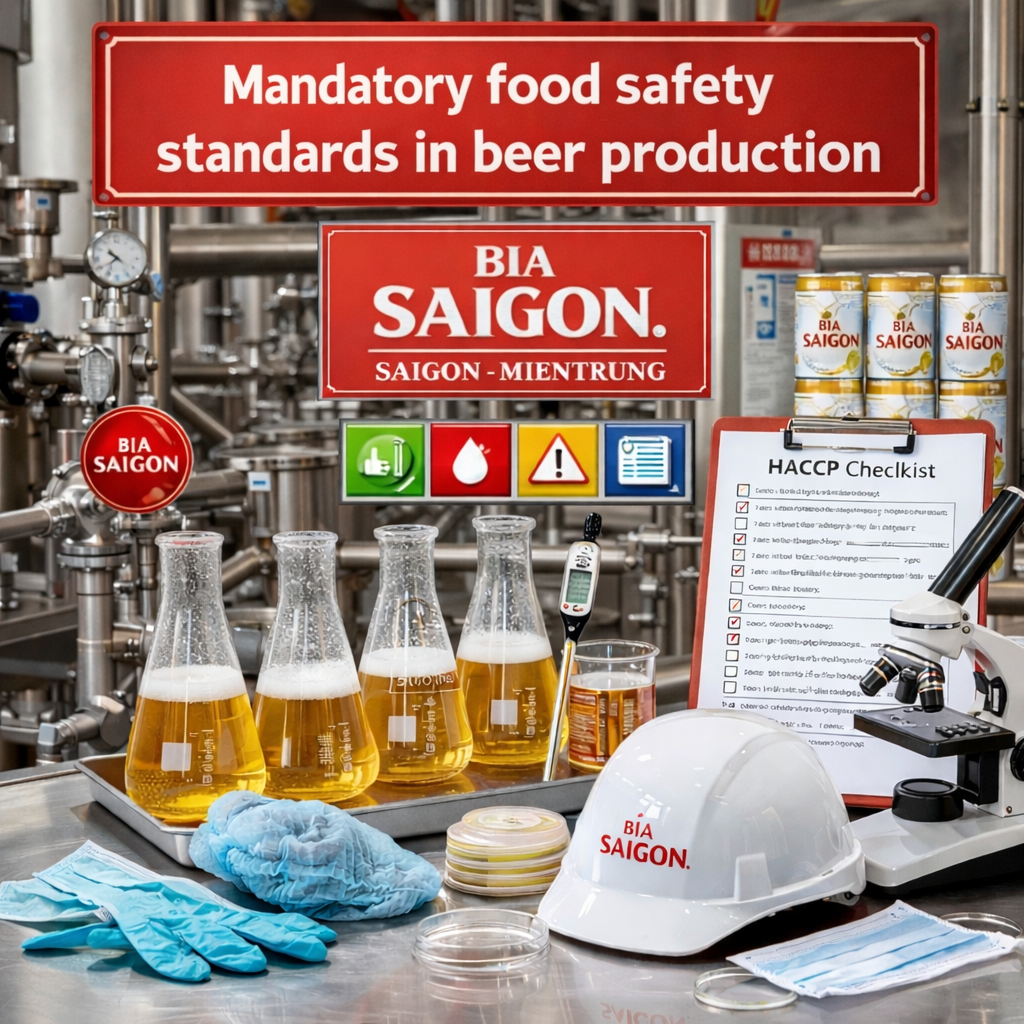


To produce a beer product with consistent quality, production technology and modern equipment are important factors, but they are not the whole story. Beer quality begins to take shape even before the production process starts, specifically at the stage of selecting and controlling incoming raw materials.
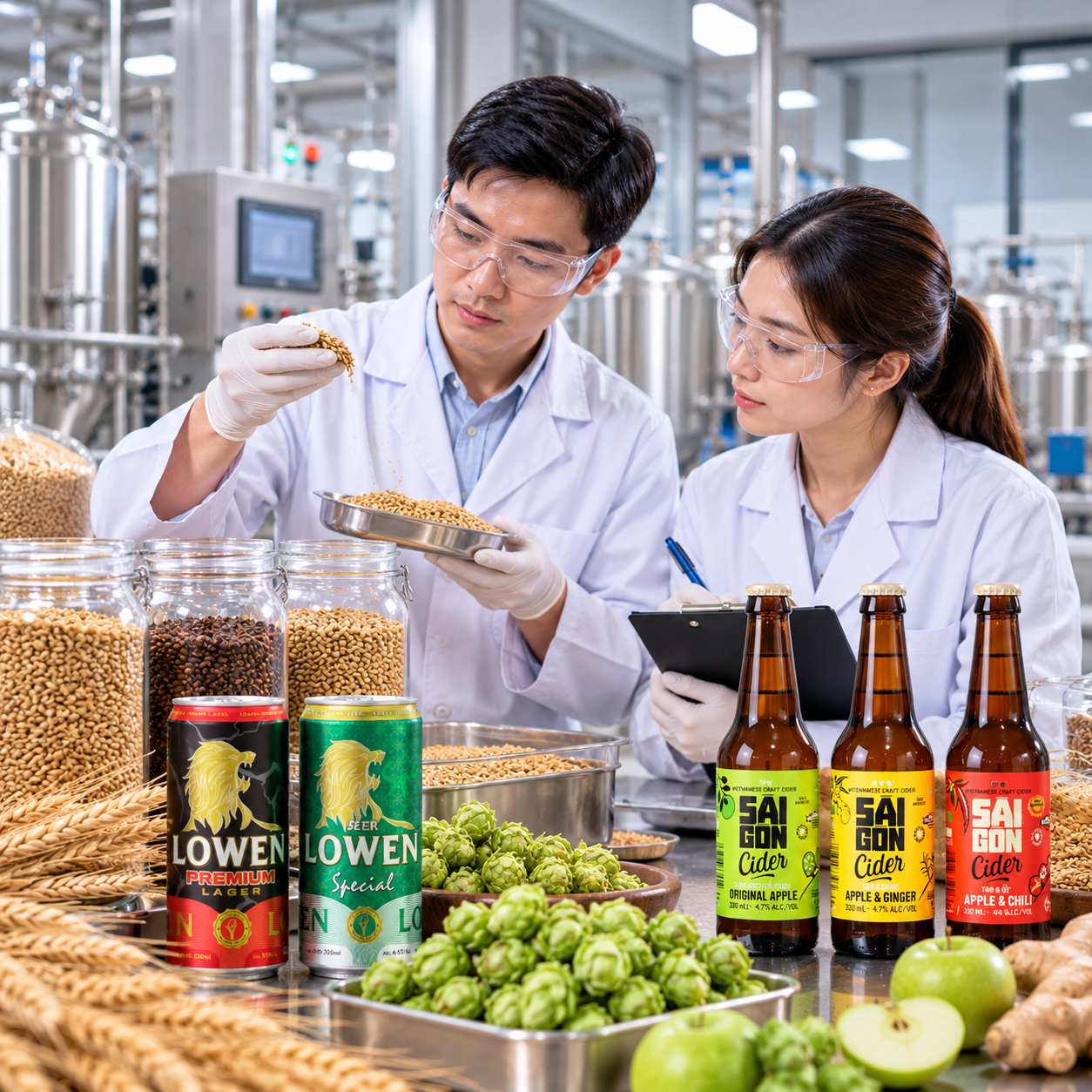
Water, malt, hops, yeast, and other ingredients suitable for each recipe all have their own characteristics. Changes in raw materials can affect the color, aroma, taste, stability, and overall experience of the product.
For businesses developing their own beer brands through OEM contract manufacturing, this issue deserves even greater attention. When production is carried out by a manufacturing partner, businesses not only need to understand how the final product meets quality requirements but should also pay attention to the control systems behind the product.
An appropriate raw material management process helps reduce variations before materials enter production, thereby contributing to consistency between beer batches. So, how do incoming raw materials affect beer quality, and why is this an important criterion to consider when selecting an OEM partner?
Beer Quality Begins with Raw Materials Before Production Starts
When consuming beer, consumers often evaluate the product based on factors such as aroma, color, drinking experience, and aftertaste. Behind these characteristics is the combination of the recipe, technological processes, and the quality of the raw materials used in production.
Therefore, a well-developed recipe alone is not enough to ensure that every production batch delivers the same experience.
If raw material characteristics change beyond the desired range, the production process may face more variables. This is why quality control should not begin only at the finished product stage.
In beer production, incoming raw materials should be regarded as the first control point in the quality chain.
This is particularly important for commercial products distributed in the market. Consumers may purchase a product for the first time at one store and buy it again several months later at another location. They generally expect the familiar flavor and experience to remain consistent.
If production batches differ too significantly, the brand will face difficulties in building consumer trust and purchasing habits.
Therefore, raw material control is not merely a technical activity within the brewery. For businesses that own the brand, it is also part of protecting product consistency in the market.
Businesses planning to develop beer under their own brands can contact SMB’s OEM department via Email: Oem@biasaigonmt.com for consultation on product requirements and suitable contract manufacturing options.
Each Group of Raw Materials Affects Beer Characteristics
A beer product is made from multiple components, and each group of raw materials plays a specific role in shaping its final characteristics.

Water accounts for a large proportion of beer. The characteristics of the water used in production are therefore directly related to the technological process as well as the perception of the product. Water treatment and control need to be carried out in accordance with production requirements.
Malt plays an important role in forming the foundation of beer, from its color to characteristics related to flavor and the wort production process. Consistent malt quality helps provide a more uniform basis for production across batches.
Hops contribute to characteristics related to bitterness and aroma, depending on the recipe. Differences in varieties, raw material characteristics, storage conditions, or storage duration can all affect their effectiveness in production.
Brewer’s yeast is also a particularly important factor because it directly participates in the fermentation process. Proper yeast management has a significant influence on the development of product characteristics.
These factors demonstrate that beer quality cannot be controlled solely through adjustments at the end of the production line.
Once an unsuitable raw material has entered the production process, addressing the resulting effects can become much more complicated than identifying the issue at the outset.
Therefore, incoming raw material control is essentially a way to prevent quality risks before they progress further into the production process.
If businesses need to discuss product direction before implementing OEM beer manufacturing, SMB is ready to receive inquiries via Email: Oem@biasaigonmt.com.
Incoming Raw Material Control Helps Maintain Consistency Between Beer Batches
For a commercial product, achieving good quality in a single batch is not enough. What matters is that businesses aim to maintain consistent quality across multiple production runs.
This is precisely where the incoming raw material control process plays its role.
Agricultural raw materials may experience certain variations due to supply sources, seasons, and storage conditions. Without appropriate acceptance and control criteria, these variations may enter the production line and affect the finished product.
A raw material control system helps manufacturers determine whether received materials meet established requirements before they are used.
From a brand perspective, this contributes to addressing a very important issue: consistency in the customer experience.
Imagine a customer choosing a product because they enjoyed its flavor during their first experience. If the experience changes significantly when they purchase it again, the likelihood of developing brand loyalty may be affected.
For a new brand, this issue deserves even greater attention because the business is still in the process of building trust in the market.
Therefore, raw material control is not simply about determining whether a material is “good” or “bad.” The more important objective is to determine whether the material meets the standards and recipe requirements of the specific product.
This suitability and consistency form one of the foundations for maintaining product characteristics across multiple production batches.
Businesses looking for a beer manufacturing partner and interested in maintaining consistent product quality can contact SMB via Email: Oem@biasaigonmt.com to discuss their projects.
Control Does Not End When Raw Materials Enter the Warehouse
A common misconception is that raw materials only need to be inspected when they arrive at the brewery. In reality, raw material management also involves subsequent storage and usage processes.
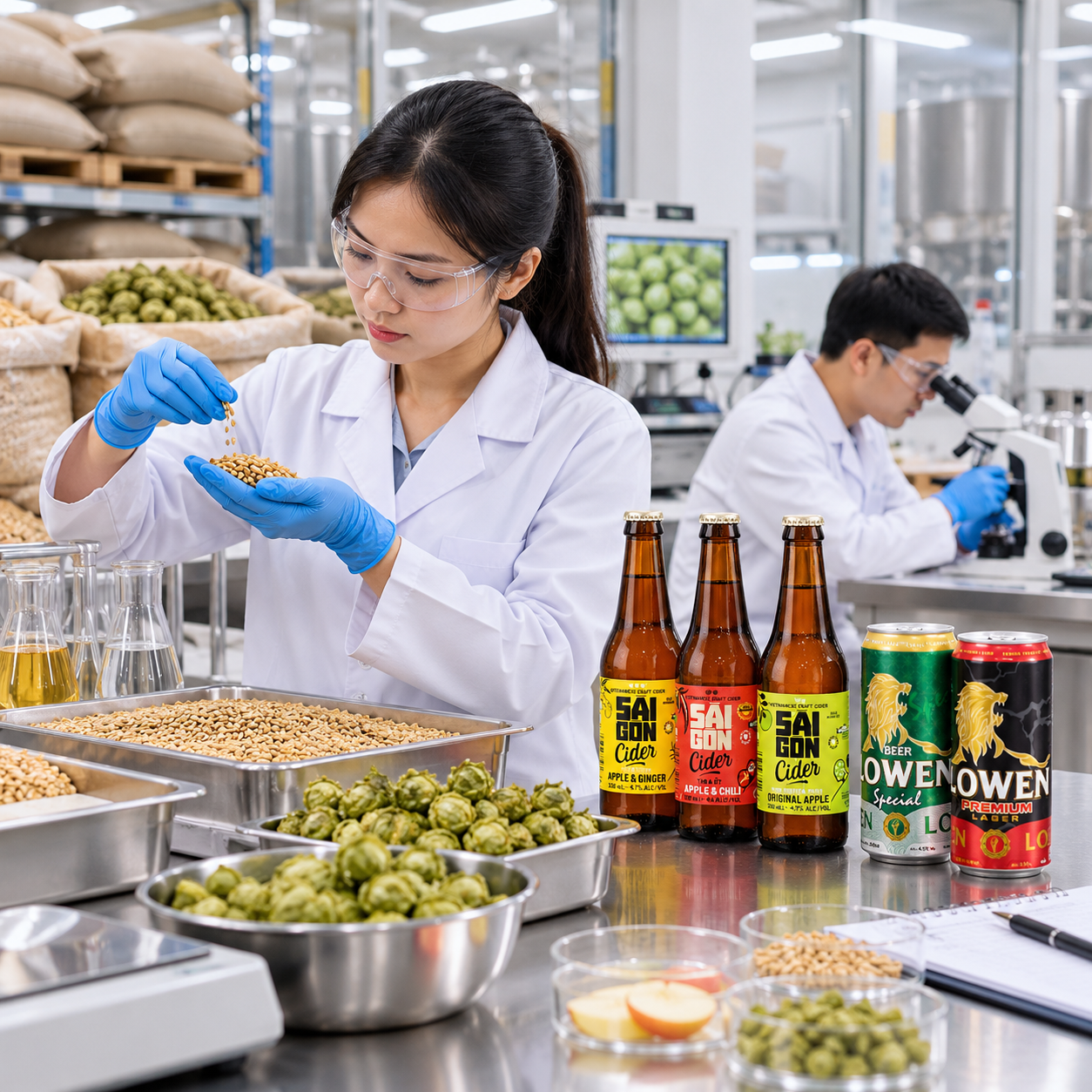
Each group of raw materials has its own characteristics and requires appropriate storage conditions.
Storage duration, temperature, humidity, and related environmental factors can affect the characteristics of raw materials. Therefore, materials that meet requirements at the time of receipt still need to be properly managed throughout the period before they are used in production.
Traceability also plays a significant role in the management system.
When raw materials are managed by batch and accompanied by clear information, manufacturers have a stronger basis for tracking which materials were used in each production run. If an issue arises that requires evaluation, this data supports the process of identifying its causes and the extent of its impact.
For businesses using OEM contract manufacturing services, this is a factor worth considering when evaluating a partner’s capabilities.
A brewery needs not only production capabilities but also an appropriate management system for the inputs involved in the production process.
More broadly, managing raw materials from receipt to use is part of a comprehensive quality control system, rather than an independent inspection step.
To learn about options for developing and producing beer under their own brands, businesses can send their requirements to Oem@biasaigonmt.com for consultation with SMB’s OEM department.
Raw Material Control Also Affects Production Efficiency and Costs
Raw material control is often viewed from a quality perspective, but in reality, it is also connected to operational efficiency and project costs.
When raw material characteristics remain consistent, the production process has more favorable conditions for operating according to established parameters. Conversely, if inputs vary significantly, manufacturers may need to carry out additional evaluation or adjustment steps.
If a raw material issue is only detected after the product has passed through multiple production stages, the cost of addressing it can be significantly higher than identifying it before production.
In such cases, the losses are not limited to the value of the original raw materials. They may also involve production time, packaging, production line capacity, and delivery schedules.
For a new beer brand, such unexpected issues can directly affect the launch plan.
Businesses may have already prepared marketing activities, distribution systems, or schedules for introducing products at points of sale. If the production timeline changes, subsequent activities may also need to be adjusted accordingly.
Therefore, incoming raw material control can also be viewed as a risk management approach for the entire project.
A good control system does not mean that all risks disappear. However, it helps identify problems at an earlier stage, when they are generally easier to address.
If businesses are planning an OEM beer project and need to discuss product requirements, production volumes, or expected timelines, they can contact SMB via Email: Oem@biasaigonmt.com for consultation.
What Should Brands Evaluate Regarding Raw Materials When Selecting an OEM Partner?
When selecting an OEM beer manufacturing partner, businesses do not necessarily need to become experts in the entire production process. However, asking the right questions will help them better understand how the brewery manages quality.

Instead of simply asking where raw materials come from, businesses can explore in greater detail how materials are received, inspected, stored, and managed during use.
Another important consideration is the ability to maintain a suitable supply of raw materials as the brand’s production volume increases.
In the initial stage, a business may only require a certain production volume. However, if the product performs well in the market, demand may increase significantly. At that point, the ability to maintain suitable raw materials and consistent quality becomes an important part of the expansion plan.
Businesses should also clearly communicate their requirements regarding product characteristics from the outset.
If a brand wants to establish a specific beer experience, the manufacturer needs to understand that objective in order to select appropriate raw materials and production processes.
This demonstrates that the relationship between a brand and an OEM brewery should not begin solely with questions about manufacturing costs.
Matters relating to raw materials, quality control, production capacity, and the ability to maintain consistency should also be discussed before the project enters commercial production.
SMB respectfully invites businesses planning to develop their own beer brands to contact the OEM department via Email: Oem@biasaigonmt.com to discuss product requirements and suitable contract manufacturing options.
Raw Material Control Is the Foundation for Maintaining Consistent Beer Quality
The quality of a beer product is not created by a single production stage. It is the result of a series of interconnected activities, from raw materials, recipes, production, fermentation, and product finishing to packaging and storage.
Within this chain, incoming raw material control is one of the first layers of quality control.
When raw materials are appropriately selected, evaluated, and managed, manufacturers have a stronger foundation for maintaining product characteristics across production batches. This helps reduce variations during production and supports brands in building a consistent consumer experience.
For businesses developing beer under their own brands, this is also an important criterion to consider when selecting an OEM partner.
Rather than focusing solely on product samples or the price of the first production batch, businesses should examine the underlying system: how raw materials are managed, at which stages quality is controlled, and whether the partner can maintain consistency as production volumes increase.
For a commercial beer brand, the objective is not simply to produce one batch of beer that meets requirements, but to maintain sufficiently consistent quality so that consumers can recognize the familiar experience in subsequent purchases.
Contact Information
To learn more about the company and receive consultation on OEM beer manufacturing services, please contact Sai Gon – Mien Trung Beer Joint Stock Company (SMB) through its official contact channels.
Company: Sai Gon – Mien Trung Beer Joint Stock Company (SMB)
Head Office Address: 01 Nguyen Van Linh, Tan An Ward, Dak Lak Province
OEM Consultation Hotline: (+84) 94 1127575
Dedicated Email: Oem@biasaigonmt.com
Official Website: https://oem.biasaigonmt.com/