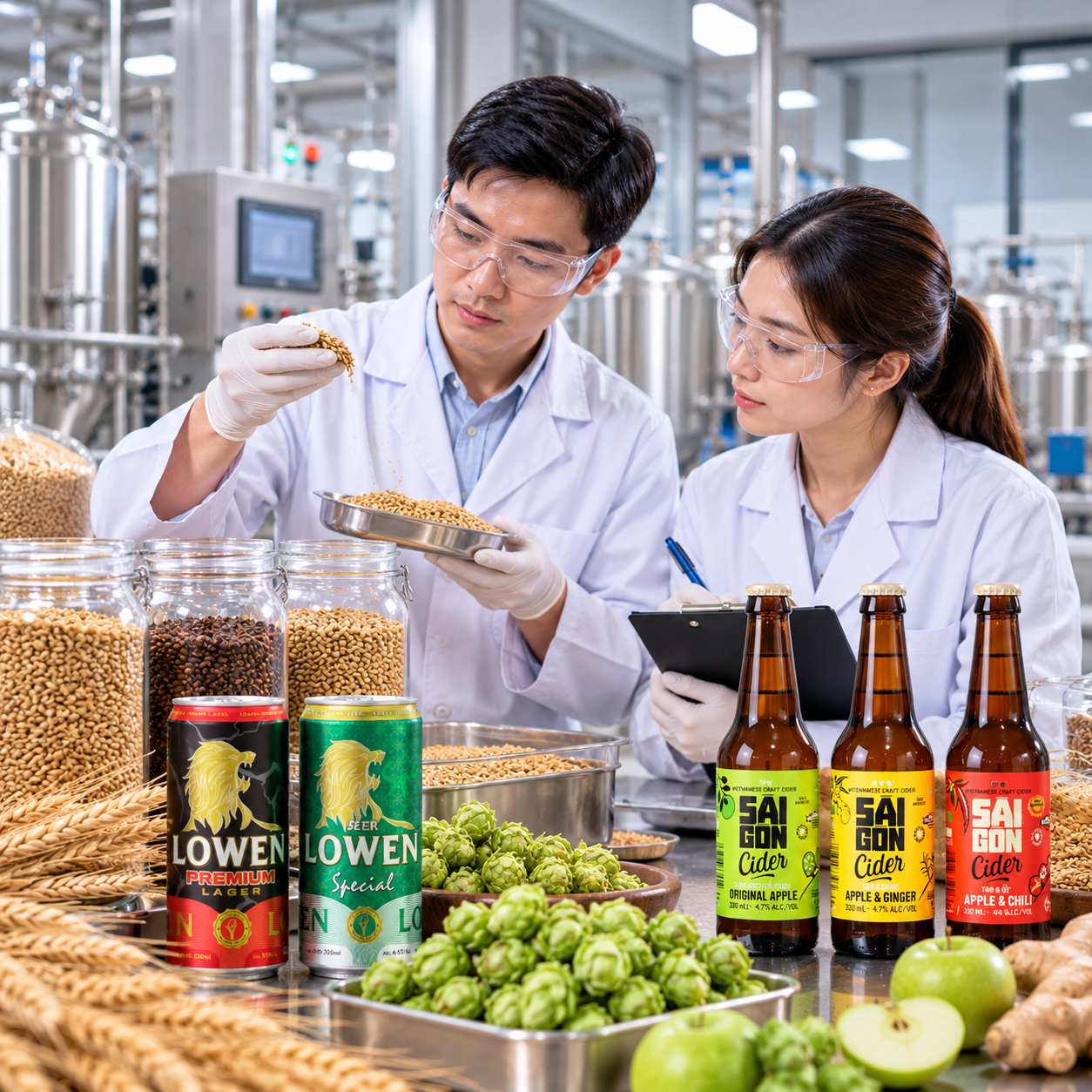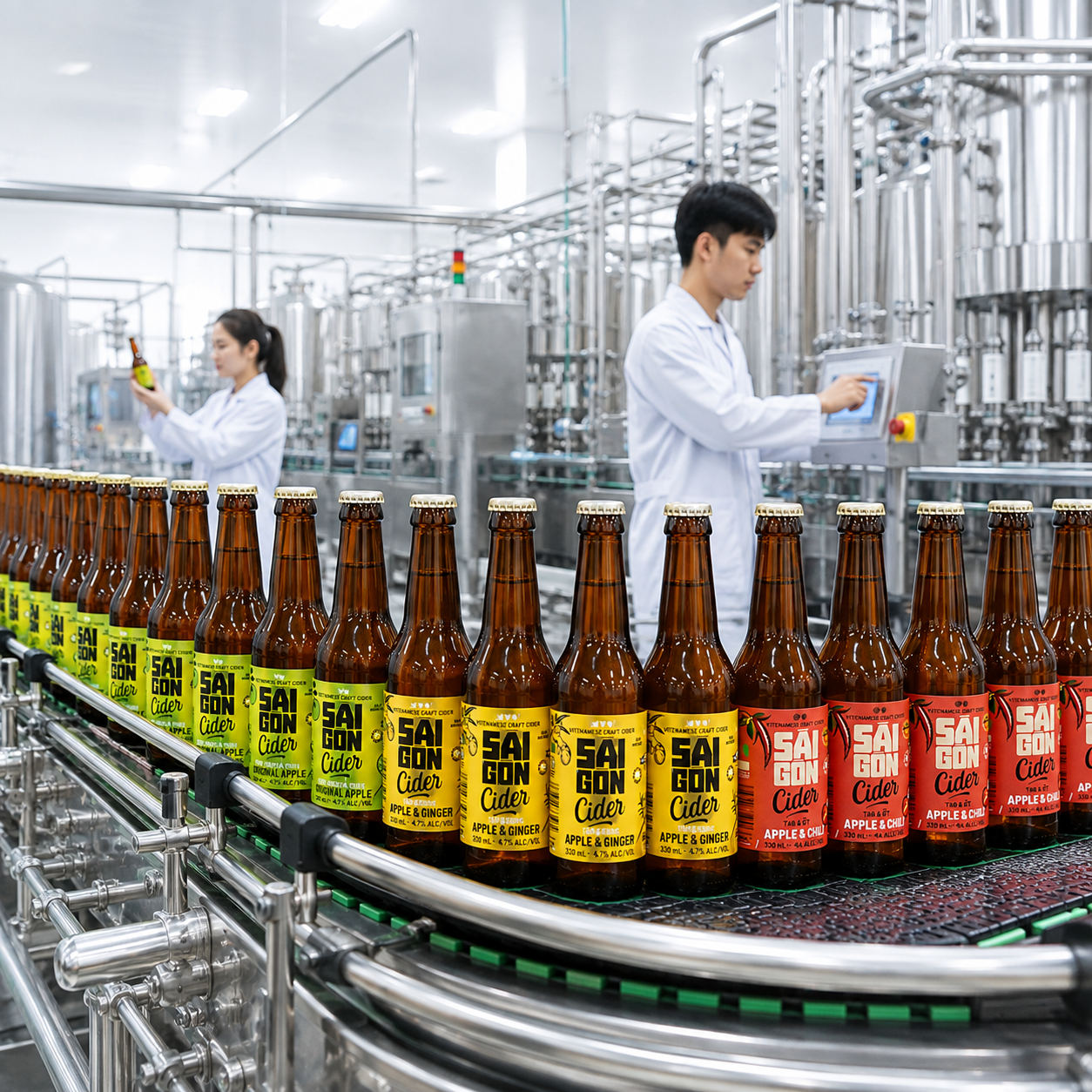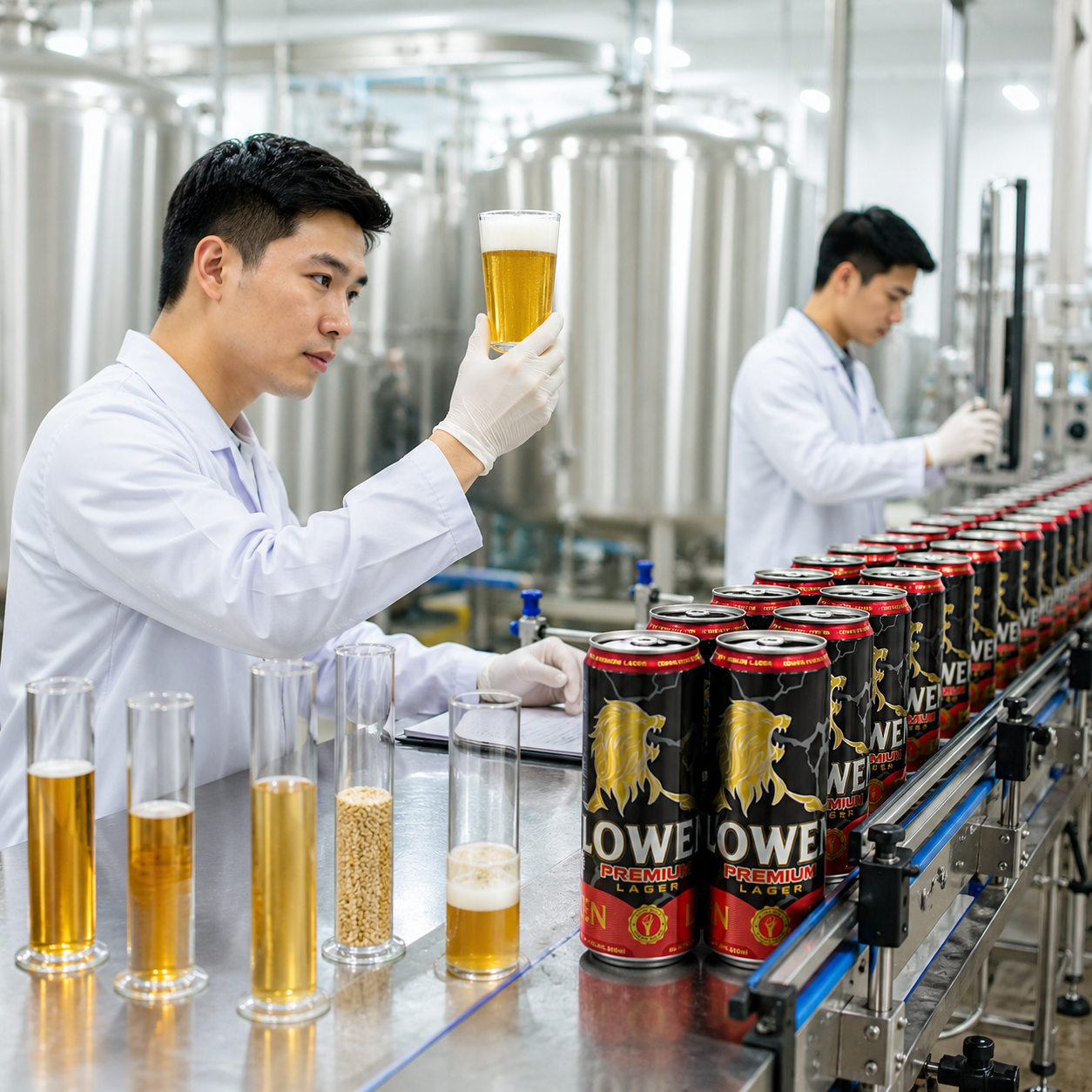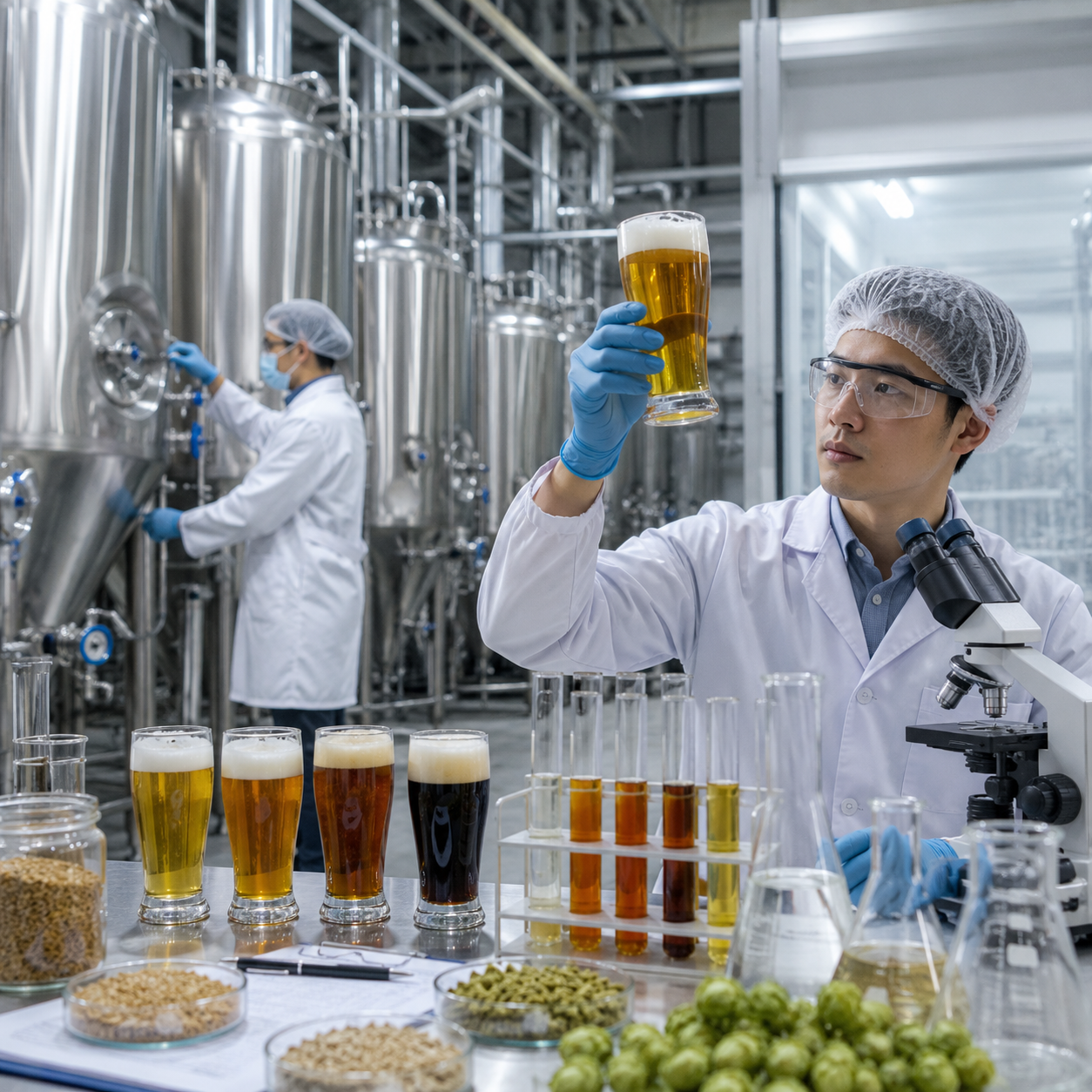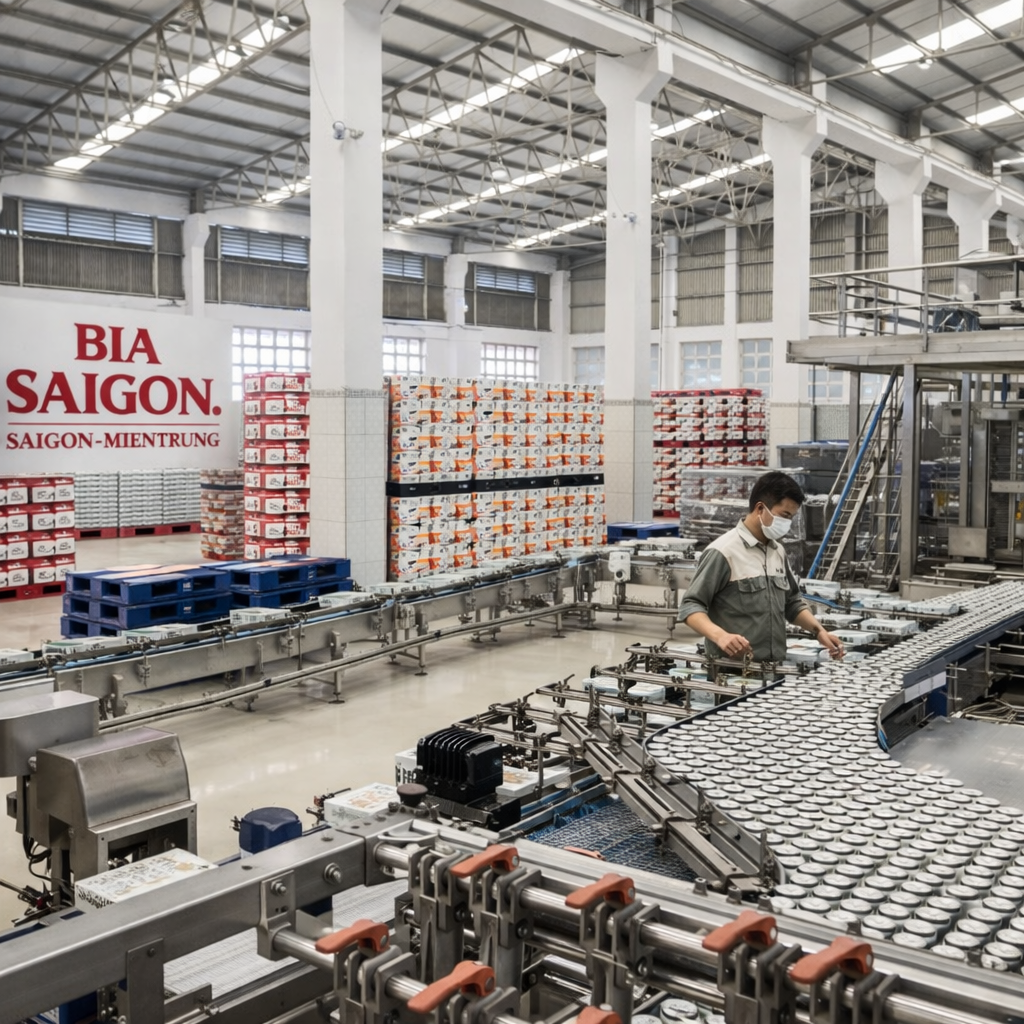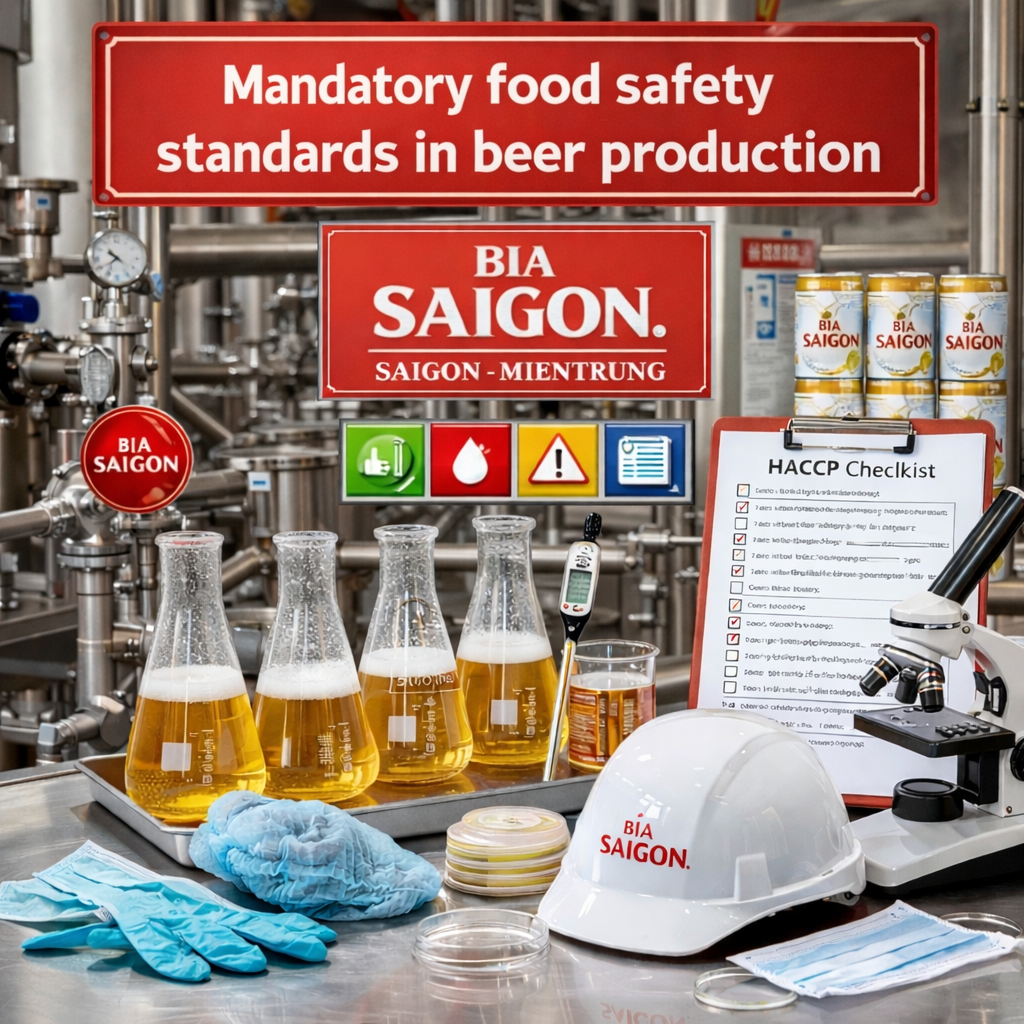


Beer quality is determined not only during production but also by the entire process of controlling raw materials, operating equipment, testing finished products, and storing them before they reach the market. Each stage has its own technical requirements to ensure that the product meets quality and food safety standards.
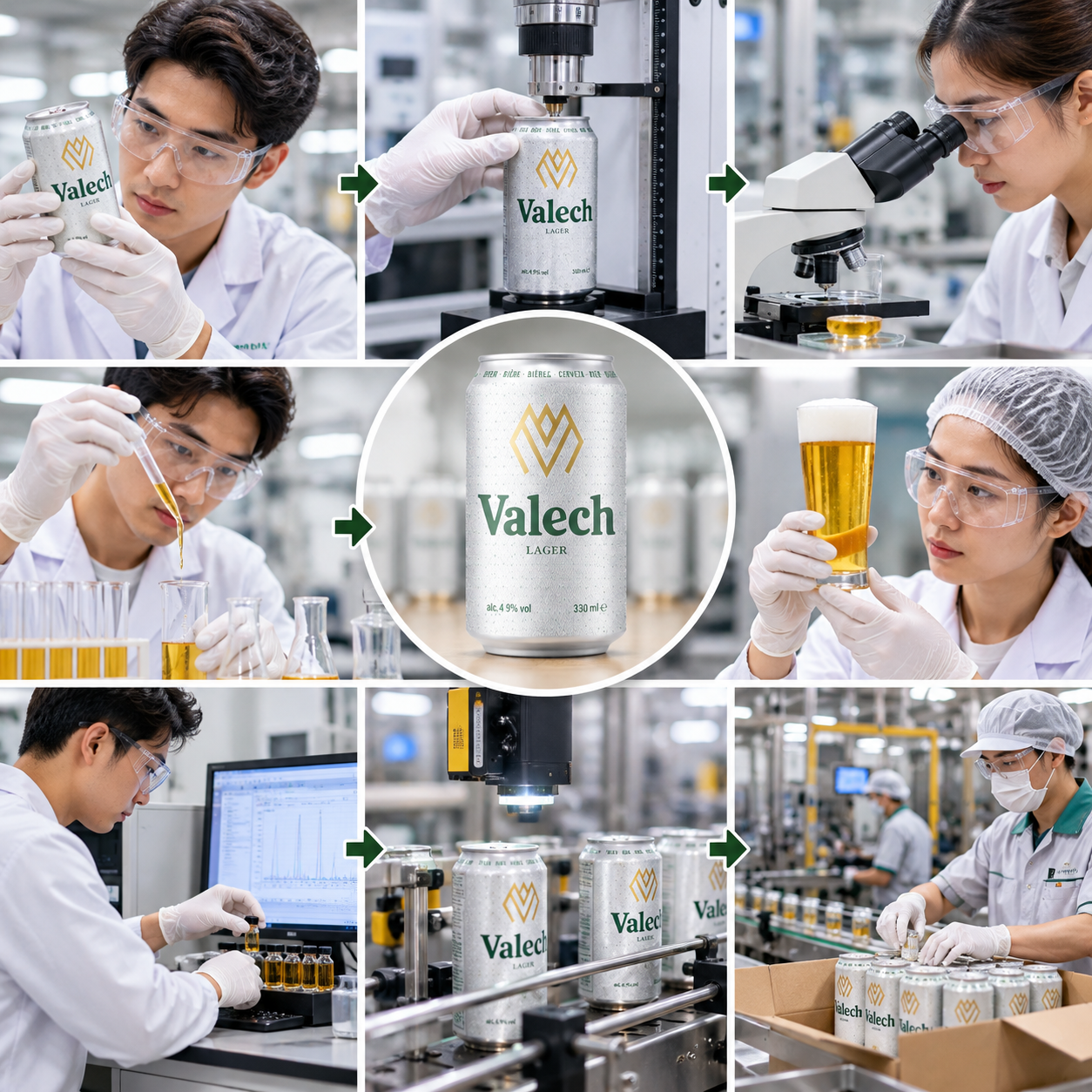
In the beer industry, beer quality inspection before release from the brewery is an important part of the quality management system. It helps the brewery assess whether each production batch meets requirements, detect deviations, and determine what conditions must be met before finished products can be released from the warehouse.
For businesses developing private-label beer through OEM beer manufacturing, understanding the quality control steps also helps define technical requirements, acceptance criteria, and the respective responsibilities of the business and the brewery.
So, what checks must a beer product undergo before it leaves the brewery and is distributed to customers?
Inspecting incoming raw materials before production
The beer quality management process begins with the receipt and assessment of raw materials.
Key ingredients such as water, malt, hops, and yeast directly affect the product’s characteristics and consistency. Therefore, quality checks need to take place before these materials enter the production line.
For brewing water, the brewery needs to monitor parameters in line with processing requirements and food safety regulations. Factors such as mineral composition, pH, and microbiological parameters can affect the production process.
For malt, the assessment may focus on moisture content, raw material characteristics, and relevant quality parameters. Hops need to be checked for their required characteristics, storage conditions, and ability to meet raw material standards.
Yeast used in brewing also needs to be managed appropriately to ensure it has the characteristics and quality required for fermentation.
In addition to the main ingredients, materials that come into direct contact with the product, such as bottles, cans, closures, and related packaging components, also need to be inspected.
Incoming material control serves both to detect materials that do not meet requirements and to prevent quality deviations in later stages.
Keeping records of suppliers, inspection results, and raw material batches enables the brewery to trace materials when needed.
For businesses using OEM beer manufacturing services, raw material requirements and incoming material standards should be discussed before the production plan is agreed upon.
Businesses defining quality requirements for private-label beer products can discuss raw material standards and product specifications with SMB’s OEM department by emailing Oem@biasaigonmt.com.
Monitoring technical parameters during beer production
Once the raw materials meet incoming requirements, quality control continues throughout production.

Stages such as wort preparation, boiling, fermentation, and product finishing each have technical parameters that need to be monitored.
The brewery establishes appropriate control limits for key parameters based on the production technology and the characteristics of each beer line.
During boiling, factors such as temperature, time, and wort characteristics can affect the results of subsequent stages.
During fermentation, monitoring temperature, fermentation progress, and related parameters helps determine whether the production process is proceeding as intended.
However, quality control involves more than recording parameters.
The brewery needs procedures to identify deviations, assess their causes, and take corrective action when results fall outside established limits.
Equipment sanitation and production conditions are also important aspects of the quality management system.
Sanitation programs, cross-contamination controls, and monitoring of operating conditions need to follow appropriate procedures.
Finished product quality depends heavily on maintaining a stable production process rather than relying solely on final test results.
For OEM beer manufacturing projects, the business should clearly define the standards the product must meet, while the brewery is responsible for implementing process controls in accordance with the scope of the agreement and applicable legal requirements.
Businesses seeking to understand which technical parameters should be agreed upon before starting OEM beer production can send project information to SMB’s dedicated team at Oem@biasaigonmt.com.
Testing the physicochemical and microbiological parameters of finished beer
Once the necessary production stages are complete, the finished beer needs to be assessed against the applicable quality standards.
This stage is important for determining whether the product meets the established requirements.
For physicochemical testing, the brewery may check alcohol content, pH, CO₂ content, and other parameters depending on the product’s characteristics.
Test results need to be checked against declared standards, applicable technical regulations, and agreed technical requirements.
Alongside physicochemical testing, microbiological testing is an important part of food safety control.
Microbiological tests are selected based on the product’s characteristics, production methods, and quality management requirements.
Testing needs to use appropriate methods, equipment, and procedures capable of producing reliable results.
However, the same set of test parameters does not apply to every beer line.
Specific requirements may vary depending on the formulation, production technology, packaging type, and applicable standards.
Therefore, testing criteria need to be based on the actual characteristics of each product.
Test results reflect only the quality of the sample collected using the relevant sampling method. Therefore, sampling, sample management, and recordkeeping also need to be controlled.
For brand owners, agreeing on acceptance criteria with the OEM partner provides a clear basis for assessing the quality of each batch.
Businesses preparing finished product acceptance standards can send their technical requirements to Oem@biasaigonmt.com to discuss with SMB what needs to be defined for the beer manufacturing project.
Checking packaging, seal integrity, and label information before release from the brewery
In addition to checking the quality of the beer itself, the brewery also needs to inspect the finished product packaging before the product is placed in storage or distributed.

For bottled or canned products, inspections may cover packaging condition, seal integrity, fill level, and other relevant technical factors.
If the packaging does not meet requirements, the product may be at risk during storage or transportation.
Therefore, inspections need to follow criteria appropriate to each type of packaging.
For bottled beer, the brewery may check the condition of the bottles and closures and verify that they seal properly. For canned beer, the can seams, seal integrity, and surface condition need to be assessed against the applicable technical standards.
Product label information also needs to be checked.
Businesses need to ensure that the product name, net quantity, information about the responsible organization, origin, manufacturing date, expiry date, and other mandatory information are presented in accordance with current regulations.
Information such as batch numbers or traceability codes also needs to be managed in accordance with applicable requirements.
In particular, the product label needs to be consistent with the technical documentation and the actual details of the batch.
Even if the beer itself meets quality requirements, incorrect packaging specifications or improper labeling can still cause problems when the product is placed on the market.
For businesses developing private-label beer, label designs and packaging specifications should be approved before commercial production begins.
Businesses preparing bottle, can, or label designs for an OEM beer project can contact SMB’s OEM department by emailing Oem@biasaigonmt.com to clarify the technical requirements that need to be agreed upon.
Reviewing production batch records and approving batch release
Finished product testing is an important part of the quality system, but it is not the only condition for determining whether a batch of beer can be released from the brewery.
Before approving release, the authorized department needs to review the records covering the entire production process.
These records may include raw material information, process monitoring results, test data, packaging condition, and any documented deviations.
The objective is to determine whether the batch meets all necessary criteria before it is allowed onto the market.
If any results fail to meet requirements, the brewery needs to follow its quality management procedures for evaluating and addressing the issue.
Depending on the severity and cause, the batch may need to be quarantined, subjected to additional testing, or handled through other appropriate measures.
Batch release approval needs to be based on quality evidence and production records rather than on delivery schedules alone.
In OEM beer manufacturing, this process also involves the respective acceptance responsibilities of the brewery and the brand owner.
The manufacturing agreement should clearly specify the acceptance criteria, how records will be provided, when acceptance will take place, and how deviations will be handled.
This gives the parties a basis for coordinating their work and helps minimize disagreements about finished product quality.
Keeping production batch records also supports traceability if feedback is received or an inspection is requested after the goods have been distributed.
When drafting an OEM beer manufacturing agreement, businesses can email SMB at Oem@biasaigonmt.com to discuss the quality information and acceptance conditions that need to be clarified before the project begins.
Controlling storage and transportation and maintaining traceability after release
Once approved for release, beer products proceed through storage, transportation, and distribution.
These stages can affect product quality if storage conditions are unsuitable.

Therefore, quality management needs to be maintained throughout the supply chain.
The brewery and distributors need to establish storage requirements appropriate to the product’s characteristics, packaging, and shelf life.
Factors such as temperature, storage conditions, stacking methods, and storage duration can affect finished product stability.
During transportation, packaging condition and loading and unloading methods also need to be controlled to minimize damage.
The batch management system also needs to support traceability from raw materials and production through to dispatch and receipt.
When feedback on quality is received, traceability helps businesses identify the batches involved and investigate the cause.
Where necessary, the parties must take corrective action, carry out recalls, or issue notifications in accordance with applicable laws and regulations.
For businesses using OEM beer manufacturing services, responsibility for quality management after handover needs to be clearly defined in the contract.
The brewery is responsible for obligations within the scope of production, while the brand owner and distributors need to fulfill their respective responsibilities according to their actual roles and applicable laws and regulations.
An effective quality management system needs to connect quality controls at the brewery with the distribution process, rather than treating release from the brewery as the end of responsibility for quality.
Businesses developing a supply plan for private-label beer can contact SMB’s OEM department at Oem@biasaigonmt.com to discuss the production, handover, and batch information management requirements that need to be agreed upon.
Beer quality inspection is a continuous process from raw materials to distribution
Beer quality is not determined by a single test but results from multiple controls carried out throughout production and distribution.
From inspecting incoming raw materials and monitoring production parameters to conducting physicochemical and microbiological tests and assessing packaging, each stage plays a role in determining whether the product meets requirements.
However, test results are only meaningful when linked to production records, procedures for handling deviations, and the batch release approval process.
A batch of beer should only be cleared for shipment once it has met the applicable quality and food safety requirements.
After release from the brewery, storage, transportation, and traceability continue to help maintain product quality throughout the distribution system.
For businesses developing private-label beer, understanding the quality control process helps establish appropriate acceptance criteria and define each party’s responsibilities when working with an OEM brewery.
Requirements for testing, packaging, batch records, and handover conditions should also be agreed upon during project preparation.
In the long term, effective quality control not only helps assess finished products before release from the brewery but also improves consistency, traceability, and management efficiency throughout the beer supply chain.
Contact Information
To learn more about the company and receive advice on OEM beer services, please contact Sai Gon – Mien Trung Beer Joint Stock Company (SMB) using its official contact details.
Company: Sai Gon – Mien Trung Beer Joint Stock Company (SMB)
Head Office Address: 01 Nguyen Van Linh, Tan An Ward, Dak Lak Province
OEM Consultation Hotline: (+84) 94 1127575
Dedicated Email: Oem@biasaigonmt.com
Official Website: https://oem.biasaigonmt.com/