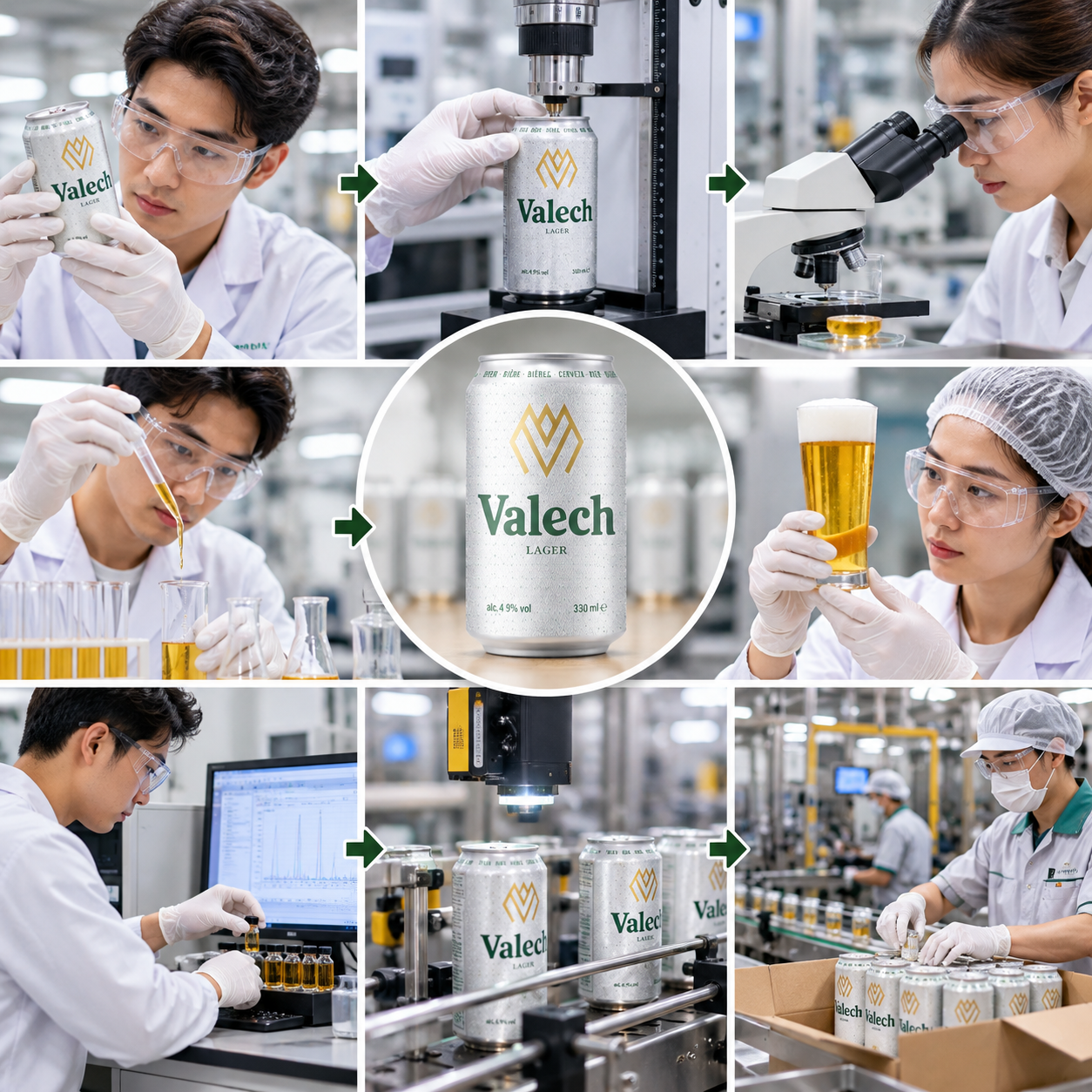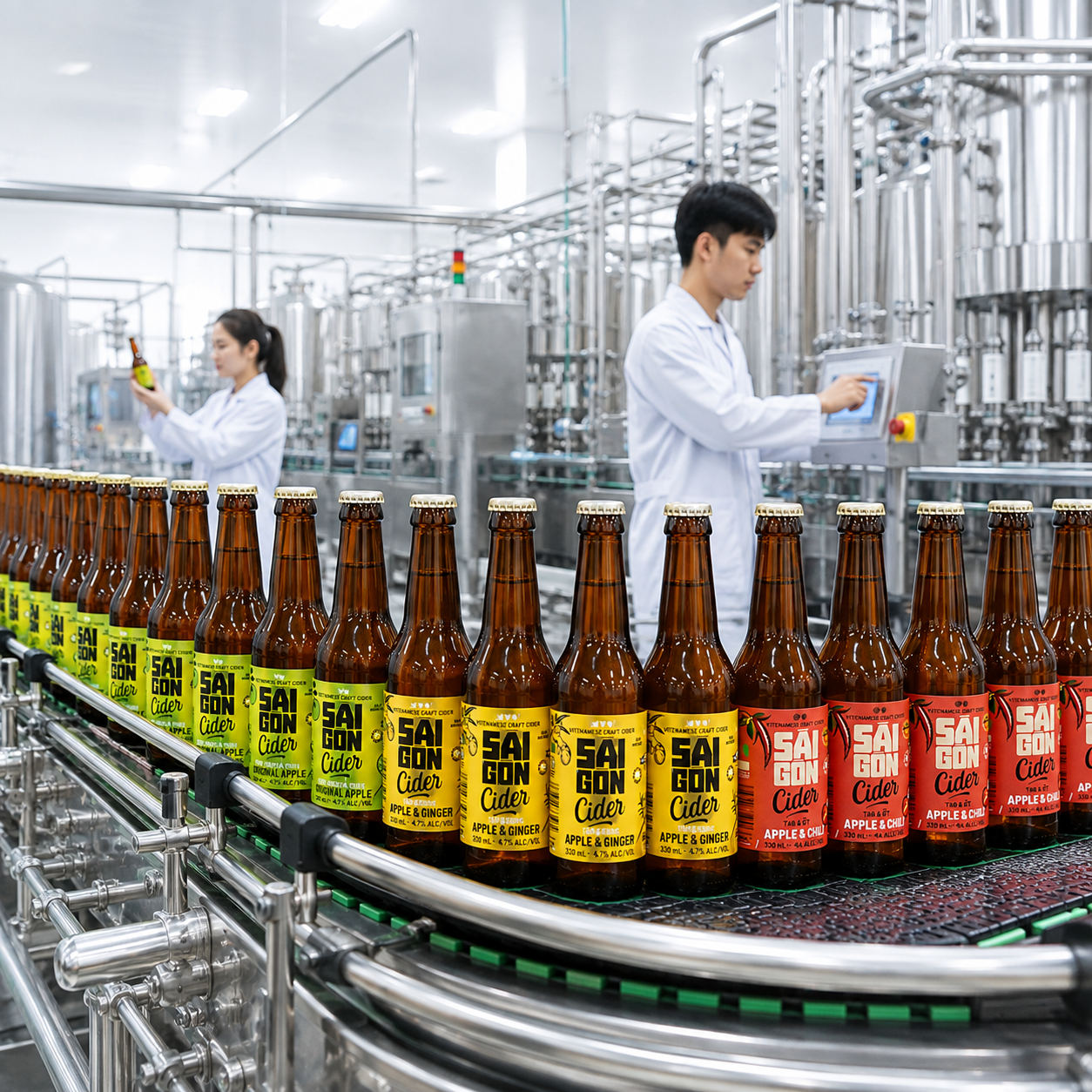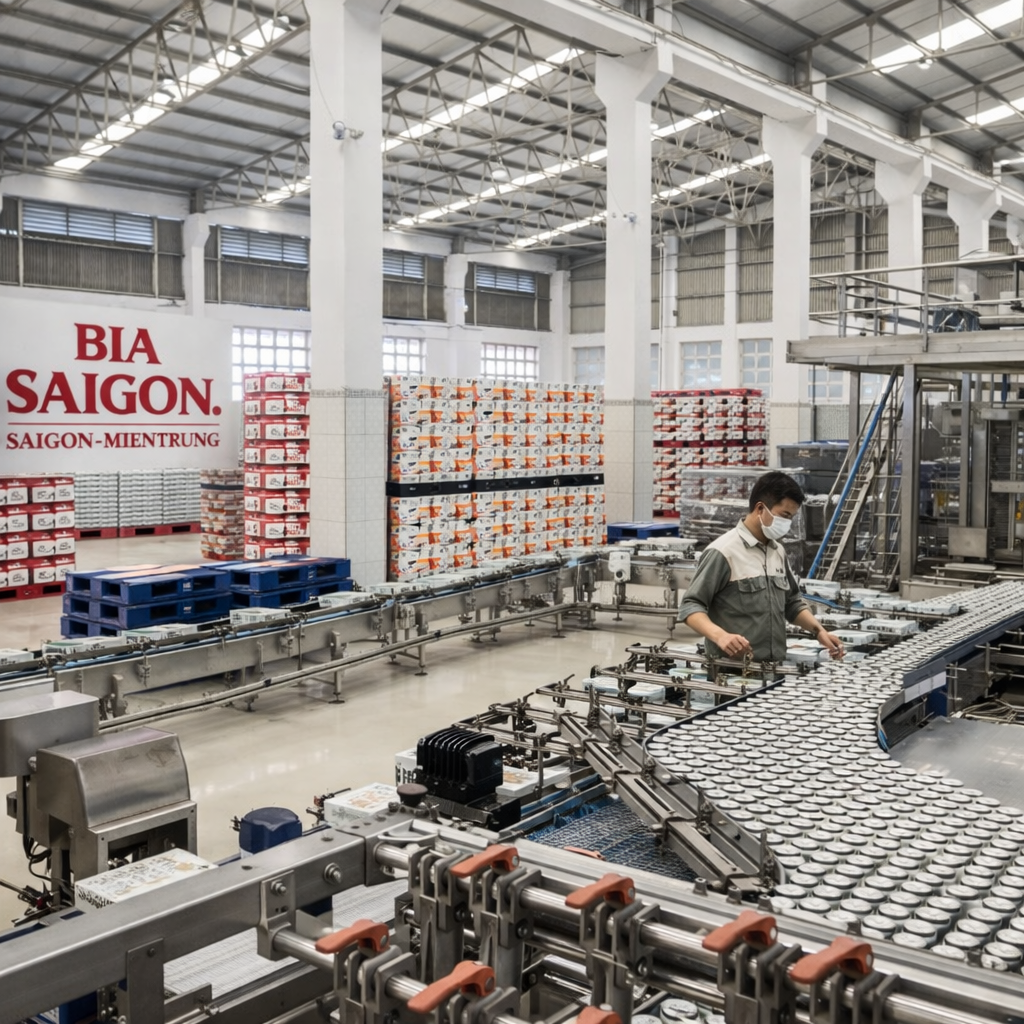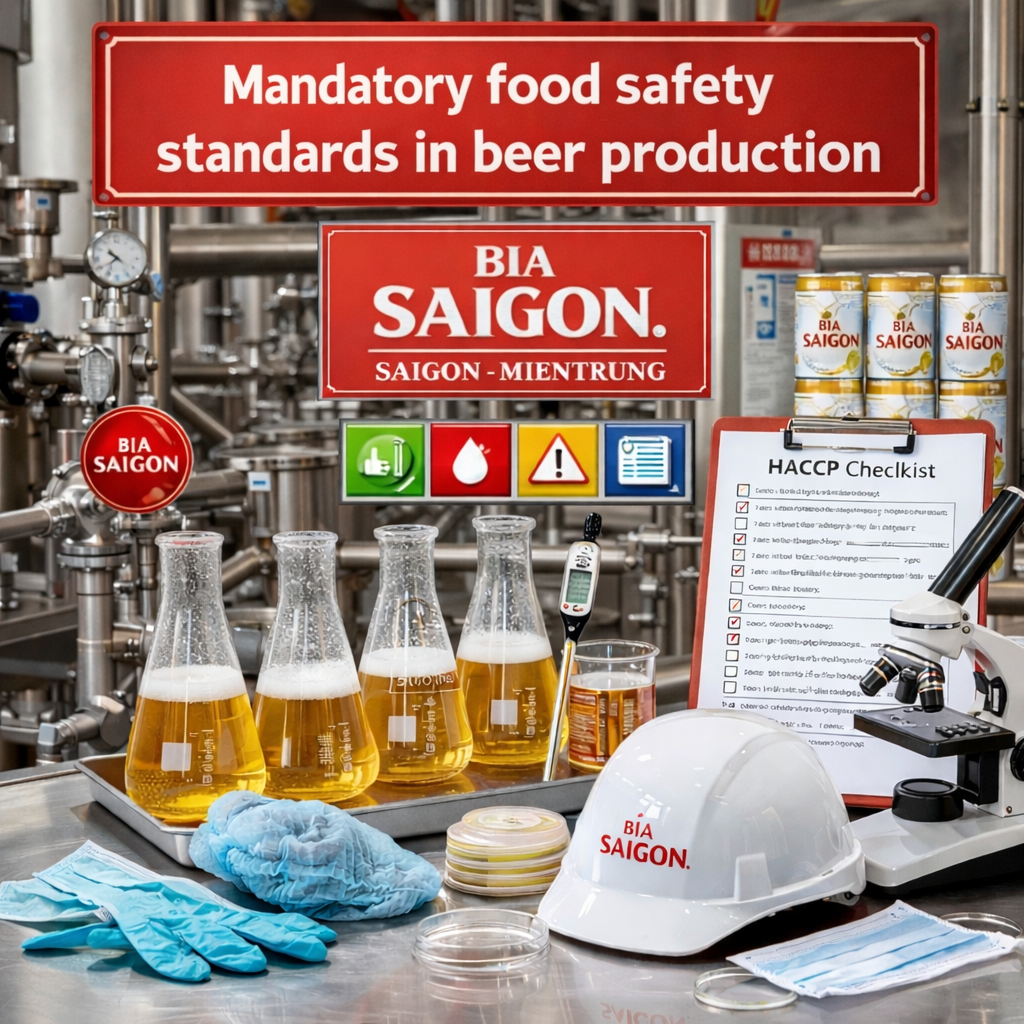


In the beer manufacturing industry, product quality depends not only on technology and raw materials but also on the ability to control the entire production process. For breweries that manufacture beer under OEM contracts, establishing a clearly defined quality management system is an important factor when assessing production capabilities.

International certifications and standards can provide a basis for businesses to understand how a brewery manages food safety, controls risks, organizes production, and maintains system stability.
However, holding a certification does not guarantee the quality of every product under all conditions. The value of a certification also depends on the scope of the assessment, the validity of the certificate, and how the management system is implemented in practice.
So, which certifications are commonly considered when evaluating the management system of an OEM brewery?
ISO 22000 – Food safety management standard
ISO 22000 is an international standard that specifies requirements for food safety management systems and can be applied by a wide range of organizations in the food chain.
For beverage manufacturers, the standard provides a management framework for identifying, assessing, and controlling hazards that may affect food safety.
ISO 22000 combines HACCP principles with requirements for management, communication, and prerequisite programs.
In a brewery, implementing the standard requires coordination across multiple departments, from raw material management to production, testing, and recordkeeping.
ISO 22000 goes beyond finished product testing. It focuses on managing hazards throughout the entire process.
This is relevant to facilities with multiple production stages and technical parameters that require continuous control.
As of October 2026, ISO 22000:2018 remains the current edition, while a replacement edition is under development.
When assessing an ISO 22000 certification, businesses should check the scope of certification, the site it covers, the certification body, and the validity period.
The value of ISO 22000 lies in demonstrating that the food safety management system has been assessed against defined requirements, rather than merely displaying the name of the standard in promotional materials.
HACCP – A method for identifying and controlling hazards
HACCP stands for Hazard Analysis and Critical Control Points and is widely used in food safety management.

Unlike an approach that only tests finished products, HACCP focuses on identifying significant hazards and establishing appropriate control measures.
In beer production, hazard analysis needs to consider factors relating to raw materials, sanitation conditions, equipment, and production stages that may affect product safety.
HACCP is based on seven principles: conducting a hazard analysis, identifying critical control points, establishing critical limits, monitoring, taking corrective action, conducting validation and verification, and keeping records.
However, not every production stage is designated as a critical control point.
This classification must be based on the results of the hazard analysis and the actual characteristics of each process.
A brewery may implement HACCP as part of its food safety management system or obtain certification from an independent assessment body under an appropriate program.
Therefore, a distinction needs to be made between a business declaring that it implements HACCP and receiving certification from an assessment body.
HACCP is valuable when control measures are implemented, monitored, and verified regularly, rather than existing only as documented procedures.
ISO 9001 – Quality management systems and continual improvement
While ISO 22000 focuses on food safety, ISO 9001 provides a quality management framework with a broader scope of application.
The standard aims to establish consistent management processes, define responsibilities, control deviations, and improve operations.
For manufacturing facilities, ISO 9001 can support process organization, record management, performance evaluation, and resolution of issues that arise.
An important aspect of ISO 9001 is its process approach and risk-based thinking.
Rather than treating departments as independent units, the management system needs to identify how processes interact and how they affect overall results.
This gives businesses a basis for assessing operational stability.
ISO 9001:2026 was published in September 2026, replacing ISO 9001:2015. Organizations certified to the previous edition need to transition according to the applicable timeline.
When reviewing a facility’s ISO 9001 certification, businesses need to check the edition of the standard, the scope of certification, and the status of the transition, if applicable.
ISO 9001 is not a certification specific to food safety. Therefore, it should not replace an assessment of the food safety requirements that apply to the manufacturing facility.
FSSC 22000 – Food safety certification scheme
FSSC 22000 is a food safety management system certification scheme based on international standards and the scheme’s additional requirements.

This certification framework combines ISO 22000, industry-specific prerequisite programs, and FSSC’s own requirements.
For food and beverage manufacturing facilities, FSSC 22000 provides a structured assessment process to determine how well the management system meets the requirements.
A notable feature of the scheme is its cycle of surveillance audits and recertification.
This means certification does not remain valid indefinitely after a single assessment.
The facility needs to continue meeting the relevant requirements to maintain its certification status.
However, holding FSSC 22000 certification does not automatically demonstrate that all of a company’s production lines or manufacturing sites fall within the certified scope.
Therefore, when reviewing the certificate, it is important to check exactly which sites, production activities, and product categories are covered.
The scheme version also needs to be clearly identified. FSSC 22000 Version 7 was published in 2026.
An assessment of FSSC 22000 certification needs to be based on the facility’s actual status and certified scope, rather than on the name of the scheme alone.
ISO 14001 and ISO 45001 – Environmental management and occupational health and safety
In addition to standards directly related to quality and food safety, environmental and occupational health and safety management systems may also be considered when assessing a manufacturing facility’s operations.
ISO 14001 is a standard for environmental management systems.
It provides a management framework for organizations to identify environmental aspects, determine their compliance obligations, and improve their environmental performance.
In beverage manufacturing, issues such as water use, energy consumption, waste management, and control of environmental impacts are directly linked to operations.
However, ISO 14001 certification does not establish that a facility has no environmental impact.
The standard focuses on the management system and the improvement process in accordance with defined requirements.
ISO 45001, meanwhile, specifies requirements for occupational health and safety management systems.
For facilities with industrial equipment, mechanical systems, and multiple operational activities, managing occupational health and safety risks is an important part of overall management.
ISO 45001 provides a basis for organizations to identify occupational hazards, assess risks, and implement appropriate management measures.
These two standards do not replace mandatory environmental and occupational health and safety requirements under Vietnamese law.
Management system certification must be distinguished from licenses, inspection results, and obligations under industry-specific laws and regulations.
How to verify the practical value of a facility’s certification
A certification is meaningful only when the information provided can be verified and is relevant to the activities being assessed.
Therefore, the review should go beyond the facility’s list of standards it has implemented.

First, determine which management system the certification covers and whether it directly relates to the manufacturing activities under review.
Next, check the name of the certified organization, the manufacturing site, the scope of activities, the edition of the standard, and the validity period.
For businesses with multiple factories, a certificate issued for one facility does not automatically apply to another.
Similarly, certification for a specific activity does not necessarily cover every product category.
Another important step is to verify the certification body.
Management system certificates are typically issued by independent certification bodies. Accreditation bodies, meanwhile, assess the competence of certification bodies against the relevant requirements.
Businesses also need to distinguish between management system certification and product test results.
ISO 22000 or ISO 9001 certification does not replace the test report for each batch when batch testing is required.
Quality records, internal audit results, and evidence of corrective actions can also provide further insight into actual operating conditions.
A certificate derives its value both from being issued by a body with the appropriate authority and from having a scope that accurately reflects the activities under review.
Certification is one part of a quality assurance system, among other factors
In beer manufacturing, standards and frameworks such as ISO 22000, HACCP, ISO 9001, and FSSC 22000 offer different approaches to quality and food safety management.
ISO 22000 focuses on food safety management systems. HACCP supports hazard analysis and control. ISO 9001 provides a quality management framework, while FSSC 22000 establishes a certification scheme with additional requirements.
ISO 14001 and ISO 45001 extend the scope of assessment to environmental management and occupational health and safety.
However, no single certification fully reflects every aspect of a facility’s operations.
An assessment of the management system needs to consider certification information alongside actual production conditions, quality records, test results, and legal compliance status.
In particular, it is important to distinguish between implementing a standard, obtaining certification against that standard, and meeting mandatory legal requirements.
In food and beverage manufacturing, an evidence-based approach makes quality system assessments clearer and more reliable.
Contact Information
To learn more about the company and receive advice on OEM beer services, please contact Sai Gon – Mien Trung Beer Joint Stock Company (SMB) using its official contact details.
Company: Sai Gon – Mien Trung Beer Joint Stock Company (SMB)
Head Office Address: 01 Nguyen Van Linh, Tan An Ward, Dak Lak Province
OEM Consultation Hotline: (+84) 94 1127575
Dedicated Email: Oem@biasaigonmt.com
Official Website: https://oem.biasaigonmt.com/