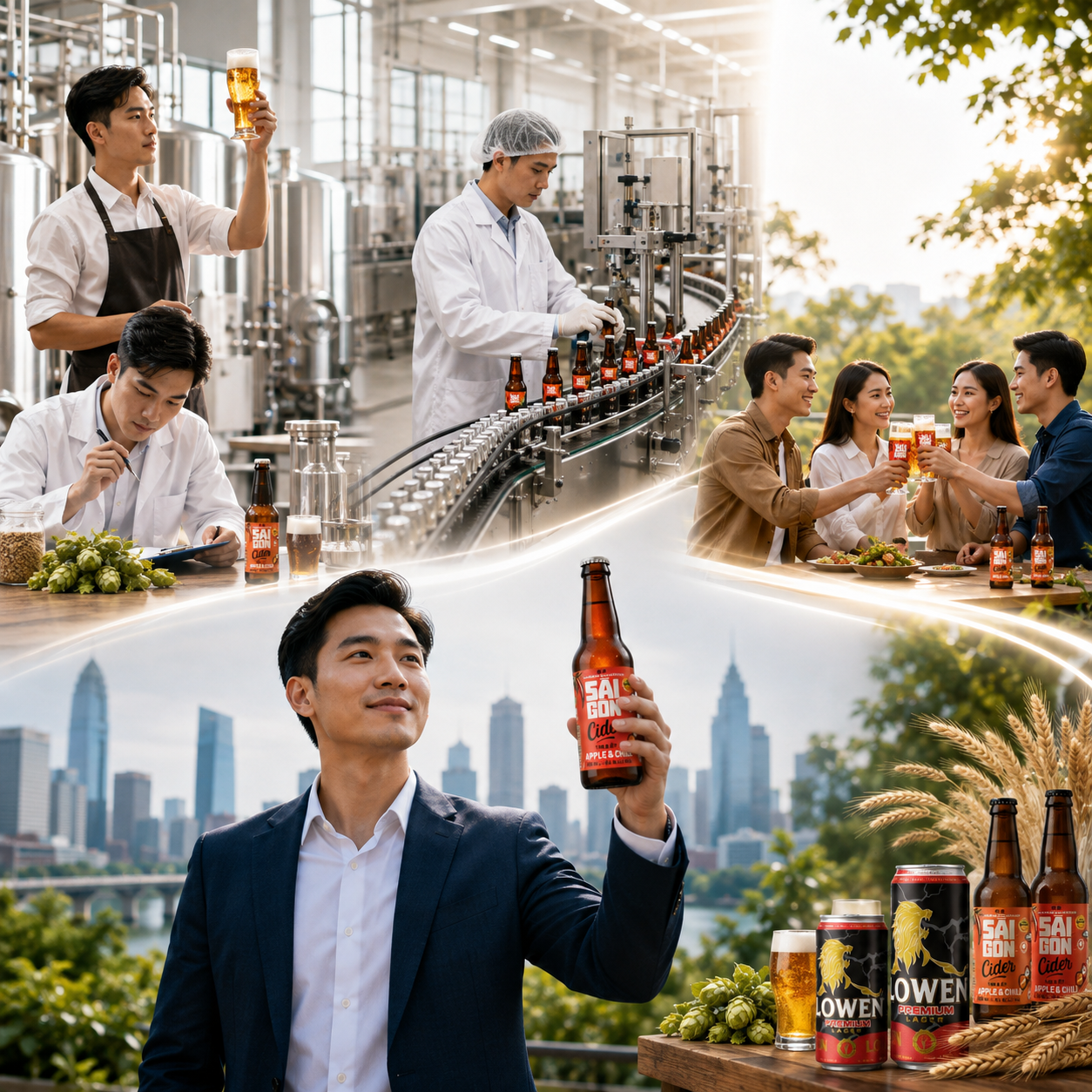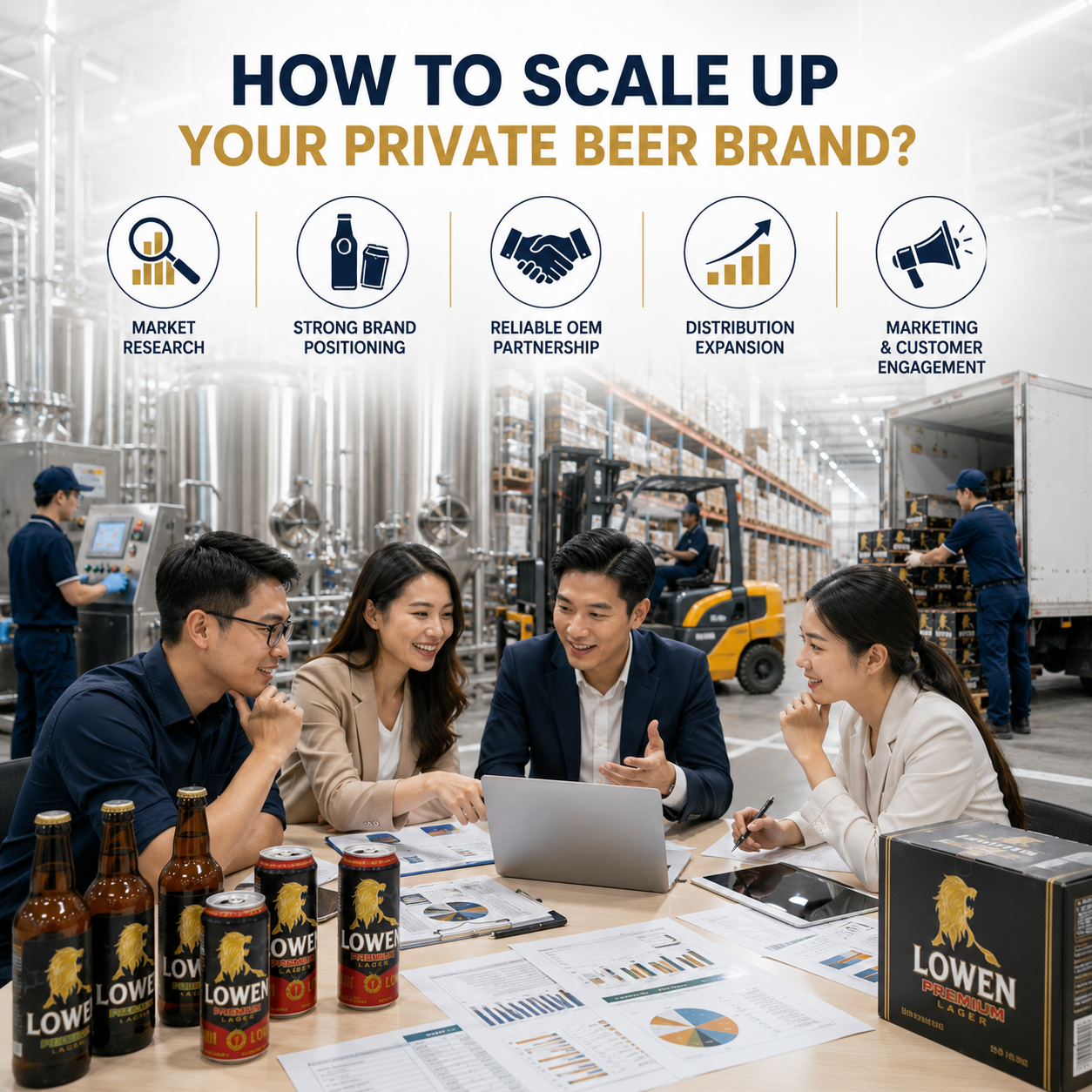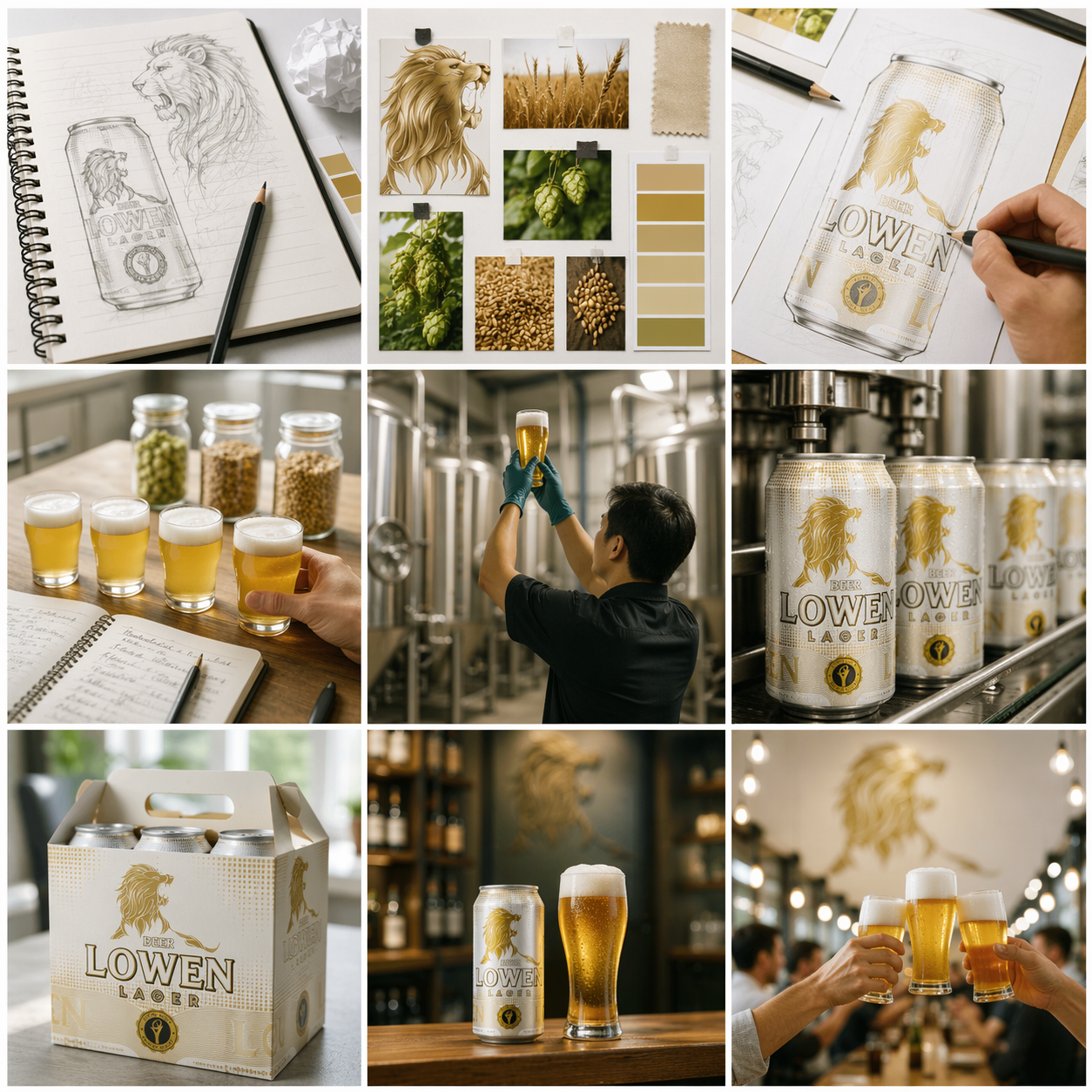


In recent years, the Vietnamese beer market has witnessed the emergence of an increasing number of new beer brands. In addition to traditional beer manufacturers, many distributors, retail chains, beverage businesses, F&B companies, and even startups have begun showing interest in building their own private-label beer brands. This trend is driven by the desire to create products with a unique identity, enhance brand value, and expand business opportunities in a market that continues to offer tremendous potential.
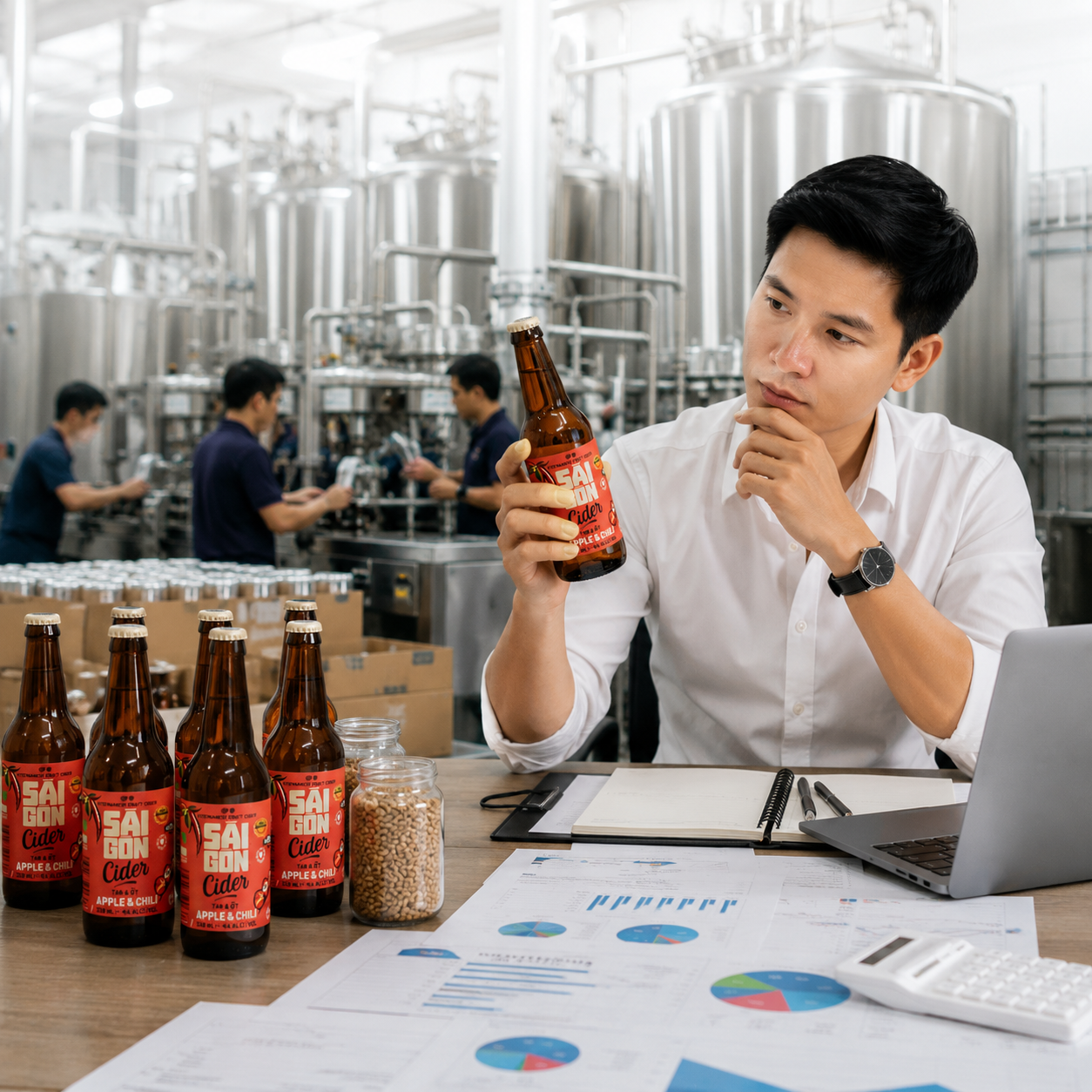
However, one of the most frequently asked questions is: how much does it actually cost to build a private-label beer brand?
Many people assume that the costs are limited to beer production or packaging design. In reality, however, building a beer brand is a far more complex process. Costs are incurred not only during the production stage but throughout the entire journey—from market research, recipe development, and brand identity creation to business operations and expansion.
Notably, the market’s approach has changed significantly in recent years. Instead of investing in an entire brewery and production system from the beginning, many businesses are choosing the beer OEM model to optimize costs and reduce investment risks.
The Biggest Cost Is Not the First Can of Beer
When starting a beer brand, many people focus on one question: how much does it cost to produce a single can of beer?
This is a common approach, but it does not fully reflect the true nature of the investment.
The largest cost in building a beer brand is usually not the first product itself, but creating a strong enough foundation for the product to survive and grow in the market over the long term.
A beer product must go through many stages before it officially reaches retail shelves.
Businesses need to conduct market research, identify their target customers, determine their brand positioning, develop the beer recipe, and create a compelling brand story.
Even after the product has been finalized, companies must continue investing in marketing, distribution, and building their sales network.
This is why many businesses realize that the budget allocated to beer production sometimes represents only a portion of the total cost of brand development.
In an increasingly competitive market, making the wrong investment decisions during the early stages can create significant risks.
Building a Brewery or Choosing Beer OEM?
In the past, building a beer brand was often associated with owning a brewery. As a result, many businesses believed that developing a beer brand required investing in a large-scale beer production system.

However, this mindset is changing rapidly.
Today, the cost of investing in a brewery extends far beyond the brewing equipment itself. Businesses must also consider land acquisition, operations, technical personnel, quality control systems, energy costs, and many other factors.
This represents a substantial investment and typically requires a long period to achieve a return.
Meanwhile, the modern beer market is evolving rapidly. A product that is popular today may not necessarily retain its appeal over the next few years.
This is precisely why many businesses are choosing beer OEM as a more flexible solution.
Instead of allocating the majority of their resources to production infrastructure, companies can focus on what matters most—brand development and customer acquisition.
This model reduces initial financial pressure while allowing businesses to test the market with a lower level of risk.
Intangible Costs Are Often Greater Than Production Costs
One of the most common mistakes when building a beer brand is focusing only on tangible costs such as raw materials or packaging.
In reality, the less visible costs are often the factors that create the greatest competitive advantage.
A beer brand does not simply sell a product—it sells an image, emotions, and experiences.
To achieve this, businesses must invest in:
Market research.
Brand design.
Product positioning.
Marketing strategy development.
Communications.
Visual content.
Customer engagement.
These elements do not produce a physical product, but they have a profound impact on long-term growth.
Many beer brands fail not because their products are inferior, but because they are unable to establish a clear image in the minds of consumers.
In today’s market, product quality is a necessary condition, but it is no longer sufficient.
The brand is what creates sustainable competitive advantage.
Time-to-Market Has a Direct Impact on Costs
Another factor that is often overlooked is the cost of time.
In the modern beer industry, time is not merely a project schedule—it also represents opportunity cost.
If a business spends too much time researching, investing in, and launching a product, it may miss emerging consumer trends or lose its competitive advantage.
This is especially evident today as the market continues to introduce new product categories such as strong beer, fruit beer, Hard Seltzer, and new-generation fermented beverages.
Businesses that respond more quickly generally have greater opportunities.
This is why many companies are choosing to collaborate with partners that already possess strong R&D capabilities and pilot brewing systems.
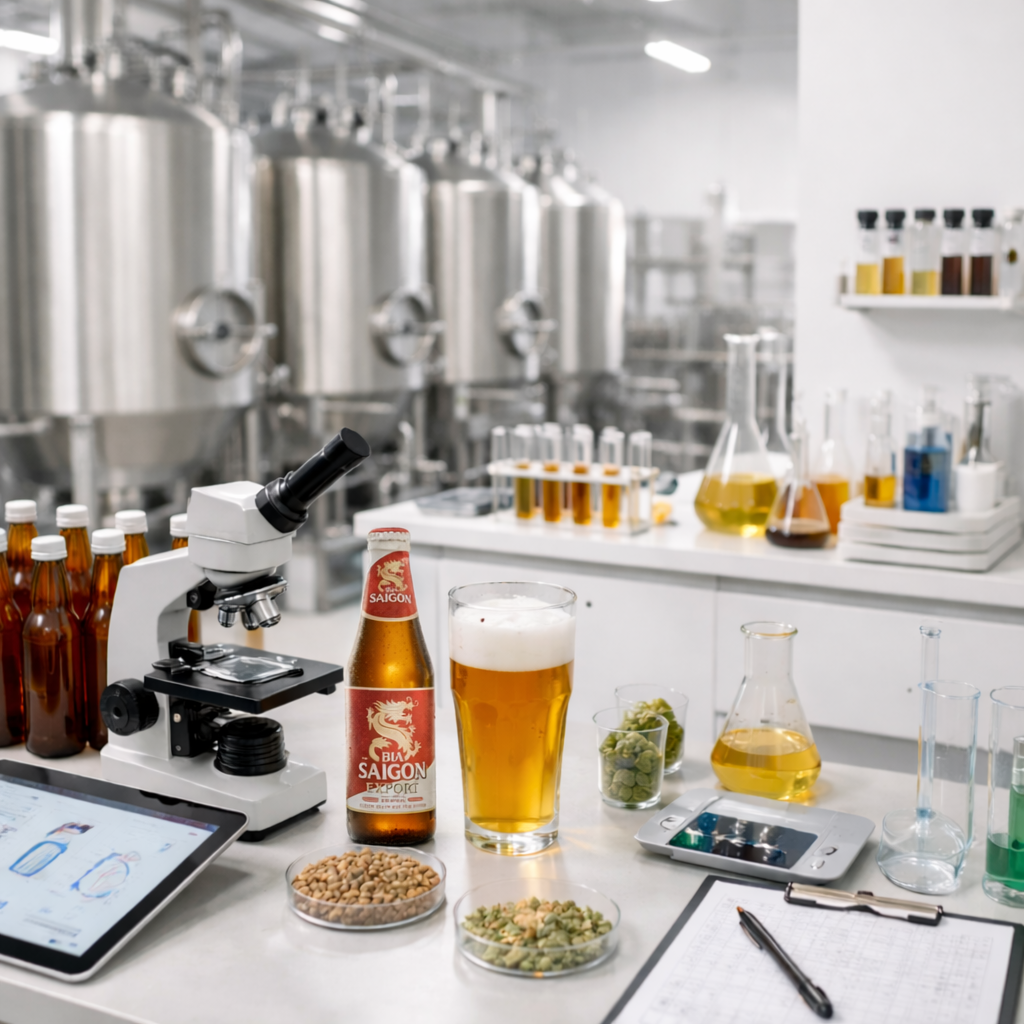
At Saigon Beer – Mien Trung Joint Stock Company (SMB), a 130-liter-per-batch Pilot Brewing System has been invested in to support research and testing of new products.
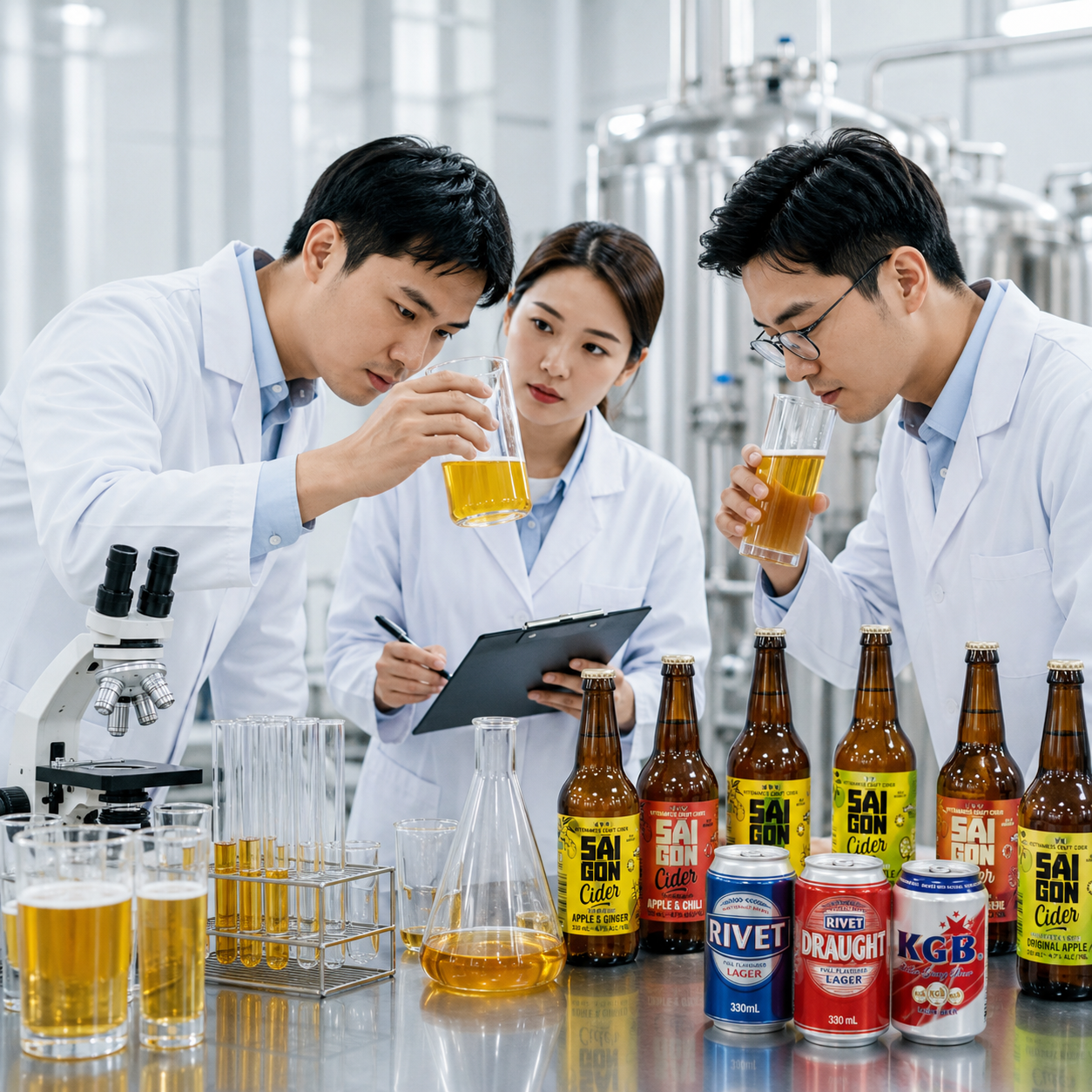
Through this platform, businesses can develop beer recipes, conduct sensory evaluation, and optimize products before moving to large-scale production.
This helps shorten the product development process and significantly reduces investment risk.
Building a Beer Brand Is Not a Competition of Capital but a Competition of Strategy
Many people believe that the strongest beer brand will belong to the company that invests the most money. However, the market has demonstrated the opposite.
Many beer brands with substantial budgets still struggle, while numerous new beer brands have established a strong presence in a remarkably short period.
The reason lies in strategy.

Today’s beer market is no longer a competition based on production scale but a competition driven by the ability to understand customers, create memorable experiences, and deliver meaningful differentiation.
A business does not necessarily need to own a brewery to build a successful beer brand. Success is possible by focusing resources in the right direction.
This is also why the beer OEM model is becoming a long-term development trend within the market.
With its modern brewing facilities, strong R&D capabilities, 130-liter-per-batch Pilot Brewing System, and extensive experience in product development, Saigon Beer – Mien Trung Joint Stock Company (SMB) is expanding its beer OEM services to support businesses in building their own private-label beer brands more effectively.
Contact Saigon Beer – Mien Trung Joint Stock Company (SMB) for consultation on beer OEM solutions, new product development, and optimizing the costs of building a private-label beer brand.
Company: Saigon Beer – Mien Trung Joint Stock Company (SMB)
Address: 01 Nguyen Van Linh Street, Tan An Ward, Buon Ma Thuot City, Dak Lak Province, Vietnam
OEM Consultation Hotline: (+84) 94 1127575
Email: oem@biasaigonmt.com
Website: https://oem.biasaigonmt.com/
SMB not only manufactures products but also partners with its clients to develop sustainable growth strategies in the modern beer market.