

In recent years, Vietnam’s beer market has witnessed the emergence of many new brands from restaurant chains, distributors, hotels, resorts, and even businesses outside the beverage industry. Rather than simply selling established beer brands, many businesses have chosen to develop private-label beer brands as a strategy to increase brand value, create differentiation, and build long-term competitive advantages.
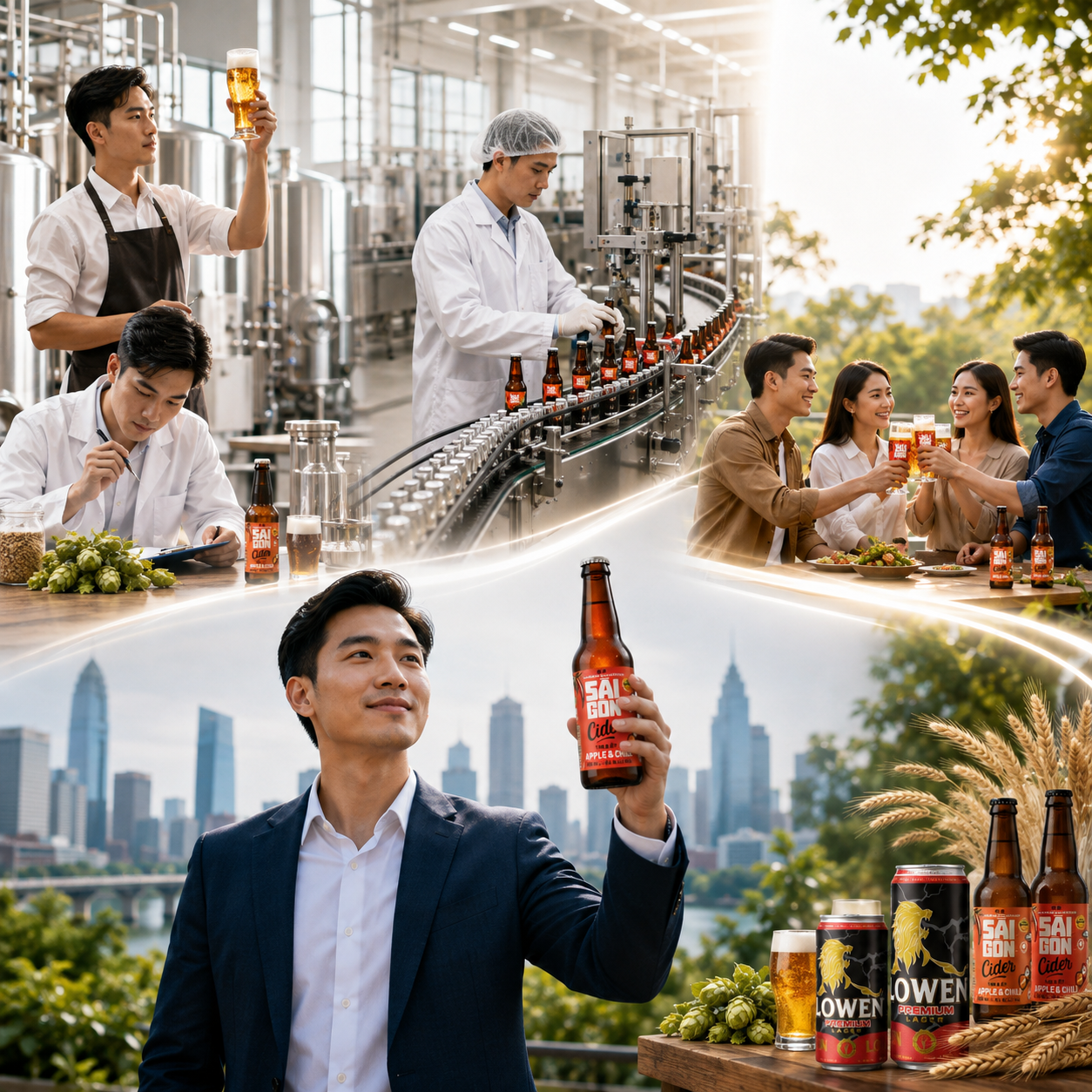
However, building a beer brand is not simply about creating a high-quality product. A brand can only develop sustainably when it is built on a clear strategy, consistent product quality, efficient operations, and the ability to adapt to changes in the market.
It is a long-term journey that requires businesses to invest not only financially, but also in vision, consistency, and a capable partner who can accompany them throughout the development process.
Every Sustainable Brand Begins With a Deep Understanding of the Market
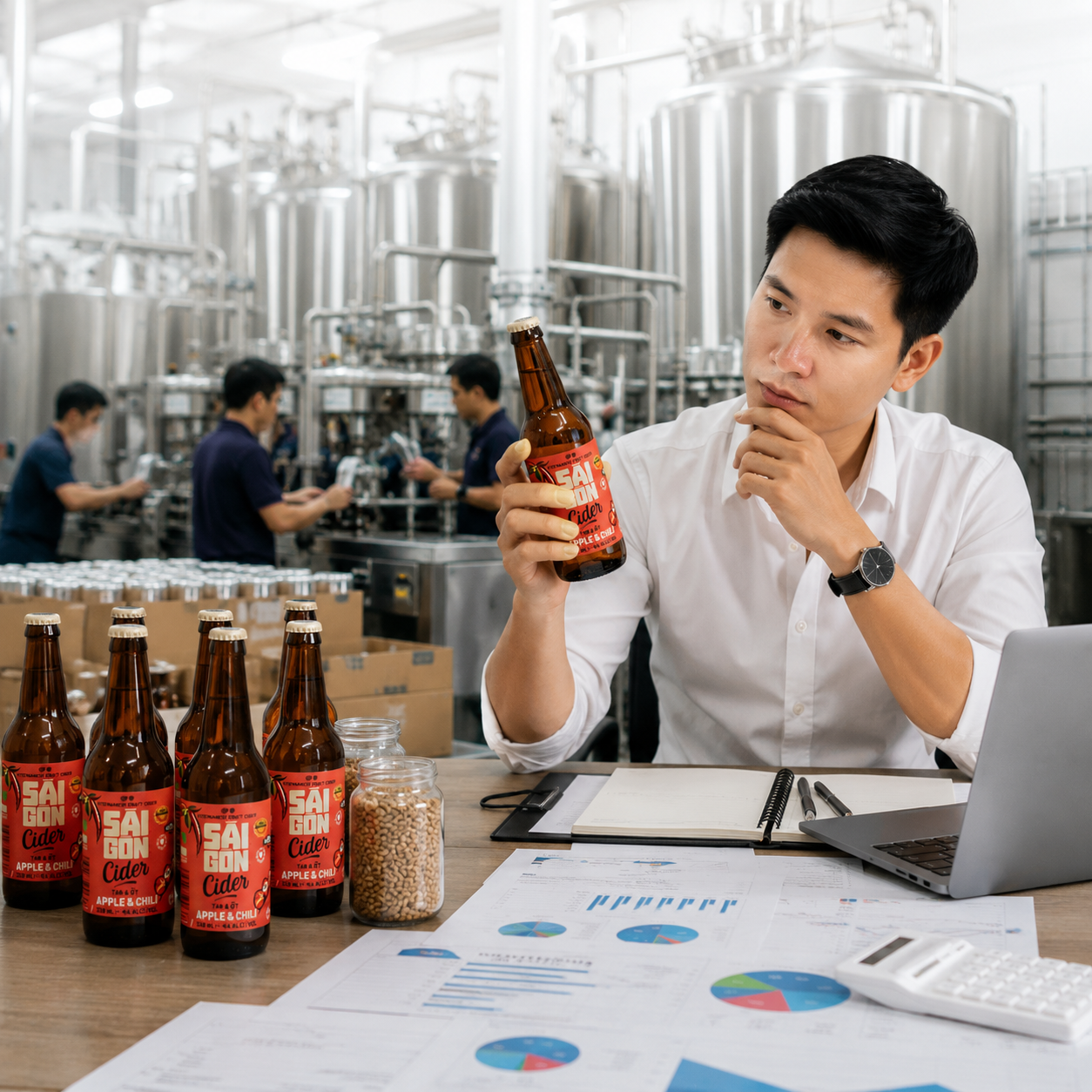
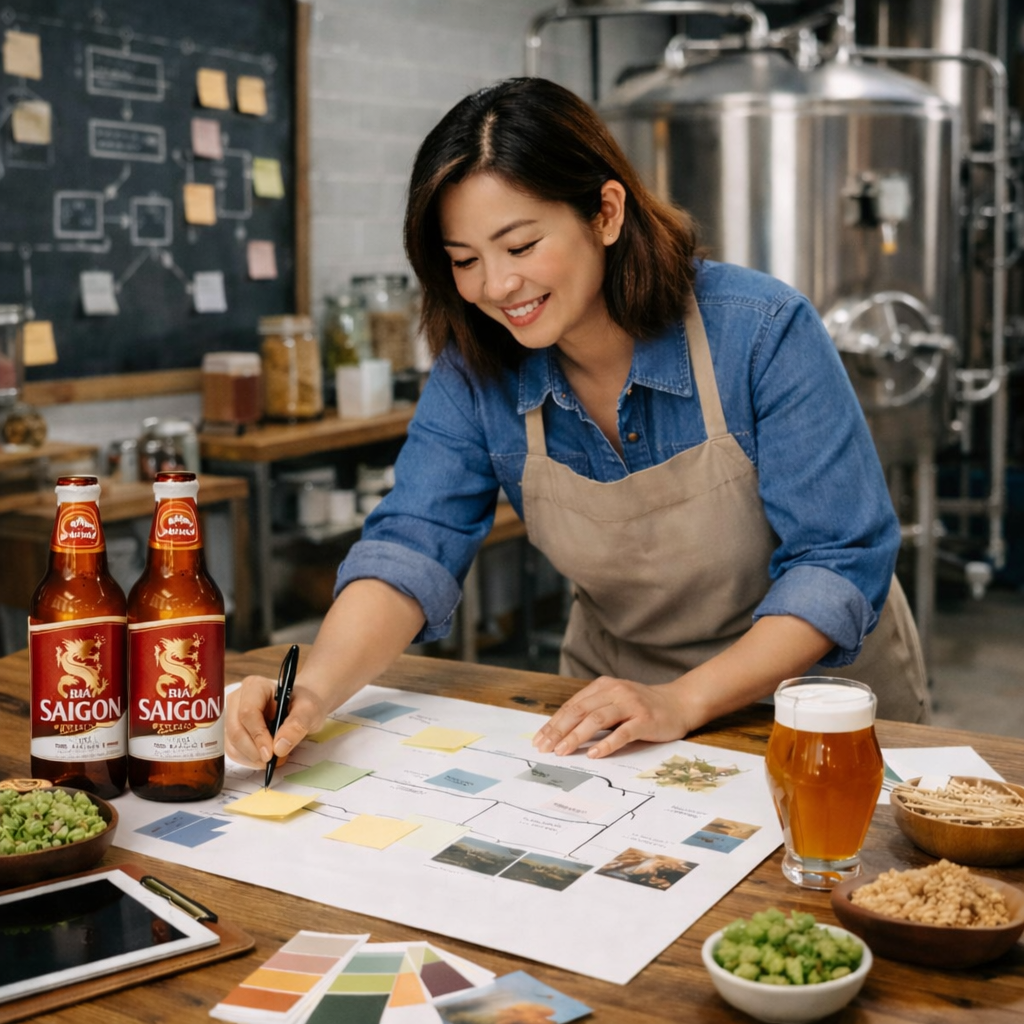
Many businesses develop their own beer brand simply because they see growing consumer demand or notice competitors succeeding with this model. However, without thorough market research, a product can easily become similar to dozens of other brands and quickly lose its appeal.
The first thing a business should do is not choose a bottle, can, or label design, but clearly define who it wants to serve.
Is the target customer a young consumer looking for new experiences, a premium customer segment, tourists, local consumers, or restaurant and pub systems? Each customer group has different expectations regarding flavor, alcohol content, price, brand image, and product experience.
By understanding its customers, a business can establish a comprehensive brand development strategy rather than focusing solely on creating a beer product.
Consistent Quality Is the Foundation of Every Brand
In the beer industry, a marketing campaign may encourage consumers to purchase a product for the first time, but product quality determines whether they will come back.
A brand can only become sustainable when every can or bottle reaching the customer delivers a consistent experience in terms of flavor, color, clarity, foam, and overall drinking experience.
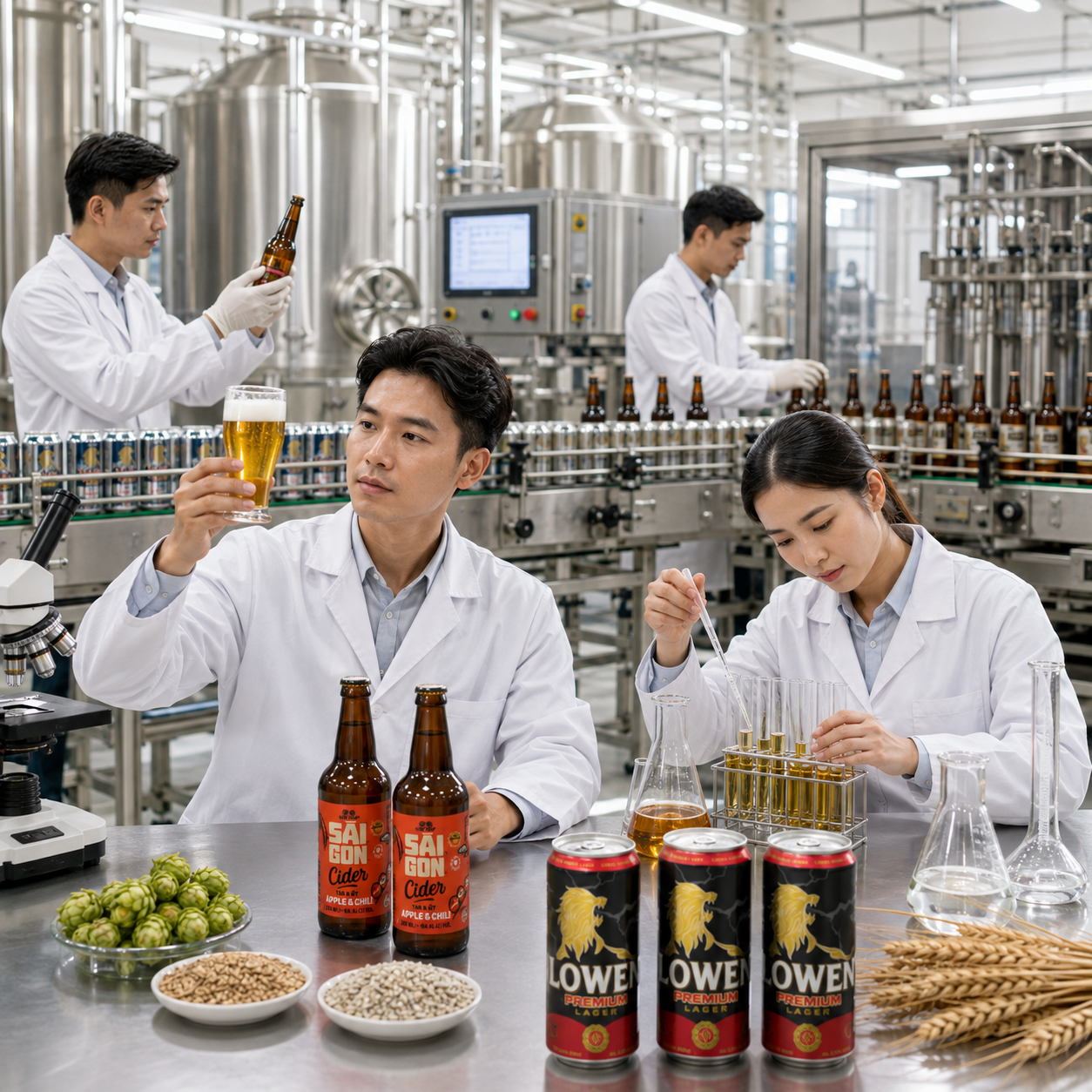
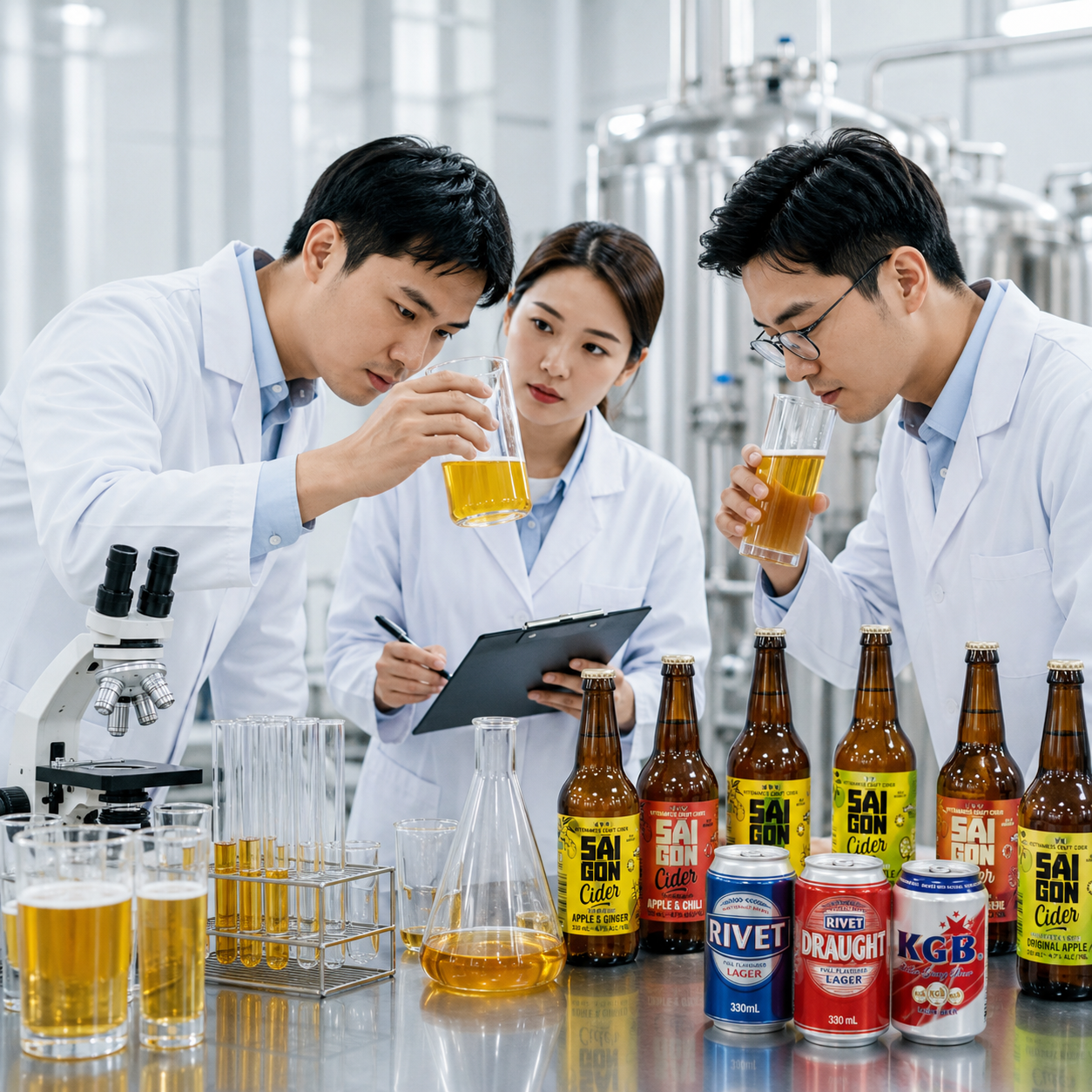
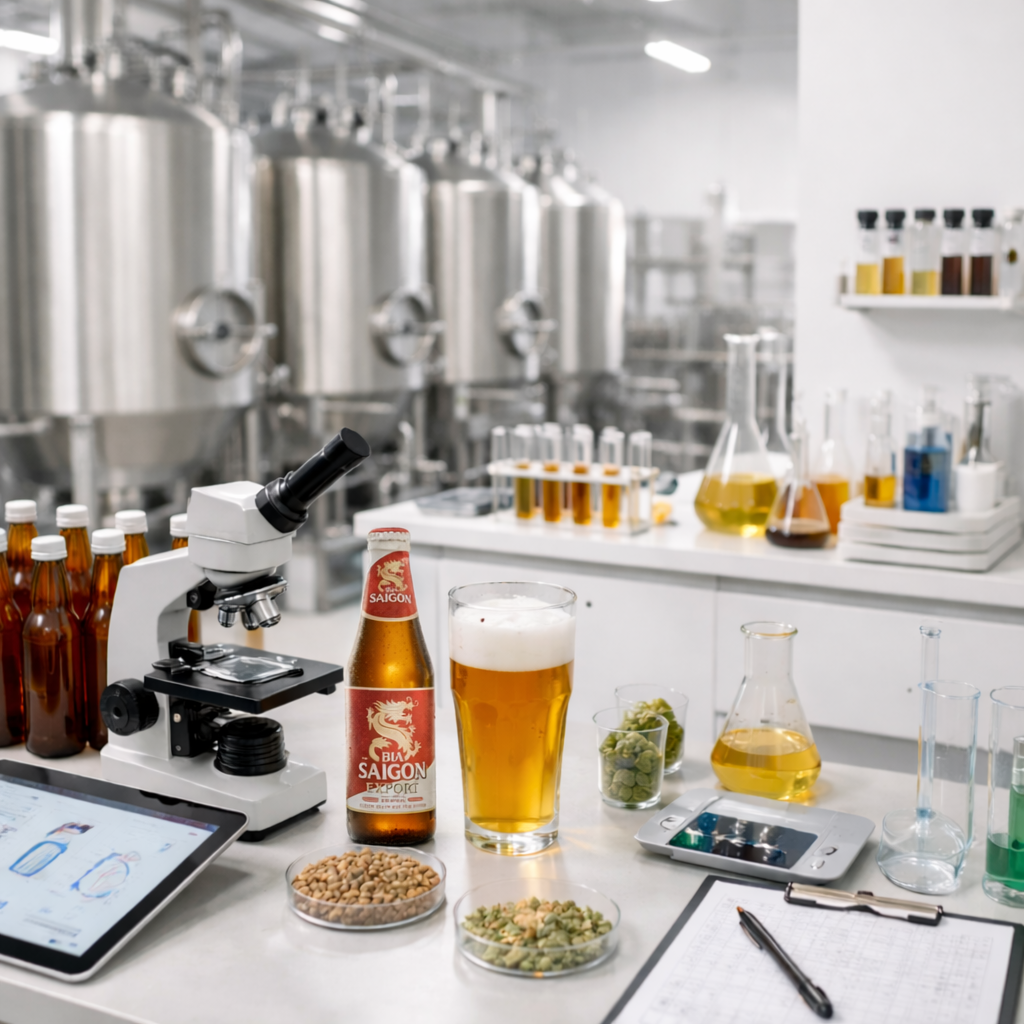
To achieve this, businesses need a structured recipe development process, carefully selected ingredients, and a comprehensive quality control system covering the entire process from incoming materials to finished products.
This is also why many businesses choose to partner with OEM breweries that have modern production capabilities. Instead of building the entire system from scratch, businesses can leverage existing QA (Quality Assurance) and QC (Quality Control) processes, together with experienced R&D (Research & Development) teams, to establish product quality from the very first production batches.
A beer brand can take years to build its reputation, but just a few inconsistent production batches can significantly undermine customer trust. Therefore, investing in quality is one of the most valuable long-term investments a brand can make.
Differentiation Is Not Just About “Making Beer” — It Is About Telling the Brand Story
Today, consumers are not simply buying a beverage. They are also buying the emotional values and experiences associated with a brand.
A product connected to local culture, a beer developed specifically for a restaurant chain, or a brand inspired by distinctive regional ingredients can create a stronger connection than products that compete primarily on price.
Therefore, building a beer brand should be viewed as a process of creating a distinctive brand identity.
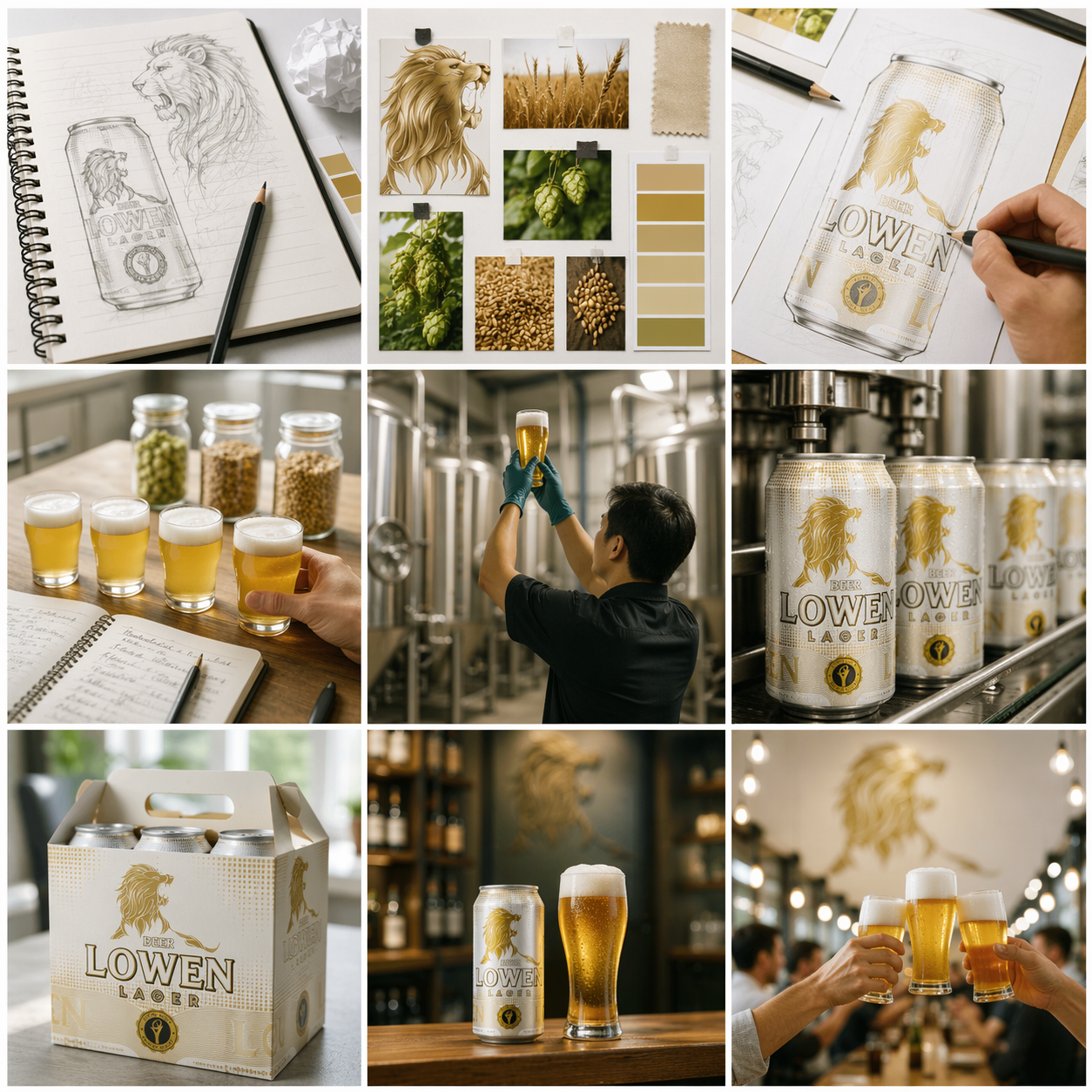
The brand name, logo, packaging design, colors, communication messages, and storytelling should all work toward the same consistent image. When every customer touchpoint communicates the same core values, the brand gradually becomes more recognizable and can build stronger customer loyalty.
Packaging Is the “Brand Ambassador” at the Point of Sale
Among hundreds of products displayed on a shelf, consumers may have only a few seconds to decide whether to pick up a beer can or not.
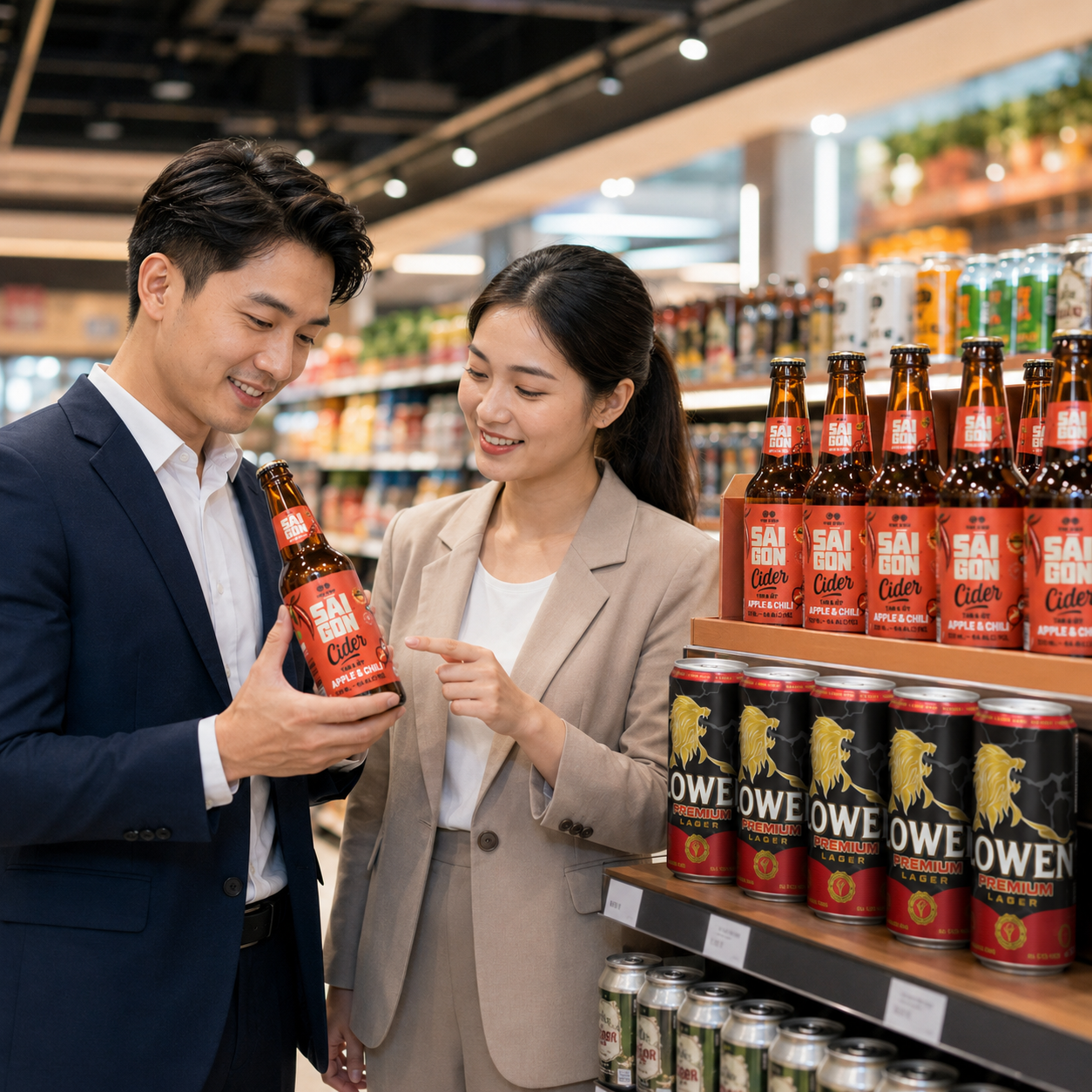
Packaging is therefore no longer simply a protective layer for the product; it has become one of the most direct and effective communication tools.
A well-designed package should accurately reflect the brand positioning while creating a professional and distinctive impression. Colors, materials, bottle or can formats, information presentation, and visibility from a distance all contribute to the customer’s first experience with the brand.
For a private-label beer brand, investing in packaging from the beginning can increase the product’s perceived value and provide significant support for future sales activities.
Building a Brand Is a Long-Term Process, Not a Short-Term Campaign
Many businesses expect a new brand to generate significant sales within just a few months of launch. In reality, most successful brands go through a long-term investment period before establishing a strong position in the market.
A brand needs time to become recognized, experienced, and trusted by customers.
Throughout this process, businesses need to maintain consistency in product quality, brand image, communication activities, and customer service. Adjustments to recipes, packaging, or marketing strategies should be based on market data and real customer feedback rather than constantly changing in response to short-term trends.
This is what creates sustainability and allows a brand to develop steadily over many years.
If a business is planning to develop its own private-label beer brand, establishing a 3-to-5-year development roadmap from the outset can help optimize resources and reduce short-term decision-making risks.
OEM – A Solution That Allows Businesses to Focus on Brand Value
One of the biggest challenges in building a beer brand is having to manage many activities simultaneously: investing in a brewery, operating production, recruiting personnel, controlling quality, developing the market, and building the brand.
Spreading resources across all these areas can consume significant time and increase operational risks.
This is one reason why the OEM (Original Equipment Manufacturing) model is increasingly being adopted by businesses.
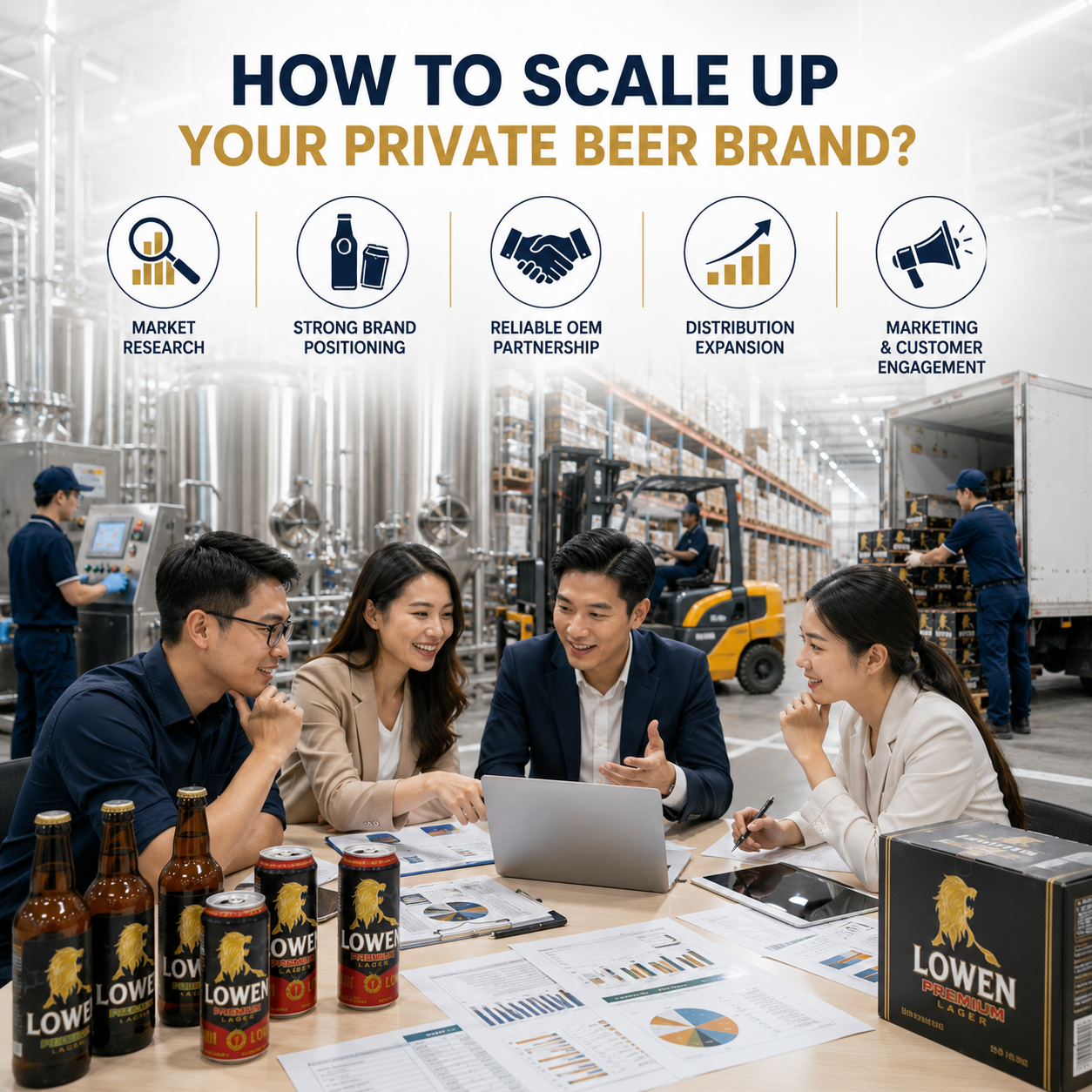
Through OEM, businesses can leverage a partner’s modern production systems, standardized operating processes, and experienced technical teams, allowing them to focus more heavily on brand strategy, expanding distribution networks, and developing customers.
Beyond reducing initial investment costs, OEM can also shorten Time-to-market, improve quality control, and enable businesses to flexibly adjust production volumes according to actual market demand.
Choosing the Right Partner Determines the Brand’s Development Speed
Throughout the journey of building a private-label beer brand, the manufacturing partner is not simply a contract manufacturer but an important link in the entire value chain.
A partner with strong R&D capabilities can help businesses develop recipes suited to their target market. Modern production systems help ensure consistency across batches. Strict quality control processes help protect the brand’s reputation. At the same time, experience in implementing multiple OEM projects helps businesses minimize common risks during product development.

At Sai Gon – Mien Trung Beer Joint Stock Company (SMB), beer OEM services are built around a comprehensive partnership model, covering market research, recipe development, packaging design, production, quality control, and support in finalizing products before market launch.
Rather than simply providing production capacity, SMB aims to become a strategic partner, helping businesses build their private-label beer brands in a structured, efficient, and sustainable manner.
Building a sustainable private-label beer brand is a long-term journey that requires businesses to combine the right strategy, consistent product quality, continuous innovation, and persistence throughout the development process.
As Vietnam’s beer market becomes increasingly competitive, the advantage will not necessarily belong to the largest businesses. Instead, it will belong to brands that understand their customers, establish a distinctive identity, and maintain consistency across every product and customer touchpoint.
With the support of the OEM model and an experienced manufacturing partner, businesses can shorten implementation time, optimize resources, and focus on the most important objective: building a beer brand with long-term value in the market.
Contact Information
Sai Gon – Mien Trung Beer Joint Stock Company (SMB)
- Address: 01 Nguyen Van Linh, Tan An Ward, Buon Ma Thuot City, Dak Lak Province
- OEM Consultation Hotline: (+84) 94 1127575
- Email: Oem@biasaigonmt.com
- Website: https://oem.biasaigonmt.com