

The beer market is becoming increasingly diverse as, alongside major brands that have already established stable positions, many businesses, distributors, and F&B operators are also interested in developing their own beer brands. This can be an approach that helps businesses gain greater control over their products, establish a presence in the market, and gradually build long-term brand equity.

However, bringing a private-label beer product to market is not simply a matter of choosing a flavor, designing a label, and proceeding with production. Before getting started, businesses need to prepare relatively carefully in terms of target customers, product positioning, production volume, packaging, commercial plans, as well as the approach to working with the brewery.
The clearer the preparation from the beginning, the more smoothly the development of a commercial beer brand can proceed, minimizing the need for repeated adjustments and creating a stronger foundation when the product is officially launched on the market.
Below are 6 important steps businesses should prepare before starting the project.
1/ Clearly define the objective of developing a beer brand
Before discussing the recipe, bottles, cans, or packaging design, the first question businesses need to answer is: Why do we want to develop our own beer brand?
Each business may start the project with a different objective. A distributor with an existing dealer network may want to own a private beer label to expand its product portfolio. A restaurant chain may need a product carrying its own brand to create differentiation in the customer experience. Meanwhile, a business newly entering the market may aim to build an independent beer brand for long-term development.
Different objectives will lead to different approaches to product development.
If a business wants to reach the mass-market segment and expand market coverage, factors such as selling price, distribution capability, and product accessibility often need to be prioritized. Conversely, if the brand targets customers with higher expectations for experience, the business may need to invest more in product characteristics, packaging imagery, and the brand story.
Defining the objective from the outset also helps businesses communicate more effectively with the OEM beer manufacturing provider. Instead of starting with a general request such as “wanting to produce beer under our own brand,” the business can provide specific direction regarding the market, customers, expected price, and business objectives.
This is the foundation for ensuring consistency throughout the subsequent development stages.
Do you have an idea for developing your own beer label but are unsure where to start? SMB is ready to discuss and provide initial guidance for the project via Email: Oem@biasaigonmt.com.
2/ Research target customers and markets
A commercial beer product only truly has meaning when it meets the needs of the customer group that the business wants to reach. Therefore, before deciding on product characteristics, the business
nghiệp cần dành thời gian tìm hiểu thị trường.

Instead of trying to create a beer that is suitable for everyone, businesses should identify their main consumer group relatively clearly.
What age group do they belong to? In what situations do they usually consume beer? Do they purchase it at restaurants, eateries, retail stores, or through distribution systems? Are they more concerned about price, flavor, design, or product origin?
These questions directly influence how the brand is built.
For example, a product intended for large social gatherings may need easy-to-drink characteristics and a price suitable for frequent consumption. Meanwhile, a product aimed at restaurant experiences or a specific segment may place greater emphasis on differentiation in perception and image.
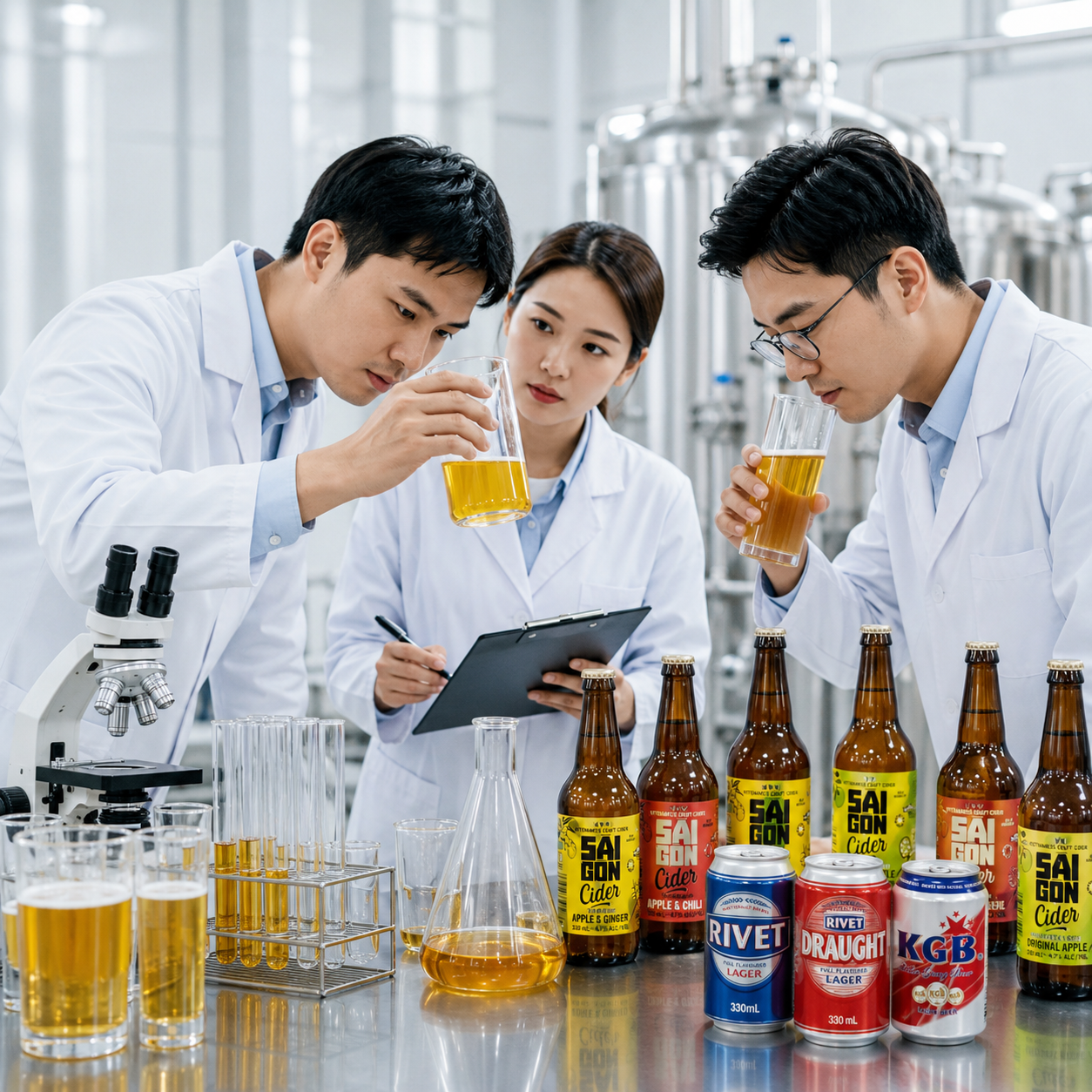
Businesses should also examine the products currently available in the segment they plan to enter. The purpose is not to copy competitors but to understand what choices are already available in the market, what the common price ranges are, and where opportunities exist for a new brand to establish its own distinctive identity.
When market information is sufficiently clear, discussions with the OEM factory also become more practical. Based on that direction, the factory can work with the business to discuss suitable product options instead of developing the product based on subjective judgment.
If businesses need to discuss product direction suitable for their intended customer segment, they can contact SMB’s OEM department via Email: Oem@biasaigonmt.com for consultation.
3/ Build positioning for the beer product
After identifying the market and customers, businesses need to translate that information into clear product positioning.
Positioning can be understood simply as how a business wants customers to remember its product. When faced with multiple choices on store shelves or on a menu, what reason makes consumers notice and choose the product?
This is an issue that needs to be determined before making significant investments in naming and design.
One brand may choose an approachable, accessible image suitable for the mass market. Another brand may focus on a modern, youthful style. Some businesses may also want to develop a product associated with a particular market region, restaurant system, or distinctive characteristic of their business operations.
The important point is that positioning must be capable of being translated into an actual product.
If the brand is positioned in the mass-market segment but the chosen packaging and product configuration cause the cost to exceed what target customers are willing to accept, the project will face difficulties when commercialized. Conversely, if the product targets a higher-value segment but its image and product experience are not sufficiently differentiated, the brand will also struggle to provide customers with a compelling reason to choose it.
Therefore, businesses should view positioning as the connection between product – packaging – selling price – distribution channels – communication rather than merely as a slogan.
When these five factors are all directed toward the same customer group and a consistent value proposition, the brand will have a clearer foundation for entering the market.
SMB can work with businesses to discuss OEM manufacturing needs and product direction before production is implemented. Contact for consultation via Email: Oem@biasaigonmt.com.
4/ Prepare product and packaging concepts
Once the objectives and positioning are relatively clear, businesses can begin to define the product in more concrete terms.
At this stage, it is not necessary to have a complete recipe immediately. What is more important is for the business to be able to describe the product it wants to develop: beer style, desired sensory characteristics, volume, packaging format, and target price range.

This information forms an initial brief for both parties to discuss together.
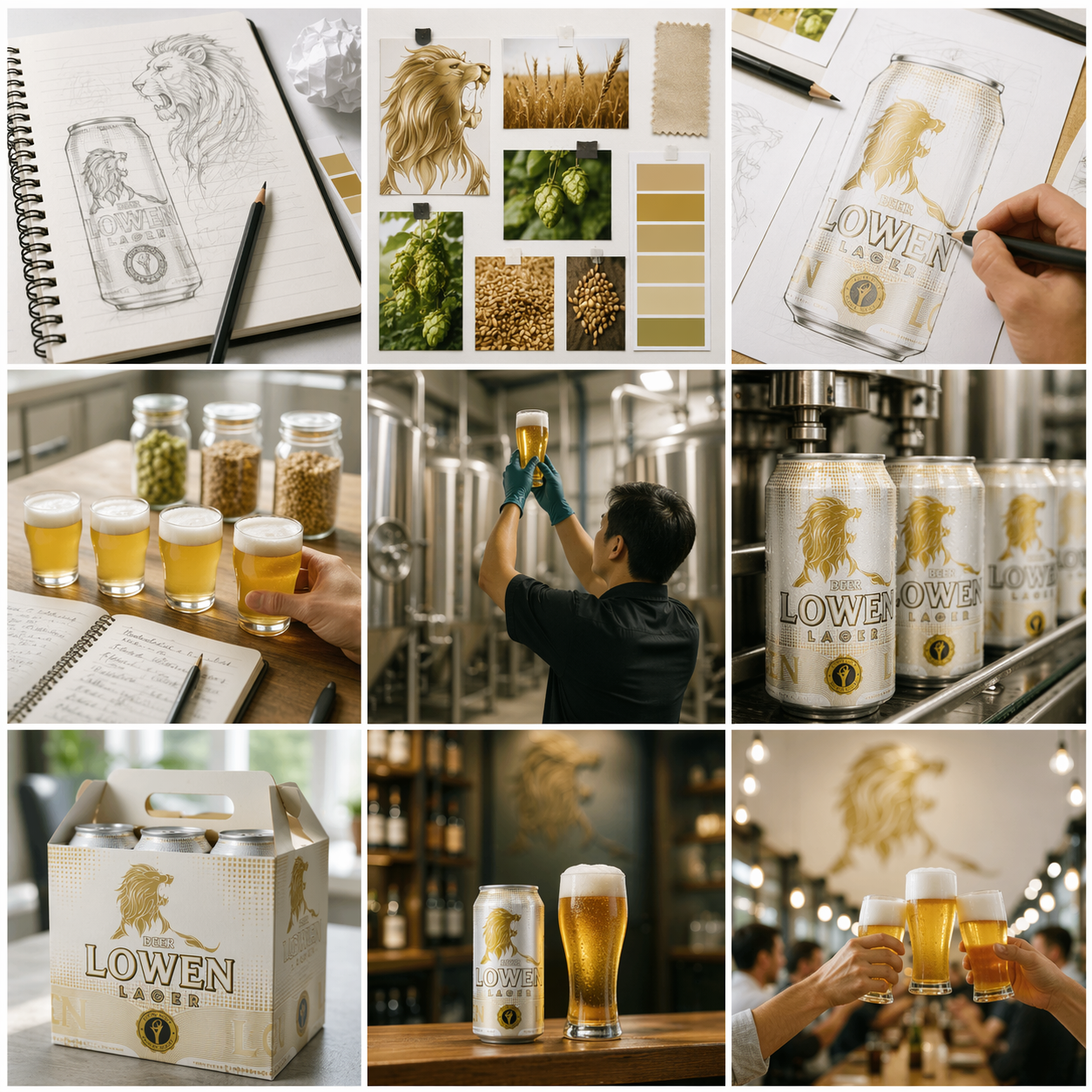
Packaging also needs to be considered alongside the product. In a commercial environment, cans, bottles, labels, cartons, and the brand identity system not only serve a containment function but are also an important part of the brand experience.
Customers may see the packaging before they have an opportunity to try the product. Therefore, the design needs to both create recognition and align with the positioning and sales environment.
Businesses also need to avoid finalizing the entire design too early when the technical specifications of the product and packaging have not yet been agreed upon. A design that looks attractive on a screen may not necessarily be fully compatible with actual production specifications.
A more effective approach is to coordinate the product and packaging development processes. When working with the manufacturing provider, businesses should first discuss packaging specifications, dimensions, and related technical requirements before finalizing the design.
This approach helps minimize unnecessary revisions when the project moves from concept to production.
Businesses preparing product or packaging concepts for their own beer labels can discuss them with SMB OEM department via Email: Oem@biasaigonmt.com for consultation before implementation.
5/ Develop the production volume, selling price, and distribution channel plan
One of the areas that needs to be carefully prepared before placing an order for OEM beer manufacturing is the commercial plan.
Many projects focus heavily on the brand name and design but have not clearly determined where the product will be sold after production, what the expected production volume will be, and what price will be suitable for the distribution system.
These factors are directly interconnected.
The expected production volume affects production planning and costs. The target selling price is related to the product configuration, packaging, and profit margins allocated to different levels of distribution. Meanwhile, the characteristics of the sales channel may determine which packaging format is more convenient when bringing the product to market.
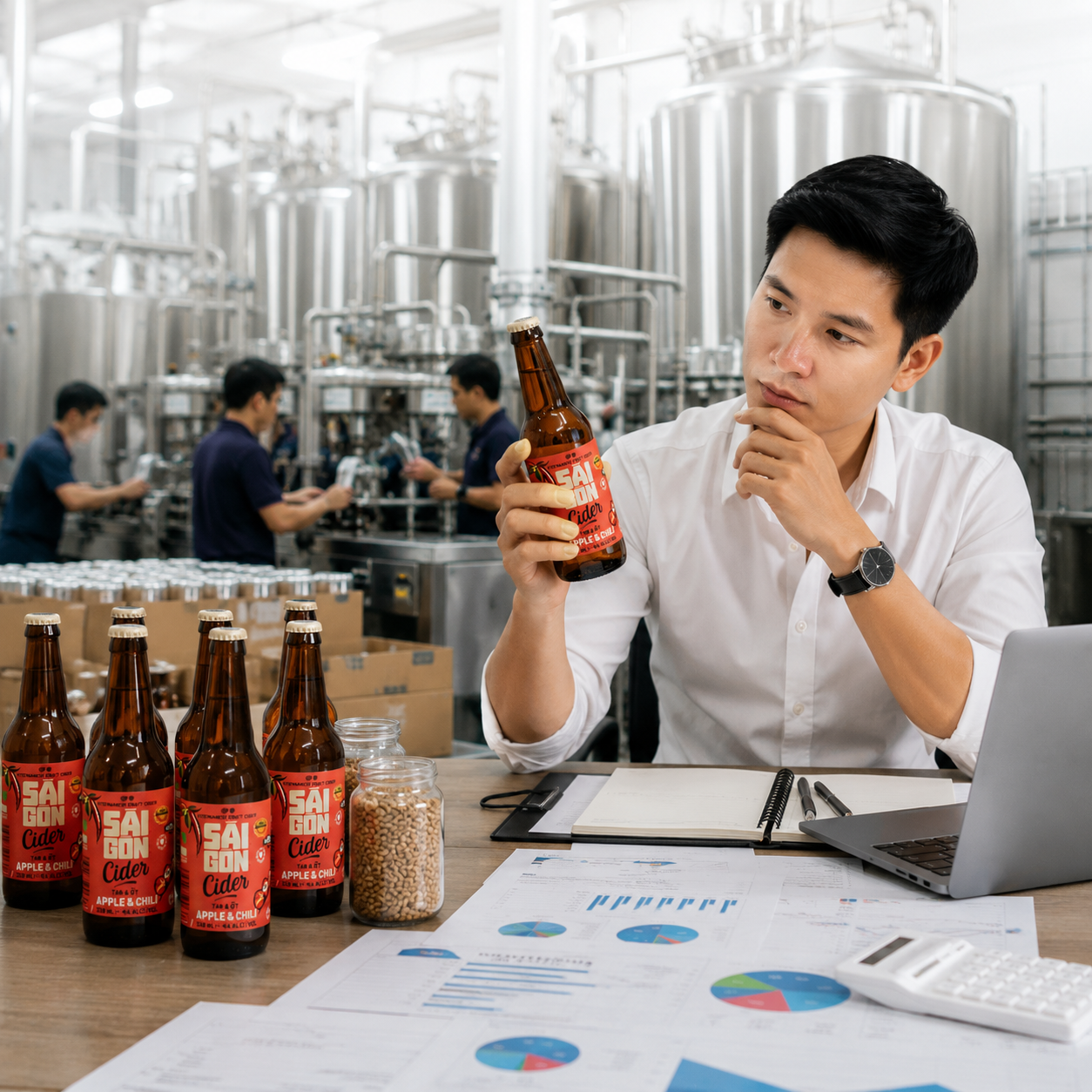
For example, a business that already has a distributor network can develop a production volume plan based on the consumption capacity of each region. A new brand without market data should develop more cautious assumptions and prepare a plan to validate customer feedback.
More importantly, businesses should calculate the business model backward from the selling price to the product cost, rather than completing the product first and then trying to determine the price.
Once the target selling price range and expected profit margin have been determined, businesses will have a better basis for discussing suitable product options with the factory.
This is also the step that helps transform a brand idea into a project with practical commercial feasibility.
To discuss production volume requirements and OEM manufacturing options suitable for the business plan, businesses can contact SMB via Email: Oem@biasaigonmt.com for consultation.
6/ Select a beer manufacturing partner and prepare an implementation plan
After completing the basic directions, the next step is to select a partner to help turn the idea into an actual product.
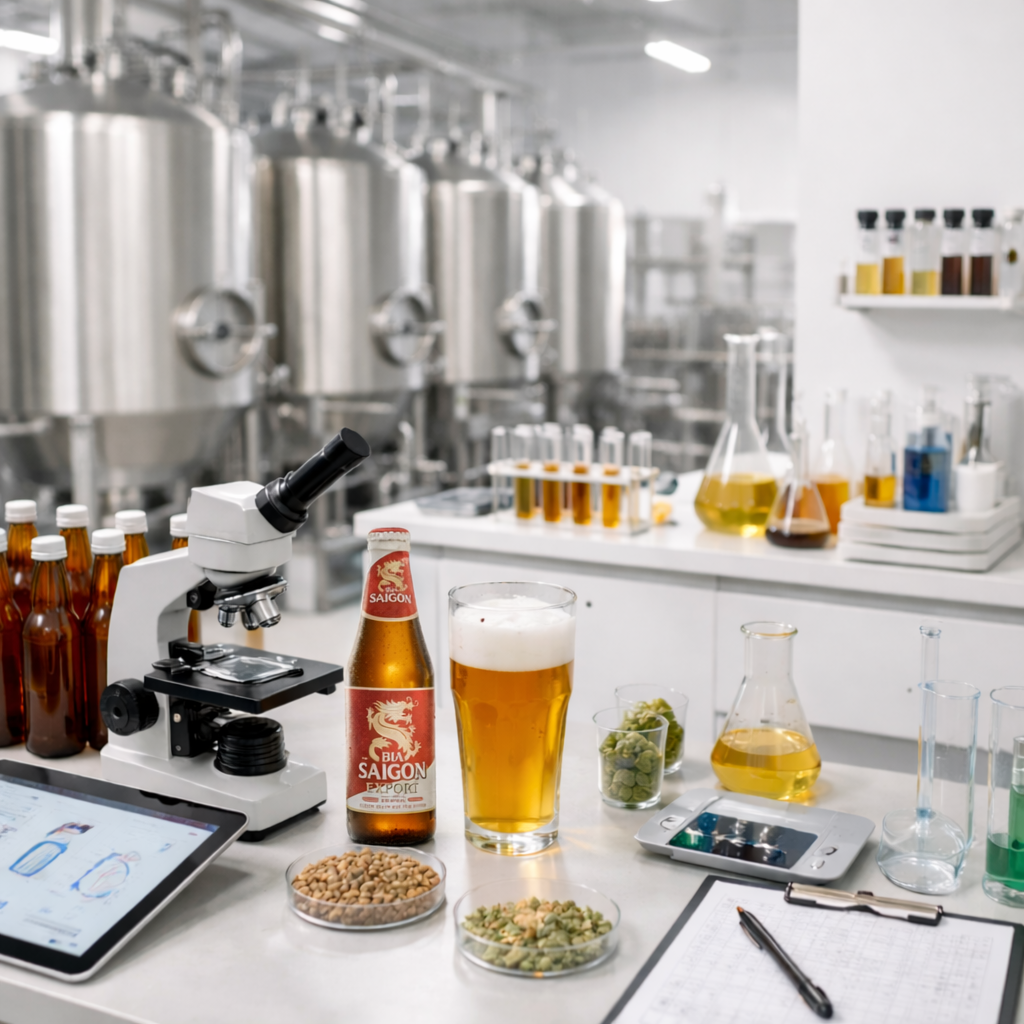
For businesses that do not own their own brewery, OEM beer manufacturing services are an option that provides access to existing production capabilities without necessarily having to invest in an entire brewery system from the outset.
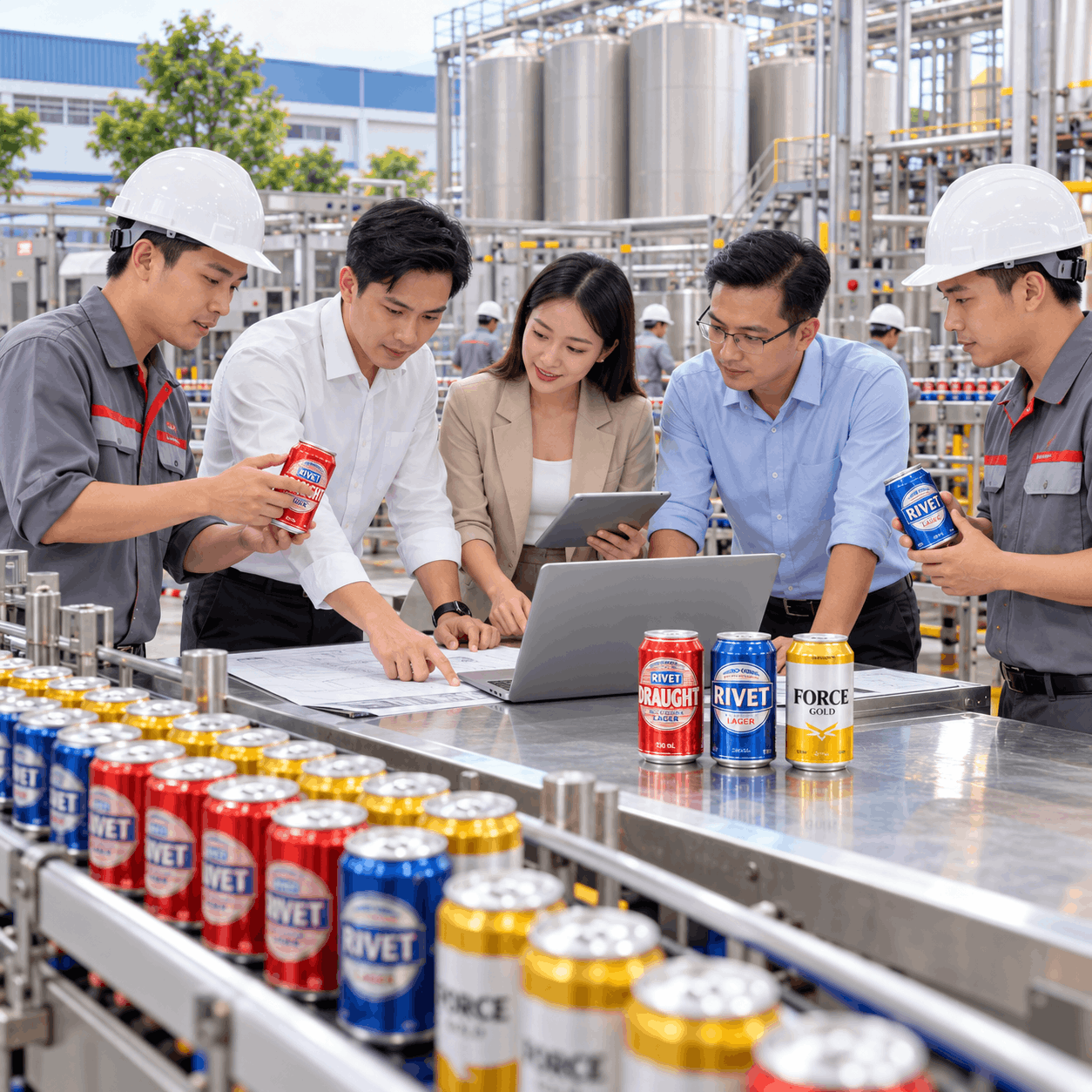
However, businesses should not view an OEM brewery merely as a facility that receives production orders.
A beer brand project typically goes through multiple stages, from discussing requirements, agreeing on product options, preparing packaging, and production planning to the point when the goods are ready for commercial activities. Therefore, the ability of the business and the manufacturing provider to coordinate with each other has a significant impact on the project timeline.
Before discussing the project with the brewery, businesses should prepare a relatively clear project description that includes the intended market, target customers, positioning, desired product type, packaging format, price range, and expected production volume.
Not all information necessarily needs to be completely finalized. Some details can continue to be adjusted as both parties work together. However, the more initial data available, the easier it will be to provide consultation and develop suitable options.
At Sai Gon – Mien Trung Beer Joint Stock Company (SMB), businesses interested in developing beer products under their own brands can contact the dedicated OEM department to discuss their projects and manufacturing requirements.
Clarifying the idea before entering production not only helps save time but also enables businesses to view the project more comprehensively: from the product and consumers to commercial feasibility.
Good preparation is the first step toward bringing a beer brand idea to market
Developing a commercial beer brand is a process that requires a connection between product thinking and business planning. A suitable recipe is important, but for the product to have an opportunity to grow in the market, businesses also need to understand customers, determine positioning, establish pricing, select packaging, and prepare the distribution system.
Therefore, before addressing production, businesses should take the time to answer three core questions: Who is the product for? How will the product be sold? And what position does the business want to build for the product in the market?
Once these questions have relatively clear answers, working with the manufacturing provider will become significantly more effective.
If a business is planning to develop its own beer label, whether it is still at the idea formation stage or already has a specific product plan, early discussions with the manufacturing provider can help assess feasibility and develop a more suitable implementation roadmap.
SMB respectfully invites businesses to contact us for consultation regarding product development needs and OEM beer manufacturing services.
Contact Information
Company: Sai Gon – Mien Trung Beer Joint Stock Company (SMB)
Head Office Address: 01 Nguyen Van Linh, Tan An Ward, Dak Lak Province
OEM Consultation Hotline: (+84) 94 1127575
Dedicated Email: Oem@biasaigonmt.com
Official Website: https://oem.biasaigonmt.com/