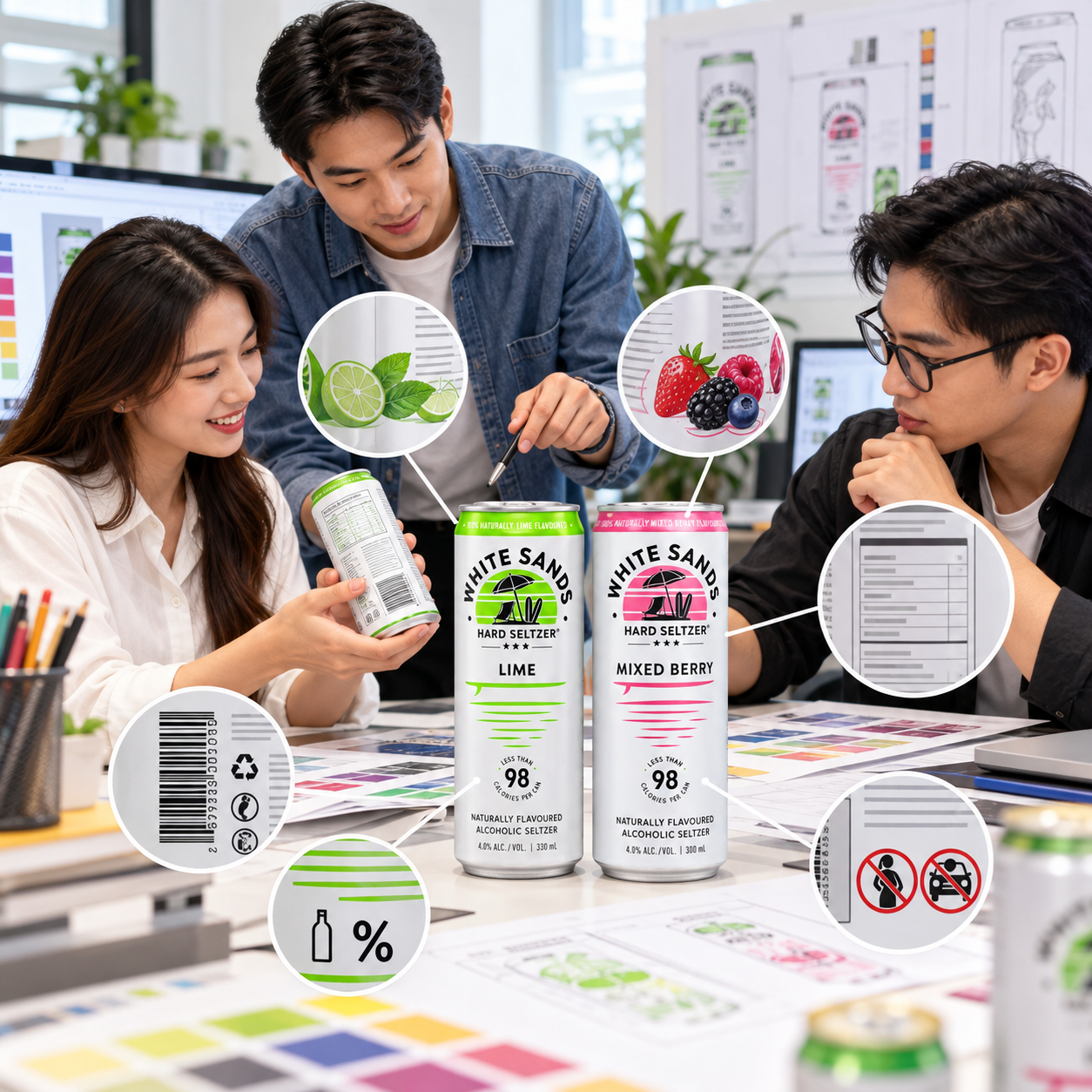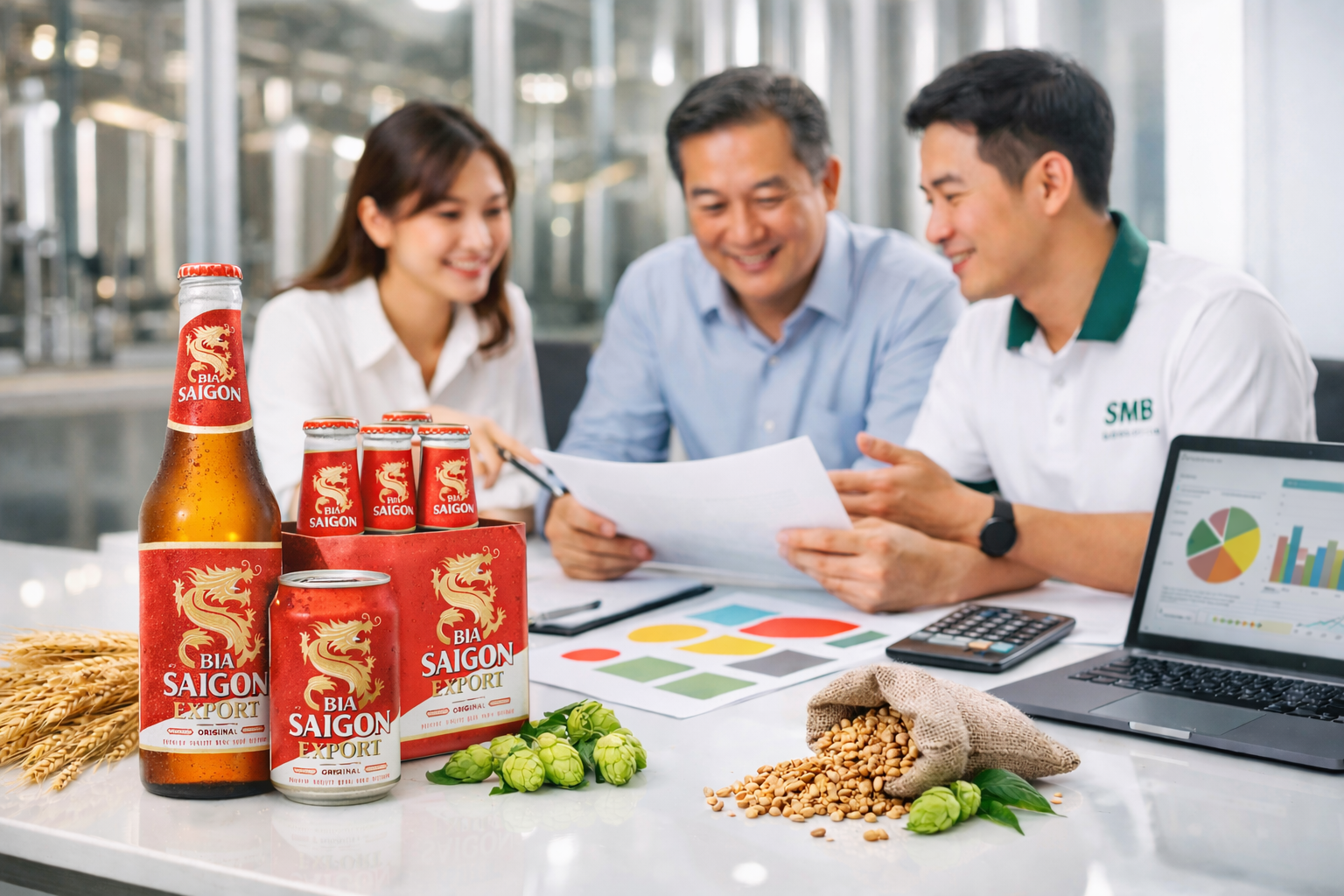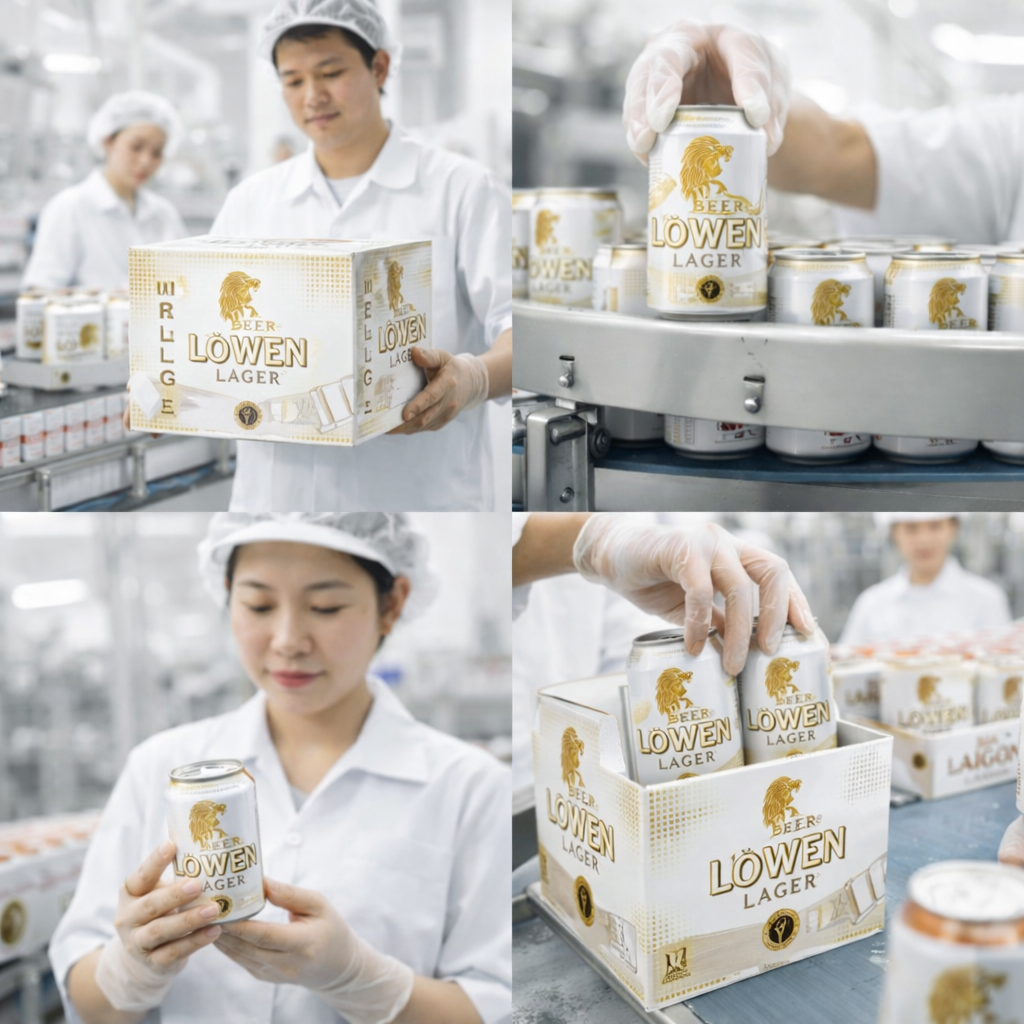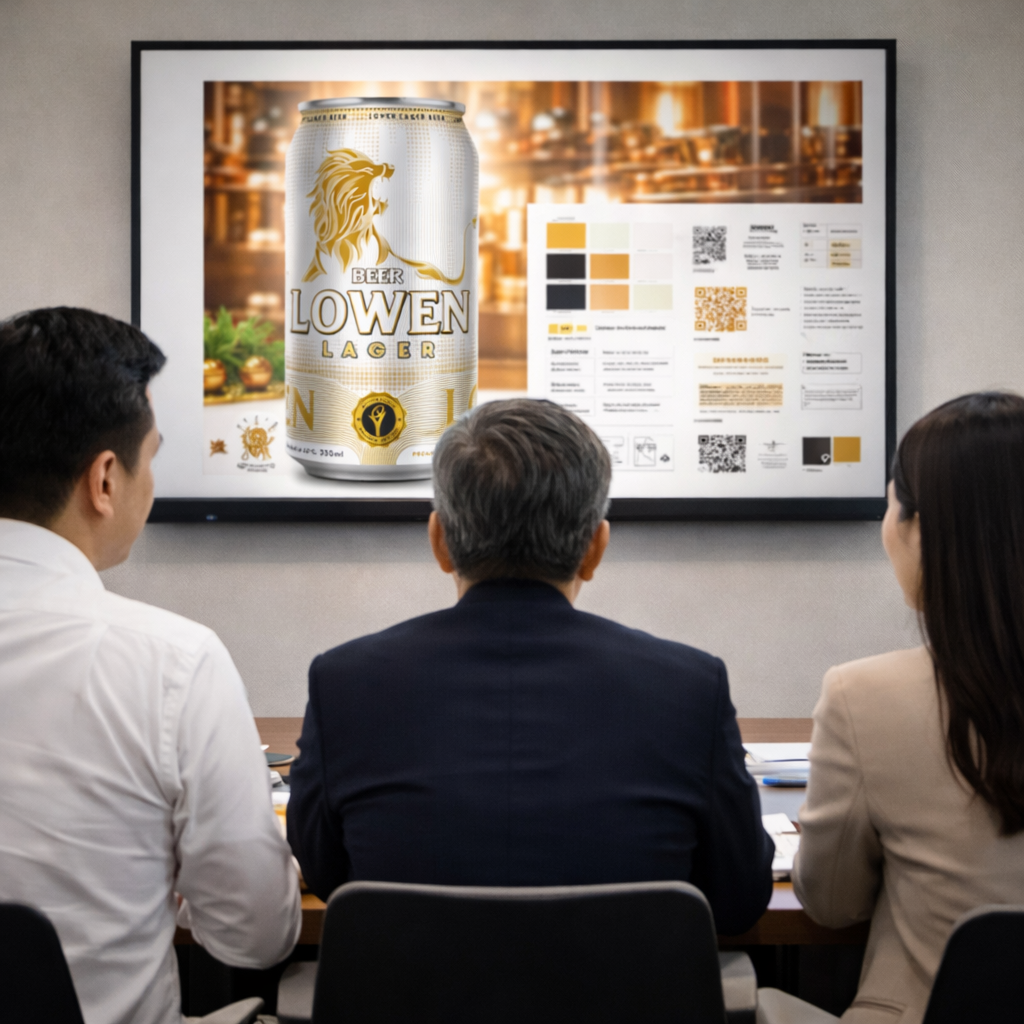


In the beer industry, packaging not only serves to contain and protect the product but also forms an important part of the brand identity system. From bottle and can shapes to colors, label layouts, and materials used, each element helps shape how customers recognize and evaluate the product.
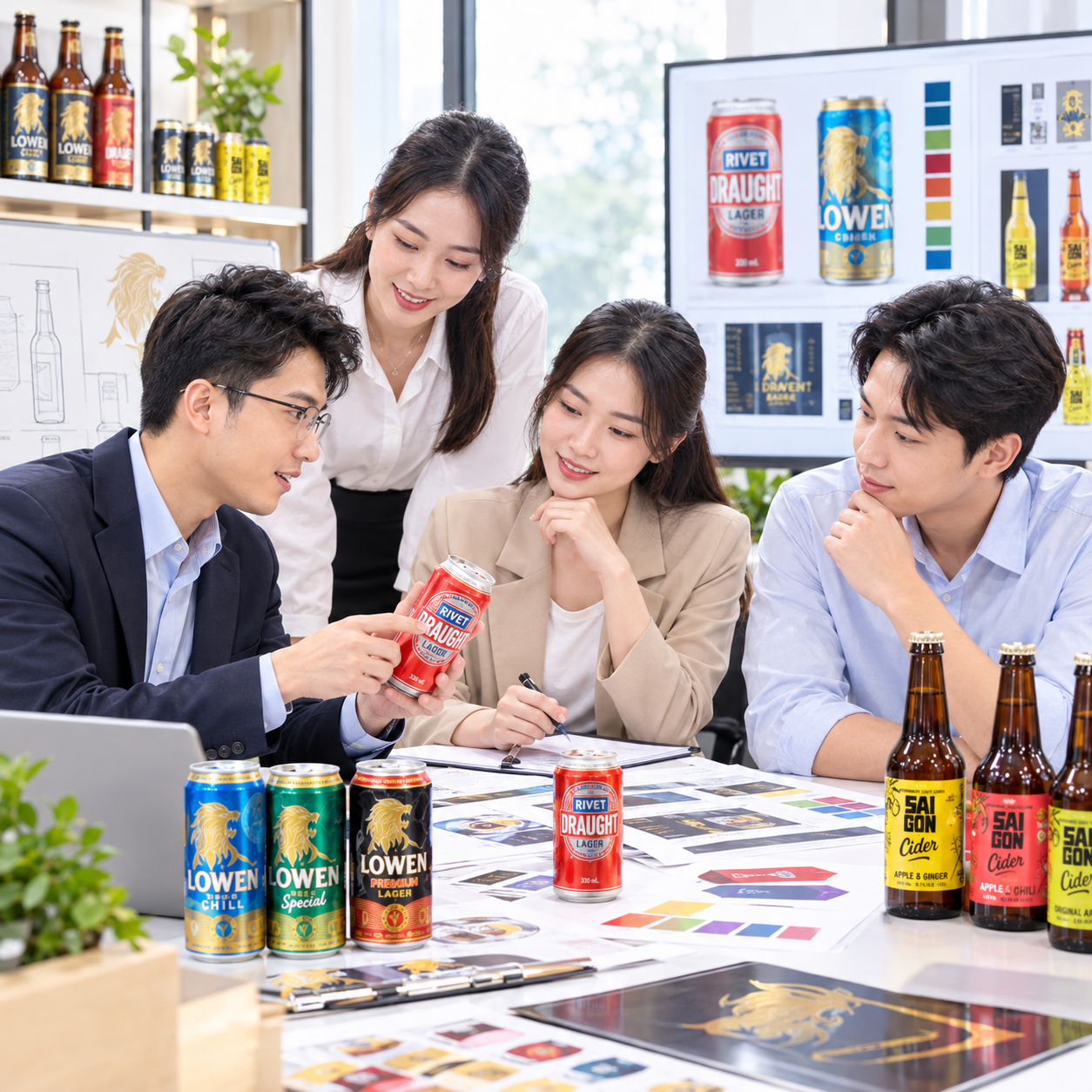
As more beer lines with different specifications and positioning enter the market, developing a suitable packaging system becomes a challenge that combines design, production engineering, and brand management.
For businesses developing private-label beer, packaging is also directly linked to investment costs, production capabilities, distribution activities, and consistency across the product portfolio.
An aesthetically pleasing design may not be effective if it is difficult to implement on the production line, incurs high costs, or is unsuitable for the conditions in which goods are distributed.
So, how can beer packaging help enhance brand value, and what factors should businesses consider when developing product packaging?
Packaging helps build a consistent brand identity system
One of the most important roles of packaging is to create a consistent identity across products belonging to the same brand.
In a distribution environment with many competing products, customers often encounter packaging before exploring product information in greater depth. Therefore, the arrangement of visuals and content on packaging can affect brand recognition.
Elements such as primary colors, typography, logo placement, and label layout need to be developed based on a clear design system.
However, consistency does not mean that all products must use the same design.
If a business develops multiple beer lines, each product can have its own distinctive identity while maintaining a connection to the overall brand system.
For example, businesses can standardize how the brand name is presented, the label structure, or the principles for using colors, while adjusting other elements to distinguish individual product lines.
This approach helps prevent inconsistencies across the packaging portfolio as the number of SKUs increases.
For private-label beer, establishing an identity system from the outset also helps businesses take a more proactive approach when developing additional packaging formats or new products.
A clear set of design principles also facilitates coordination among the design agency, packaging suppliers, and the contract manufacturing facility.
Businesses developing private-label beer products can discuss packaging specifications and requirements to prepare before production with SMB’s OEM department via Email: Oem@biasaigonmt.com.
Packaging design helps communicate product positioning and value
Packaging is one of the ways businesses communicate a product’s direction through visuals and information.
A brand may choose a minimalist or modern design style, or emphasize elements related to the product’s origin and characteristics. However, these choices need to align with the established positioning.
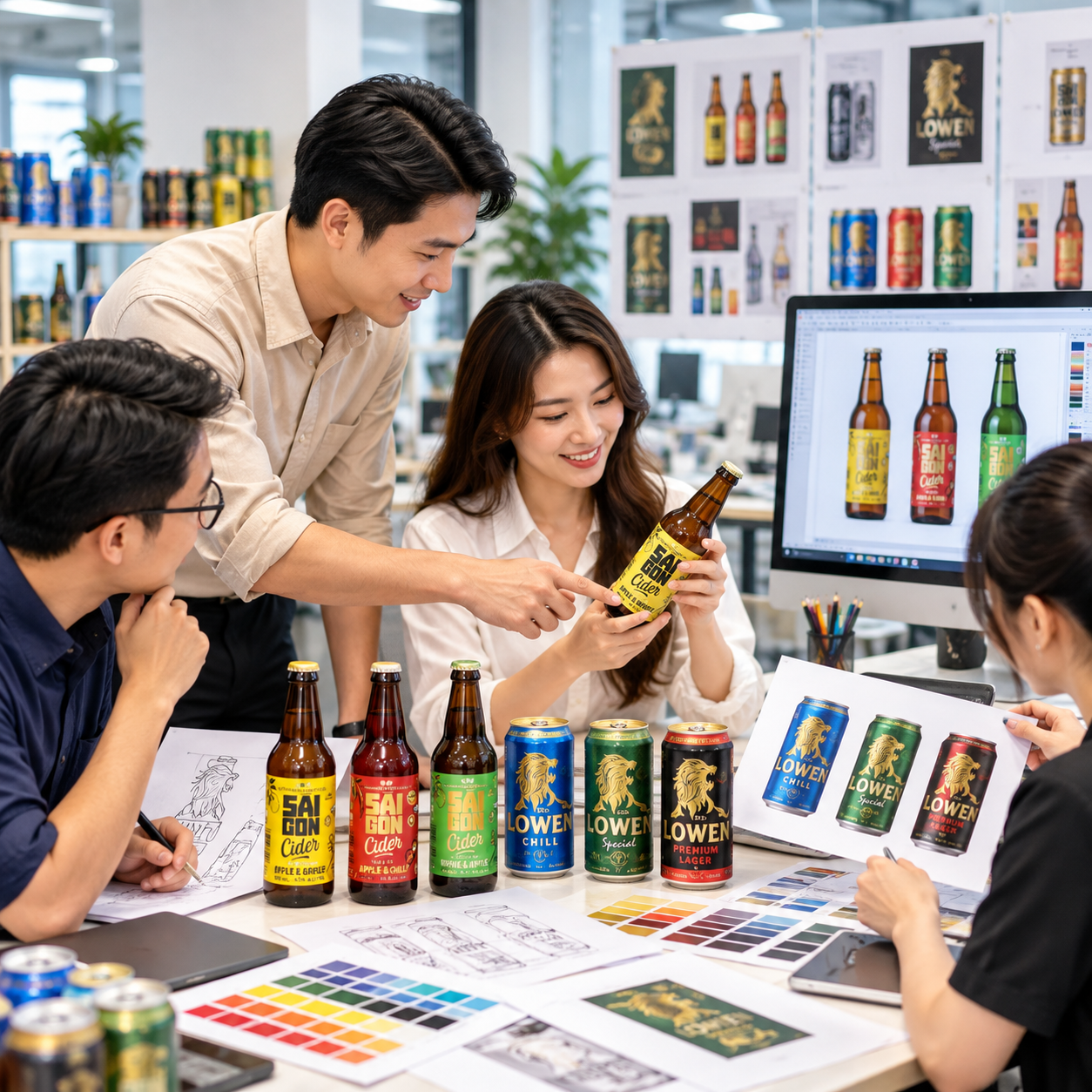
If the packaging design does not accurately reflect the product’s characteristics, customers may develop expectations that differ from the actual product information.
Therefore, businesses need to consider the relationship between brand positioning, packaging design, and the content communicated.
For products developed for different segments, packaging can help distinguish the role of each product line within the portfolio.
However, design differences need to have a clear basis rather than merely changing colors or visuals to follow trends.
Another important factor is the ability to communicate information clearly.
The product name, specifications, volume, and mandatory information need to be presented clearly and comply with applicable laws.
In addition, descriptions of product characteristics need to be supported by verifiable evidence to avoid creating misleading impressions.
In brand development, the value of packaging lies not only in how much it stands out but also in its ability to communicate information accurately and consistently.
When customers can recognize the product and clearly understand the necessary information, packaging contributes to the brand’s communication function.
If businesses already have a design direction but have not clearly defined production specifications, SMB’s OEM department can receive project information via Oem@biasaigonmt.com to discuss technical requirements related to packaging.
Packaging quality helps protect the product and the brand’s reputation
In the beer industry, packaging not only serves a visual purpose but also performs important technical functions.
Bottles, cans, closures, and related components need to meet requirements appropriate to the product’s characteristics, production conditions, and distribution process.
If packaging does not meet technical requirements, resulting issues may affect finished product quality and operational efficiency.
Therefore, businesses need to consider packaging quality as part of the product quality control system.
For packaging that comes into direct contact with beer, material selection needs to meet applicable food safety requirements and technical standards.
In addition, the integrity of packaging seals, compatibility with the production line, and storage conditions also need to be assessed.
A design with a suitable appearance that is incompatible with production equipment may cause difficulties during filling, sealing, or finished product inspection.
Packaging is also subject to stresses during case packing, transportation, handling, and storage.
Therefore, the ability to protect the product throughout the entire supply chain is an important criterion when evaluating packaging options.
For businesses using the OEM beer manufacturing model, technical requirements need to be discussed with the factory before finalizing the design or purchasing materials.
Early coordination helps reduce situations in which packaging has already been produced but needs to be adjusted to meet actual operating conditions.
To learn about the factors that need to be agreed upon between packaging design and OEM beer production requirements, businesses can contact SMB’s dedicated department via Email: Oem@biasaigonmt.com.
Packaging suited to distribution channels helps improve operational efficiency
An effective packaging option needs to be considered in the context of how the product will be distributed.
Retail channels, restaurants, hotels, or different distribution systems may have their own requirements for specifications, packing, storage, and delivery.
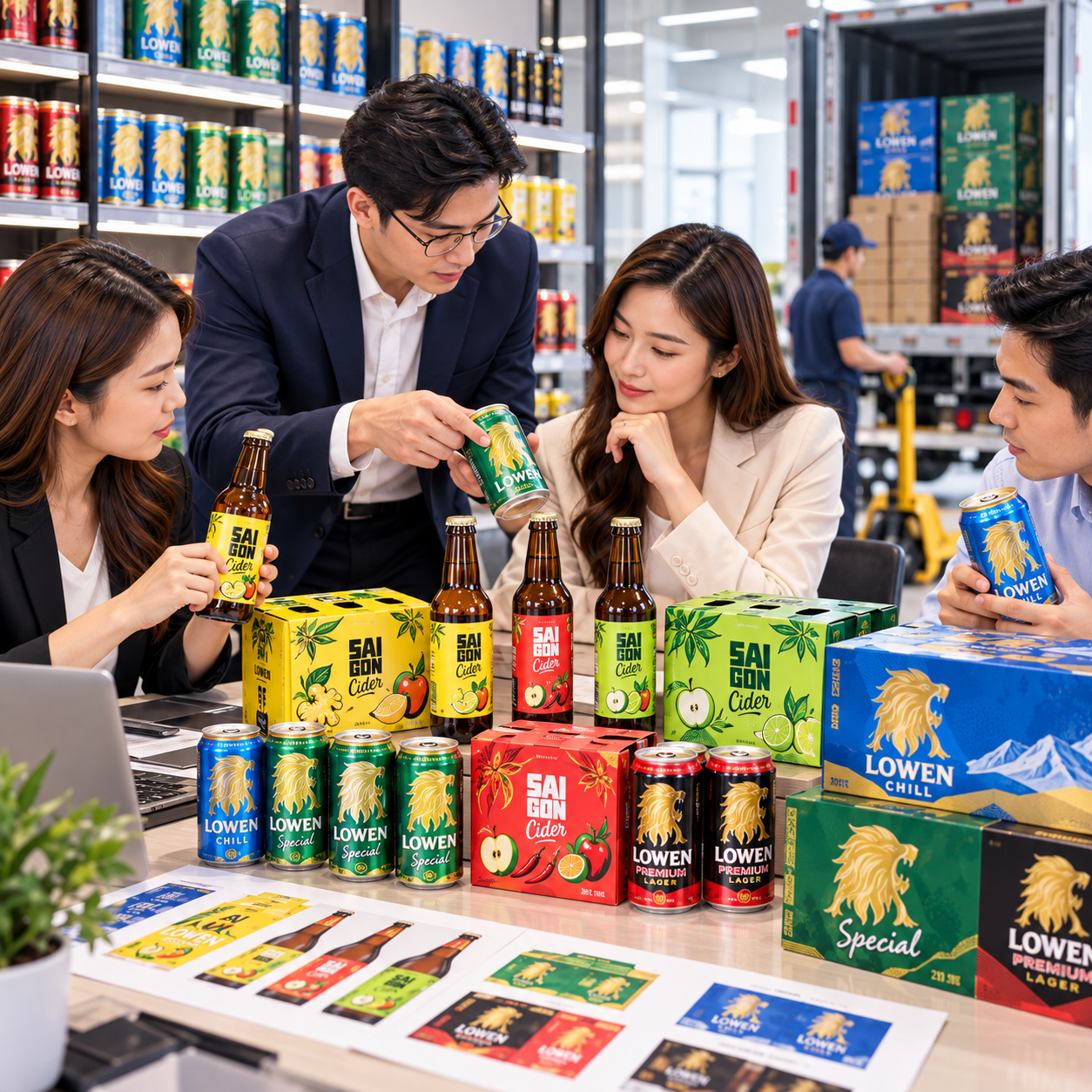
Therefore, businesses should not evaluate packaging solely on its external appearance.
For retail channels, the arrangement of information and product identification elements needs to suit how goods are displayed.
Meanwhile, transportation and storage requirements may influence the choice of shipping cases, the number of units per case, and stacking methods.
An unsuitable specification may increase transportation costs or create difficulties in inventory management.
Conversely, packaging designed in alignment with the distribution system can help businesses use resources more efficiently.
This is particularly important when businesses plan to expand into multiple market regions.
If the portfolio includes too many packaging specifications but production volumes for each are low, managing materials and inventory can become complicated.
Therefore, businesses need to balance the need for product diversification with the ability to maintain operational efficiency.
In some cases, standardizing certain packaging specifications can help simplify purchasing, storage, and production planning.
However, the final decision still needs to be based on product characteristics, distribution requirements, and actual costs.
Once businesses have identified their target distribution channels, they can send information on their planned packaging specifications to Oem@biasaigonmt.com to discuss with SMB the factors to consider in a beer contract manufacturing plan.
Packaging costs and MOQ affect the effectiveness of brand development
For businesses developing private-label beer, packaging is one of the components that needs to be accounted for from the budgeting stage.
Packaging costs depend not only on materials but may also involve printing technology, order quantities, design requirements, and other finishing processes.
An option with numerous details or specialized materials may differ in cost from commonly used specifications.
However, higher-cost packaging does not necessarily deliver greater brand value in every case.
Businesses need to assess the alignment between the design option, product positioning, and the actual budget.
One factor worth considering is the MOQ for each type of packaging material.
In some projects, the minimum order quantities for cans, bottles, labels, or shipping cases may differ from the planned finished product volume.
If this is not accounted for from the outset, businesses may accumulate more material inventory than they need.
This affects cash flow and the ability to adjust designs in subsequent stages.
In addition, changing packaging after materials have been purchased may create additional costs or render some materials unsuitable.
Therefore, businesses need to establish a design approval process before proceeding with packaging production.
For the OEM model, agreeing on specifications and expected production volumes early gives the parties a stronger basis for assessing overall costs.
A suitable packaging option needs to balance identity requirements, production feasibility, and efficient budget use.
Businesses planning packaging costs for private-label beer can share their expected specifications and production volumes with SMB via Oem@biasaigonmt.com to discuss the factors that need to be prepared for the OEM project.
Sustainable packaging and adaptability to market trends
In addition to identifying and protecting the product, packaging is also linked to requirements receiving increasing attention in production and supply chain management.
Issues concerning resource use, waste management, recyclability, and compliance with environmental regulations may influence packaging choices.

For businesses in the beer industry, assessing packaging sustainability needs to be based on the actual characteristics of the materials and the collection and processing systems.
A material that is technically recyclable may not be recycled effectively in every region.
Similarly, reducing material weight needs to be considered alongside the ability to protect the product during transportation and storage.
If changing materials increases the risk of damage or product loss, the expected environmental benefits may not be achieved as intended.
Therefore, sustainable packaging development needs to be considered across the entire life cycle rather than based on a single characteristic.
Businesses also need to monitor legal requirements relating to packaging, product labeling, and environmental responsibilities that apply to their operations.
In addition to sustainability, the adaptability of the packaging system is also important.
When businesses develop additional products or expand into new markets, standardized design principles and technical standards can help facilitate adjustments.
However, packaging changes still need to be assessed for technical feasibility, costs, and compliance requirements before implementation.
For OEM beer production projects, coordination among the brand owner, material suppliers, and the contract manufacturing facility is necessary to assess the feasibility of new options.
If businesses are considering changes to packaging specifications or materials for private-label beer products, SMB’s OEM department accepts inquiries via Email: Oem@biasaigonmt.com.
Beer packaging creates value by combining brand identity with production efficiency
Beer packaging can help enhance brand value in many ways, from building an identity system and communicating information to protecting product quality and supporting distribution activities.
However, packaging value should not be assessed solely on aesthetics.
A distinctive design that is unsuitable for production conditions or incurs costs beyond the business’s means may create difficulties during implementation.
Conversely, packaging developed by combining brand positioning, technical requirements, and business planning is more likely to meet long-term objectives.
For businesses developing private-label beer, the design process needs to be connected to selecting specifications, determining budgets, and assessing production feasibility.
Factors such as material quality, MOQ, production line compatibility, and distribution conditions should be considered before finalizing the preferred option.
In the OEM beer manufacturing model, early discussions with the production partner help businesses identify technical limitations and factors that may affect costs.
At the same time, an appropriately standardized packaging system can provide a foundation for managing the product portfolio and developing new specifications in the future.
Ultimately, packaging helps build brand value when visuals, information, and actual quality are maintained consistently.
This also provides a basis for businesses to view packaging as a component of their product development strategy rather than merely a design stage before putting goods into production.
Contact Information
To learn more about the company and receive advice on OEM beer services, please contact Sai Gon – Mien Trung Beer Joint Stock Company (SMB) through its official contact details.
Company: Sai Gon – Mien Trung Beer Joint Stock Company (SMB)
Head Office Address: 01 Nguyen Van Linh, Tan An Ward, Dak Lak Province
OEM Consultation Hotline: (+84) 94 1127575
Dedicated Email: Oem@biasaigonmt.com
Official Website: https://oem.biasaigonmt.com/